The Lebanese civil war, which lasted until 1990, was fought between a bewildering array of sectarian, ideological and foreign armed factions in continuously shifting alliances. Getty Images

Armed groups 'repeatedly used sexual violence in Lebanon's civil war'


Jamie Prentis
  • English
  • Arabic

Multiple actors in the Lebanese civil war “systematically” used sexually violence against women and girls, according to report by Legal Action Worldwide.

The report, which includes interviews with victims and witnesses, said it sets out for the first time the extent of gender-based crimes during the Lebanese civil war from 1975 to 1990.

The non-profit organisation said accountability over abuses committed during that period “has largely been absent and the use of transitional justice mechanisms in Lebanon has been limited”.

Commissioned by gender equality organisation UN Women, the report says multiple state and non-state actors and armed groups carried out sexual and gender-based violence against females, including rape, genital mutilation, sexualised torture and humiliation, and forced prostitution.

Rape via the use of foreign objects, for instance glass bottles, was reportedly common.

“Rape was used as a method of war to persecute persons from particular communities, to humiliate them, to break their resistance and to emasculate members of the family,” the report said.

“During sieges and massacres, women and girls were divided according to their nationality. In many cases, perpetrators killed women and girls after raping them. Women and girls were raped in their homes and in the streets and in front of their family members, after which they were killed.”

Researchers spoke to a 75-year-old woman who witnessed 19 girls aged from 9 to 15 being taken to a camp.

“They were in an indescribable state. They had blood stains all over their clothes and legs. They were raped with bottles,” she told LAW.

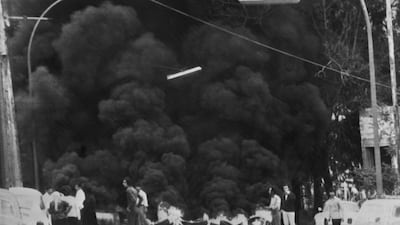
  • Smoke rises in a Beirut street during clashes between Palestinians and members of Christian militia the Lebanese Forces, backed by Lebanon's Christian Kataeb Phalangist party, on April 15, 1975. AFP
    Smoke rises in a Beirut street during clashes between Palestinians and members of Christian militia the Lebanese Forces, backed by Lebanon's Christian Kataeb Phalangist party, on April 15, 1975. AFP
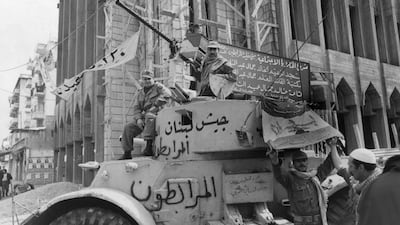
  • Guerrilla fighters on a tank in a street in Beirut during Lebanon's civil war, in December 1975. Getty Images
    Guerrilla fighters on a tank in a street in Beirut during Lebanon's civil war, in December 1975. Getty Images
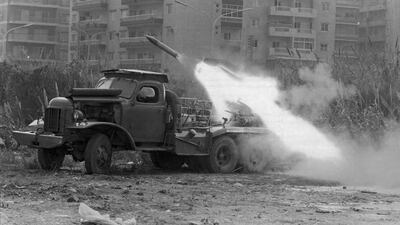
  • A Katyusha rocket is fired from the back of an army lorry into an apartment complex during the first year of the Lebanese civil war, in 1975. Getty Images
    A Katyusha rocket is fired from the back of an army lorry into an apartment complex during the first year of the Lebanese civil war, in 1975. Getty Images
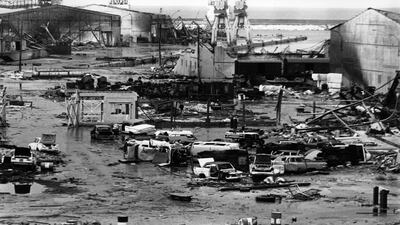
  • A mass of burnt vehicles in the harbour area of Beirut after the outbreak of civil war in 1975. Getty Images
    A mass of burnt vehicles in the harbour area of Beirut after the outbreak of civil war in 1975. Getty Images
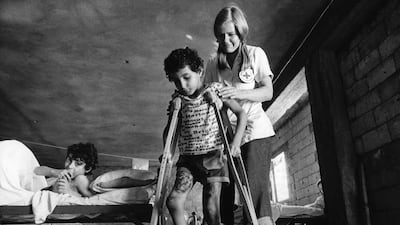
  • A Red Cross nurse from Sweden takes care of a boy shot in the heel by a sniper, on September 9, 1976, at a hospital in the Coral Beach Hotel, on the road between Beirut and Saida. AFP
    A Red Cross nurse from Sweden takes care of a boy shot in the heel by a sniper, on September 9, 1976, at a hospital in the Coral Beach Hotel, on the road between Beirut and Saida. AFP
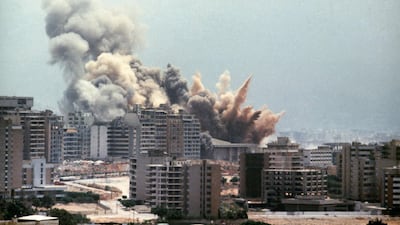
  • Israeli shelling on west Beirut on August 2, 1982. AFP
    Israeli shelling on west Beirut on August 2, 1982. AFP
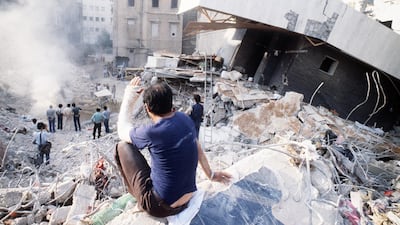
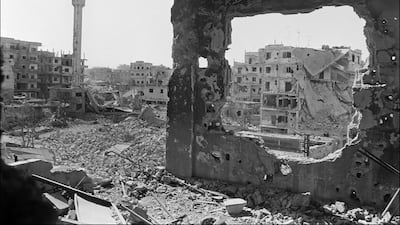
  • A man sits on rubble in a desolated area of west Beirut on August 20, 1982. AFP
    A man sits on rubble in a desolated area of west Beirut on August 20, 1982. AFP
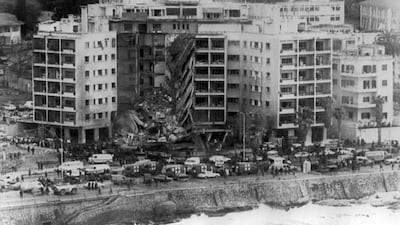
  • The US embassy in Beirut on April 18, 1983, after a bomb destroyed part of the building. AFP
    The US embassy in Beirut on April 18, 1983, after a bomb destroyed part of the building. AFP
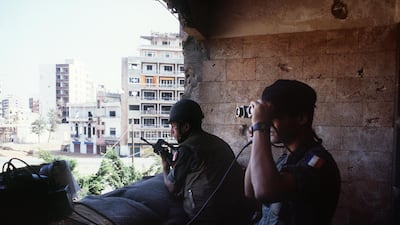
  • French soldiers watch the skyline in Beirut on September 26, 1983. The troops were part of the Beirut security multinational force sent to keep security after the Israeli invasion of 1982. AFP
    French soldiers watch the skyline in Beirut on September 26, 1983. The troops were part of the Beirut security multinational force sent to keep security after the Israeli invasion of 1982. AFP
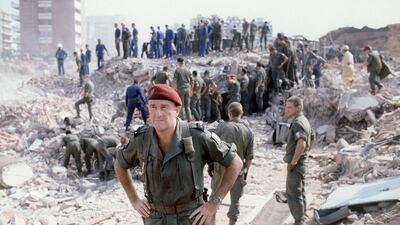
  • General Francois Cann, commander of the French troops of the multinational forces, on October 23, 1983, as rescuers search for survivors in Beirut through the rubble of a building that was destroyed by a suicide lorry bomber overnight. Fifty-eight French soldiers and five Lebanese were killed in the attack. AFP
    General Francois Cann, commander of the French troops of the multinational forces, on October 23, 1983, as rescuers search for survivors in Beirut through the rubble of a building that was destroyed by a suicide lorry bomber overnight. Fifty-eight French soldiers and five Lebanese were killed in the attack. AFP
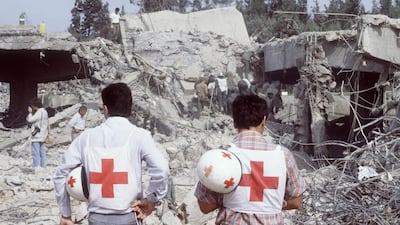
  • Rescuers continue to search on October 31, 1983, for corpses and identify the victims of the attack on October 23 on the headquarters of US troops from the multinational force in Beirut. AFP
    Rescuers continue to search on October 31, 1983, for corpses and identify the victims of the attack on October 23 on the headquarters of US troops from the multinational force in Beirut. AFP
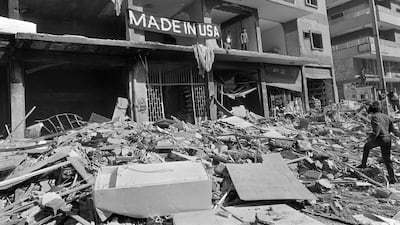
  • Rescuers search for victims on March 8, 1985, 15 minutes after a car, packed with an estimated 250kg of TNT, exploded in a crowded street of the southern Bir Al Aabed district in mainly Shiite southern suburb of Beirut. At least 75 people were killed and 256 injured in the explosion. AFP
    Rescuers search for victims on March 8, 1985, 15 minutes after a car, packed with an estimated 250kg of TNT, exploded in a crowded street of the southern Bir Al Aabed district in mainly Shiite southern suburb of Beirut. At least 75 people were killed and 256 injured in the explosion. AFP
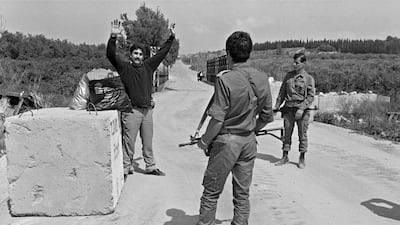
  • Israeli Defence Force soldiers on March 19, 1985, confront a civilian at Kasmyah bridge after troops the month before evacuated about 500 sq km around Saida. AFP
    Israeli Defence Force soldiers on March 19, 1985, confront a civilian at Kasmyah bridge after troops the month before evacuated about 500 sq km around Saida. AFP
  • Tripoli, in northern Lebanon, on October 4, 1985, after a ceasefire between pro-Palestine and pro-Syrian militias was agreed to in Damascus. AFP
    Tripoli, in northern Lebanon, on October 4, 1985, after a ceasefire between pro-Palestine and pro-Syrian militias was agreed to in Damascus. AFP
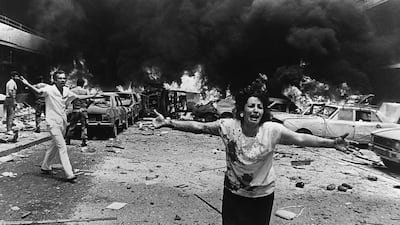
  • A woman cries in shock, minutes after a car bomb exploded in a crowded neighbourhood of mainly-Muslim west Beirut on August 8, 1986, killing 13 people, including three children, and wounding at least 92. AFP
    A woman cries in shock, minutes after a car bomb exploded in a crowded neighbourhood of mainly-Muslim west Beirut on August 8, 1986, killing 13 people, including three children, and wounding at least 92. AFP
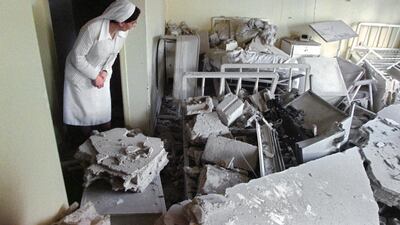
  • A nun inspects a damaged room in the Hotel Dieu Hospital in east Beirut on February 25, 1990, after a break in the battle between rival Christian factions. AFP
    A nun inspects a damaged room in the Hotel Dieu Hospital in east Beirut on February 25, 1990, after a break in the battle between rival Christian factions. AFP

“I saw a man who was crying. He told me that two of them were his daughters and that the younger one was not among them, because she had died. She was raped with a bottle and the bottle broke inside her.”

Women and girls were sometimes forced to have sexual relations with militiamen in return for food and protection.

“Sexualised torture was perpetrated in detention centres, at checkpoints, and in the streets during sieges and massacres. In detention, male officers electrocuted victims’ nipples, breasts, and genital areas, and intensified physical assaults when victims were menstruating,” the report said.

“Women and girls as young as 12 years old had their legs tied to two cars, which were driven in opposite directions, wrenching the victim in two from the crotch up, and resulting in death. Women were also killed in this way, but with militiamen holding the legs of the victim and wrenching them apart.”

Women and girls were killed and abducted in front of family members in retribution, with pregnant women and new mothers also murdered, it said.

LAW also reported an increase in violence from male family members towards their relatives, often amid stress, trauma and poor living conditions.

“With this report, we are seeking to contribute to the body of work produced in Lebanon that shines a spotlight on the gendered impact of Lebanon’s civil war, and its long lasting legacy — which includes today’s heightened levels of violence against women and continued stigma for those who survived these crimes,” said Rachel Dore-Weeks, the head of UN Women Lebanon.

“Without acknowledging and understand the past, we cannot build a peace and stable future,” she said.


Labour dispute

The insured employee may still file an ILOE claim even if a labour dispute is ongoing post termination, but the insurer may suspend or reject payment, until the courts resolve the dispute, especially if the reason for termination is contested. The outcome of the labour court proceedings can directly affect eligibility.


- Abdullah Ishnaneh, Partner, BSA Law 

Email sent to Uber team from chief executive Dara Khosrowshahi

From: Dara

To: Team@

Date: March 25, 2019 at 11:45pm PT

Subj: Accelerating in the Middle East

Five years ago, Uber launched in the Middle East. It was the start of an incredible journey, with millions of riders and drivers finding new ways to move and work in a dynamic region that’s become so important to Uber. Now Pakistan is one of our fastest-growing markets in the world, women are driving with Uber across Saudi Arabia, and we chose Cairo to launch our first Uber Bus product late last year.

Today we are taking the next step in this journey—well, it’s more like a leap, and a big one: in a few minutes, we’ll announce that we’ve agreed to acquire Careem. Importantly, we intend to operate Careem independently, under the leadership of co-founder and current CEO Mudassir Sheikha. I’ve gotten to know both co-founders, Mudassir and Magnus Olsson, and what they have built is truly extraordinary. They are first-class entrepreneurs who share our platform vision and, like us, have launched a wide range of products—from digital payments to food delivery—to serve consumers.

I expect many of you will ask how we arrived at this structure, meaning allowing Careem to maintain an independent brand and operate separately. After careful consideration, we decided that this framework has the advantage of letting us build new products and try new ideas across not one, but two, strong brands, with strong operators within each. Over time, by integrating parts of our networks, we can operate more efficiently, achieve even lower wait times, expand new products like high-capacity vehicles and payments, and quicken the already remarkable pace of innovation in the region.

This acquisition is subject to regulatory approval in various countries, which we don’t expect before Q1 2020. Until then, nothing changes. And since both companies will continue to largely operate separately after the acquisition, very little will change in either teams’ day-to-day operations post-close. Today’s news is a testament to the incredible business our team has worked so hard to build.

It’s a great day for the Middle East, for the region’s thriving tech sector, for Careem, and for Uber.

Uber on,

Dara

%3Cp%3E%3Cstrong%3EEngine%3A%20%3C%2Fstrong%3E4-litre%20twin-turbo%20V8%0D%3Cbr%3E%3Cstrong%3ETransmission%3A%3C%2Fstrong%3E%208-speed%20auto%0D%3Cbr%3E%3Cstrong%3EPower%3A%20%3C%2Fstrong%3E470hp%2C%20338kW%0D%3Cbr%3E%3Cstrong%3ETorque%3A%3C%2Fstrong%3E%20620Nm%0D%3Cbr%3E%3Cstrong%3EPrice%3A%3C%2Fstrong%3E%20From%20Dh491%2C500%20(estimate)%0D%3Cbr%3E%3Cstrong%3EOn%20sale%3A%20%3C%2Fstrong%3Enow%3C%2Fp%3E%0A
Mountain%20Boy
%3Cp%3E%3Cstrong%3EDirector%3A%3C%2Fstrong%3E%20Zainab%20Shaheen%3C%2Fp%3E%0A%3Cp%3E%3Cstrong%3EStarring%3A%3C%2Fstrong%3E%20Naser%20Al%20Messabi%3C%2Fp%3E%0A%3Cp%3E%3Cstrong%3ERating%3C%2Fstrong%3E%3A%203%2F5%3C%2Fp%3E%0A
FIXTURES

All kick-off times UAE ( 4 GMT)
Brackets denote aggregate score

Tuesday:
Roma (1) v Shakhtar Donetsk (2), 11.45pm
Manchester United (0) v Sevilla (0), 11.45pm

Wednesday:
Besiktas (0) v Bayern Munich (5), 9pm
Barcelona (1) v Chelsea (1), 11.45pm

TO A LAND UNKNOWN

Director: Mahdi Fleifel

Starring: Mahmoud Bakri, Aram Sabbah, Mohammad Alsurafa

Rating: 4.5/5

2025 Fifa Club World Cup groups

Group A: Palmeiras, Porto, Al Ahly, Inter Miami.

Group B: Paris Saint-Germain, Atletico Madrid, Botafogo, Seattle.

Group C: Bayern Munich, Auckland City, Boca Juniors, Benfica.

Group D: Flamengo, ES Tunis, Chelsea, (Leon banned).

Group E: River Plate, Urawa, Monterrey, Inter Milan.

Group F: Fluminense, Borussia Dortmund, Ulsan, Mamelodi Sundowns.

Group G: Manchester City, Wydad, Al Ain, Juventus.

Group H: Real Madrid, Al Hilal, Pachuca, Salzburg.

Our legal consultants

Name: Hassan Mohsen Elhais

Position: legal consultant with Al Rowaad Advocates and Legal Consultants.

The%20specs%20
%3Cp%3E%3Cstrong%3EEngine%3A%20%3C%2Fstrong%3E2.0-litre%204cyl%20turbo%0D%3Cbr%3E%3Cstrong%3EPower%3A%20%3C%2Fstrong%3E261hp%20at%205%2C500rpm%0D%3Cbr%3E%3Cstrong%3ETorque%3A%20%3C%2Fstrong%3E400Nm%20at%201%2C750-4%2C000rpm%0D%3Cbr%3E%3Cstrong%3ETransmission%3A%20%3C%2Fstrong%3E7-speed%20dual-clutch%20auto%0D%3Cbr%3E%3Cstrong%3EFuel%20consumption%3A%20%3C%2Fstrong%3E10.5L%2F100km%0D%3Cbr%3E%3Cstrong%3EOn%20sale%3A%20%3C%2Fstrong%3ENow%0D%3Cbr%3E%3Cstrong%3EPrice%3A%20%3C%2Fstrong%3EFrom%20Dh129%2C999%20(VX%20Luxury)%3B%20from%20Dh149%2C999%20(VX%20Black%20Gold)%3C%2Fp%3E%0A
Where to donate in the UAE

The Emirates Charity Portal

You can donate to several registered charities through a “donation catalogue”. The use of the donation is quite specific, such as buying a fan for a poor family in Niger for Dh130.

The General Authority of Islamic Affairs & Endowments

The site has an e-donation service accepting debit card, credit card or e-Dirham, an electronic payment tool developed by the Ministry of Finance and First Abu Dhabi Bank.

Al Noor Special Needs Centre

You can donate online or order Smiles n’ Stuff products handcrafted by Al Noor students. The centre publishes a wish list of extras needed, starting at Dh500.

Beit Al Khair Society

Beit Al Khair Society has the motto “From – and to – the UAE,” with donations going towards the neediest in the country. Its website has a list of physical donation sites, but people can also contribute money by SMS, bank transfer and through the hotline 800-22554.

Dar Al Ber Society

Dar Al Ber Society, which has charity projects in 39 countries, accept cash payments, money transfers or SMS donations. Its donation hotline is 800-79.

Dubai Cares

Dubai Cares provides several options for individuals and companies to donate, including online, through banks, at retail outlets, via phone and by purchasing Dubai Cares branded merchandise. It is currently running a campaign called Bookings 2030, which allows people to help change the future of six underprivileged children and young people.

Emirates Airline Foundation

Those who travel on Emirates have undoubtedly seen the little donation envelopes in the seat pockets. But the foundation also accepts donations online and in the form of Skywards Miles. Donated miles are used to sponsor travel for doctors, surgeons, engineers and other professionals volunteering on humanitarian missions around the world.

Emirates Red Crescent

On the Emirates Red Crescent website you can choose between 35 different purposes for your donation, such as providing food for fasters, supporting debtors and contributing to a refugee women fund. It also has a list of bank accounts for each donation type.

Gulf for Good

Gulf for Good raises funds for partner charity projects through challenges, like climbing Kilimanjaro and cycling through Thailand. This year’s projects are in partnership with Street Child Nepal, Larchfield Kids, the Foundation for African Empowerment and SOS Children's Villages. Since 2001, the organisation has raised more than $3.5 million (Dh12.8m) in support of over 50 children’s charities.

Noor Dubai Foundation

Sheikh Mohammed bin Rashid Al Maktoum launched the Noor Dubai Foundation a decade ago with the aim of eliminating all forms of preventable blindness globally. You can donate Dh50 to support mobile eye camps by texting the word “Noor” to 4565 (Etisalat) or 4849 (du).

The specs: 2018 Nissan 370Z Nismo

The specs: 2018 Nissan 370Z Nismo
Price, base / as tested: Dh182,178
Engine: 3.7-litre V6
Power: 350hp @ 7,400rpm
Torque: 374Nm @ 5,200rpm
Transmission: Seven-speed automatic
​​​​​​​Fuel consumption, combined: 10.5L / 100km

What is Genes in Space?

Genes in Space is an annual competition first launched by the UAE Space Agency, The National and Boeing in 2015.

It challenges school pupils to design experiments to be conducted in space and it aims to encourage future talent for the UAE’s fledgling space industry. It is the first of its kind in the UAE and, as well as encouraging talent, it also aims to raise interest and awareness among the general population about space exploration. 

Winners

Best Men's Player of the Year: Kylian Mbappe (PSG)

Maradona Award for Best Goal Scorer of the Year: Robert Lewandowski (Bayern Munich)

TikTok Fans’ Player of the Year: Robert Lewandowski

Top Goal Scorer of All Time: Cristiano Ronaldo (Manchester United)

Best Women's Player of the Year: Alexia Putellas (Barcelona)

Best Men's Club of the Year: Chelsea

Best Women's Club of the Year: Barcelona

Best Defender of the Year: Leonardo Bonucci (Juventus/Italy)

Best Goalkeeper of the Year: Gianluigi Donnarumma (PSG/Italy)

Best Coach of the Year: Roberto Mancini (Italy)

Best National Team of the Year: Italy 

Best Agent of the Year: Federico Pastorello

Best Sporting Director of the Year: Txiki Begiristain (Manchester City)

Player Career Award: Ronaldinho

Winners

Ballon d’Or (Men’s)
Ousmane Dembélé (Paris Saint-Germain / France)

Ballon d’Or Féminin (Women’s)
Aitana Bonmatí (Barcelona / Spain)

Kopa Trophy (Best player under 21 – Men’s)
Lamine Yamal (Barcelona / Spain)

Best Young Women’s Player
Vicky López (Barcelona / Spain)

Yashin Trophy (Best Goalkeeper – Men’s)
Gianluigi Donnarumma (Paris Saint-Germain and Manchester City / Italy)

Best Women’s Goalkeeper
Hannah Hampton (England / Aston Villa and Chelsea)

Men’s Coach of the Year
Luis Enrique (Paris Saint-Germain)

Women’s Coach of the Year
Sarina Wiegman (England)

COMPANY PROFILE

Name: Rain Management

Year started: 2017

Based: Bahrain

Employees: 100-120

Amount raised: $2.5m from BitMex Ventures and Blockwater. Another $6m raised from MEVP, Coinbase, Vision Ventures, CMT, Jimco and DIFC Fintech Fund

Updated: June 10, 2022, 2:28 PM