

Lebanese president Michel Aoun on Monday called for an end to an 11-week deadlock that has prevented the government from convening, further undermining state institutions in the country amid an economic meltdown.
Mr Aoun implicitly blamed his powerful ally Hezbollah for preventing the government from convening but did not name the militant group and political party.
In a televised speech, he also listed other obstructions that have derailed necessary legislation and reforms, criticising his long-time rival, Parliament Speaker Nabih Berri, also without naming him.
The government of Prime Minister Najib Mikati has not been able to meet since October 12 after Hezbollah and allies demanded the removal of the lead judge investigating the huge explosion at the Beirut port last year, in which at least 216 people died.
Hezbollah accuses Judge Tarek Bitar of bias and its allies refused to attend Cabinet meetings until the government found a way to remove him.
Mr Aoun said he has been unfairly criticised and his authority undermined while he cannot force the Cabinet to convene.
“Paralysing state institutions has become a standard and the result is the destruction of the state,” he said.
“In what law, logic or constitution is the Cabinet obstructed and asked to make a decision that is not part of its authority?”
Mr Aoun said the government must meet as soon as possible to address outstanding problems.
Mr Mikati took office in September after another deadlock over the balance of power in government amid the crisis.
The political class has also been divided over reform plans, negotiations with the International Monetary Fund and regional relations.
-
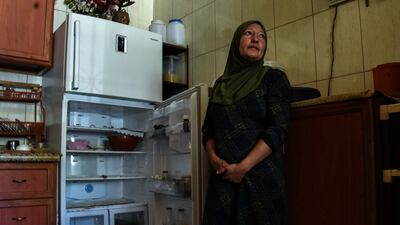
Rweida Mohammed stands next to her almost empty fridge that is warm inside due to prolonged power cuts. Elizabeth Fitt for The National -
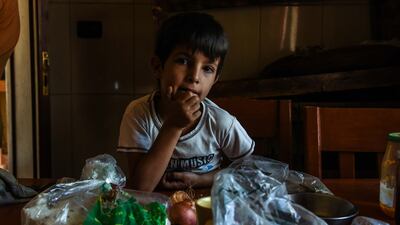
Hamid Khodor sits despondently in the kitchen. There is no electricity to keep food fresh in the fridge and freezer, no cooking gas for the stove and not much to eat except what the family can grow in the garden. Elizabeth Fitt for The National -

The Khodor family is relying on homegrown vegetables. Elizabeth Fitt for The National -
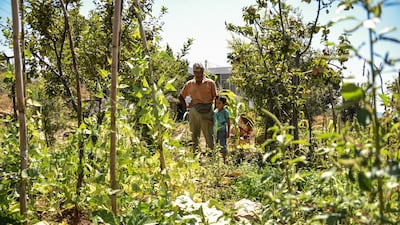
Talal Khodor with his son, Omar, in their vegetable garden. The family is relying on homegrown vegetables to feed themselves during Lebanon's economic collapse. Elizabeth Fitt for The National -
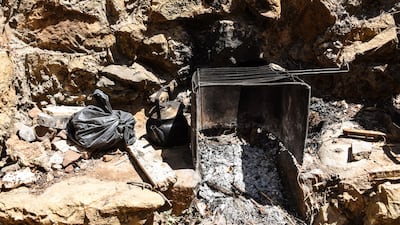
Rweida Mohammed uses a makeshift grill to cook for the family. Since gas for the kitchen stove became so scarce in Lebanon, the family can't get hold of any. Elizabeth Fitt for The National -
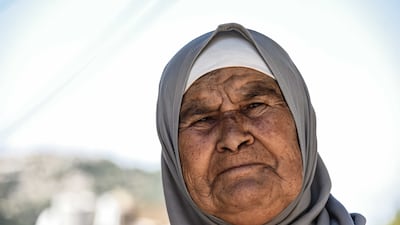
Talal Khodor's mother is frustrated by the ongoing situation. Elizabeth Fitt for The National -
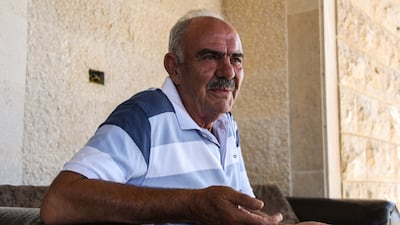
There are few options left to help Mohammed Hazim provide for his family. Elizabeth Fitt for The National -
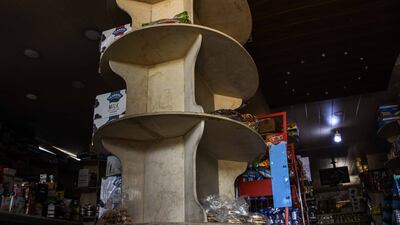
Shelves that usually display bread have been empty for days in the village store. Elizabeth Fitt for The National -
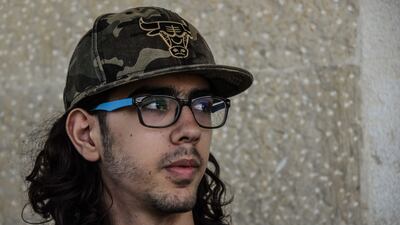
Mohammed Hazim's son, Ziad, waits for his exam results. He had to study using his father's mobile phone. Elizabeth Fitt for The National -
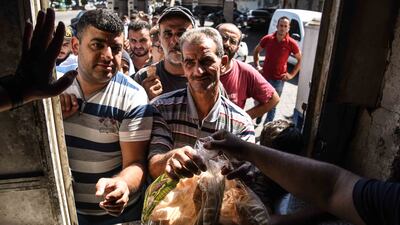
People queue for bread as shortages continue. Elizabeth Fitt for The National -
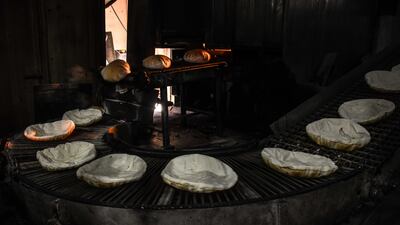
The manager at Tarik Al Ridani bakery says it is one of only two producers still operational in the city and with two tonnes of flour left, it will soon run out of bread. Elizabeth Fitt for The National -
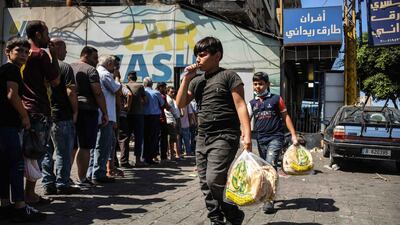
These boys are among the lucky few that have found bread before stocks run out. Elizabeth Fitt for The National -

Ogero, Lebanon's state-run telecoms provider, has a mast in Hrar, but connection speeds are often very slow. Elizabeth Fitt for The National


Mr Aoun, Hezbollah’s favourite candidate, was elected president in 2016, filling a post that had been vacant for more than two years.
His alliance with Hezbollah was sealed in 2006 after his return from 15 years in exile after the end of Lebanon’s civil war.
Since taking office, the alliance has been tested as Mr Aoun had to tackle an unprecedented economic crisis and deal with Lebanon’s often divisive sectarian-based politics.
On Monday he expressed frustration at the powerful ally and questioned the purpose of creating tension with Gulf nations.
Saudi Arabia, followed by other Gulf nations, boycotted Lebanon in October after critical comments by a George Kordahi, then information minister, who is allied with Hezbollah.
Mr Kordahi refused to resign for weeks.
But Mr Aoun, a former army general, stopped short of calling out Hezbollah publicly, indicating the alliance was holding. He is in the last year of his six-year term.
Lebanon is in the throes of an economic crisis described as one of the worst in the world in the last 150 years.
International financial institutions call it a deliberate depression blaming the political elite of mismanaging the country’s resources.

