


A man injured in the Beirut port explosion has succumbed to injuries 13 months after the explosion.
Ibrahim Harb, 35, suffered serious head injuries after 2,500 tonnes of ammonium nitrate exploded at the port in August last year, leaving him in a coma for three months.
He then spent almost a year at a rehabilitation centre, drifting in and out of consciousness until his family moved him home last week.
He was there for three days before dying on Monday night.
Mr Harb was laid to rest in Beirut on Tuesday, in an emotional funeral. His death raised the number of people killed in the port explosion to at least 215.

“May God punish whoever was behind it. What else can we say?” his brother Mazen told AP.
Mr Harb, an accountant, had been working at his office in downtown Beirut when the blast happened. He leaves behind a fiance.
Ahmad Mroue, who runs the Lebanese NGO Maan, which works with victims of the blast, said that the death coming on the same day as the suspension of the port blast investigation only underlined the unwillingness of Lebanon's political class to see justice served.
“It’s really sad that we lost another person. Unfortunately, the politicians in this country count them only as numbers, they don’t look at them as human beings. They deserve justice,” he said.
“What happened yesterday, just before Ibrahim died was really sad because again we see how politicians are treating the investigation and the judge – the main thing they are doing now is blocking justice.”
The port blast was suspended for a second time after a former minister lodged a complaint, questioning the lead judge’s impartiality.
-
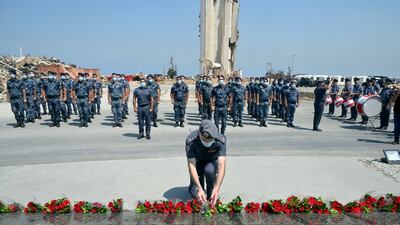
Members of the Lebanese Internal Security Forces lay flowers in front of a memorial to the victims of the explosion in Beirut's port last year. -
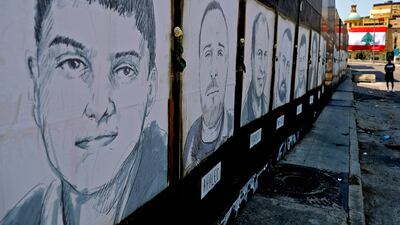
Portraits of victims of last year's Beirut port blast. -
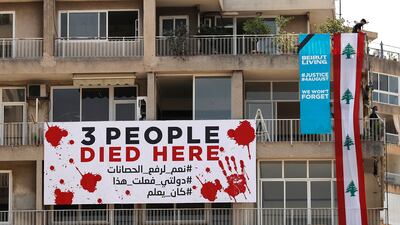
A man, right, hangs a giant Lebanese flag on a building that was damaged in last year's blast. -
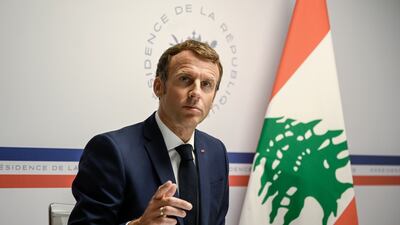
France's President Emmanuel Macron remotely attends a Lebanon donors' conference one year after the Beirut port blast. -

Police hold flowers to mark the anniversary of Beirut's 2020 port blast on August 5. -
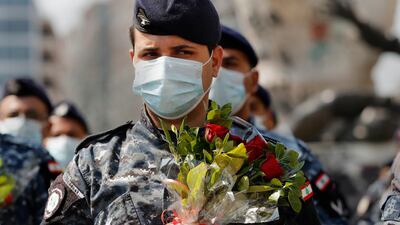
Police hold flowers to mark the anniversary of Beirut's massive 2020 port blast. -

Police hold flowers to mark the anniversary of the Beirut port explosion. -
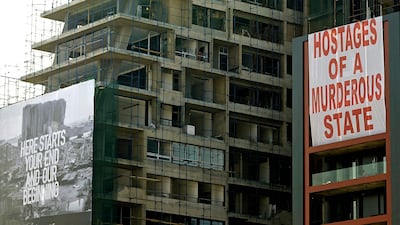
Banners reading 'Here starts your end and our beginning' and 'Hostages of a murderous state' hang on a building damaged in last August's port blast, as Lebanon marks a year since a the cataclysmic explosion devastated Lebanon's capital. -
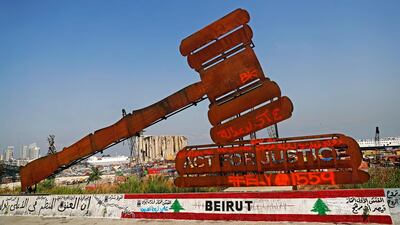
A gavel monument symbolising justice can be seen in front of the damaged grain silos at Beirut port, as Lebanon marks a year since an explosion ravaged the country's capital. -
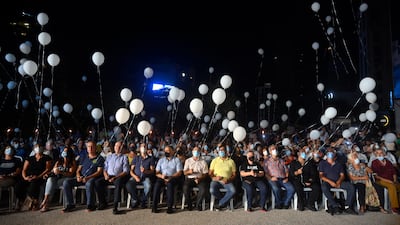
Supporters of Lebanon's Free Patriotic Movement release white balloons to mark one year since the huge explosion in Beirut's port. At least 200 people were killed, and more than 6,000 injured in the blast on August 4, 2020. -
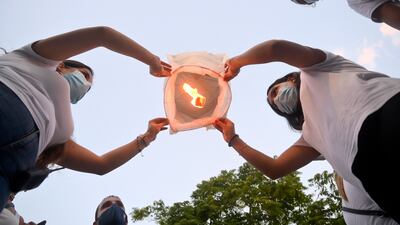
Supporters of the Free Patriotic Movement release paper lanterns to mark one year since a huge explosion in Beirut's port. -
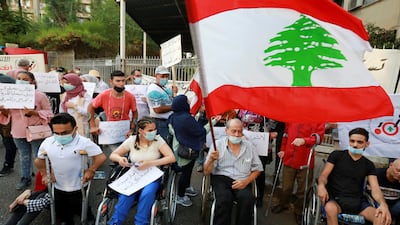
A man in a wheelchair flies a Lebanese flag during a protest demanding justice for the victims of last year's Beirut port blast. -
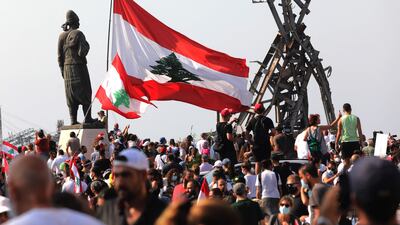
Demonstrators gather outside Beirut port on the anniversary of the blast that ravaged the city last August. Hundreds of Lebanese marched on August 4 to mark the explosion, protesting against impunity over the country's worst peacetime disaster at a time when its economy was already in tatters. -
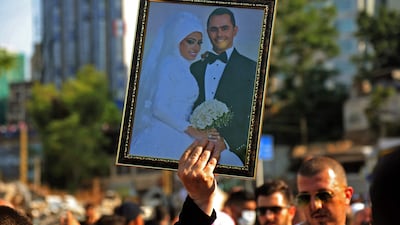
Relatives of Beirut port blast victims arrive for a remembrance ceremony at the site of the explosion on the first anniversary of the disaster. -
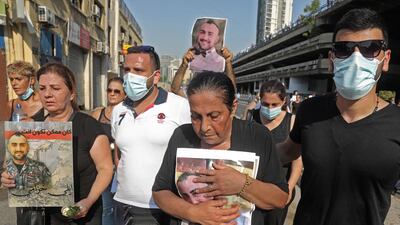
Relatives of Beirut port blast victims arrive for a remembrance ceremony at the site of the explosion on the first anniversary of the disaster. -
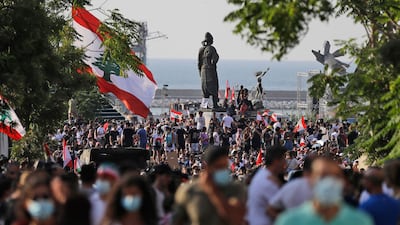
Demonstrators gather by the statue of 'The Lebanese Emigrant' near Beirut port on the first anniversary of the blast that ravaged the port and the city. -
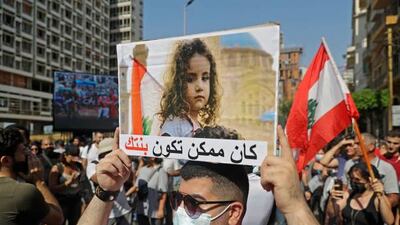
A demonstrator marches with a sign showing one of the young victims of the 2020 Beirut blast. -

People carry flags and banners as they march to mark the anniversary of Beirut's port blast. -
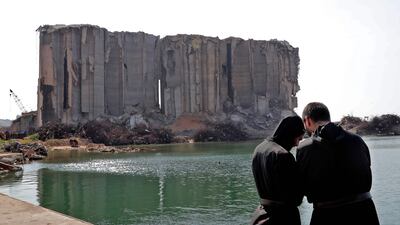
Priests pray near the remains of Beirut port on the first anniversary of the blast that ravaged the port and the city. -
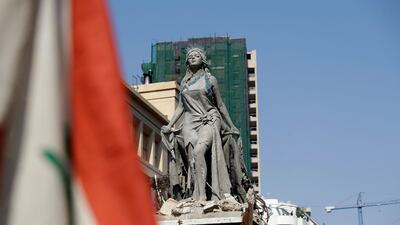
Demonstrators in Lebanon's capital march past a statue symbolising "Beirut rising from destruction" on their way towards the port on the first anniversary of the blast that ravaged the city. -
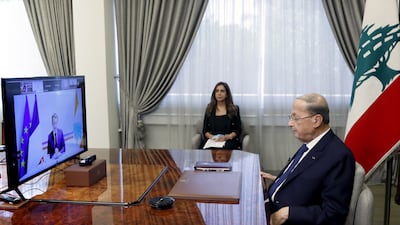
France's President Emmanuel Macron talks to his Lebanese counterpart Michel Aoun during a remote international conference to raise aid for the country. France has pledged about €100 million ($118.3m) in emergency aid as well as 500,000 Covid-19 vaccine doses for Lebanon. -
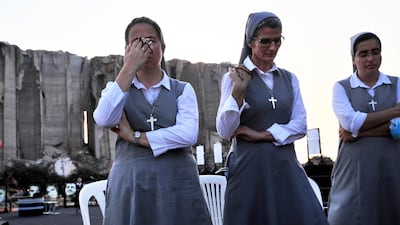
Nuns pray during a mass organised at the Beirut port with the relatives of last year's blast victims. -
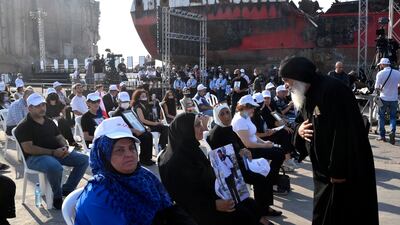
A priest comforts the relative of a blast victim at a Mass organised in Beirut. -
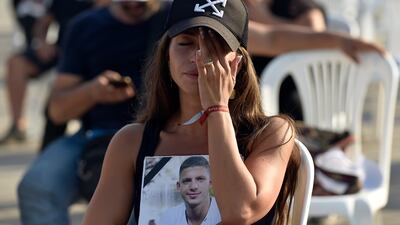
Families and relatives of people killed in the blast carried portraits of their loved ones to the commemoration Mass in Beirut. -
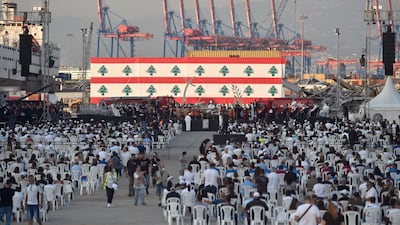
Families and relatives of victims of the explosion at Beirut port attend a Mass held to commemorate the anniversary. -
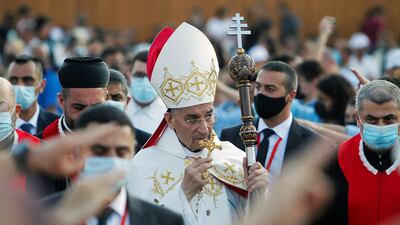
Lebanese Maronite Patriarch Bechara Boutros Al-Rai arrives to lead a Mass in memory of people who died in the explosion. -
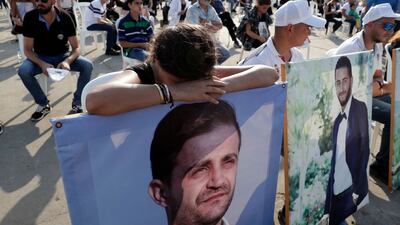
Relatives of people who died in the 2020 Beirut blast attend a Maronite Christian Mass at the city’s port. -
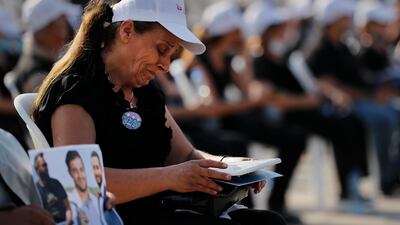
A relative of a victim of the blast weeps as she attends the Mass. -
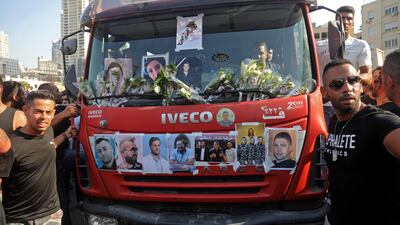
A fire engine carrying portraits of blast victims is driven during a remembrance ceremony at the port of Lebanon’s capital. -
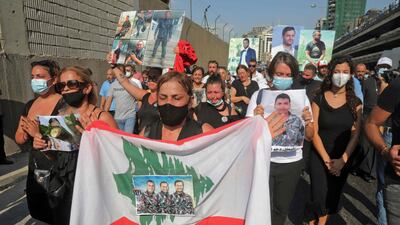
Relatives of the Beirut port blast victims arrive for a remembrance ceremony at the Lebanese capital’s port.


Nouhad Machnouq, a former interior minister, filed the complaint on Monday, saying that Tarek Bitar, who is heading the investigating, was acting beyond his remit.
Mr Machnouq, who is one of four former ministers facing questioning in relation to the blast, requested the removal of Mr Bitar, prompting the investigation's freezing.
The suspension prompted outrage among families of the blast’s victims, yet lawyers of Maj Gen Abbas Ibrahim, the head of the influential General Security agency, accused Mr Bitar of populism in running the investigation.
“It is unfortunate that Judge Bitar experienced the disappointments of the legal breaches that he reaped during his populist management of the port explosion file,” he said in a statement.
He accused Mr Bitar of acting to “dilute the truth and underline it with fictitious heroics”.
The investigation has been beset by delays and complaints, with high-profile figures repeatedly refusing to show up when summoned for questioning.
Earlier this month, former prime minister Hassan Diab left the country to visit family in the US, missing his scheduled questioning.

