


Lebanon's power provider has said that the country is at risk of a “total and complete” power cut by the end of the month unless more fuel supplies are received.
The state-run Electricite du Liban (EDL) said on Thursday that fuel acquired in a recent deal with Iraq was only enough to provide about 500 megawatts of power — well short of the country’s monthly needs.
“The network already experienced total power cuts across the country seven times and if this continues there is a high risk of reaching total and complete power cut by the end of September,” EDL said.
Lebanon has been plagued by energy shortages in recent months, with EDL currently able to provide little more than four to six hours of electricity a day, though it has so far prevented a nationwide power cut.
The Ministry of Energy reduced subsidies for the second time in a month last week, prompting the cost of a tank of petrol to jump some 16 per cent overnight.
Generous subsidies have meant that, for years, Lebanon has enjoyed some of the world's lowest fuel prices despite producing no fuel itself.
At the heart of the crisis has been the Central Bank's inability to release funds to pay for fuel imports, leaving tankers laden with fuel waiting in the Mediterranean as the power onshore fails.
The country's power plants are reliant on the fuel oil to generate electricity for the national grid.
In the deal struck with Iraq in February, Baghdad agreed to provide Lebanon with a million tonnes of heavy fuel in exchange for in-kind goods and services.
But Lebanon lacks the capacity to refine the heavy fuel, meaning it must be exchanged for a fuel product usable in Lebanon's power plants.
-
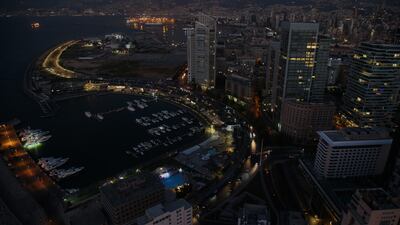
A view of Lebanon's capital, Beirut, with the lights on only in some buildings. Lebanese rely on highly polluting diesel generators run by private neighbourhood operators to make up for shortfalls in electricity supply from the state utility. EPA -
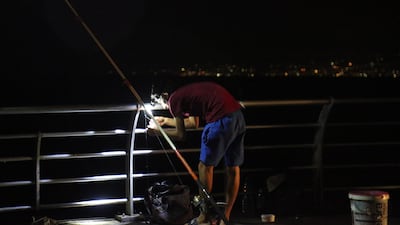
A fisherman uses a headlamp at the seaside corniche in Beirut, Lebanon. EPA -

A vendor sells LED balloons in full darkness at the corniche in Beirut. EPA -
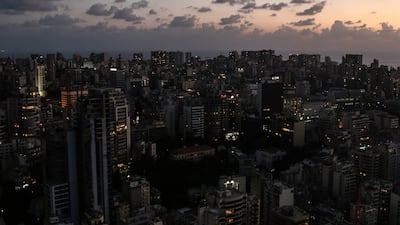
The near collapse of the national grid has increased the duration of power cuts across Lebanon. EPA -
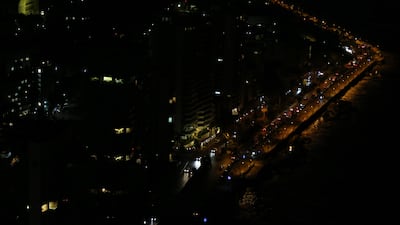
Residents of Beirut are experiencing power cuts of up to 20 hours a day. EPA



