
Along a drab commercial street in east Amman, local fast food shops are staffed with young Syrians who toil long hours for a pittance.
Many of the Syrian workers in the dusty Jasmin-Badr district had marched in demonstrations against Assad family rule that broke out a decade ago in Damascus and in rural areas on the border with Jordan.
They formed the backbone of the Syrian revolt, which militarised after violent suppression by the regime. It was largely defeated after the Russian intervention that propped up President Bashar Al Assad in 2015.
Rami Saleh, 28, was in the final year of high school when he and his brother took part in pro-democracy protests in Midan.
Syrian war in pictures
-
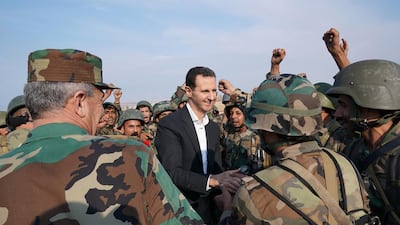
Syrian soldiers are seen cheering President Bashar Al Assad during his visit to Al Habit on the southern edges of the Idlib province, in a picture released on October 22, 2019. AFP / Syrian Presidency Facebook page -
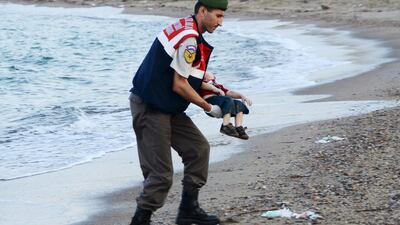
A Turkish gendarme retrieves the body of Syrian refugee Alan Kurdi from a beach in Turkey. Reuters -
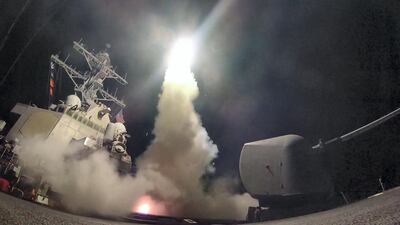
The guided-missile destroyer 'USS Porter' conducts strikes while in the Mediterranean Sea, on April 7, 2017. AFP / US NAVY -
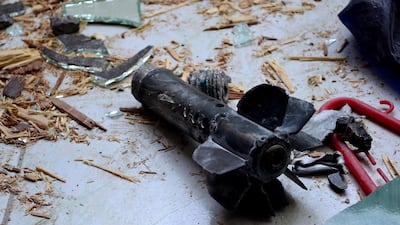
A handout picture released by the official Syrian Arab News Agency on October 31, 2013, shows the remains of a mortar after an alleged mortar attack by rebel fighters on the Damascus mixed Christian-Druze suburb of Jaramana. AFP / Sana -
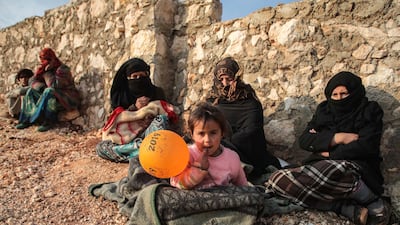
Displaced Syrians from the south of Idlib province sit out in the open in the countryside west of the town of Dana in the north-west Syrian region on December 23, 2019. AFP -
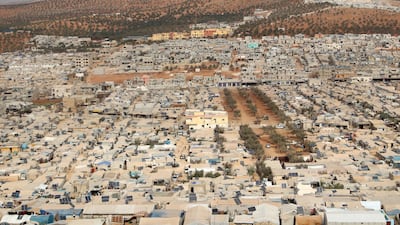
This picture shows a general view of an overcrowded displacement camp near the village of Qah near the Turkish border in Syria's north-west Idlib province, on October 28, 2020, during the coronavirus pandemic crisis. AFP -
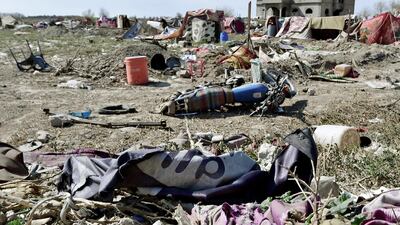
A picture taken on March 23, 2019, shows the last ISIS bastion in the eastern Syrian village of Baghuz after the defeat of the group. The Kurdish-led forces pronounced the end of ISIS regime on March 23, 2019, after flushing out the diehard militants from their very last bastion in eastern Syria. AFP -
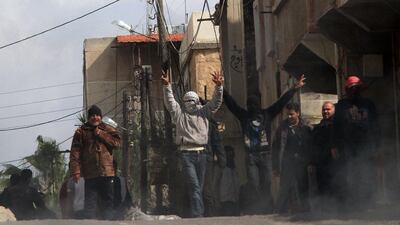
Anti-government activists gesture as they gather on the streets of Daraa, 100 kilometres south of the capital Damascus, on March 23, 2011. AFP -
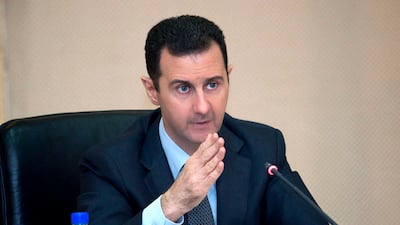
Syria's President Bashar Al Assad heading a cabinet meeting in the presidential palace in Damascus in 2013. Sana / AFP -
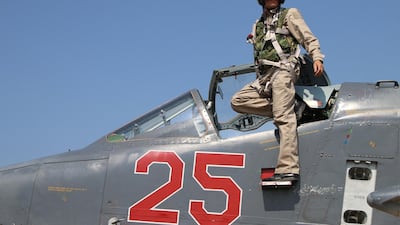
A picture taken on October 3, 2015 shows a Russian army pilot leaving the cockpit of a Russian Sukhoi Su-25 ground attack aircraft at the Hmeimim airbase in the Syrian province of Latakia. AFP -
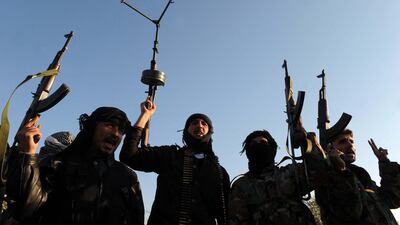
Members of the Free Syrian Army raise their weapons during a patrol in Idlib in north-west Syria on February 18, 2012. AFP -
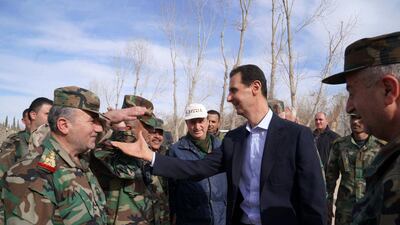
Syrian President Bashar Al Assad is shown shaking hands with government troops in Eastern Ghouta, in the leader's first trip to the former rebel enclave outside Damascus in years, in this handout picture released by the Syrian Presidency on March 18, 2018. Syrian Presidency Facebook page / AFP -
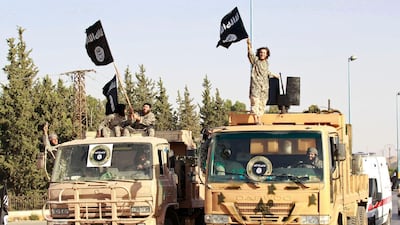
Militant fighters wave flags as they take part in a military parade along the streets of Syria's northern Raqqa province, on June 30, 2014. Reuters


The conservative Sunni district in central Damascus is known for its old mercantile class and culinary traditions.
After members of the Alawite-dominated regime arrested and tortured his brother in 2012, Mr Saleh’s family sent him to stay at his aunt’s home.
She has been married to a Jordanian since the 1980s and lives in Jasmin-Badr.
“I was good in computers and wanted to be a computer engineer,” Mr Saleh said from behind the counter of a sweet shop.
“But the priority as soon as I arrived here was to make money to survive.”
Instead of realising their dreams of freedom in Syria, thousands of young Syrians are working cutting shawarma, making falafel or doing other low-paid jobs in Jordan.
They mostly have no work permits, and no protection. Those lucky enough to be paid a regular salary receive up to $400 a month and work 12 to 14-hour days.
No one has helped them to pursue the schooling they lost, or pressured the Assad regime not to persecute them if they go back.
Most consider going back to Syria a non-option, even if the regime ignores their participation in the revolt, because they are wanted for conscription in the military.
In their teens when the revolt started, they are now in their late 20s, with little money, little schooling, and no legal access to Jordan’s labour market.

Mr Saleh pays one third of his salary in rent. He sometimes saves $10 a month and sends it to his family in Damascus, where a dollar now fetches 4,200 Syrian pounds after the currency's collapse from 50 to the dollar 10 years ago.
Syrian businessmen Ziad Abdulrahman said Syria’s lost generation in exile in Jordan and elsewhere could replicate itself if there was no serious international pressure on the the regime in Damascus.
Mr Abdulrahman’s connections in Jordan helped him re-establish his trading company when he fled Syria, a privilege most of his exiled compatriots do not have.
“Regardless whether you are for or against the regime, there is no opportunity for these young people. They are getting more mired in misery and are bound to become a social problem in Jordan,” he said.
“If they go back to Syria, they will be either conscripted in the regime’s army or be driven by poverty to join Iranian militias.”
Although the Jordanian government says it is burdened by the presence of hundreds of thousands of Syrian refugees, officials have made it clear that safe conditions do not exist in Syria to allow for their voluntary return.
Those without monthly wages look for daily work that is becoming more difficult to find amid a recession in Jordan.
Suleiman works odd jobs in construction and cleaning that bring him $300 a month.
He said he was 16 when he “joined the people” in demonstrations against Mr Al Assad in Jobar, a large Sunni suburb separating Damascus from the countryside.
He watched as thousands of soldiers entered Jobar with tanks in 2012 and painted slogans on the wall promising to eradicate Jobar’s inhabitants.
“I will never forget it. I had 11 friends. Seven friends died from shelling and two disappeared,” he said.
He fled to Jordan after he was randomly arrested at a regime road block while he was in a service taxi. Four days of incarceration at the Abbasid football stadium convinced him to flee Syria.
The regime had turned the stadium in Damascus into a detention centre.
“I tried to resumed my studies in Jordan. But here the living costs are expensive,” he said. “One day we work, 10 days we don’t. I’m running and running and can’t catch up.”
Slightly older Syrians who had managed to finish higher levels of education have had better chances to relocate to Turkey or in Europe, the exiles say.
Abboud, a Syrian IT specialist who did not want to give his last name because his family is in Damascus, said several of his friends left Jordan after being accepted for asylum in Europe.
“I went to demonstrations. I was part of the revolution and I am proud for that,” he said, adding that he fled to Jordan in 2012, shortly after he was jailed.
“We were hungry, we were dirty. We were naked,” said Abboud, who is in his early 30s.
In Jordan, “everyone tells me the same sentence: ‘You are Syrian, sorry we cannot employ you’,” he said.
“I feel I have to leave this country. It is so hard to live here.”

