
Only 31 of a group of 163,000 people fully vaccinated in Israel with the Pfizer-BioNtech drug have since caught Covid-19, bolstering trial figures on effectiveness of the shots.
The results indicate that the drug is 92 per cent effective in real world settings – in line with the Phase 3 trial data that indicated a 95 per cent effectiveness – the Times of Israel reported.
The newspaper said that in an equivalent group of unvaccinated people in Israel, there were 6,437 cases of Covid-19 in the same 10-day window.
While experts cheered the findings by Maccabi Health that runs a number of vaccination centres, they also pointed out it was an inexact measure as the study had no official control group to benchmark against but said it was still a strong indicator.
Cyrille Cohen, an immunology expert at Bar-Ilan University, told the paper that the wider Israeli society was a form of “imperfect” control group.
Coronavirus around the world – in pictures
-
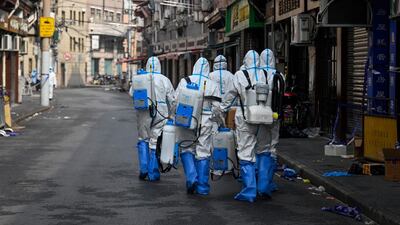
Health workers in protective gear prepare to spray disinfectant in a blocked off area in Shanghai's Huangpu district, after residents were evacuated following the detection of a few cases of COVID-19 coronavirus in the neighbourhood. AFP -
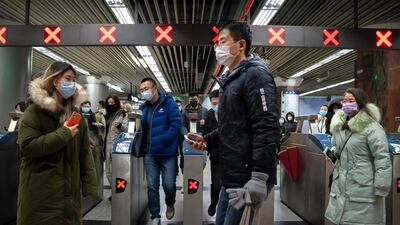
People wearing face masks to protect against the spread of the coronavirus walk through a subway station in Beijing. China has given more than 22 million COVID vaccine shots to date as it carries out a drive ahead of next month's Lunar New Year holiday, health authorities said Wednesday. AP -

A health officer checks a woman temperature body as they evacuated villagers to a temporary evacuation center after mount Merapi spew pyroclastic smoke in Yogyakarta, Indonesia. Getty Images -

People wait to refill oxygen tanks for relatives sick with COVID-19 in the Iztapalapa district of Mexico City. The city is offering free oxygen refills for patients with COVID-19. AP -

Around 20 members of the Thurgau Civil Defence are converting the MS Thurgau, a Lake Constance ship, into a vaccination ship, in Romanshorn, Switzerland. From 02 February onward, up to 170 people per day will be vaccinated here by the Hirslanden private hospital group at the ports of Kreuzlingen, Romanshorn and Arbon. EPA -

Tunisian medical staff attend coronavirus patients at the intensive care unit of the Ariana Abderrahmen Mami hospital in the city of Ariana near the Tunisian capital Tunis, during the Covid-19 pandemic crisis. AFP -
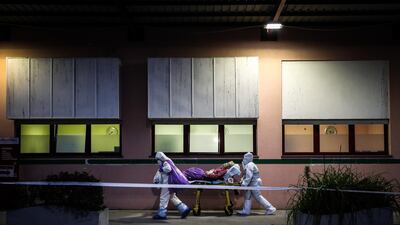
Paramedics transport COVID-19 patients from Amadora Sintra Hospital to Luz Hospital in Lisbon, in Amadora, Portugal, due to the rising of hospitalizations. The Amadora-Sintra Hospital moved a team of doctors, nurses and auxiliaries to accompany the 19 patients who are being transferred to the infirmary that will open at Hospital da Luz in Lisbon. EPA -

Pallbearers stand next to coffins of three top government officials at their burial at the National Heroes acre in Harare. Zimbabwe on Wednesday buried three top officials who succumbed to COVID-19, in a single ceremony at a shrine reserved almost exclusively for the ruling elite as a virulent second wave of the coronavirus takes a devastating toll on the country. AP -
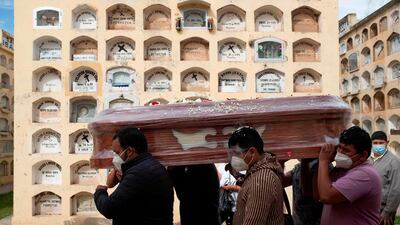
Relatives of a Covid-19 victim carry a coffin at the General Cemetery in the central city of Huanuco, 370 kilometers northeast of Lima. Sixteen million Peruvians will enter a two-week coronavirus lockdown covering a third of the country at the end of January, Peru's interim president said Tuesday. The South American nation's healthcare system has been overwhelmed by the Covid-19 pandemic, with only 500 intensive care beds for a population of 32 million, with authorities reporting a spike in deaths as infections increase. AFP


The results also come after concerns were raised when early data suggested only 33 per cent less infections in those that had the first of the two doses of the vaccine after 14 days. The findings, however, appear to bolster the indication that the second dose is crucial to building antibody levels to prevent the virus.
The news comes as Pfizer-BioNtech says that their vaccine is effective against coronavirus mutations found in the variants emerging from Britain and South Africa.
Several new variants – each with a cluster of genetic mutations – have sparked fears over an increase in infectiousness as well as suggestions that the virus could begin to elude immune response, whether from prior infection or a vaccine.
The two companies said these preliminary findings "do not indicate the need for a new vaccine to address the emerging variants".
They said they were "prepared to respond" if a new strain was shown to be able to evade the immunity of the vaccine, adding that they could produce updates to their product if needed.
Other manufactures have suggested 'booster' shots could be developed swiftly to improve the efficacy against variant strains if other drugs struggle to prevent illness.

