


Iraq on Saturday called for emergency assistance from the international community to help restore the flow of water in the country's two main rivers.
Prime Minister Mohammed Shia Al Sudani made the plea for “urgent international intervention” at the start of the two-day Baghdad International Water conference.
“The issue of water has become a sensitive one not only in Iraq but in all countries,” Mr Al Sudani said.
Water levels in the Tigris and Euphrates rivers, which account for more than 90 per cent of Iraq's freshwater reserves, have declined significantly over the years, partly as a result of the construction of dams and diversion of water upstream in Turkey and Iran.
The Prime Minister warned that a shortage of water compounded by climate change would have a substantial impact on Iraq's economic development and environment, with wider ramifications for regional stability.
-

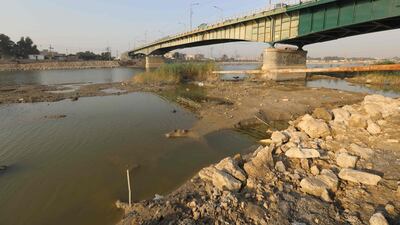
The Hadarat bridge across the Euphrates river, which has seen a sharp decrease in water levels, in Nassiriya. AFP -
Iraqi officials have pledged to take urgent measures to ease shortages in the parched country. AFP -
Water levels of the Tigris and Euphrates rivers — the headwaters of which originate in Turkey — have plunged 30 per cent in recent days, Iraq’s Ministry of Water Resources says. AFP -
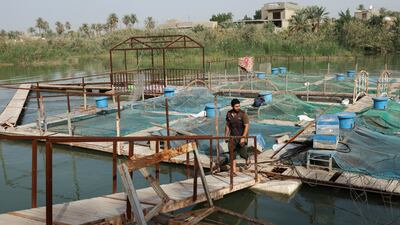
The fish farming pond in the Euphrates River in Najaf. Reuters -
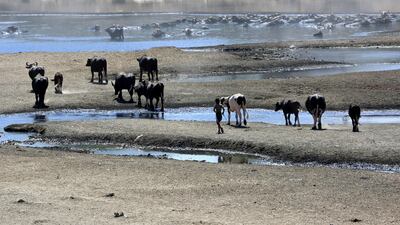
A shepherd watches his buffalos cool off in the scarce waters of Diyala River, east of Baghdad, in June 2022. EPA -
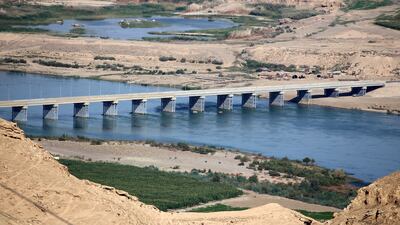
A bridge spans the Tigris river near the Makhoul dam site, in northern Iraq's Salaheddine province. AFP -

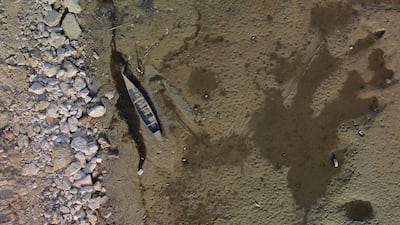
A boat lies on the dried out shore of the Euphrates river, near Qere Qozaq, controlled by Kurdish-led Syrian Democratic Forces, in October 2022. Reuters -
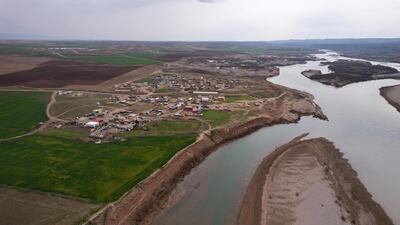
This Tigris river in the village of Bajid Kandala, 50km west of the northern Iraqi city of Dohuk. AFP


Mr Al Sudani said water scarcity had an impact on internal and external security “as it affects the existence of different human activities, whether in agriculture, industry or life”.
“Iraq is one of the countries that reels under the impact of the climate change and its environment has seen substantial effects that have had economic and social impacts,” he added.
Iraq has the world's fifth-largest proven oil reserves but it also ranks fifth among countries most vulnerable to climate change, according to the UN.
The country's water problems have been growing worse for decades as a result of climate change, mismanagement and pollution.
Moreover, successive wars have degraded its water infrastructure, leading to losses and inefficient distribution.
These factors, combined with an outdated centuries-old water management system, have “led us to this sensitive point in the water issue at the time of climate change”, Mr Al Sudani said.
He warned that overlooking the water issue “will cause Iraq to lose the elements of development and will lead to a strategically dangerous area.”
Iraq is experiencing its worst drought in decades, with temperatures exceeding 50°C last summer. Many of its lakes have shrunk or dried up completely.
The Tigris and Euphrates currently receive less than 30 per cent of their normal flow from Turkey and Iran, Deputy Environment Minister Jassim Al Falahi said last month.
-
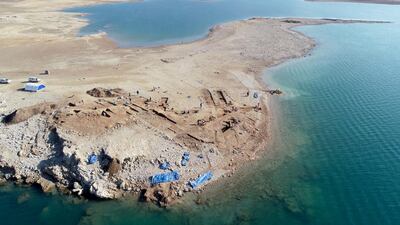
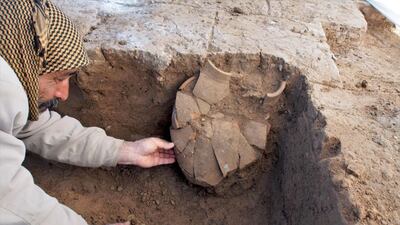
Drought in Iraq has revealed a 3,400 city beneath the waters of a dam on the Tigris River. -
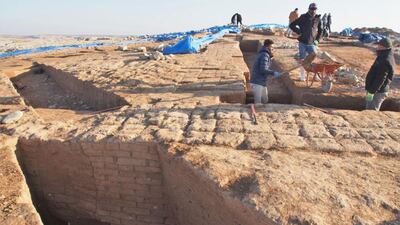
The ruins of a Bronze Age palace and other monumental buildings were revealed as the Mosul reservoir dried up. -
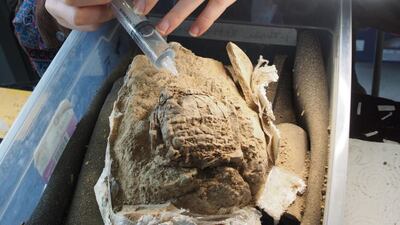
The site at Kemune, underwater since the dam was filled in the 1980s, yielded many treasures to archaeologists. -
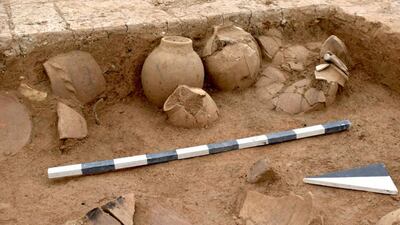
Archaeologists found five ceramic vessels containing more than 100 cuneiform tablets. -
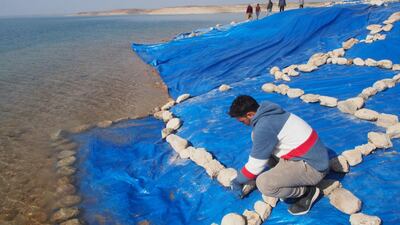
Buildings were excavated then covered with plastic sheeting and covered with gravel before the water level rose again. -
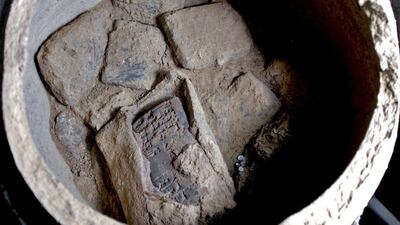
Cuneiform tablets from the site. -
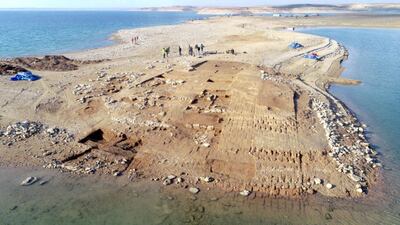
The reservoir has now been filled again, once again submerging the ancient city. -
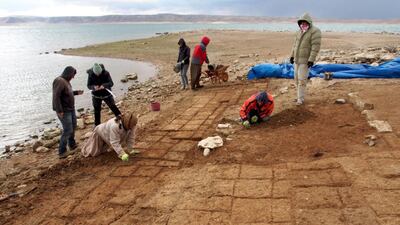
The UN says Iraq is most vulnerable country in the world to the effects of climate change. -
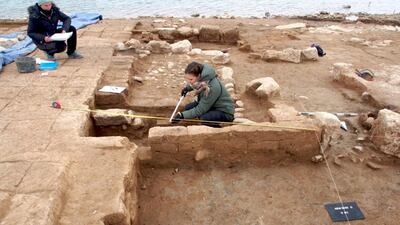
Time to investigate the site was limited as the reservoir level rose. -
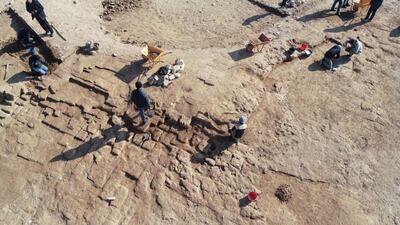
But investigators were able to map it for the first time. -
The city is located at Kemune in the northern Kurdistan Region of Iraq. -

It is thought that the ruins could belong to Zakhiku, capital of the Mittani Empire that ruled the Tigris River area between 1550 and 1350 BC.


Mr Al Sudani said the rivers, along whose banks Mesopotamian civilisations flourished, not only “represent Iraq but they are global and human heritage, and their disappearance means that the memory of history and civilisation will lose a lot”.
“To save the Tigris and Euphrates we need an urgent international intervention from countries and organisations to help Iraq in this sensitive period of the history of its great rivers,” he said.
'Tough summer'
Early in April Turkey began releasing more water into the Tigris for a period of one month at the request of the Iraqi government.
Iraq's Water Resources Ministry said Ankara was releasing 1,500 cubic metres per second, doubling the previous amount.
Minister of Water and Resources Aoun Diab said the drought the country saw last year was the worst since 1930, hailing the Turkish government move.
He did not say whether that deal has been extended but said Iraq was looking for more co-operation.
“There is an understanding from the Turkish side, but we hope to see that on the ground,” Mr Diab told the audience without elaborating.
The minister warned that the country will face “big challenges” in the summer in regard to water availability but gave assurances that the government will take the necessary measures.
“The summer will be a tough one,” he said. “For sure, there will be a tough challenge, but God willing, we can deal with it during the summer.
“We have taken measures and will consider more on how to divide this limited amount [of water] fairly for all consumers.”
Regional security
Desertification affects 39 per cent of the country and 54 per cent of agricultural land has degraded, mainly due to soil salinity caused by historically low water levels in the two rivers and reduced rainfall.
Agriculture Minister Abbas Al Ali painted a bleak picture.
The amount of land dedicated for strategic crops — wheat, rice and corn — and irrigated from the rivers decreased by more than 50 per cent since 2021, Mr Al Ali said.
For wheat, the land went down from 4.5 million dunams (450,000 hectares) in 2021 to 1.5 million dunams (150,000 hectares) in 2023.
The land for corn and rice decreased from 574,000 dunams (57,400 hectares) and 393,000 dunams (39,300 hectares) respectively three years ago to 10,000 dunams (1,000 hectares) now.
“That is alarming,” he told a discussion panel. “These crops represent an opportunity for creating jobs, decreasing unemployment, maintaining social security and civil peace for this country.”
He warned that the ramifications could reach neighbouring countries.
“The stability of Iraq and the availability of water to refresh its agriculture sector is a stability to this region which already faces a lot of challenges,” he said.
“It also contributes to the protection of the interests of neighbouring countries so we hope that there will be serious co-operation to help Iraq to implement its plans and projects, especially in water and agriculture.”

