

Christians in Iraq were persecuted by ISIS, which forcibly transferred them, seized their property and subjected them to sexual violence and other “inhumane acts”, a UN report has found.
An investigative team said they had collected evidence that strengthens preliminary findings that the extremist group committed crimes against humanity and war crimes against the Christian community after it seized about a third of the country in 2014.
The report on Thursday night to the UN Security Council said crimes also included enslavement, forced conversions and destruction of cultural and religious sites.
The team said they had identified leaders and prominent members of ISIS who participated in the attack and takeover of three predominantly Christian towns in the Nineveh plains north of Iraq’s second-largest city, Mosul, in July and August 2014 ― Hamdaniyah, Karamlays and Bartella. It also started collecting evidence of crimes committed against the Christian community in Mosul.
ISIS fighters seized Iraqi cities and declared a self-styled caliphate in large areas of territory in Syria and Iraq in 2014. The group was formally declared defeated in Iraq in 2017 following a three-year bloody battle that left tens of thousands dead and cities in ruins, but its sleeper cells continue to stage attacks in different parts of Iraq.
The 26-page report was submitted by the UN Investigative Team to Promote Accountability for Crimes committed by ISIS.
The team updated its investigations into the extremists’ development and use of chemical and biological weapons, attacks on the Yazidi and Sunni communities, the mass execution of prisoners and detainees at Badush prison near Mosul in June 2014, and crimes in and around Tikrit.
In December 2021, the head of the UN team, Christian Ritscher, told the Security Council that ISIS extremists committed crimes against humanity and war crimes at the prison in Badush.
In May 2021, Mr Ritscher’s predecessor, Karim Khan, told the council that investigators had found “clear and compelling evidence” ISIS extremists committed genocide against the Yazidi minority in 2014. He also said the militant group successfully developed chemical weapons and used mustard gas.
Battle of Mosul — In Pictures
-
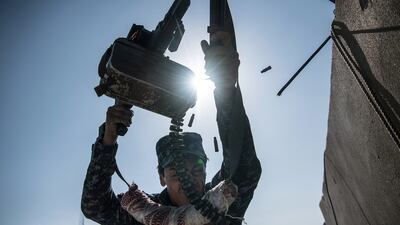
An Iraqi federal policeman fires a machine gun at an ISIS position on a nearby rooftop during fighting in west Mosul in April 2017. Getty Images -
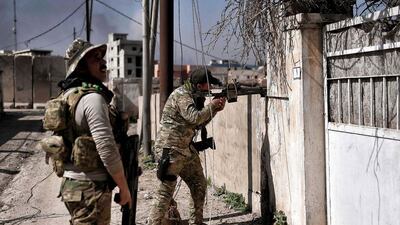
Iraqi troops patrol areas retaken from ISIS in western Mosul on March 9, 2017. AFP -
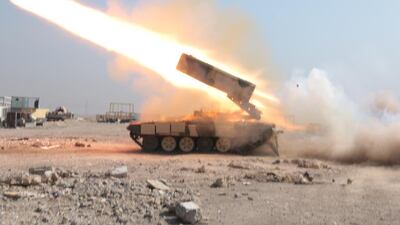
Iraqi forces fighting to retake Mosul airport from ISIS fire a missile from a rocket launcher on February 23, 2017. Florian Neuhof / The National -

An Iraqi soldier sprays fire at an ISIS position across the road in west Mosul. Florian Neuhof / The National -
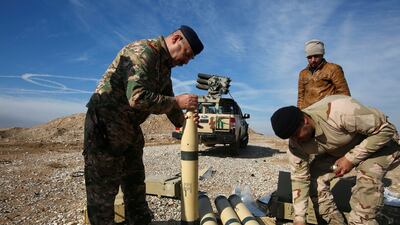
Iraqi army personnel check ammunition during clashes with ISIS militants north of Mosul on December 29, 2016. Reuters -

Members of an Iraqi special forces police unit fire at ISIS. Reuters -
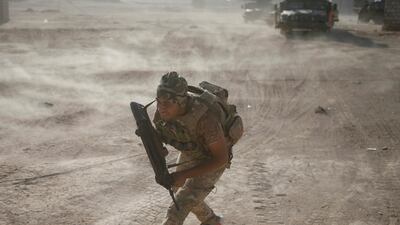
A member of the Iraqi special forces runs for cover. Reuters -
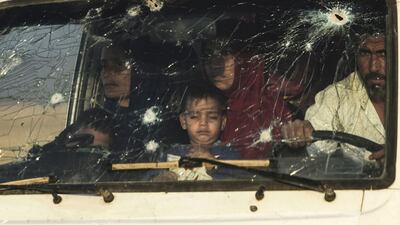
Iraqi families escape the fighting in a bullet-strewn vehicle outside Mosul. AFP -

Iraqi families seen near Qayyarah, outside Mosul. AFP -

Popular Mobilisation Forces (PMF) personnel fire artillery rounds. Reuters -
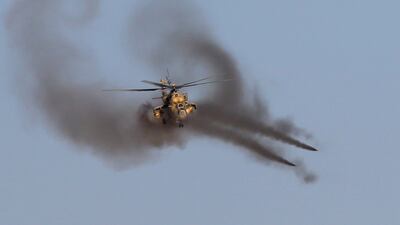
An Iraqi air force helicopter fires missiles at ISIS targets. Reuters -

Iraqi tanks advance towards ISIS positions in the Old City in western Mosul on June 18, 2017. Reuters -
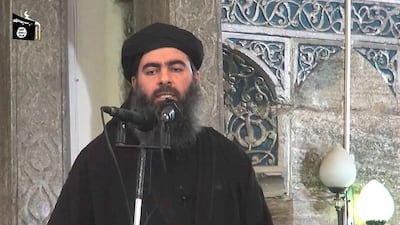
An image grab taken from an ISIS propaganda video shows Abu Bakr Al Baghdadi addressing worshippers at a mosque in Mosul in 2014. AFP -
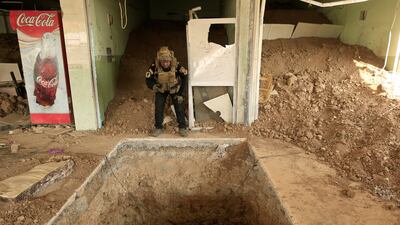
An Iraqi special forces soldier looks down the entrance of a tunnel used by ISIS fighters inside a restaurant in Bazwaya, east of Mosul. Reuters -
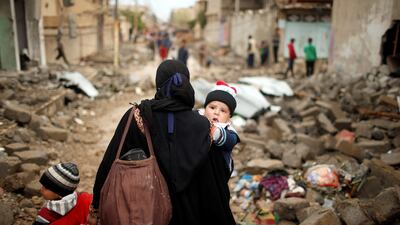
Displaced Iraqis flee their homes in western Mosul. Reuters -

Children play in Qayyara, outside Mosul, where ISIS fighters set fire to crude oil fields as they retreated in October 2016. Photo: Alessio Romenzi -
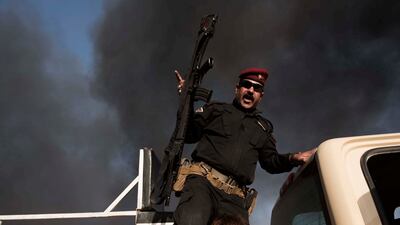
An Iraqi army soldier gestures above an accused ISIS member who tried to flee Mosul on October 31, 2016. Photo: Alessio Romenzi -

Al Nuri Mosque in Mosul, destroyed by ISIS, is being rebuilt with assistance from the UAE. Reuters -

A man cries as he carries his daughter while walking from an ISIS-controlled part of Mosul towards Iraqi special forces during a battle in Mosul, Iraq, March 4, 2017. Reuters -
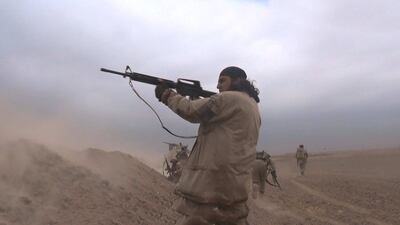
ISIS militants firing automatic weapons during a firefight outside Mosul, near Nineveh, Iraq. -

A view of Al Nuri Mosque in Mosul, Iraq, where ISIS declared a caliphate in 2014. Photo: Gus Palmer / Keo Films / Handout -
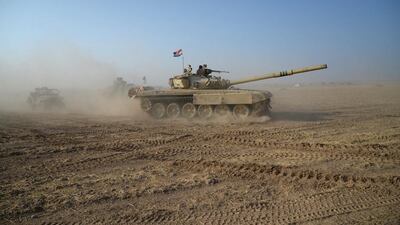
Iraqi security forces take part in an operation against ISIS in Al Shura, south of Mosul. Reuters -

Iraqi Counter-Terrorism Service making the victory gesture as members hold the black ISIS flag upside down outside the destroyed Al Nuri Mosque in the Old City of Mosul after the area was retaken. AFP -

An Iraqi forces sniper looks on as smoke billows following an air strike by US-led international coalition forces fighting ISIS in the Old City of Mosul on July 9, 2017. AFP -

A mass grave of ISIS victims in Mosul. AP -

Iraqi soldiers take cover during clashes with ISIS in Mosul. Reuters -

Counter-terrorism service troops advance towards Ghozlani military complex, south of Mosul, on February 23, 2017. Reuters


The new report said Mr Ritscher’s team found evidence of payments to the families of ISIS members killed deploying chemical weapons and records of payments for training senior operatives on the use of chemical weapons and devices to disperse such weapons.
The team said they were still assessing evidence of the use of agents.
“Evidence suggests that ISIS manufactured and produced chemical rockets and mortars, chemical ammunition for rocket-propelled grenades, chemical warheads and improvised explosive devices,” the report said. “Furthermore, the ISIS programme involved the development, testing, weaponisation and deployment of a range of agents, including aluminium phosphide, chlorine, clostridium botulinum, cyanide, nicotine, ricin and thallium sulphate.”
As for the destruction of cultural and religious sites by ISIS fighters, the team said it expanded its investigations into different Iraqi communities and focused on several areas in Nineveh and Mosul.
This has led to a preliminary inventory of over 150 Kaka’i, Shabak and Shia Turkmen sites “suspected of having been destroyed by ISIS, along with enforced displacements, disappearances and sometimes killings of members of those communities,” the team said. They also identified places of worship and heritage sites in Tikrit that were severely damaged or destroyed by ISIS.
“The evidence obtained thus far shows that religious and cultural sites were either intentionally destroyed or taken over and occupied by ISIS, sometimes for military purposes, which resulted in their severe damage or destruction,” they said.
“While the motives and methods adopted by ISIS are still being reviewed, it appears that explosives and heavy equipment were used to destroy many of the sites.”
Iraqi Christians inaugurate new bell in Mosul — in pictures
-
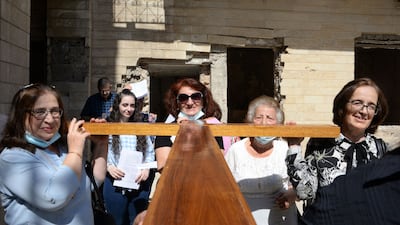
Iraqi christians carry a large cross during the inauguration ceremony for a new bell at a church in the country's second city of Mosul. AFP -
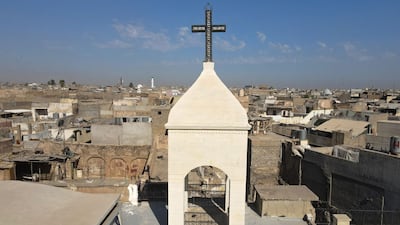
The church bell was inaugurated at the Syriac Christian church of Mar Tuma on September 18, seven years after ISIS overran the city and proclaimed it their "capital", before they were driven out three years later by the Iraqi army. AFP -
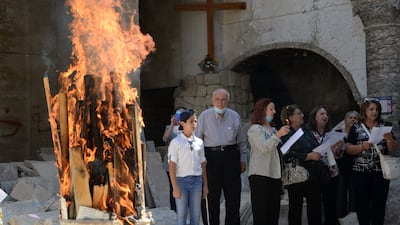
Worshippers during the inauguration ceremony for the new bell. AFP -

A priest rings the newly inaugurated bell. AFP -
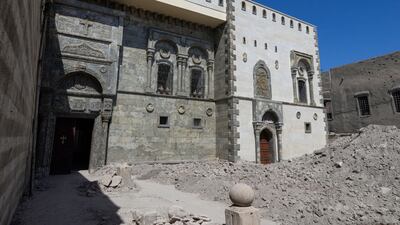
The church of Mar Tuma, which dates back to the 19th century, was used by ISIS as a prison or a court. AFP -
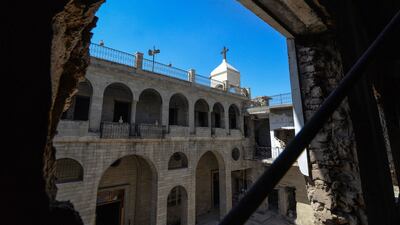
Restoration work is in progress at the church. AFP -

The new bell weighing 285 kilograms was cast in Lebanon, with donations from a charity. AFP -
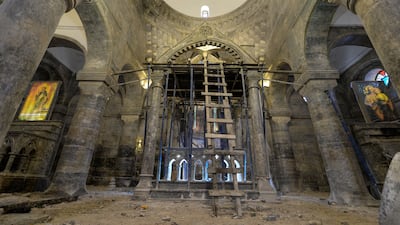
The church's marble floor is being completely redone, as part of renovations. AFP -
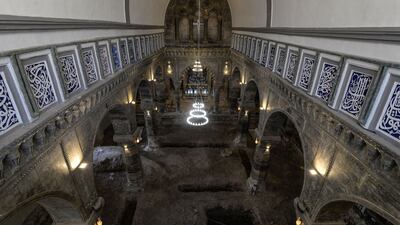
Iraq's Christian community, which numbered more than 1.5 million in 2003 before the US-led invasion, has shrunk to about 400,000, reports say. AFP


With regard to attacks on the Yazidi community in Sinjar, the team said they has expanded the list of identified perpetrators to include the names of 2,181 people, including 156 foreign fighters.
“In-depth case files have been developed in relation to 30 primary persons of interest,” they said.
The team said they had expanded the investigation into crimes by ISIS against the Sunni community in Anbar, citing progress in an investigation into the execution of hundreds of members of the Albu Nimr tribe between 2014 and 2016.
The UN investigation into the mass execution of detainees at Badush prison on June 10-11, 2014, continues, the team said. It includes interviews with additional witnesses and survivors.
This yielded “new and corroborative evidence on the circumstances under which approximately 1,000 predominantly Shia prisoners were targeted and executed by ISIS inside the prison and in various other locations,” the team said.
The team said they had also continued investigating crimes against civilians in Tikrit and Alam in 2014 and 2015, and were gathering further evidence on the mass killing of unarmed military cadets and personnel from the Tikrit Air Academy in June 2014.
In the coming months, the investigators said they plan to focus on making the transition from investigations to building cases and sharing information with Iraq to spur prosecutions and accountability.

