

Iraq's security forces will not be dragged into the political conflict the country is facing, Prime Minister Mustafa Al Kadhimi said as the Supreme Judiciary Council resumed work on Wednesday.
Supporters of Moqtada Al Sadr continued to hold their sit-in outside the judiciary's headquarters in Baghdad on Tuesday, forcing the institution to close and stoking tension between the populist cleric and his rivals, the Co-ordination Framework.
Mr Al Sadr's supporters demanded the dissolution of parliament and an end to corruption.
A Sadrist movement official, Mohammed Al Iraqi, who is known as Mr Al Sadr's minister, said on Wednesday the movement will make "a surprising step".
Mr Al Iraqi said those who criticised Tuesday's sit-in are impacted by "fear of exposing those corrupt".
"The Co-ordination Framework considers the judiciary its only protector," he said on Twitter.
Late on Tuesday, the cleric called on his followers to withdraw from the gate of the Supreme Judicial Council. However, they continued with their sit-in, which began on July 30.
On August 10, Mr Al Sadr gave the country's top court a week to dissolve parliament to end the political standoff. However, the court said it lacked the authority to do so.
The judiciary said that only lawmakers can vote to dissolve the legislature. Because the parliament has exceeded the constitutional timeline for forming a new government following the October elections, what happens next is not clear.
-
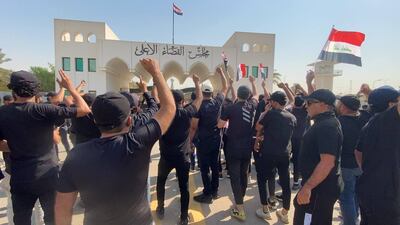
Followers of Moqtada Al Sadr have expanded their sit-in to the Supreme Judiciary Council building inside the Green Zone in Baghdad. All photos: Sadrist Media Office -
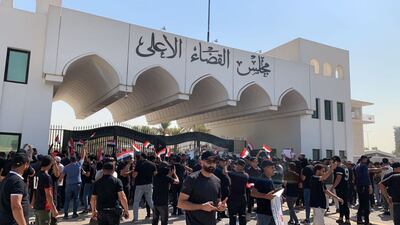
The Iraqi capital’s heavily fortified Green Zone was last month stormed by Mr Al Sadr’s supporters, who occupied the parliament building and staged a sit-in. -
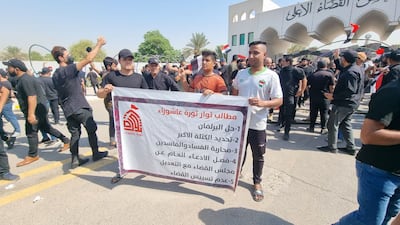
The continuing protests come amid a 10-month political impasse over forming a new government in Iraq. -

The Shiite cleric’s supporters have set up tents outside the headquarters of Iraq’s top judicial body. -
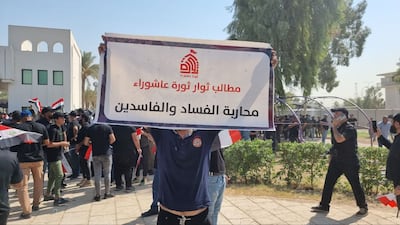
They are demanding the dissolution of the Iraqi Parliament and an end to corruption. -
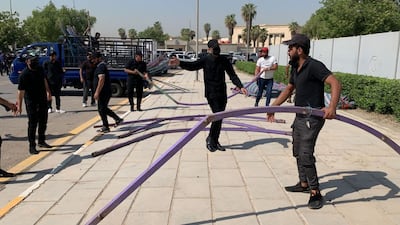
Demonstrators gathered in front of the Supreme Judicial Council early on Tuesday. -
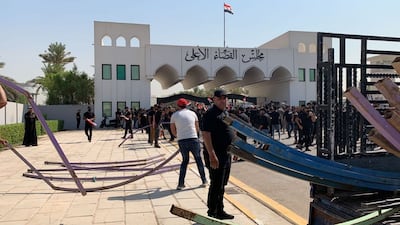
The now expanded sit-in has made it impossible for politicians to convene and proceed with the formation of a new government. -
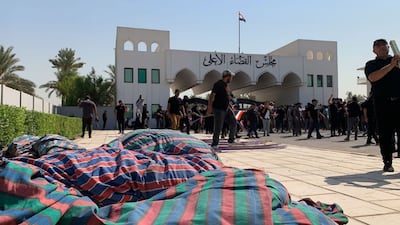
The political deadlock that has engulfed Iraq looks set to continue.


The Co-ordination Framework, an alliance of Iran-backed parties, said the parliament would have to convene to dissolve itself.
It also said political groups in the country should not get the judiciary involved in their "rivalries and political competition".
The sit-in in front of the judiciary coincided with a move by supporters of the Co-ordination Framework to hold a protest against Mr Al Sadr's followers and call for the formation of a new government after the October legislative elections.
They want a transitional government before new elections are held.
The Co-ordination Framework's supporters have been holding a sit-in of their own outside Baghdad's Green Zone and diplomatic compound where parliament is located.
The framework consists of former paramilitaries of the Iran-backed Hashed Al Shaabi network, and the party of former prime minister Nouri Al Maliki, a longtime foe of Mr Al Sadr.
The Hashed was formed to fight ISIS alongside the Iraqi army, after the extremists took over large areas in Iraq and Syria in 2014.
The fight against the terror group was claimed in 2017 and since the Hashed remains as a major security entity.
Disruption 'exposes the country to serious risks'
Meanwhile, Iraq's judiciary said anyone who stepped “outside the lines” would face harsh consequences.
Mr Kadhimi, who rushed back to Baghdad from a summit in Cairo on Tuesday, said security forces would not be dragged into political conflicts or be a part of them.
Any member of the security forces found to be in breach will face “the harshest penalties”, he said.
Mr Al Kadhimi said disrupting the work of the judiciary exposed the country to serious risks.
“[Security forces] are prevented from issuing any statements of a political nature or one that represents a transgression,” he said.
The prime minister called on all political parties "to calm down and to take advantage of the opportunity for national dialogue to get the country out of its current crisis", a statement from his office said.
-
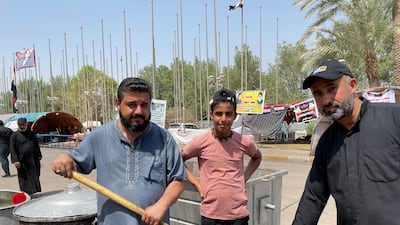
Ali Al Safi (left), 35, travelled from the southern province of Thi Qar to serve the protesters with food. All photos: Sinan Mahmoud/The National -
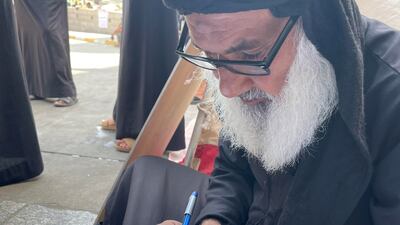
Mohammed Jassim Saad, 60, signs the lawsuit to be sent to the Supreme Federal Court in which he demands that parliament is dissolved and early elections are held. -
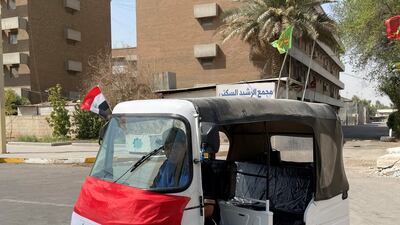
Three-wheeled rickshaws, known as tuk-tuks, shuttle followers of Shiite cleric Moqtada Al Sadr to and from the parliament building. -
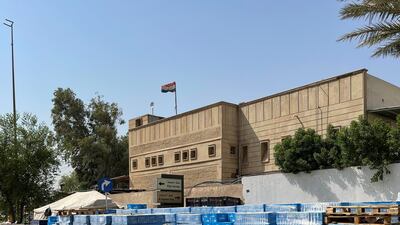
Packs of bottled water and food are stacked outside the parliament building, sent by volunteers for the protesters. -
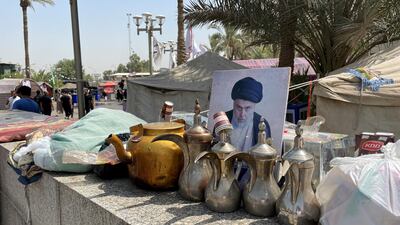
The sit-in outside the parliament is the latest chapter in Iraq’s 10-month political deadlock over forming the new government since elections in October. -
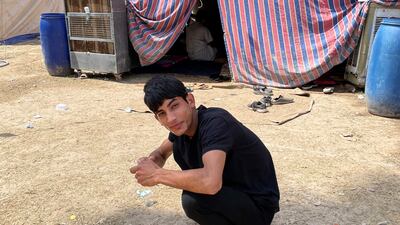
Murtadha Riyadh, 19, splashes cold water on his face to beat the heat outside the tent he and others sleep in. -
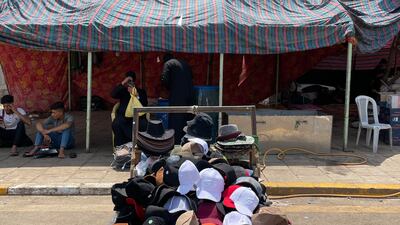
Caps are up for grabs outside the parliament. -
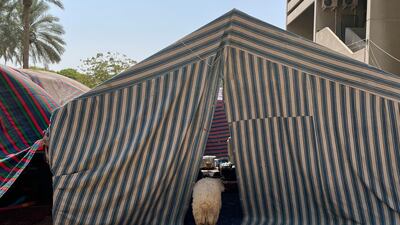
Sheep and cows are tied up outside the parliament to feed the protesters. -
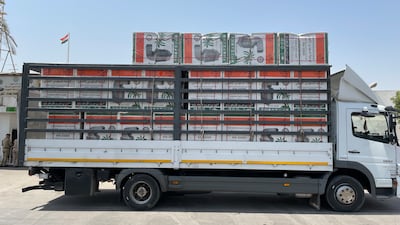
A lorry full of air coolers outside the parliament for the protesters. -
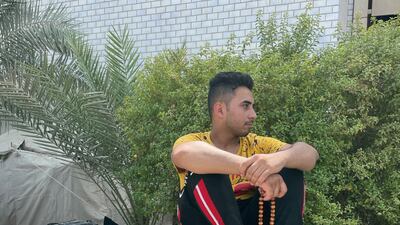
A protester sits outside the parliament next to an announcement that urges followers of Mr Al Sadr to follow his statements on Twitter. -
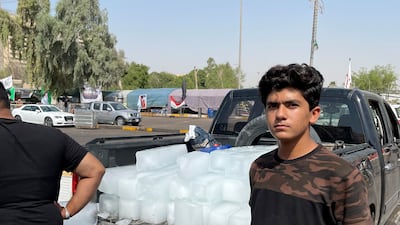
Volunteers unload ice blocks from a pick-up truck for the protesters.


The Iraqi prime minister held crisis talks with party leaders last week, but Mr Al Sadr's supporters boycotted the discussions.
It started when followers of Mr Al Sadr stormed the heavily fortified Green Zone, which houses Iraq's Parliament, government buildings and foreign embassies.
They overran and occupied the parliament, after which all sessions of the assembly were cancelled until further notice.
The takeover also effectively halted efforts by the Framework to try and form the next government after Mr Al Sadr failed to do so.
The cleric's bloc won the largest number of seats in parliament but failed to form a majority government that excluded his Iran-aligned rivals.
After the US-led invasion of 2003, Iraq has been governed under a sectarian power-sharing system that reserves the prime minister's post for the country's Shiite majority.

