


Former Iraqi prime minister Nouri Al Maliki has called for an immediate end to the occupation of parliament so his party and its allies can convene to form the next government.
Thousands of protesters loyal to Shiite cleric and political leader Moqtada Al Sadr stormed parliament on July 30, protesting against the nomination of Muhammad Al Sudani for prime minister.
Mr Al Sudani is a former Cabinet minister regarded as being close to Mr Al Maliki, a political opponent of Mr Al Sadr.
Since then, the protesters have left the parliament building itself, but remain camped outside in Baghdad's Green Zone, the seat of government power that includes offices and residences of Iraq's elites, as well as foreign embassies.
"There is no solution for parliament and no early elections without the return of parliamentary sessions," Mr Al Maliki said on Monday night.
Parliament alone "discusses these demands and what it decides we will execute", he said in a speech marking the Shiite mourning ritual of Ashura.
Mr Al Sadr has also called for early elections after withdrawing his 73 MPs from the 329-member chamber in June, in protest at what he called a corrupt political system.
That placed the rival coalition, the Iran-aligned Co-ordination Framework, in pole position to form the next government after their parties, including Mr Al Maliki’s State of Law coalition, gained Mr Al Sadr’s vacant seats.
As the sit-in continues, Mr Al Sadr said that dissolving the Iraqi parliament has become a popular demand, but Mr Al Maliki has said that few Iraqis are likely to vote in another national election.
October's elections had been called early, following an almost nationwide protest movement against the country's elite, which was met with bloody crackdowns.
-
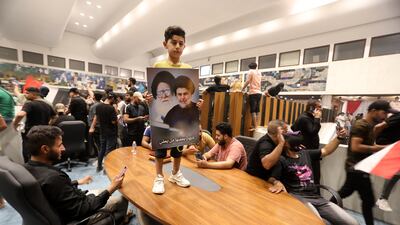
Supporters of Iraqi Shiite cleric Moqtada Al Sadr, head of the Sadrist movement, gather inside Iraq's Parliament buliding. EPA -
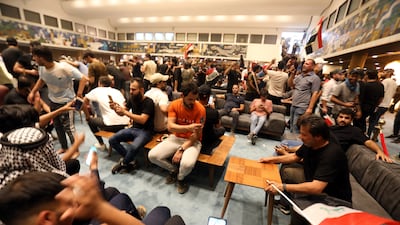
The cleric's followers enter the Parliament building in a show of force. EPA -
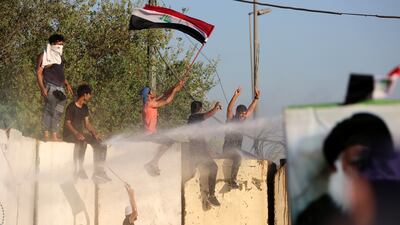
Anti-riot policemen use water cannons in a bid to disperse supporters of Mr Al Sadr. EPA -
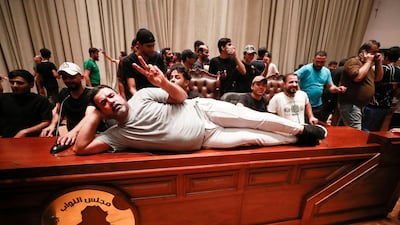
A demonstrator lies on the desk of the Speaker of the Iraqi parliament. AFP -

Supporters of Mr Al Sadr flash the victory sign as they gather inside the Iraqi Parliament. AFP -
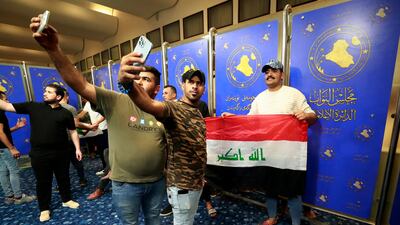
There's always time for a selfie. AFP -
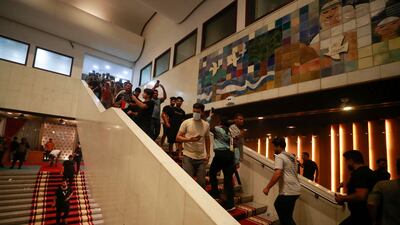
The demonstrators are protesting the recent selection of Mohammed Al Sudani as the official nominee of the Co-ordination Framework bloc. AFP -
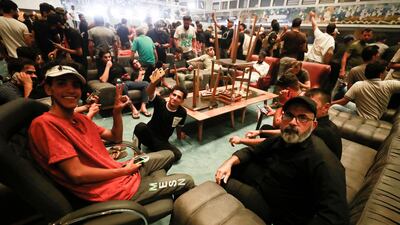
It is the largest protest since federal elections were held in October. AFP -
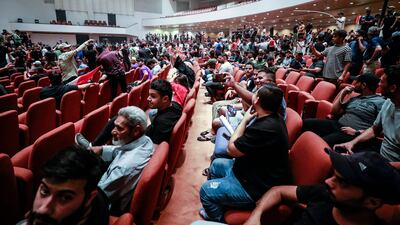
The protesters sit in the building, in Baghdad's high-security Green Zone. AFP -
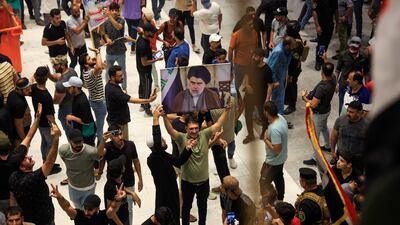
A person holds a portrait of Mr Al Sadr. Reuters -
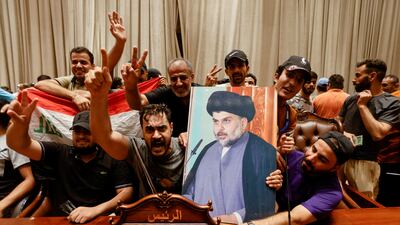
Protesters raise flags and a portrait of Mr Al Sadr. Reuters -
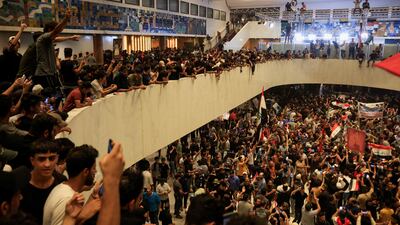
Al Sadr posted a statement on Twitter telling supporters their message had been received. Reuters -
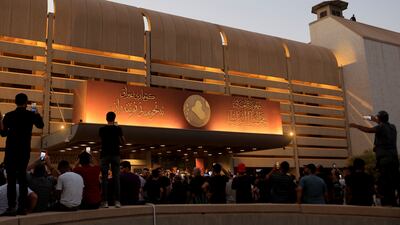
People stand outside of the Parliament building during the protest. Reuters -
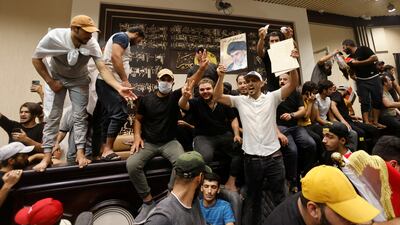
Supporters of Iraqi Shiite cleric Moqtada Al Sadr protest against corruption inside the Parliament building in Baghdad, Iraq. Reuters -
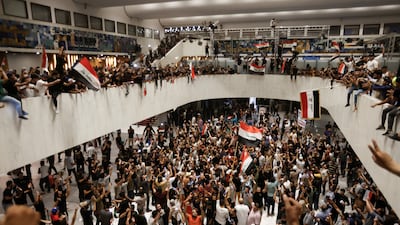
Mr Al Sadr's supporters protest against corruption inside the Parliament building in Baghdad. Reuters -
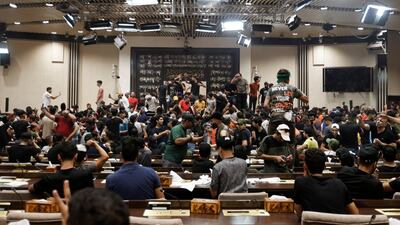
Demonstrators protest inside the Parliament building. Reuters -
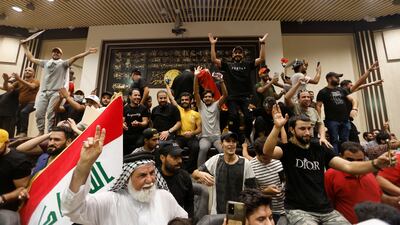
Protesters demonstrate inside the Parliament building. Reuters -
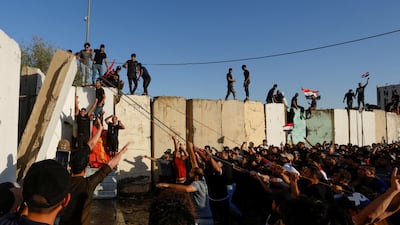
Protesters pull down a wall with chains and ropes during a protest against corruption. Reuters -
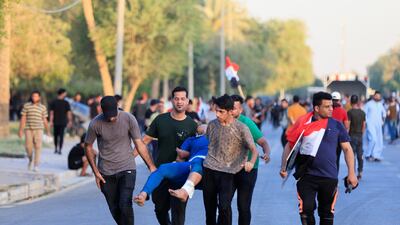
Supporters of Mr Al Sadr carry a person during a protest against corruption in the Green Zone in Baghdad. Reuters -

Iraqi security forces stand outside the main gate of Baghdad's Green Zone as demonstrators protest against the nomination of Mohammed Shia Al Sudani as prime minister. AFP -
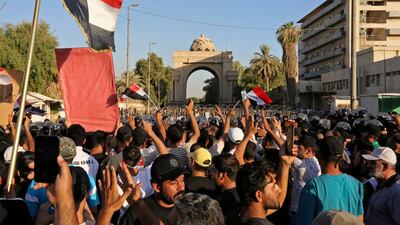
Mr Al Sadr's supporters gather outside the main gate of Baghdad's Green Zone. AFP -
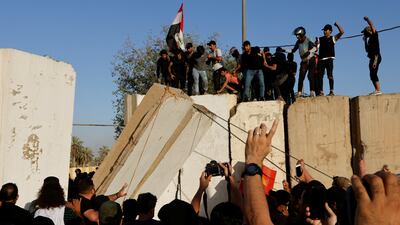
Supporters of Mr Al Sadr protest against corruption in Baghdad. Reuters -
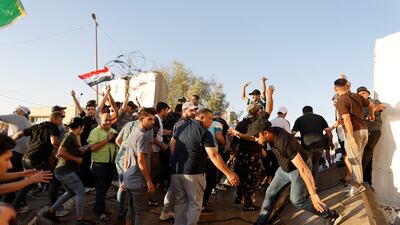
Protesters break down barricades in Baghdad. Reuters -
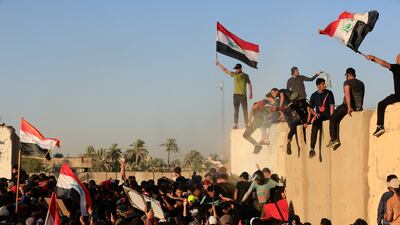
Supporters of Mr Al Sadr demonstrate in Baghdad. Reuters -
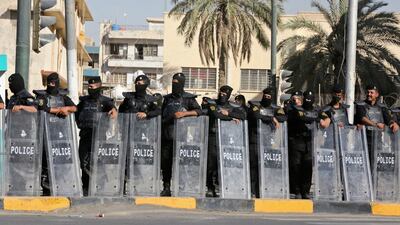
Iraqi security forces prepare to meet the demonstrators in Baghdad's Tahrir Square. AFP -

Supporters of Mr Al Sadr gather in Baghdad's Tahrir Square to protest against the nomination of Mohammed Shia Al Sudani as prime minister. AFP -
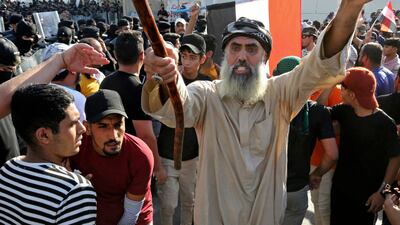
Protesters demonstrate in Baghdad. AFP -
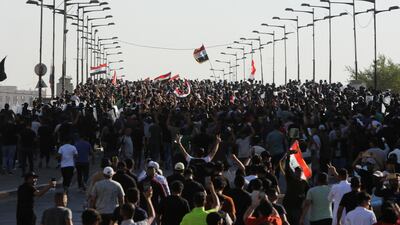
Mr Al Sadr's supporters walk across a bridge to the Green Zone during a protest against corruption in Baghdad. Reuters


The Iraqi constitution stipulates that a legislature can be dissolved only through a vote passed by an absolute majority. A vote can be requested by a third of MPs, or by the prime minister with the president's approval.
Since October’s national elections more than 10 months ago, Iraq’s political parties have been unable to form a government.
Building a government involves selecting a president first, who then announces the largest political bloc in parliament and gives them the task of nominating a prime minister, who then selects Cabinet members.
However, this process has been derailed by political bickering, including claims of electoral fraud and boycotts of parliament. These stopped the election of a president.
A row between Kurdish parties over who to select as president — the Kurds hold the presidency under an informal agreement — and a series of Supreme Court challenges made against candidates nominated by Mr Al Sadr's allies, have further prolonged this process.
Since the US-led invasion of 2003, the position of prime minister has traditionally been held by a Shiite Arab, that of parliamentary speaker by a Sunni Arab and the presidency by a Kurd.

