

Recounts of contested ballot boxes in October's elections have only affected five seats in five provinces, Iraq’s Independent High Elections Commission said on Tuesday.
The chairman of IHEC Board of Commissioners, Judge Jalil Adnan Khalaf, said the five provinces were Baghdad, Nineveh, Erbil, Basra and Kirkuk.
“We’d like to underline here that the commission has been committed in dealing with the results according to the law and in line with the will of the Iraqi people,” Mr Adnan said in a televised speech.
He called the commission’s work “professional” and said the election was “credible, fair and transparent.”
Iraqis headed to the polls on October 10 to cast their vote for a new government in an early election that was demanded by anti-government protesters.
The final results were delayed due to a lengthy manual recount launched by the commission in response to voter fraud allegations made by some parties.
Last Saturday, the electoral commission said it had finally wound up the recount of hundreds of ballot boxes.
The results announed on Tuesday will be sent to the Supreme Federal Court for ratification on Wednesday.
The political movement led by Shiite cleric Moqtada Al Sadr made major gains in the polls, securing 73 seats in the 329-member parliament.
Sunni Parliament Speaker Mohammed Al Halbousi’s Taqadum group won 37 seats, while former prime minister Nouri Al Maliki’s State of Law bloc was third with 33 seats.
Other parties and independents make up the rest of the seats, with the Kurdistan Democratic Party taking 31, the Kurdistan Alliance, 17 and Al Fatah Alliance also 17. Prominent activist party, Imtidad Movement won nine seats.
While Mr Al Sadr’s movement advanced in the polls, some pro-Iranian Shiite factions lost support, and their backers launched protests, claiming election fraud.
-
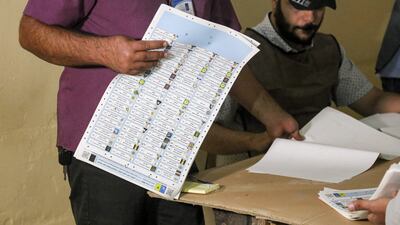
Iraqi election officials conduct a manual count of votes from a ballot box picked at random as part of the verification process for the electronic count, at a polling station in the central city of Karbala. AFP -
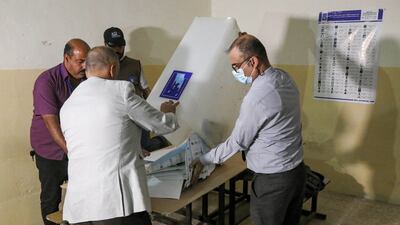
Iraqi election officials in Karbala. AFP -
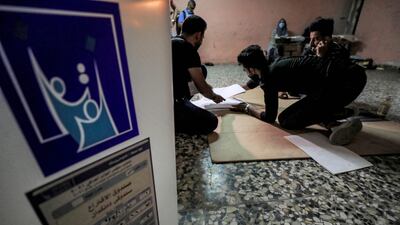
Iraqi election officials conduct a manual count of votes at a polling station in the capital Baghdad. AFP -
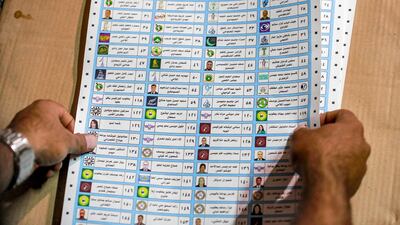
Iraqi election officials check data at a polling station in Baghdad. AFP -
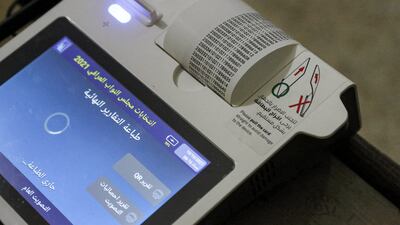
Iraqi officials print out the electronic count of votes at a polling station in Karbala. AFP -
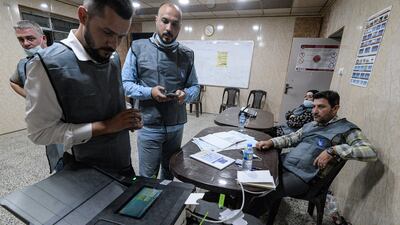
Iraqi election officials conduct the electronic count of votes at a polling station in the northern city of Mosul. AFP -
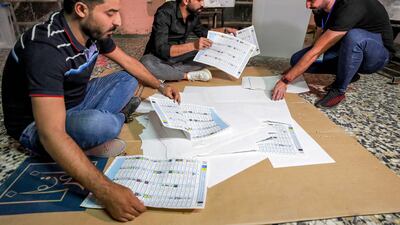
Iraqi election officials count votes at a polling station in Baghdad. AFP -
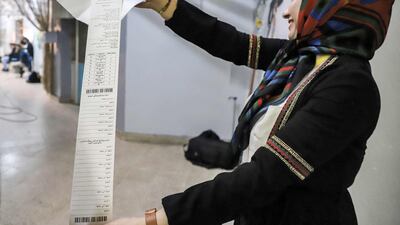
An Iraqi election official holds a printout of the electronic count of votes at a polling station in the north-eastern city of Sulaymaniyah in Iraq's autonomous Kurdistan region. AFP -

Iraqi officials print out the electronic count of votes at a polling station in the north-eastern city of Sulaymaniyah. AFP -
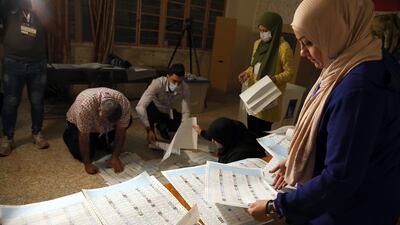
Iraqi election committee staff members count votes at the end of the parliamentary election day at a polling station in Baghdad's Karada district. EPA -
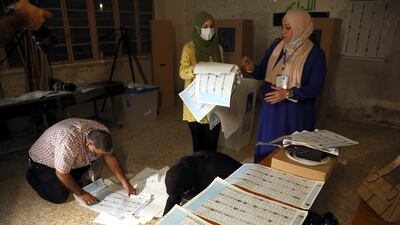
Iraqi election committee staff members count votes to elect 329 new members of the Council of Representatives. EPA -
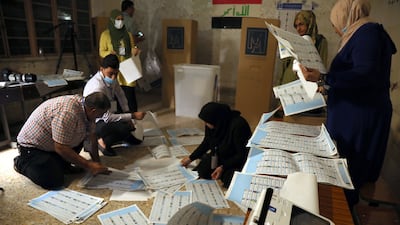
Iraq's Independent High Electoral Commission is expected to announce the results of Sunday's election within two days. EPA -
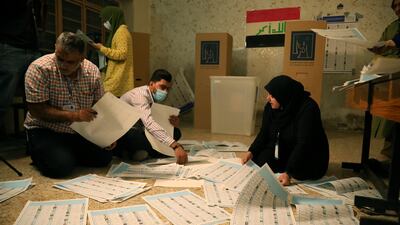
Iraqi election committee staff members count votes at the end of Sunday's parliamentary election day at a polling station in Baghdad's Karada district. EPA -
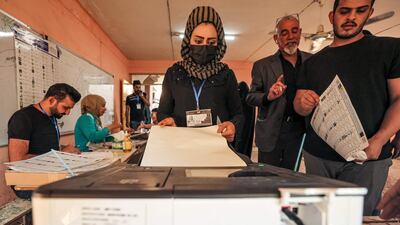
A woman voter casts her vote at a polling station in Baghdad. AFP -
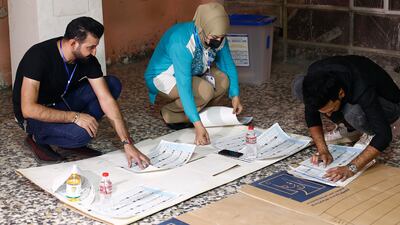
Election workers count ballots at a polling station in Baghdad at the end of voting in parliamentary elections. AP -
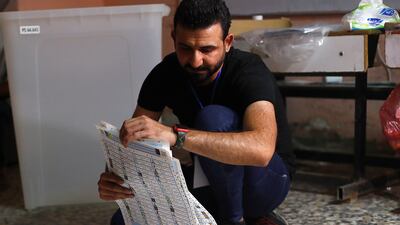
An election worker counts ballots after polls close. Parliamentary elections were held months ahead of schedule in response to a popular uprising against corruption and mismanagement. AP


The election is the fifth since the toppling of Saddam Hussein’s dictatorship by a US-led invasion in 2003.
It was originally scheduled to be held in May 2022 but was brought forward to quell public anger at the government’s lack of action to meet the demands of pro-reform protesters.
Iraq’s government formation is a lengthy process that involves complex negotiations in the country’s multi-confessional and multi-ethnic sectors. Experts say it could take months until a new government is established.

