


Iraqi activists are again demanding answers from the government about the killing of prominent security expert Hisham Al Hashimi, a year on from his death in an assassination that sparked a public outcry.
Al Hashimi was gunned down outside his Baghdad home in front of his family in July last year. His two assassins have not been caught. The government immediately opened an investigation but has yet to reveal any of its findings.
“A year has passed since the killing of Hisham Al Hashimi and so far the killers are without punishment or accountability, simply because they are supported by government agencies that carry out assassinations against activists and are immune,” Inas Jabbar, an activist from Baghdad, told The National.
The fact those responsible have not been identified “is evidence that shows those who carry out the killings are government-related entities”, she said.
Al Hashimi, 47, was a key figure in government efforts to rein in Iraq’s Shiite militias and combat ISIS. The researcher was favoured by many international news networks, who turned to him for his analysis of Iraq’s security sector and the government’s efforts to fight extremism.
Activists and friends of Al Hashimi were expected to hold a vigil for him in Baghdad’s Tahrir Square on Tuesday evening.
Al Hashimi's death shocked the public and pushed protesters to take to the streets in anger at the government.
“We were all shocked. Someone like Hisham Al Hashemi, a security expert who helped the Iraqi forces liberate the country from ISIS, is killed so easily in Baghdad, the capital,” said Mohammed Al Hassani, an activist from Karbala.
“Since 2003 Iraq has not witnessed a deterioration in the security sector as it is witnessing today,” he said.
-

Members of Iraq's Popular Mobilisation Forces take part in a parade to mark the seventh anniversary of the organisation's founding at Camp Ashraf in Diyala province. AFP -
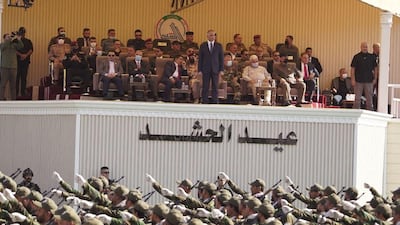
Iraq's Prime Minister Mustafa Al Kadhimi attends a parade marking the seventh anniversary of the Popular Mobilisation Forces. AFP -
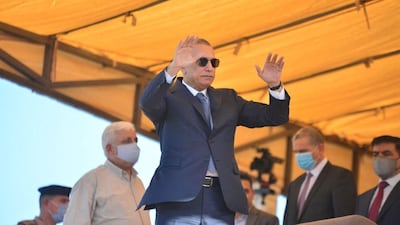
Mustafa Al Kadhimi told members of the Popular Mobilisation Forces: 'I esteem your sacrifices, and the sacrifices of the Iraqi armed forces' in fighting ISIS. He warned against sedition within PMF but did not elaborate. AFP -
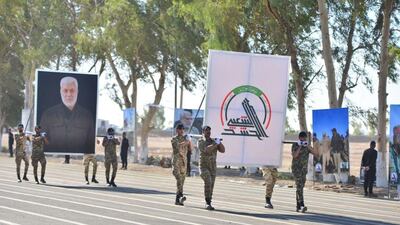
Members of Iraq's Popular Mobilisation Forces take part in a parade to mark the seventh anniversary of the organisation's founding at Camp Ashraf in Diyala province. AFP -
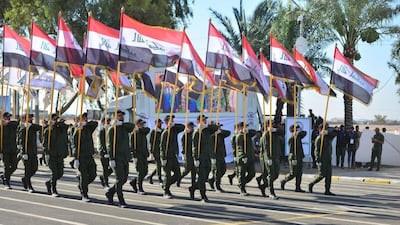
Members of Iraq's Popular Mobilisation Forces take part in a parade to mark the seventh anniversary of the organisation's founding at Camp Ashraf in Diyala province. AFP -
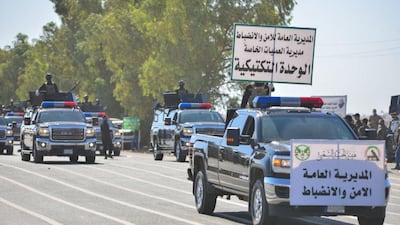
Members of Iraq's Popular Mobilisation Forces take part in a parade to mark the seventh anniversary of the organisation's founding at Camp Ashraf in Diyala province. AFP -
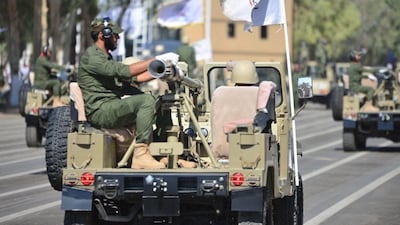
Members of Iraq's Popular Mobilisation Forces take part in a parade to mark the seventh anniversary of the organisation's founding at Camp Ashraf in Diyala province. AFP -
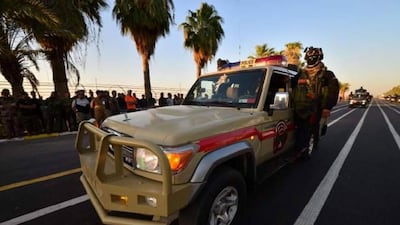
Members of Iraqi Popular Mobilisation Forces take part in a military parade in Diyala province to mark the seventh anniversary of the organisation. Reuters -
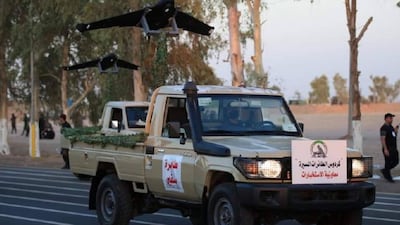
Members of Iraqi Popular Mobilisation Forces take part in a military parade in Diyala province to mark the seventh anniversary of the organisation. Reuters -
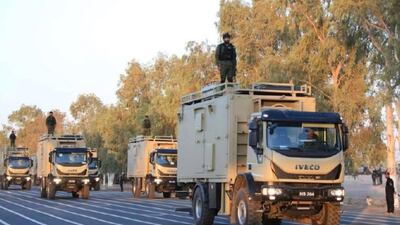
Members of Iraqi Popular Mobilisation Forces take part in a military parade in Diyala province to mark the seventh anniversary of the organisation. Reuters -
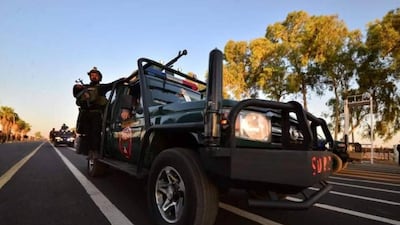
Members of Iraqi Popular Mobilisation Forces take part in a military parade in Diyala province to mark the seventh anniversary of the organisation. Reuters -

Members of Iraqi Popular Mobilisation Forces take part in a military parade in Diyala province to mark the seventh anniversary of the organisation. Reuters


Many activists are concerned for their safety because of the increase in targeted killings and feel the government is incapable of protecting them.
“I’m sometimes afraid to go out, I fear for my life, my family, friends and anyone who knows me,” Hassan Ahmed, an anti-government protester, told The National.
“Hisham’s death was a reminder of how bad the security situation is, it’s getting worse and worse by the day and yet the killers are still free,” he said.
Iraq has suffered a new wave of assassinations in recent months. In May, prominent activist Ihab Al Wazni was killed in the central city of Karbala by unknown gunmen. He was known as the "Hero of Karbala".

At the end of May the government arrested militia leader Qassem Musleh, who they accused of being behind several high-profile assassinations of activists and protesters. He was later released by the judiciary for lack of evidence.
“Although we witnessed several attempts by Prime Minister Mustafa Al Kadhimi to arrest some of those accused of the assassination, the pressure by militias on him were far greater than his authority as prime minister,” Ms Jabbar said.
“These attempts put Iraq in a category of a state that is incapable of maintaining any rights, and the perpetrators of these crimes will remain free,” she said.

