


Israel's top general on Tuesday raised the prospect of action against Iran, despite National Security Adviser Tzachi Hanegbi playing down any immediate threat from a new underground nuclear centre being built by Tehran.
Efforts by world powers to negotiate new limits on Iranian uranium enrichment and other projects have been fruitless so far, fanning threats by Israel to resort to force if it considers diplomacy to be at a dead end.
"Iran has advanced with uranium enrichment further than ever before … there are negative developments on the horizon that could bring about [military] action," Lt Gen Herzi Halevi, chief of Israel's armed forces, said in a speech.
He did not detail what those developments might be, or what action might be taken and by whom.
"We have capabilities and others also have capabilities," Gen Halevi told the Herzliya Conference, an international security forum, apparently referring to the US.
Experts are divided over whether the Israeli military has the ability to deal lasting damage to Iranian nuclear centres that are distant, dispersed and defended.
Iran's nuclear programme - in pictures
-
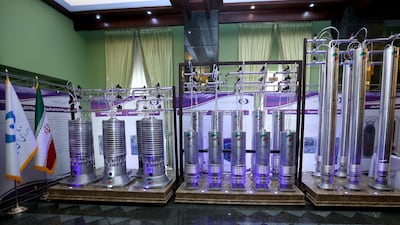
New generation Iranian centrifuges on display for Iran's National Nuclear Energy Day in Tehran, in April 2021. Iranian Presidency Office / Wana -

President Ebrahim Raisi, second right, is accompanied by Atomic Energy Organisation of Iran chief Mohammad Eslami, at Nuclear Technology Day in Tehran in April 2022. Iranian presidency / AFP -
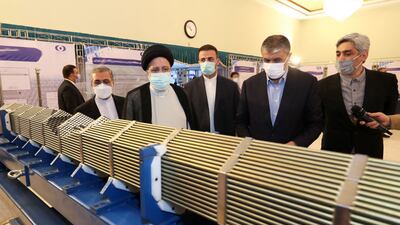
Mr Raisi and Mr Eslami at the April 2022 event. Iranian presidency / AFP -
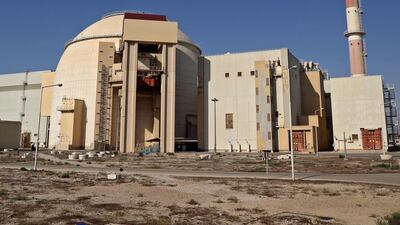
The Bushehr Nuclear Power Plant during a visit by Mr Raisi in October 2021. Iranian Presidency / AFP -
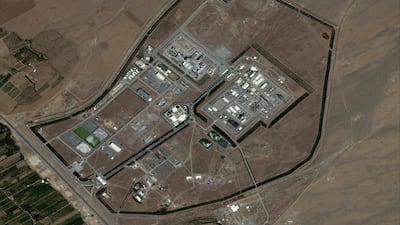
Iran's Arak Heavy Water Reactor complex, south of the capital Tehran in January 2020. Maxar Technologies / AFP -
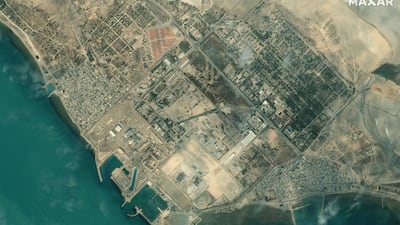
A satellite image of Iran's Bushehr Nuclear Power Plant in January 2020. Maxar Technologies / AFP -
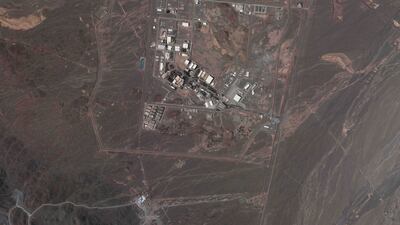
A satellite image of Iran's underground Natanz nuclear site in May 2022. Planet Labs PBC / AP -
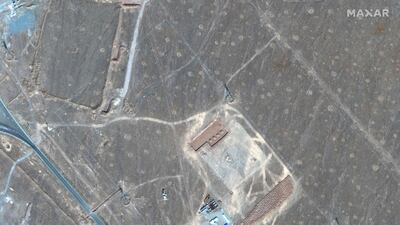
A satellite image in January 2020 of Iran's Fordow Fuel Enrichment Plant, north-east of the city of Qom. Maxar Technologies / AFP -
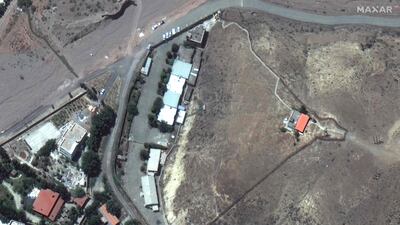
The Sanjarian nuclear centre, east of Tehran, in May 2021. Maxar Technologies / AFP


Iran denies wanting a nuclear bomb and has pledged devastating reprisals for any attack.
There has been speculation that Israel might use countries on Iran's borders as springboards for strikes.
One such country, Azerbaijan, dismissed that idea despite its strong ties with Israel.
"We refrain from interfering in the disputes or problems [of other countries], including by allowing or giving our territory for some operations or adventures," deputy Azeri foreign minister Fariz Rzayev said at the conference.
AP on Monday reported that Iran was building a new underground site in the Zagros Mountains to replace an exposed uranium centrifuge plant at nearby Natanz that was hit by an explosion and fire in July 2020.
US and Israel pledge to deny Iran nuclear weapons - video
"This, of course, limits the capacity to carry out an attack, relative to above-ground facilities, which is of course easier," Mr Hanegbi told the conference.
"But what can be said about this matter is that there is nowhere that cannot be reached."
After the 2020 incident, Iran announced in 2021 that it was working to move some of its centrifuge plants into the "heart of the mountain near Natanz", an area where Iranian engineers have long carried out excavation work.
Mr Hanegbi declined to explicitly threaten an attack by Israel and even suggested the onus would be on the US, saying it has massive GBU-43/B bombs that Israel does not.
In any event, he said: "This [underground centre near Natanz] is years away from being completed."
Although Washington prefers to pursue diplomacy with Iran, the allies see "eye to eye" and have no significant difference on possible red lines for last-resort military action, Mr Hanegbi said.

