

More than 300 people were indicted on Monday for participating in Iran's women-led protests, with four possibly facing the death penalty, the country's judiciary said.
Protests against the Iranian regime turned violent at the weekend at Tehran's Sharif University of Technology, when a group of demonstrating female students clashed with counter-protesters.
The violence comes amid weeks-long anti-government protests triggered by the death of 22-year-old Mahsa Amini in morality police custody.
Indictments have been issued for 315 people for “congregating and colluding with the intention of acting against the country's security”, “propaganda against the system” and “disturbing public order”, the judiciary's Mizan Online news website cited Tehran prosecutor Ali Salehi as saying.
Mr Salehi said “indictments were also issued for four rioters on charges of moharebeh” — or “war against God” — a charge that can carry a death sentence.
The rioters are accused of “using a weapon to terrorise the society and people, injuring security officers, setting fire to and destroying public and government property with the intent to disrupt the country's security and confronting the holy system of the Islamic Republic of Iran”, he said.
The development comes as Iran's “morality police” have been filmed beating protesters and firing shotguns into crowds.
Demonstrations around the world have been held in solidarity with Iran's protest movement, with marches taking place in New York, London and Berlin.
-
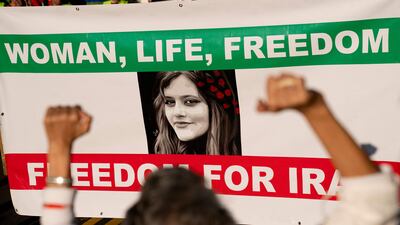
Demonstrators chant slogans during the March of Solidarity for Iran in Washington. AFP -
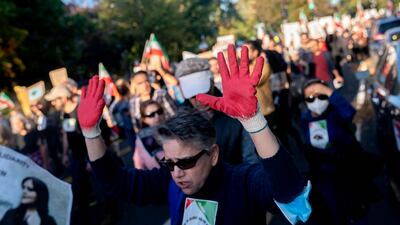
Another group of demonstrators at the march. AFP -
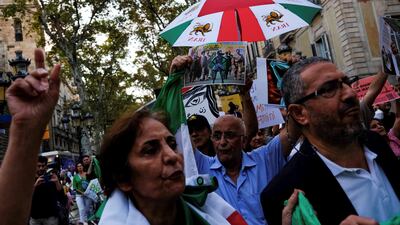
A protest in support of Iranian women in Barcelona. Reuters -
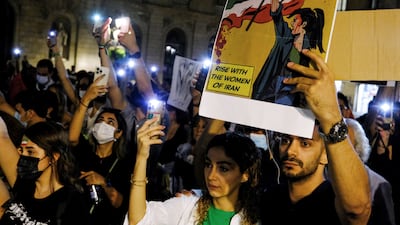
Iranian citizens and locals joined in the Barcelona protest. Reuters -
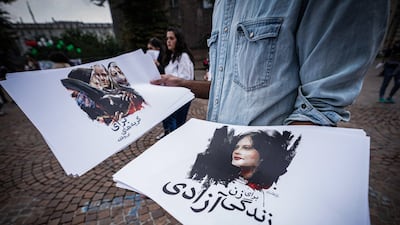
People attend a demonstration in solidarity with Mahsa Amini and other Iranian women in Castello Square, Turin. EPA -
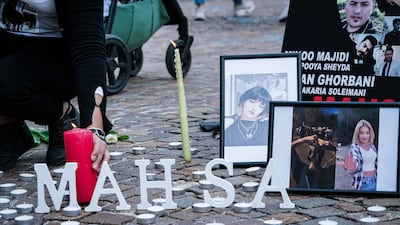
A person places a candle during the demonstration in Turin. EPA -
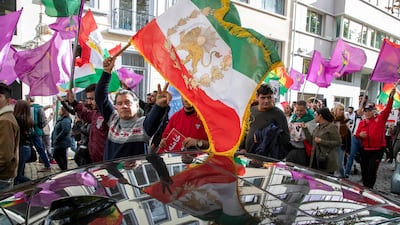
A protester holds a pre-Islamic Revolution Iranian flag during a demonstration in Brussels in support of the Iranians fighting for their freedom. AFP -
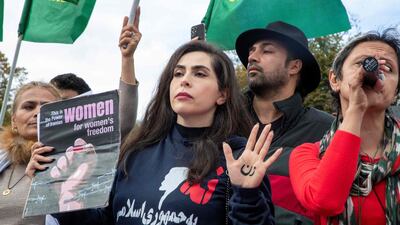
A protester wearing a top with a logo that reads 'No to an Islamic state" as she takes part in a rally in support of the Iranian people, in Brussels. AFP -
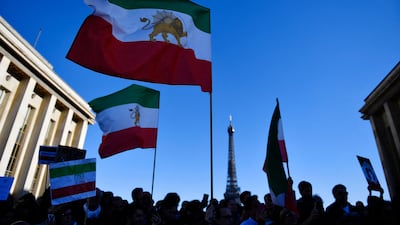
People wave the Shah-era Iranian flag during a protest in Paris. AFP -
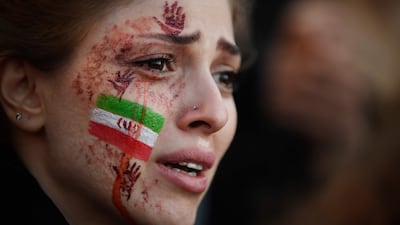
A woman shows her true colours in the protest against the Iranian government, in Paris. AFP -
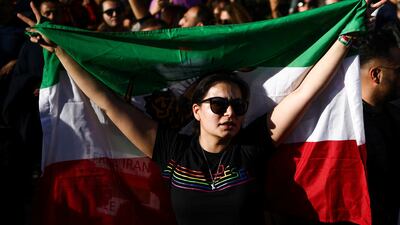
A woman holds a flag, as people protest against the Iranian regime outside Iran's embassy in central London. Reuters -
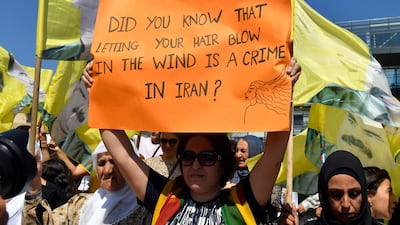
Supporters of the Kurdistan Workers' Party (PKK) carry placards and wave party flags in Beirut, during a protest against the death of Ms Amini. EPA -
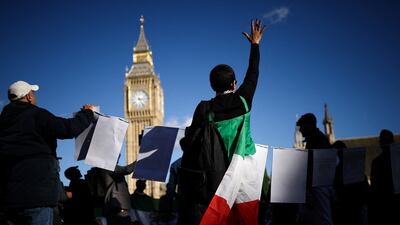
People demonstrate against the Iranian government outside the Houses of Parliament in London following the death of Amini. Reuters -
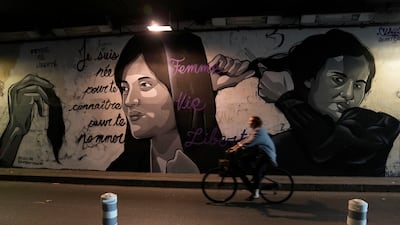
A mural in Paris depicts women cutting their hair to show support for Iranian protesters. AP -
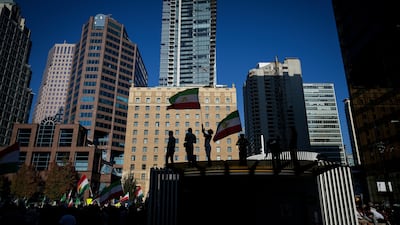
People take part in a rally against the Iranian government in Vancouver, Canada, on Saturday. AP -
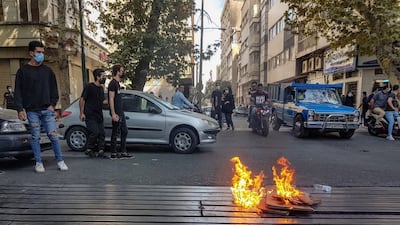
Protesters take to the streets of Tehran. EPA -
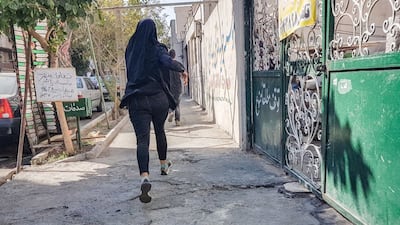
Iranian protesters run after clashing with with police. EPA -
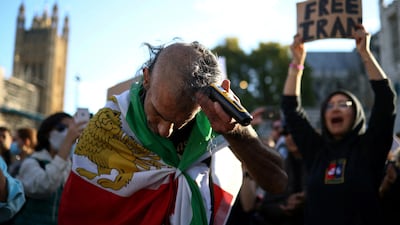
A protester shaves their head outside the Houses of Parliament in London. Reuters -
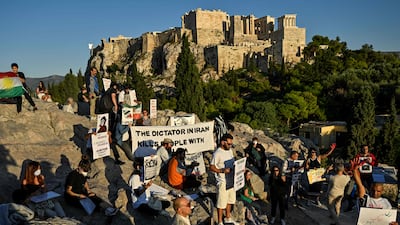
Iranians living in Athens hold a protest in solidarity. AFP -
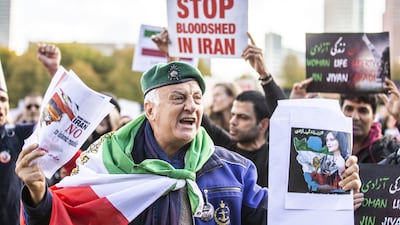
People take part in a rally in The Hague. AFP -
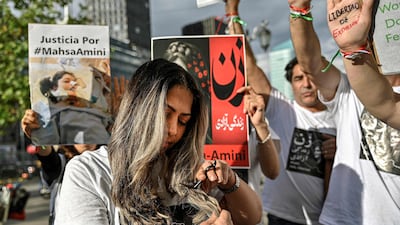
A woman cuts her hair during a demonstration in Santiago, Chile, by feminist groups and Iranian migrants in support of Iranian women following the death of Amini. AFP -
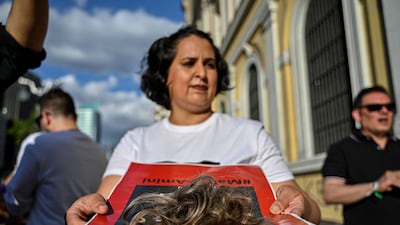
Members of feminist groups and Iranian migrants during the protests in Santiago. AFP -
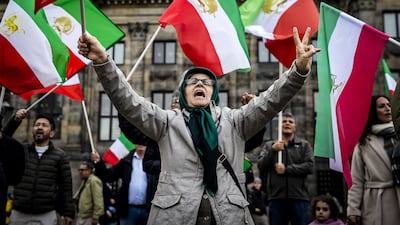
Iranian activists shout slogans during a protest against the government in Tehran, in Amsterdam, The Netherlands. EPA -
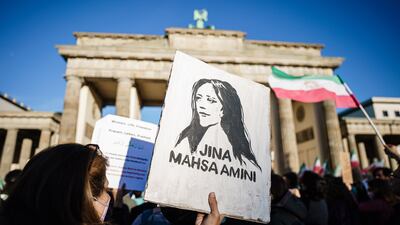
A protester holds a painted portrait of Mahsa Amini in Berlin, Germany. EPA -
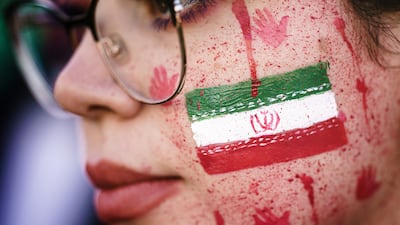
A protester shows red paint on her face, resembling blood splatters and bloody handprints next to the national Iranian emblem, during a rally in Berlin. EPA -
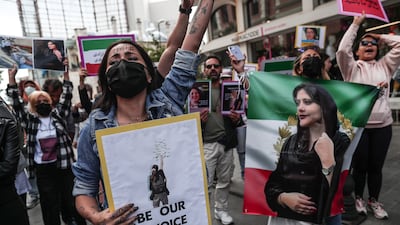
Iranian protesters shout slogan during a protest in Istanbul, Turkey. EPA -
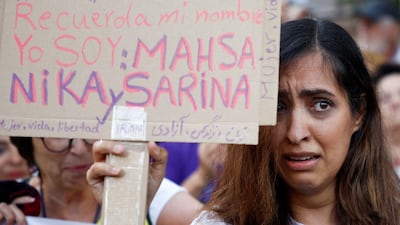
A woman holds a sign during a protest against the Iranian government, in front of the country's embassy in Madrid, Spain. The protests were triggered by the death of a young Iranian woman, Mahsa Amini, in police custody. Reuters -
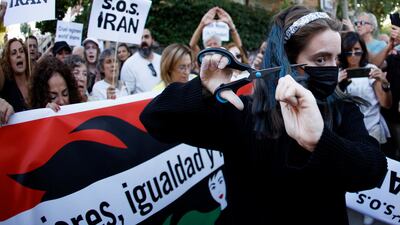
A woman cuts her hair during the protest in front of the Iranian embassy in Madrid. Reuters -
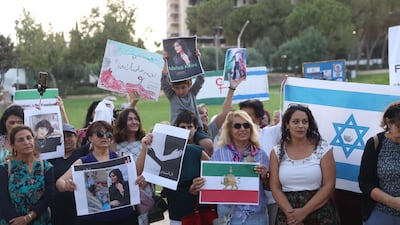
Israelis show their support for women in Iran as they hold up placards of Amini during a protest in Jerusalem. EPA -
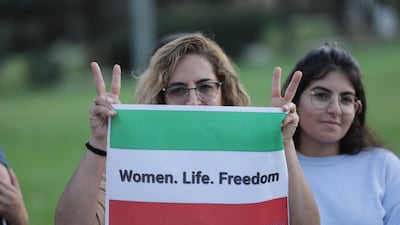
Amini, 22, was arrested in Tehran on September 13, 2022, by the morality police. She fell into a coma while in police custody and was declared dead on September 16. EPA -
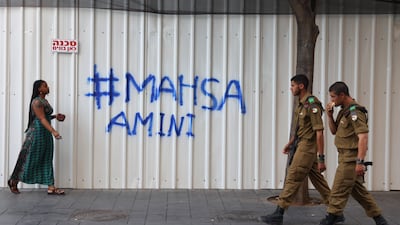
People walk by graffiti in support of the protests triggered by Amini's death, in Jerusalem. EPA -
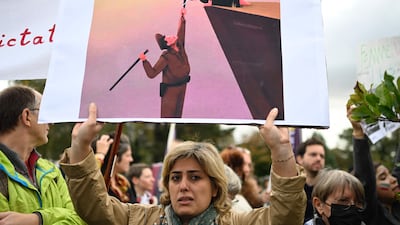
A protest in Nantes, western France, after the death of Amini in Iranian police custody. AFP -
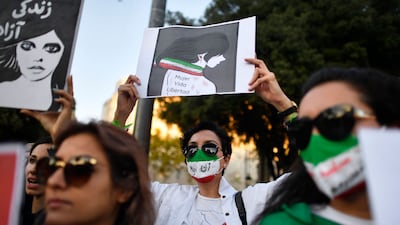
Women gather for a demonstration in Barcelona, Spain. AFP -
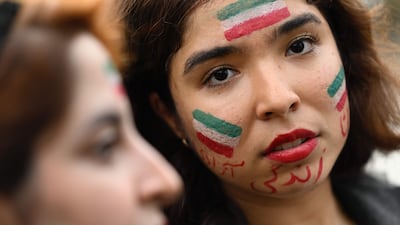
Demonstrators in Nantes. Amini's death has sparked a global protest movement. AFP -
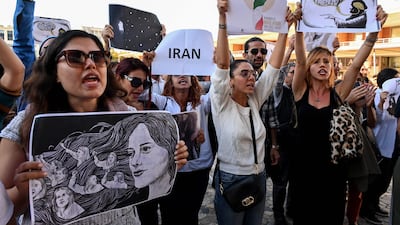
Women protest outside the town hall in in Montpellier, southern France. AFP -
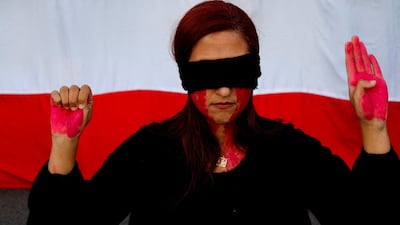
A woman at a protest in Catalunya Square, Barcelona. Reuters -
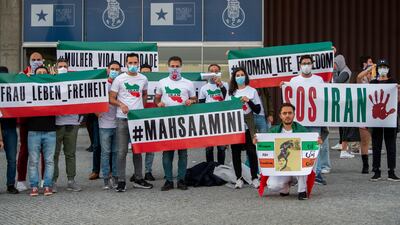
Campaigners and football fans protest at a Champions League match between Porto and Bayer Leverkusen at the Dragao stadium in Portugal. EPA -
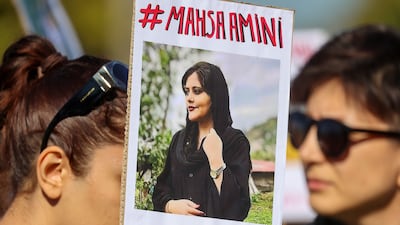
People hold placards during a demonstration in solidarity with the Iranian people near the European Parliament in Strasbourg, France. EPA -
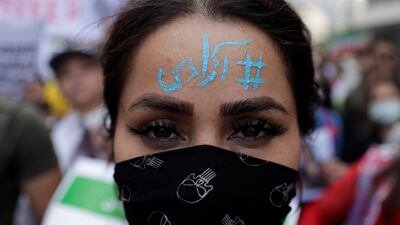
An Iranian woman living in Turkey with 'Freedom' written on her forehead takes part in a protest near the Iranian consulate in Istanbul. Reuters -
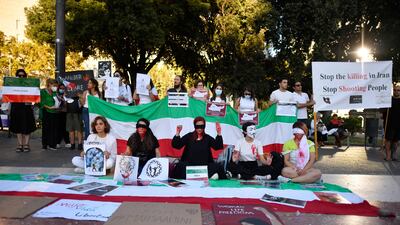
In Barcelona, protesters take part in a demonstration in support of Iranian women. AFP -
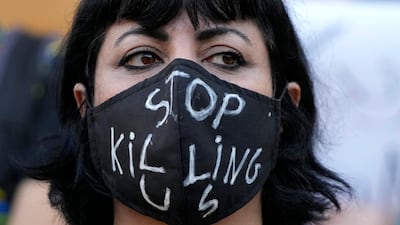
A Lebanese activist takes part in a protest in Beirut, triggered by the death of Amini, 22. AP -
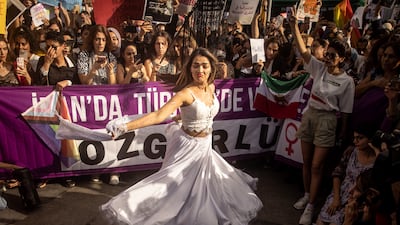
A Turkish protester takes off her head scarf while giving a performance in Instanbul during a protest against Iran over Amini's death. Getty -

A woman in Istanbul cuts her hair during a protest against Iran. Getty -
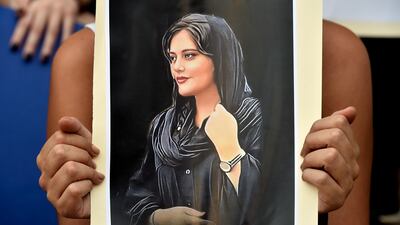
A Lebanese activist holds a poster depicting Amini during a protest in Beirut organised by feminist groups in support of women protesters in Iran. EPA -
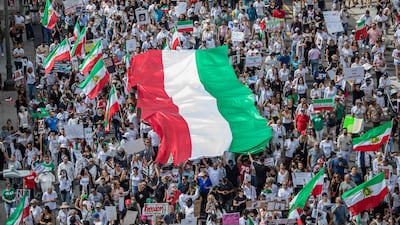
Demonstrators in Los Angeles, California, hold the Iranian flag during a protest against the government in Tehran. AFP -
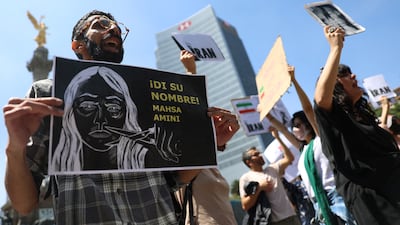
Demonstrators hold placards in Mexico City during a protest against Iran. Reuters -
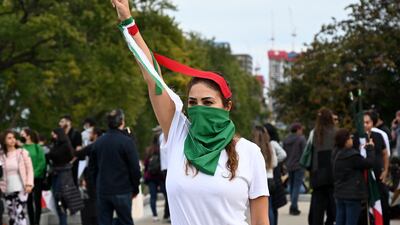
People demonstrate in Montreal, Canada, during a protest triggered by Amini's death. AFP -
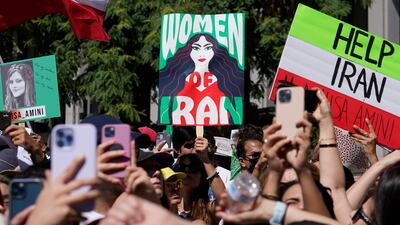
Iranian Americans participate in a rally in central Los Angeles, in solidarity with women in Iran. AP -
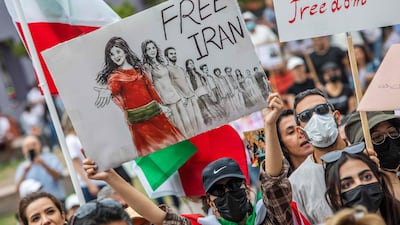
Demonstrators march during a protest in Los Angeles, California. AFP -
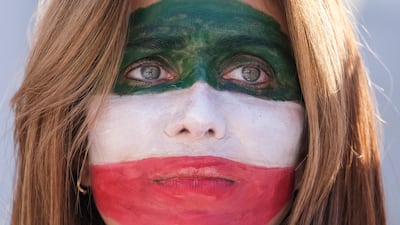
A woman with the colours of the Iranian flag painted on her face participates in a rally as thousands demonstrate in support of Iranian women in Los Angeles. EPA -
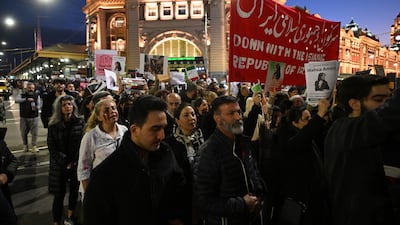
Australians protest over Amini's death in Melbourne. EPA -
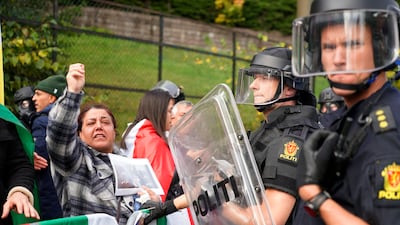
Police block protesters from entering Iran's embassy in Oslo, Norway. EPA -
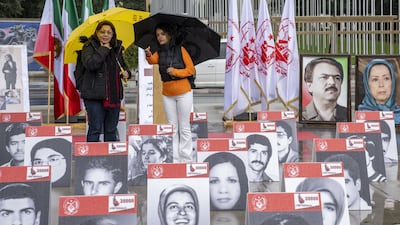
Demonstrators in front of the European headquarters of the UN in Geneva, Switzerland, during a rally against Iran. EPA -
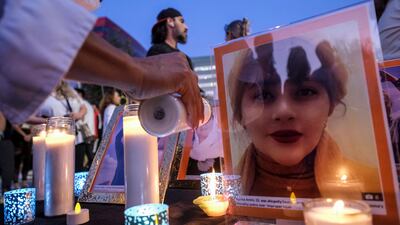
A candlelight vigil for Amini in Los Angeles. AFP -
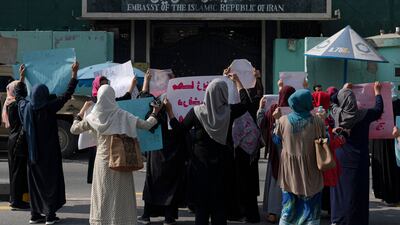
Afghan women hold placards as they take part in a protest in front of the Iranian embassy in Kabul. AFP -
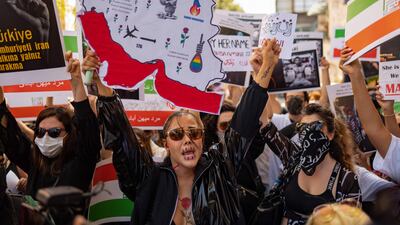
Protestors take part in a rally outside the Iranian consulate in Istanbul. AFP -
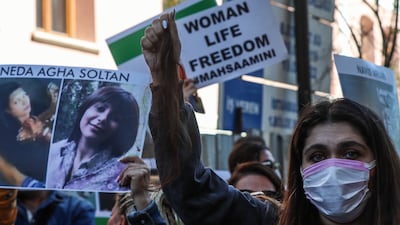
An Iranian woman shows a lock of hair she cut off during a protest outside the Iranian consulate in Istanbul. EPA -
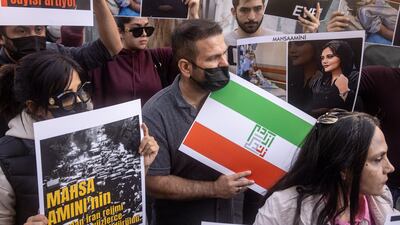
Demonstrators outside the Iranian consulate in Istanbul. Getty -
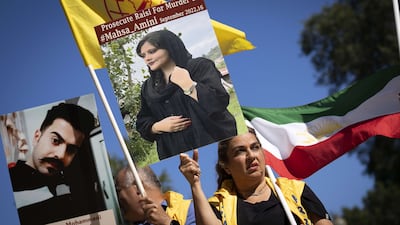
Iranian Americans rally on Capitol Hill in Washington to show support for protesters in Iran. AFP -
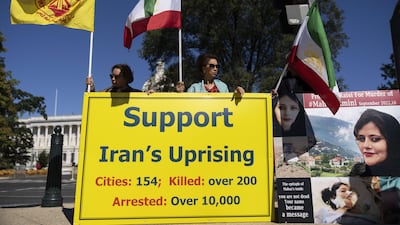
Protesters on Capitol Hill hold a sign condemning the crackdown by Tehran. AFP -
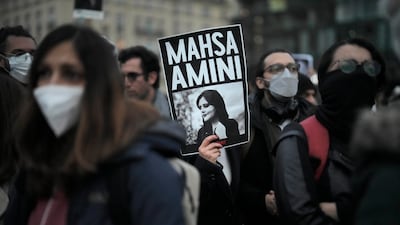
German demonstrators gather in Berlin after the death of Amini in Iranian police custody. AP -
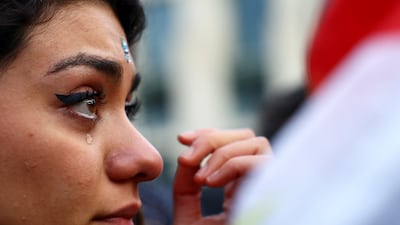
A protester cries during a rally in Berlin. Reuters -
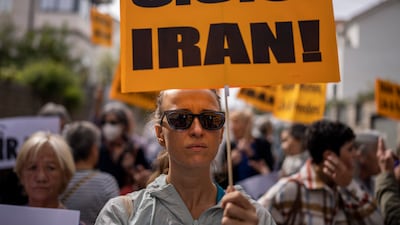
A demonstration in Madrid, Spain. Thousands have gathered in cities across Europe to support protests in Iran. AP -
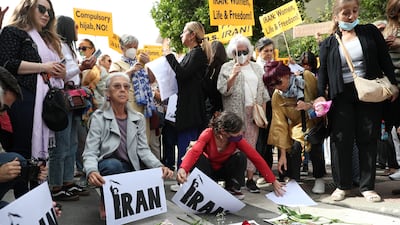
Demonstrators gather outside the Iranian embassy in Madrid. Reuters -
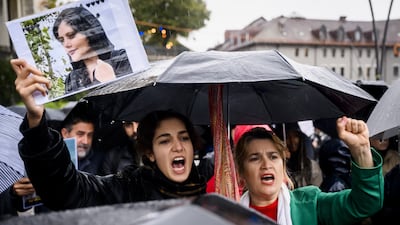
People take part in a protest in Lausanne, Switzerland. EPA -
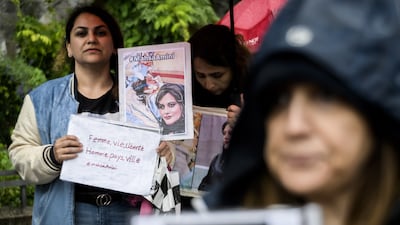
Protesters hold signs featuring images of Amini during the protest in the western Swiss city. EPA -
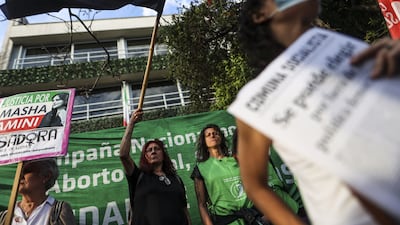
Demonstrators in front of the Iranian embassy in Buenos Aires, Argentina. EPA -
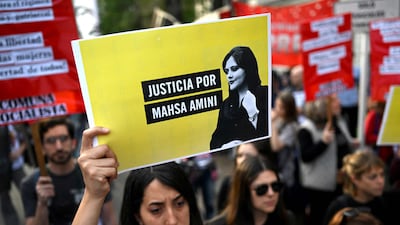
An activist outside the Iranian embassy in Buenos Aires, Argentina, with a sign that reads 'Justice for Mahsa Amini'. AFP -
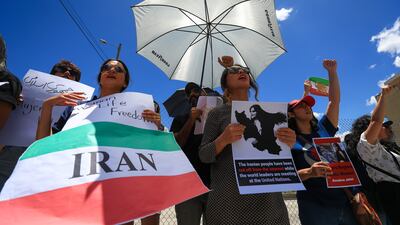
A demonstration against violence in Iran is held in Quito, Ecuador. The Iranian community in Ecuador protested outside the Iranian embassy. EPA -
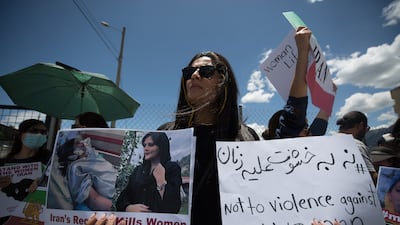
Protesters at a demonstration outside the Iranian embassy in Quito, Ecuador. EPA


Rights groups said more than 200 people have been killed since the protests began as security forces clamp down on the largest anti-government movement since 2019, when more than 200 died in what is now referred to as Bloody November.
Classes at Sharif University of Technology were suspended and moved online earlier this month after clashes between students and security forces.
Tasnim news agency reported that when classes resumed on Saturday, “a number of female students entered the men's dining hall after removing their hijab”, breaching Iran's rules on gender segregation in some public spaces and mandatory headscarves for women.
On Sunday, another group of students “held a rally … protesting against the insults and desecration that had occurred at the university”, Tasnim said.
The students, who waved the Iranian flag, called on the university's administration “to deal with lawlessness and violation of norms” on its campus, the report said.
A separate group of students “chanted vulgar slogans, broke the door and windows of the dining hall and threw them towards the students inside”, Tasnim said. It added that “some students and university security personnel” were injured.
The news agency published a video purportedly showing students kicking the door to the dining hall as others blocked it from inside.
The university said on Sunday that it had barred entry to “a small number of students” over their role in “creating an uneasy atmosphere”, local media reported.
The students were “temporarily banned from attending the university for their own benefit and for the benefit of the university”, Shargh newspaper quoted the statement as saying.
On October 2, riot police confronted about 200 students who gathered at the university and chanted slogans against authorities, Mehr news agency reported.
The security forces used tear gas and paintballs, while police officers were armed with weapons that shoot non-lethal steel pellets, Mehr reported.
Deputy Interior Minister Majid Mirahmadi said on Saturday that protests in universities and elsewhere had subsided.
“There are various gatherings in some universities, which are decreasing every day, and the riots are going through their final days,” state news agency IRNA quoted Mr Mirahmadi as saying.

