


Iranian Foreign Minister Hossein Amirabdollahian will hold nuclear-deal talks in Moscow on Tuesday as Tehran said Washington must make a final decision on the agreement.
Mr Amirabdollahian’s trip to Russia comes as discussions have been stalled following new demands from Moscow.
He will “go to Moscow on Tuesday” to continue discussions on the nuclear deal, said Iranian Foreign Ministry spokesman Saeed Khatibzadeh.
“We are not at a point of announcing an agreement now since there are some important open issues that need to be decided upon by Washington,” Mr Khatibzadeh said.
Still, Iranian officials seemed cautiously optimistic in assessing the future of the negotiations, which have lasted 11 months.
Iranian officials will remain in Vienna until their “legal and logical” demands are met and a “strong agreement is reached” Ali Shamkhani, secretary of the Supreme National Security Council, which makes the decisions in the Vienna talks, said in a tweet.
-
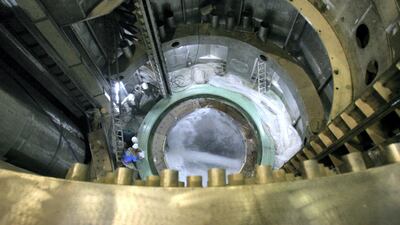
Russian contractors work at the Bushehr nuclear reactor site in 2007. The plant opened four years later. Bloomberg -
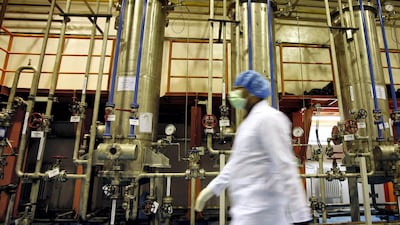
An Iranian technician at the International Atomic Energy Agency inspects the country's Isfahan plant in 2007. Tehran is no longer co-operating with the agency at nuclear sites across the country. EPA -

Workers wait to begin constructing a second reactor at the Bushehr nuclear power plant in 2019. AFP -
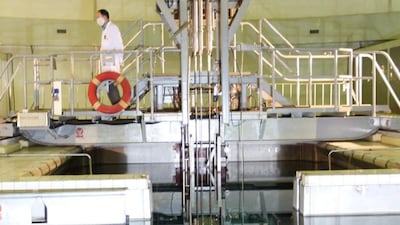
A metal-encased rod with 20 per cent enriched nuclear fuel is inserted into a reactor in Tehran in 2012. AFP -
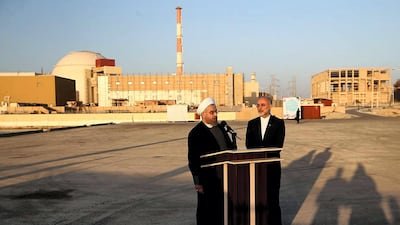
Fomer Iranian President Hassan Rouhani and the country's Atomic Energy Organisation chief Ali Akbar Salehi speak at the Bushehr nuclear site in 2015. AFP -
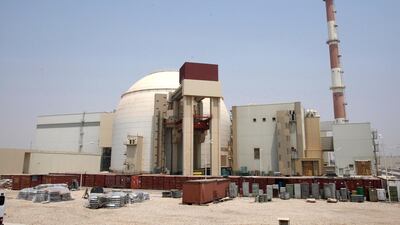
Iran's Bushehr nuclear plant has been restarted. EPA -
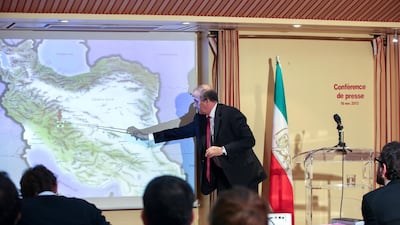
Mehdi Abrichamtchi, chairman of the Peace and Security Committee at the National Council of Resistance of Iran, shows journalists the location of a secret nuclear site in Iran in 2013. AFP -
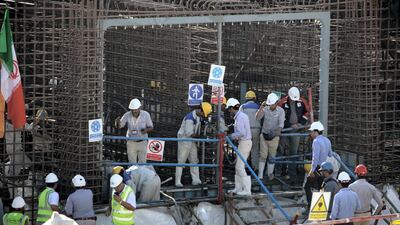
Workers prepare to begin the construction of a second reactor at the Bushehr site. AFP


The 2015 landmark deal between major world powers was close to being revived following 10 months of talks on regulating the country's nuclear programme.
US Secretary of State Antony Blinken dismissed as “irrelevant” the Russian demands for guarantees, saying that they “just are not in any way linked together".
The current round of negotiations started in late November in the Austrian capital between Iran and Britain, China, France, Germany and Russia, with the US taking part indirectly.
The 2015 deal gave Iran sanctions relief in exchange for curbs on its nuclear programme.
But the US unilaterally withdrew from the accord in 2018 under former president Donald Trump and imposed tough economic sanctions on different sectors, including oil exports.

