

Hundreds of Hezbollah supporters cheered and fired guns into the air on Thursday as tankers carrying US-sanctioned Iranian fuel oil arrived in Baalbeck, a stronghold for the group in Lebanon, where petrol is scarce.
Women dressed in long black robes waved Hezbollah flags and threw rose petals and rice at the convoy of fuel tankers travelling from neighbouring Syria where the Iranian shipment docked.
While Hezbollah says the arrival of the fuel will ease Lebanon's crippling energy crisis, fuel importers previously told The National the shipment will last only three days.
Supporters of Iran and its allies in Lebanon celebrated the arrival of the tankers as a victory, but the US-sanctioned product may put Lebanon at risk and bring the small country closer to Iran’s orbit.
“We are here to celebrate a new victory,” said Hawra, a young woman in a chador carrying a basket of rose petals on her arm.
“These flowers are for the glorious convoy.”
Hezbollah Secretary General Hassan Nasrallah said that four ships carrying petrol from Iran were headed to Beirut via Baniyas.
He said a second ship with fuel oil would arrive at the Syrian port in a few days.
-
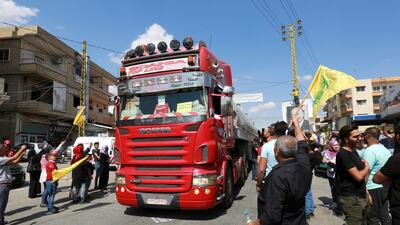
People wave Hezbollah flags as a convoy of tankers carrying Iranian fuel oil arrive in Baalbeck, Lebanon. Reuters -
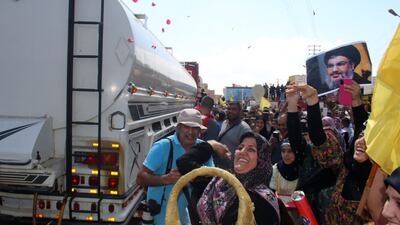
Dozens of tankers carrying Iranian fuel and transported by the Shiite Hezbollah movement, arrived from Syria in Lebanon, which is in the grip of severe fuel shortages. AFP -
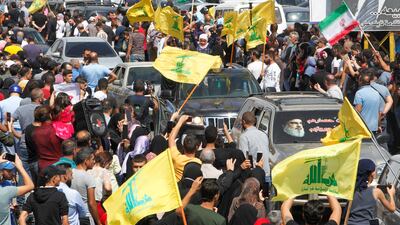
Hezbollah supporters cheer and fire guns into the air. Reuters -

Hezbollah says the arrival of the fuel will ease Lebanon's crippling energy crisis. Reuters -
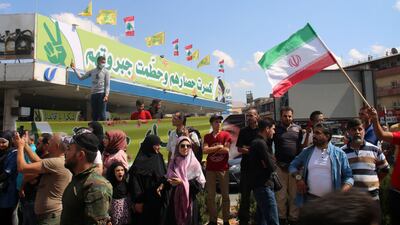
Fuel importers say the shipment will last only three days. AFP -

The delivery breaches US sanctions imposed on Tehran after former president Donald Trump pulled America out of a nuclear deal between Iran and world powers three years ago. AP Photo -
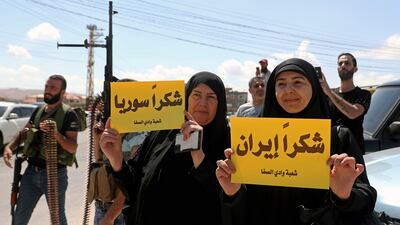
Hezbollah supporters with placards in Arabic that read "Thank you Iran," right, and "Thank you Syria." AP Photo -
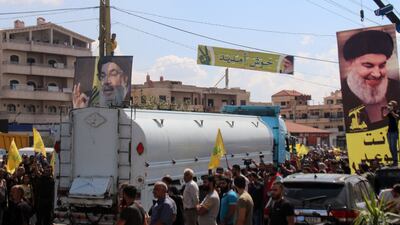
Hezbollah supporters with posters of the Shiite movement's leader Hassan Nasrallah as they gather to welcome tankers carrying Iranian fuel. AFP


The first convoy will involve between 70 and 80 tankers with a total of three million litres of diesel, according to a Hezbollah statement.
Oil shipment analysts TankerTrackers.com had previously said 792 oil tankers would be needed to deliver the Iranian gasoil to Lebanon from Baniyas.
Located in the Bekaa Valley, in north-east Lebanon, Baalbeck is renowned for being the country’s drug capital and a stronghold for Hezbollah.
The group had planned celebrations and a procession to mark the occasion, with English banners adorning Baalbeck’s main entrance - a rare sight. Celebrations were officially cancelled at the last minute, but supporters gathered at the pre-arranged spot and time.
Despite the fanfare, experts say the fuel oil is not a solution to the crisis.
Baalbeck resident
The sanctioned fuel oil on the first ship can cover Lebanon’s needs for only three days, fuel importers and private generator owners previously told The National.
At the entrance of the city, a large banner with Mr Nasrallah’s face plastered in the corner reads in English: “You broke their siege.”
The group says Lebanon’s economic collapse, caused by decades of corruption and mismanagement, is the result of an American siege. Hezbollah and its ally, the Syrian regime, are under US sanctions but Lebanon is not.
Bachar Al Halabi, MENA research analyst at Clipper Data, says the decision to bring fuel to Lebanon is "mostly about optics."
"They created a narrative that Lebanon is under siege, and that they broke that siege. None of that is true."
The Iranian shipment docked in Baniyas, Syria, earlier this week, with tankers ferrying the petrol by land, sparing Lebanese authorities the dilemma of accepting the shipment and risking US sanctions or refusing it and risking Hezbollah reprisals.
Information Minister George Kordahi said on Thursday after a Cabinet meeting that ministers did not discuss the issue of Iranian fuel entering Lebanon.
"I cannot say the government's position as long as we have not discussed the issue yet," he told the press.
After two years of economic collapse, Lebanon’s central bank is low on foreign currencies needed to import subsidised goods such as petrol and medicine, causing shortages. Lebanon relies on petrol to generate electricity. Shortages have caused power cuts lasting for up to 24 hours and hindering the work of hospitals.
-
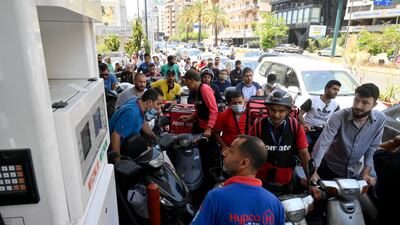
Motorists crowd at a gas station trying to get fuel for their vehicles as supplies are rationed in Beirut. -
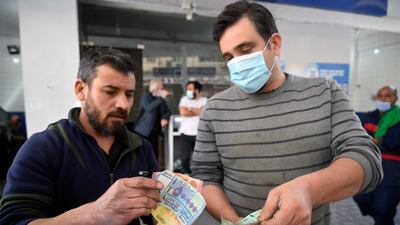
An attendant counts Lebanese pounds next to a customer at a gas station in Beirut. -

Motorbike drivers wait to get fuel at a gas station in Beirut. -
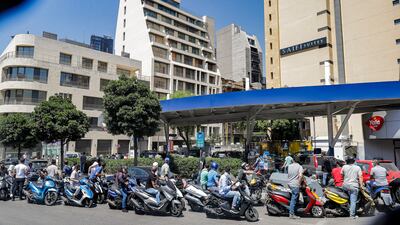
Scooter motorists queue for fuel outside a petrol station in Lebanon's capital Beirut. -
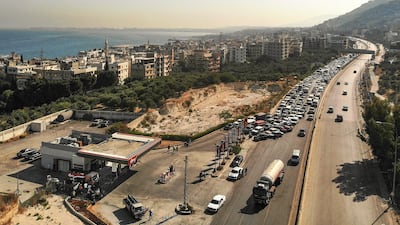
An aerial view shows vehicles queueing for fuel as traffic flows through on the Tripoli-Beirut highway in the coastal city of Qalamun in northern Lebanon. -
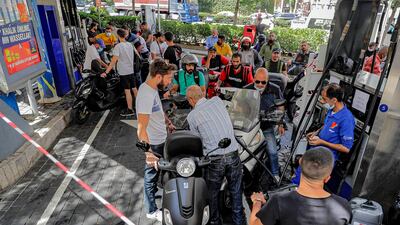
Vehicles queue for fuel at a petrol station in Lebanon's capital Beirut. -
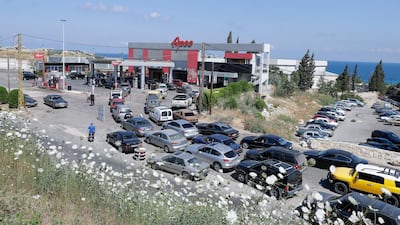
Vehicles queue at a petrol station in the Balamand area on the coastal highway linking Lebanon's capital to the country's north.


Hezbollah said the fuel will be dispersed to civil defence, hospitals, homes for the elderly, orphanages, official water institutions, fire brigades in the Civil Defence, and the Lebanese Red Cross.
The fuel oil will also be distributed to Al Amanah fuel stations, where it will be sold to the public.
Homemaker Zahraa Zeaiter said she is just happy to have fuel oil.
“People are in need of everything, so when we heard there was help coming, of course I wanted to come here and celebrate,” she said. Baalbeck has been marginalised for years, she said.
Bringing scarce fuel oil to the country scored points for Hezbollah at a time when its constituents are suffering from shortages – and some protesters blame the group for exacerbating the country’s economic crisis.
Mr Al Halabi said importing fuel from Iran was a way for the armed group to claim victory without engaging in warfare.
"This is the biggest victory they can claim without paying a real cost."

