


Egypt’s population grew by another million in 221 days, the country’s statistics agency said.
It exceeded 104 million on Saturday, with a baby born every 19 seconds, or 4,525 births a day.
The Arab world’s most populous country reached 100 million in February 2020 and has been adding a million to its population every 240 days on average thereafter.
It took less time for the latest one million increase because of “the noticeable decrease in the number of deaths, reaching 1,566 per day, compared to 1,858 per day in the previous period”, the Central Agency for Public Mobilisation and Statistics (Capmas) said.
President Abdel Fattah El Sisi has previously said that rapid population growth hinders national progress and initiatives to improve the lives of citizens.
World population hits 8 billion - in pictures
-
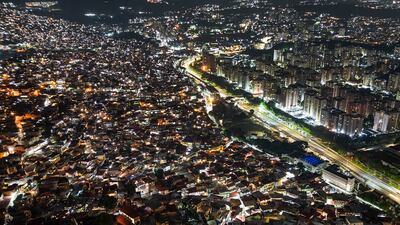
Houses cover a hillside in the Petare neighbourhood of Caracas, Venezuela. The world's population hit an estimated eight billion people on November 15, according to the United Nations. AP -
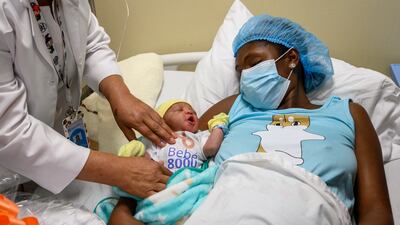
Damaris Ferrera with her baby at Damian Ferrera Altagracia Hospital – in Santo Domingo, Dominican Republic – which symbolically named him the eight billionth inhabitant of the world. AP -
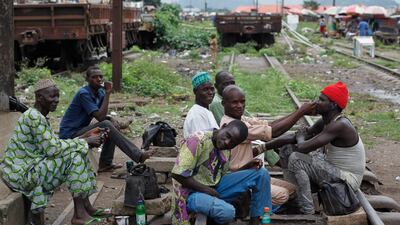
Barbers on an abandoned train track in Abeokuta, about 70km outside Lagos, Nigeria. More than half of the projected increase in the global population up to 2050 will be concentrated in eight countries: the Democratic Republic of Congo, Egypt, Ethiopia, India, Nigeria, Pakistan, the Philippines and Tanzania. EPA -

Newborn babies at Hotel Dieu hospital in Beirut, Lebanon, as the world population surges past eight billion. Reuters -
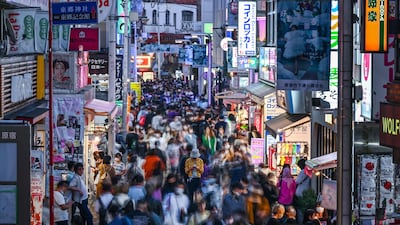
Crowds on Takeshita Street in Tokyo, considered to be the world's most populous metropolitan area. AFP -
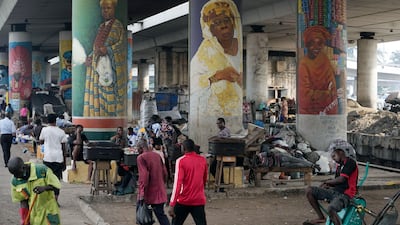
Nigeria is a significant contributor to world population growth. Countries in sub-Saharan Africa are expected to contribute more than half of the increase anticipated up to 2050, according to the UN. AP -

A packed Ipanema beach in Rio de Janeiro, Brazil. AP -
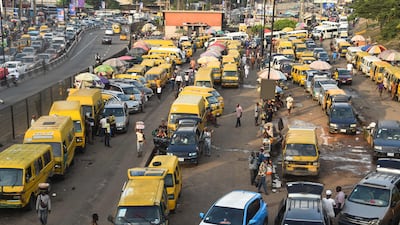
Traffic chaos at Ojodu-Berger bus station in Lagos, Nigeria's commercial capital, which has a population of about 15 million. AFP -
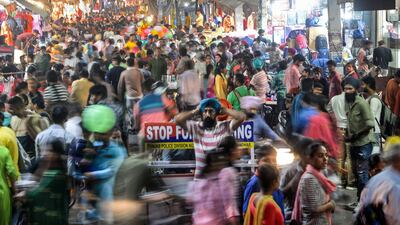
A crowded market in Jalandhar, India. AFP -
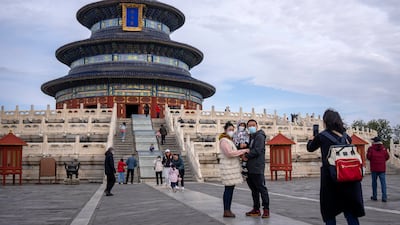
A family taking pictures at the Temple of Heaven in Beijing. AP -
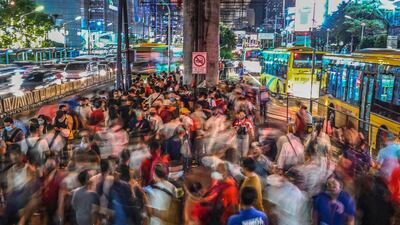
Commuters waiting for buses in Manila, Philippines, where the city's 12 million population swells by three million during working hours. AFP -
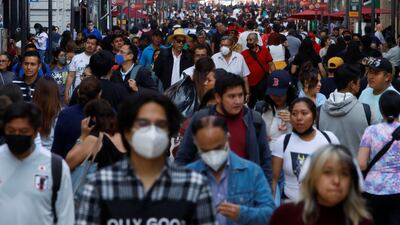
Mexico City is home to more than 20 million people. Reuters -

Times Square in Manhattan. About nine million people live in New York's five boroughs. Reuters -
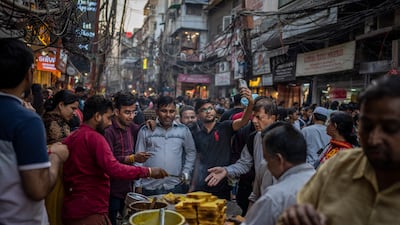
A busy market in New Delhi, India, part of an urban area where the population is estimated to be 32 million. AP -
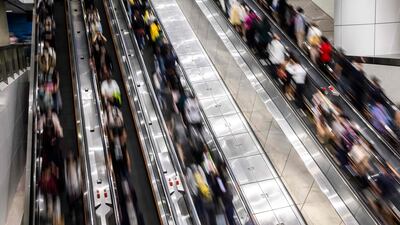
Commuters at a train station in Hong Kong. AFP -
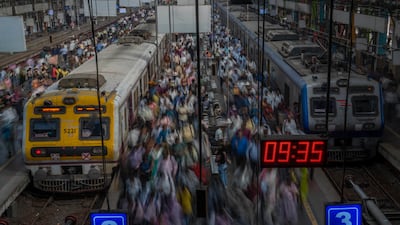
Indian commuters get off trains at the Church Gate railway station in Mumbai, India. AP -
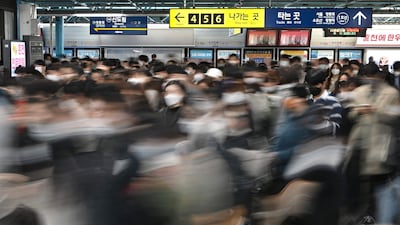
A subway station in Seoul. The South Korean capital has a population approaching 10 million. AFP


Overpopulation constitutes a “burden on the national economy” and “generates many economic, social, environmental and security challenges”, Capmas said.
The Ministry of Health and Population has encouraged families to have fewer children, spending more than 100 million Egyptian pounds ($5.1m) annually to offer family planning methods at no charge or at a discount.
In 2020, Egypt launched a two-year initiative called Two Is Enough.
Egypt has succeeded in reducing the rate from 3.5 births per woman in 2014 to 2.8 in 2021. In other words, every 10 women produce 28 children.
“That’s a good number, but it’s not enough,” Hussein Abdel Aziz, adviser to the head of Capmas, told Egyptian TV station Sada El Balad on Saturday night.
He said the goal is to reduce the rate to 1.6 children per woman, or 16 babies for every 10 women, “like in developed countries”.
At the current fertility rate, Egypt’s population will reach 165 million in 2050. If the rate is reduced to 1.6, the population will reach 139 million in 2050.
The governorates with the highest birth rates are mainly in Upper Egypt, including Assiut, Sohag, Qena, Minya and Beni Suef.
The areas with the lowest birth rates included the port cities of Port Said and Suez, and the Nile Delta governorates of Damietta, Dakahlia and Qalyubia.
The country’s three most populous governorates are Cairo with more than 10.1 million people, Giza with 9.4 million, and Sharqia in the northern part of the country with 7.8 million.
Egypt is the most populous African country after Nigeria and Ethiopia, and 14th worldwide.
Egypt's tourist attractions - in pictures
-
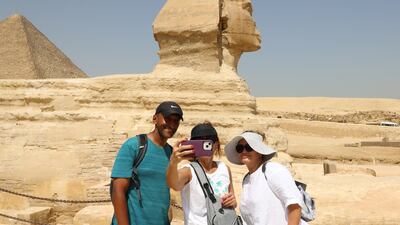
Tourists visit the Giza Pyramids and the Sphinx, in Egypt. EPA -
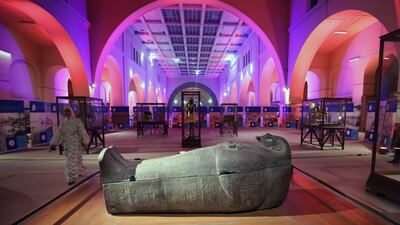
The black granite sarcophagus of King Psusennes I, discovered in 2018, on display at the Museum of Egyptian Antiquities, in Cairo. EPA -

Egypt's tourism industry drew in $13 billion in 2021. EPA -

Seeing underwater fish from a submarine in the Red Sea, in Sharm El Sheikh. Reuters -
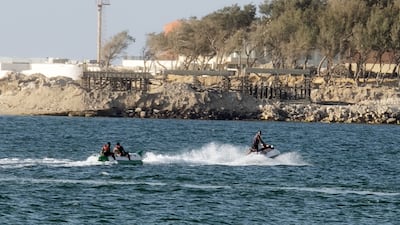
Unwinding at the beach in Alexandria, about 220 kilometres north of Cairo, Egypt. EPA -
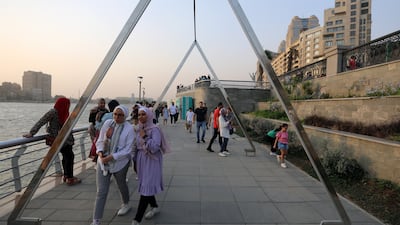
Walking by the Nile, in Cairo. EPA -
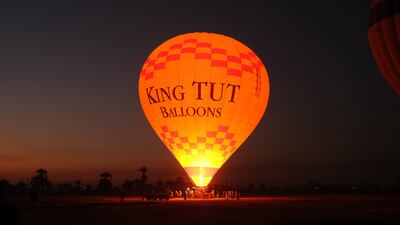
A balloon is filled with hot air before take-off for a ride with tourists on the west bank of the Nile, in Luxor. AFP -
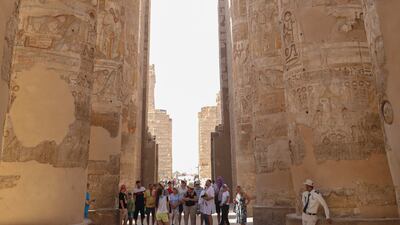
Tourists visit the Karnak Temple, a day after the reopening of the Avenue of Sphinxes, in 2021. AP -
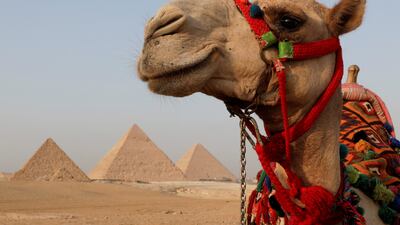
Camel rides are a popular activity at the pyramids. Reuters -
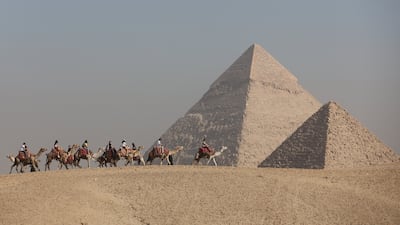
Camel rides are a popular activity at the pyramids. Reuters -
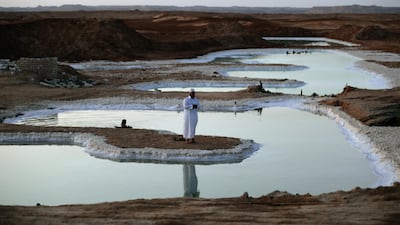
Prayer time by a salty lake, near the Siwa Oasis. EPA -
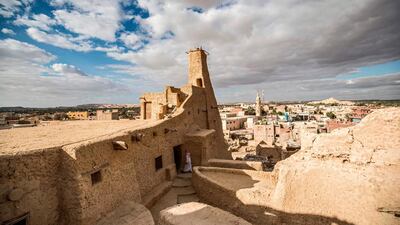
The recently restored fortress of Shali and its surroundings, near the desert oasis of Siwa, about 600km south-west of the capital Cairo. AFP -
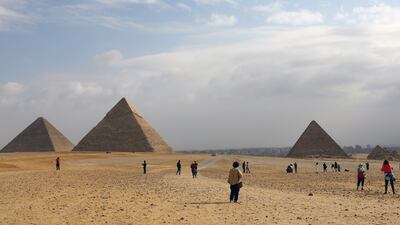
Tourists visit the area of the Great Pyramids, in Giza. Reuters -
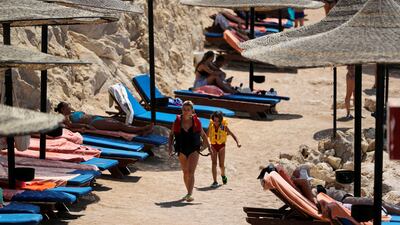
Time to relax in the Red Sea resort of Sharm El Sheikh. Reuters -

By the beach in the Aqaba Gulf, Sharm El Sheikh. Reuters -

Snorkelling near a beach in Sahl Hasheesh, Hurghada. Reuters



