Egyptian President Abdel Fattah El Sisi speaking during the opening of the World Youth Forum in the Egyptian Red Sea resort of Sharm el Sheikh. AFP

Insight: El Sisi's week of speeches gives clearer view of the man and his plan


Hamza Hendawi
  • English
  • Arabic

It's not uncommon to see the Egyptian president sitting stony-faced listening to presentations by Cabinet ministers on development projects or panel speakers addressing an array of topics, as was the case during last week's World Youth Forum. He often cuts in and grab the microphone to ask for clarifications, offer counsel, heap praise or issue new orders.

His interventions, televised live, are sometimes pleasant, often impassioned but can also be angry. He vents frustration over a lack of popular co-operation with his government and laments the failure of officials to use time and resources better.

Whichever the case, they are always blunt.

With an Egyptian Parliament that rarely criticises or questions the president's plans and a press largely controlled by the state, the president's televised comments offer the country's 102 million people an insight into President Abdel Fattah El Sisi's thinking and the government’s priorities.

Egyptians have grown accustomed to watching their leader of seven years in these live televised functions when he faces the cameras while attendees are seated behind him.

A 67-year-old former general, the president’s impromptu comments during a tour of southern Egypt late last month and the World Youth Forum earlier this month covered a wide range of topics, from road construction and poverty to immigration, water conservation and power generation.

He also covered topics his predecessors feared to raise domestically, such as discussing Egypt's much-criticised human rights record or subtly lambasting the West for a perceived hypocrisy.

While his comments don't amount to the opinions of subject experts, they do hint at his diligence, tenacity, eye for detail and punishing work ethic as he pursues a high-octane quest to modernise Egypt after decades of negligence under his predecessors.

The Egyptian leader has urged his people to work harder, admonished them for flouting the law – like illegal construction on farmland – or threatened offenders with the full weight of the law.

“I believe in the freedom of expression. During recent years, we [Mr El Sisi and Egyptians] have been speaking to each other a great deal. We talk about everything with extreme transparency," he said on January 13 at the World Youth Forum held in the Red Sea resort city of Sharm El Sheikh.

The president's televised comments of late have shown a growing confidence in his leadership and policies, doing away with much of the caution that characterised his early public appearances after the election in 2014.

For example, after inspecting new trains in the southern city of Aswan last month, he brought up the subject of his predecessors allowing services like the railways to deteriorate rather than raise fares to generate revenue for maintenance work.

Egypt's President Abdel Fattah El Sisi replaces his face mask after a trilateral meeting between Greece, Egypt and Cyprus in Athens. AFP

“It was never a question of political will," he said. "They knew exactly what the remedy was, but they wanted to hold on to power even if that meant the country was ruined. They stayed in power while Egypt turned into scrap, just scrap.”

Earlier in his southern tour last month, he said his government had no intention of giving newlyweds Egyptian state food cards, a social programme used by 60 per cent of people to buy heavily subsidised food. If they could not afford to buy food at market prices, he said, they should not get married.

Last year, also during a live broadcast event, he dropped a bombshell when he announced it was time to lift state subsidies on bread.

His announcement sent shockwaves through a country where the majority rely on cheap bread as their main staple. At least 70 people died in riots in 1977 when the government briefly reduced subsidies on bread.

“His predecessors lied either intentionally or unwittingly. But, with this president there’s transparency and honesty,” said Gehad Auda, a political science professor from Helwan University in Cairo. “In some ways, those events resemble a royal audience but they essentially offer a realistic look at where things stand and where they are headed.”

Mr El Sisi has also recently offered a blunt recollection of the 2011 uprising that forced long-time ruler Hosni Mubarak to step down and ushered in years of turmoil.

“We nearly ruined the country in 2011. I will never forget that and you Egyptians shouldn’t either," he said late last month.

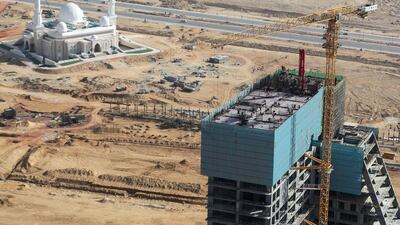
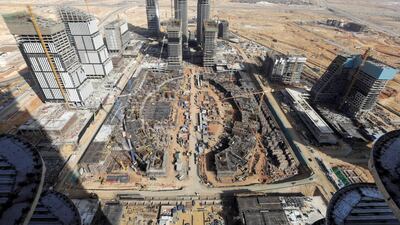
  • Work is ongoing at Egypt's New Administrative Capital in the east of Cairo. Reuters
    Work is ongoing at Egypt's New Administrative Capital in the east of Cairo. Reuters
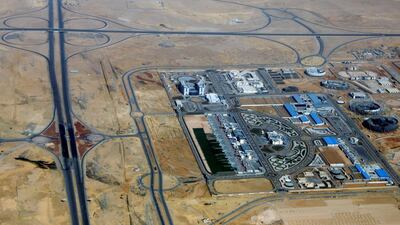
  • The new city is designed to operate with smart technology away from Cairo. Reuters
    The new city is designed to operate with smart technology away from Cairo. Reuters
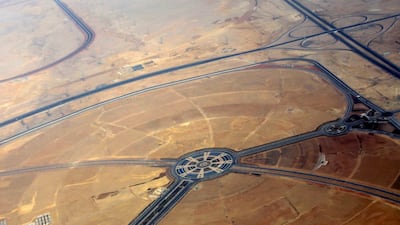
  • The New Administrative Capital is located 45 kilometres east of Cairo. Reuters
    The New Administrative Capital is located 45 kilometres east of Cairo. Reuters
  • It will have a population of 6.5 million, although that figure is expected to rise to seven million. Reuters
    It will have a population of 6.5 million, although that figure is expected to rise to seven million. Reuters
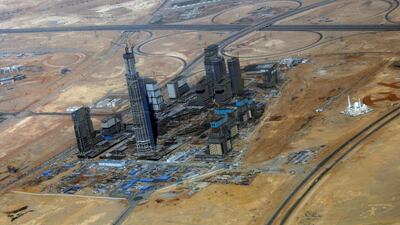
  • The Iconic Tower, a futuristic skyscraper, will take centre stage in the business district. Reuters
    The Iconic Tower, a futuristic skyscraper, will take centre stage in the business district. Reuters
  • Measuring 385.8 metres, The Iconic Tower is set to be Egypt's and Africa's largest skyscraper. Reuters
    Measuring 385.8 metres, The Iconic Tower is set to be Egypt's and Africa's largest skyscraper. Reuters
  • A monorail will pass through the business district. Reuters
    A monorail will pass through the business district. Reuters
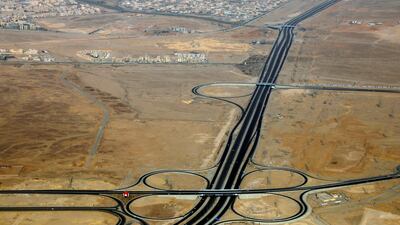
  • While mega-highways and bridges will provide easy access throughout the New Administrative Capital. Reuters
    While mega-highways and bridges will provide easy access throughout the New Administrative Capital. Reuters
  • Control centres will monitor infrastructure and security electronically, roofs will be covered in solar panels, payments will be cashless and green space will be aplenty. Reuters
    Control centres will monitor infrastructure and security electronically, roofs will be covered in solar panels, payments will be cashless and green space will be aplenty. Reuters
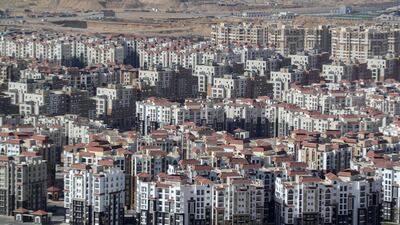
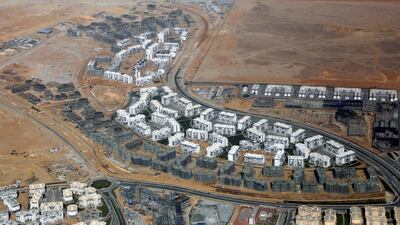
  • It will be home to universities, leisure facilities, residential towers and a diplomatic quarter. Reuters
    It will be home to universities, leisure facilities, residential towers and a diplomatic quarter. Reuters

While much of what the president offers is on the running of state, billion-dollar developments and new laws, he occasionally surprises viewers with unexpected comments over issues such as the best methods of milking cows or, as he did during his tour of southern Egypt, the problems pomegranate growers face when unable to sell their surplus.

Admonishing officials for not seizing the opportunity to build a factory that would process the surplus pomegranate, he yelled: “Why is it that you don’t dream?"

For a leader who has been questioned by rights groups and allies over the country's rights record, the president has been speaking publicly about the issue a great deal.

He did so again last week during the youth summit and, as on past occasions, he was not defensive.

Egyptian President and former army general Abdel Fattah El Sisi while still in active service in 2014 before his election. AP

"Give me $50 billion a year and I will personally ask Egyptians to demonstrate every day," he said in response to criticism in the West of his government's human rights record. "I am prepared to hold elections every year, but on one condition – you finance them; and if Egyptians say 'no' to me, I will just leave."

Addressing the West, he said: "Do you love our people more than we do? Are you more concerned about our country than us?"

When it comes to trying to deliver for the Egyptian people, Mr El Sisi has been trying to build a strong track record.

Since taking office in 2014, he has stabilised the country following a wave of deadly terrorist attacks after the military's removal the previous year of an Islamist president.

He then launched the largest building boom in Egypt's modern history with dozen of new cities under construction, including a new capital in the desert east of Cairo, thousands of kilometres of roads, hundreds of thousands of affordable housing units and enough power stations to make once common blackouts more of a rarity.

He has also introduced a reform programme to overhaul the battered economy that, while compounding the hardships faced by the poor and middle classes, won accolades from donors and international financial agencies.

An early riser who once boasted of starting to “study” conditions in Egypt as a young boy, Mr El Sisi has done enough to convince many Egyptians that his governing style is different from his predecessors.

His schedule, according to official media releases, suggests he hardly takes any time off.

"Poverty ... should push us not to sleep or even nap until we get rid of it with work, work, work," he said last week.


Lexus LX700h specs

Engine: 3.4-litre twin-turbo V6 plus supplementary electric motor

Power: 464hp at 5,200rpm

Torque: 790Nm from 2,000-3,600rpm

Transmission: 10-speed auto

Fuel consumption: 11.7L/100km

On sale: Now

Price: From Dh590,000

Rajasthan Royals 153-5 (17.5 ov)
Delhi Daredevils 60-4 (6 ov)

Rajasthan won by 10 runs (D/L method)

FFP EXPLAINED

What is Financial Fair Play?
Introduced in 2011 by Uefa, European football’s governing body, it demands that clubs live within their means. Chiefly, spend within their income and not make substantial losses.

What the rules dictate?
The second phase of its implementation limits losses to €30 million (Dh136m) over three seasons. Extra expenditure is permitted for investment in sustainable areas (youth academies, stadium development, etc). Money provided by owners is not viewed as income. Revenue from “related parties” to those owners is assessed by Uefa's “financial control body” to be sure it is a fair value, or in line with market prices.

What are the penalties?
There are a number of punishments, including fines, a loss of prize money or having to reduce squad size for European competition – as happened to PSG in 2014. There is even the threat of a competition ban, which could in theory lead to PSG’s suspension from the Uefa Champions League.

Mercer, the investment consulting arm of US services company Marsh & McLennan, expects its wealth division to at least double its assets under management (AUM) in the Middle East as wealth in the region continues to grow despite economic headwinds, a company official said.

Mercer Wealth, which globally has $160 billion in AUM, plans to boost its AUM in the region to $2-$3bn in the next 2-3 years from the present $1bn, said Yasir AbuShaban, a Dubai-based principal with Mercer Wealth.

Within the next two to three years, we are looking at reaching $2 to $3 billion as a conservative estimate and we do see an opportunity to do so,” said Mr AbuShaban.

Mercer does not directly make investments, but allocates clients’ money they have discretion to, to professional asset managers. They also provide advice to clients.

“We have buying power. We can negotiate on their (client’s) behalf with asset managers to provide them lower fees than they otherwise would have to get on their own,” he added.

Mercer Wealth’s clients include sovereign wealth funds, family offices, and insurance companies among others.

From its office in Dubai, Mercer also looks after Africa, India and Turkey, where they also see opportunity for growth.

Wealth creation in Middle East and Africa (MEA) grew 8.5 per cent to $8.1 trillion last year from $7.5tn in 2015, higher than last year’s global average of 6 per cent and the second-highest growth in a region after Asia-Pacific which grew 9.9 per cent, according to consultancy Boston Consulting Group (BCG). In the region, where wealth grew just 1.9 per cent in 2015 compared with 2014, a pickup in oil prices has helped in wealth generation.

BCG is forecasting MEA wealth will rise to $12tn by 2021, growing at an annual average of 8 per cent.

Drivers of wealth generation in the region will be split evenly between new wealth creation and growth of performance of existing assets, according to BCG.

Another general trend in the region is clients’ looking for a comprehensive approach to investing, according to Mr AbuShaban.

“Institutional investors or some of the families are seeing a slowdown in the available capital they have to invest and in that sense they are looking at optimizing the way they manage their portfolios and making sure they are not investing haphazardly and different parts of their investment are working together,” said Mr AbuShaban.

Some clients also have a higher appetite for risk, given the low interest-rate environment that does not provide enough yield for some institutional investors. These clients are keen to invest in illiquid assets, such as private equity and infrastructure.

“What we have seen is a desire for higher returns in what has been a low-return environment specifically in various fixed income or bonds,” he said.

“In this environment, we have seen a de facto increase in the risk that clients are taking in things like illiquid investments, private equity investments, infrastructure and private debt, those kind of investments were higher illiquidity results in incrementally higher returns.”

The Abu Dhabi Investment Authority, one of the largest sovereign wealth funds, said in its 2016 report that has gradually increased its exposure in direct private equity and private credit transactions, mainly in Asian markets and especially in China and India. The authority’s private equity department focused on structured equities owing to “their defensive characteristics.”

The biog

Alwyn Stephen says much of his success is a result of taking an educated chance on business decisions.

His advice to anyone starting out in business is to have no fear as life is about taking on challenges.

“If you have the ambition and dream of something, follow that dream, be positive, determined and set goals.

"Nothing and no-one can stop you from succeeding with the right work application, and a little bit of luck along the way.”

Mr Stephen sells his luxury fragrances at selected perfumeries around the UAE, including the House of Niche Boutique in Al Seef.

He relaxes by spending time with his family at home, and enjoying his wife’s India cooking. 

The specs
Engine: 4.0-litre flat-six
Power: 510hp at 9,000rpm
Torque: 450Nm at 6,100rpm
Transmission: 7-speed PDK auto or 6-speed manual
Fuel economy, combined: 13.8L/100km
On sale: Available to order now
Price: From Dh801,800
Yahya Al Ghassani's bio

Date of birth: April 18, 1998

Playing position: Winger

Clubs: 2015-2017 – Al Ahli Dubai; March-June 2018 – Paris FC; August – Al Wahda

PROFILE BOX:

Company/date started: 2015

Founder/CEO: Rami Salman, Rishav Jalan, Ayush Chordia

Based: Dubai, UAE

Sector: Technology, Sales, Voice, Artificial Intelligence

Size: (employees/revenue) 10/ 100,000 downloads

Stage: 1 ($800,000)

Investors: Eight first-round investors including, Beco Capital, 500 Startups, Dubai Silicon Oasis, Hala Fadel, Odin Financial Services, Dubai Angel Investors, Womena, Arzan VC


The Great Derangement: Climate Change and the Unthinkable
Amitav Ghosh, University of Chicago Press

The specs: 2018 Chevrolet Trailblazer

Price, base / as tested Dh99,000 / Dh132,000

Engine 3.6L V6

Transmission: Six-speed automatic

Power 275hp @ 6,000rpm

Torque 350Nm @ 3,700rpm

Fuel economy combined 12.2L / 100km

Jigra
Director: Vasan Bala
Starring: Alia Bhatt, Vedang Raina, Manoj Pahwa, Harsh Singh
Rated: 3.5/5
Match info:

Leicester City 1
Ghezzal (63')

Liverpool 2
Mane (10'), Firmino (45')

Updated: January 21, 2022, 3:54 PM