Palestinian workers gather in the waiting hall at the reopened Erez crossing. Reuters

Israel reopens key crossing to Palestinian workers amid Gaza violence


  • English
  • Arabic

Israel reopened the Erez border crossing, authorities said on Thursday, allowing Palestinian workers to leave the blockaded Gaza Strip after almost two weeks of closure.

The crossing, the only exit for Palestinians from Gaza into Israel, was initially closed for the Jewish New Year on September 15.

The closure was then extended amid Palestinian protests on the border in a move criticised as “collective punishment.”

The Palestinian civilian affairs ministry confirmed the crossing had reopened on Thursday morning, while Israel's COGAT, the Israeli defence body responsible for Palestinian civilian affairs, confirmed the move on Wednesday night.

About 18,500 Gazans work in Israel, according to COGAT, with jobs in high demand among Palestinians in the blockaded enclave, where wages are low and unemployment rates hover at about 50 per cent.

While Palestinians seeking medical treatment in Israel were technically allowed to use the crossing, many people in need of life-saving care are often denied permits or receive permission from authorities too late.

Journalists at the crossing saw thousands of Palestinian workers waiting to enter Israel on Thursday.

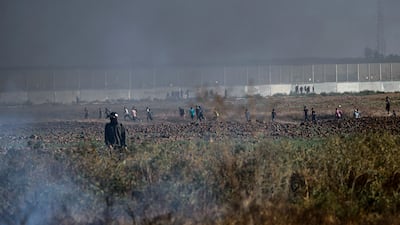
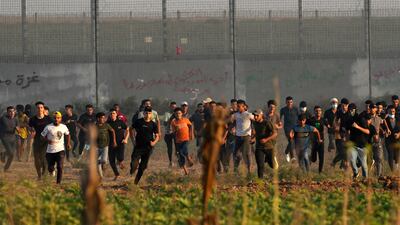
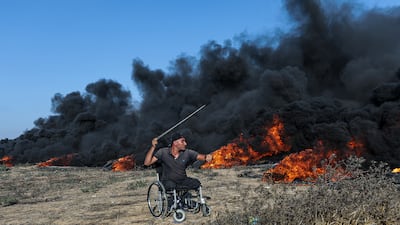
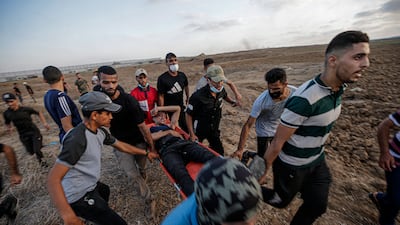
It comes amid continuing protests on the border between Gaza and Israel, where Israeli forces have killed several people and wounded dozens of demonstrators protesting continuing Israeli aggression in the occupied West Bank.

Seven Palestinians have been killed and more than 100 wounded in the violence in Gaza since September 13, as reported by the Hamas-controlled health ministry.

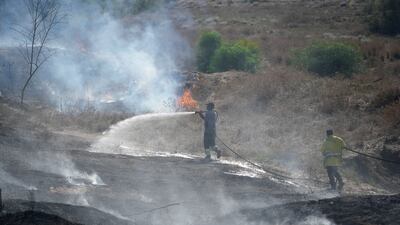
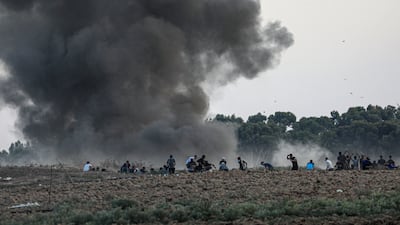
Protesters have burnt tyres and sent incendiary balloons across the border as Israeli forces fire tear gas and live ammunition.

The army killed six Palestinians across the West Bank and Gaza last Tuesday amid raids on Jenin refugee camp and protests on the Gaza border.

It also struck three Hamas sites in the strip the week before.

Israel has imposed an air, land and sea blockade on Gaza since Hamas seized the Palestinian territory in 2007.

Violence in Jerusalem and the West Bank can also lead to conflict in Gaza, where Israel has launched air strikes following rocket fire from Hamas.

More than 30 Palestinians were killed in Israeli air strikes on Gaza in May, following the death of one Israeli by Hamas rocket fire.


Who's who in Yemen conflict

Houthis: Iran-backed rebels who occupy Sanaa and run unrecognised government

Yemeni government: Exiled government in Aden led by eight-member Presidential Leadership Council

Southern Transitional Council: Faction in Yemeni government that seeks autonomy for the south

Habrish 'rebels': Tribal-backed forces feuding with STC over control of oil in government territory

Manikarnika: The Queen of Jhansi

Director: Kangana Ranaut, Krish Jagarlamudi

Producer: Zee Studios, Kamal Jain

Cast: Kangana Ranaut, Ankita Lokhande, Danny Denzongpa, Atul Kulkarni

Rating: 2.5/5

SCHEDULE

Saturday, April 20: 11am to 7pm - Abu Dhabi World Jiu-Jitsu Festival and Para jiu-jitsu.

Sunday, April 21: 11am to 6pm - Abu Dhabi World Youth (female) Jiu-Jitsu Championship.

Monday, April 22: 11am to 6pm - Abu Dhabi World Youth (male) Jiu-Jitsu Championship.

Tuesday, April 23: 11am-6pm Abu Dhabi World Masters Jiu-Jitsu Championship.

Wednesday, April 24: 11am-6pm Abu Dhabi World Professional Jiu-Jitsu Championship.

Thursday, April 25: 11am-5pm Abu Dhabi World Professional Jiu-Jitsu Championship.

Friday, April 26: 3pm to 6pm Finals of the Abu Dhabi World Professional Jiu-Jitsu Championship.

Saturday, April 27: 4pm and 8pm awards ceremony.

The smuggler

Eldarir had arrived at JFK in January 2020 with three suitcases, containing goods he valued at $300, when he was directed to a search area.
Officers found 41 gold artefacts among the bags, including amulets from a funerary set which prepared the deceased for the afterlife.
Also found was a cartouche of a Ptolemaic king on a relief that was originally part of a royal building or temple. 
The largest single group of items found in Eldarir’s cases were 400 shabtis, or figurines.

Khouli conviction

Khouli smuggled items into the US by making false declarations to customs about the country of origin and value of the items.
According to Immigration and Customs Enforcement, he provided “false provenances which stated that [two] Egyptian antiquities were part of a collection assembled by Khouli's father in Israel in the 1960s” when in fact “Khouli acquired the Egyptian antiquities from other dealers”.
He was sentenced to one year of probation, six months of home confinement and 200 hours of community service in 2012 after admitting buying and smuggling Egyptian antiquities, including coffins, funerary boats and limestone figures.

For sale

A number of other items said to come from the collection of Ezeldeen Taha Eldarir are currently or recently for sale.
Their provenance is described in near identical terms as the British Museum shabti: bought from Salahaddin Sirmali, "authenticated and appraised" by Hossen Rashed, then imported to the US in 1948.

- An Egyptian Mummy mask dating from 700BC-30BC, is on offer for £11,807 ($15,275) online by a seller in Mexico

- A coffin lid dating back to 664BC-332BC was offered for sale by a Colorado-based art dealer, with a starting price of $65,000

- A shabti that was on sale through a Chicago-based coin dealer, dating from 1567BC-1085BC, is up for $1,950

Mercer, the investment consulting arm of US services company Marsh & McLennan, expects its wealth division to at least double its assets under management (AUM) in the Middle East as wealth in the region continues to grow despite economic headwinds, a company official said.

Mercer Wealth, which globally has $160 billion in AUM, plans to boost its AUM in the region to $2-$3bn in the next 2-3 years from the present $1bn, said Yasir AbuShaban, a Dubai-based principal with Mercer Wealth.

Within the next two to three years, we are looking at reaching $2 to $3 billion as a conservative estimate and we do see an opportunity to do so,” said Mr AbuShaban.

Mercer does not directly make investments, but allocates clients’ money they have discretion to, to professional asset managers. They also provide advice to clients.

“We have buying power. We can negotiate on their (client’s) behalf with asset managers to provide them lower fees than they otherwise would have to get on their own,” he added.

Mercer Wealth’s clients include sovereign wealth funds, family offices, and insurance companies among others.

From its office in Dubai, Mercer also looks after Africa, India and Turkey, where they also see opportunity for growth.

Wealth creation in Middle East and Africa (MEA) grew 8.5 per cent to $8.1 trillion last year from $7.5tn in 2015, higher than last year’s global average of 6 per cent and the second-highest growth in a region after Asia-Pacific which grew 9.9 per cent, according to consultancy Boston Consulting Group (BCG). In the region, where wealth grew just 1.9 per cent in 2015 compared with 2014, a pickup in oil prices has helped in wealth generation.

BCG is forecasting MEA wealth will rise to $12tn by 2021, growing at an annual average of 8 per cent.

Drivers of wealth generation in the region will be split evenly between new wealth creation and growth of performance of existing assets, according to BCG.

Another general trend in the region is clients’ looking for a comprehensive approach to investing, according to Mr AbuShaban.

“Institutional investors or some of the families are seeing a slowdown in the available capital they have to invest and in that sense they are looking at optimizing the way they manage their portfolios and making sure they are not investing haphazardly and different parts of their investment are working together,” said Mr AbuShaban.

Some clients also have a higher appetite for risk, given the low interest-rate environment that does not provide enough yield for some institutional investors. These clients are keen to invest in illiquid assets, such as private equity and infrastructure.

“What we have seen is a desire for higher returns in what has been a low-return environment specifically in various fixed income or bonds,” he said.

“In this environment, we have seen a de facto increase in the risk that clients are taking in things like illiquid investments, private equity investments, infrastructure and private debt, those kind of investments were higher illiquidity results in incrementally higher returns.”

The Abu Dhabi Investment Authority, one of the largest sovereign wealth funds, said in its 2016 report that has gradually increased its exposure in direct private equity and private credit transactions, mainly in Asian markets and especially in China and India. The authority’s private equity department focused on structured equities owing to “their defensive characteristics.”

Updated: September 28, 2023, 9:48 AM