


Efforts to find the thousands of people still missing around the Libyan port city of Derna are chaotic and lack centralised co-ordination, experts and rescue workers have said, five days after the area was hit by floods that killed thousands.
The North African country is being ruled by two rival administrations. The lack of co-ordination between the rival governments has complicated the organisation of relief efforts.
"Despite some improvement, the situation remains chaotic and lacks a very clear central structure that's able to handle the issue of search, rescue, identification of bodies, burial and public health issues and diseases that are at risk of spreading while dealing with survivors and their needs as well as the delivering of aid," said Mohammed Eljarh, managing partner at Libya Desk Consultants.
"So it’s not the fact that there’s a shortage [of aid] but utter incompetence in managing the process, by authorities," Mr Eljarh told The National, hours after he had left Derna.
An international aid worker confirmed that while different groups are co-ordinating their efforts individually, there was no centralised steering committee to oversee the rescue efforts.
Libyan authorities have been accused of neglecting the maintenance of two dams which burst, sending a deadly deluge of water into the city, and of mismanaging the response to the disaster.
On Thursday, the UN's World Meteorological Organisation said most of the deaths could have been avoided if Libya had better early warning and emergency management systems that allowed authorities to carry out evacuations.
Although Derna's Security Directorate warned people of approaching bad weather before the storm, it ordered residents to stay at home and imposed a curfew that lasted from September 10 until the following morning. This meant many Derna residents were trapped in their homes rather than evacuated when the city was hit by flooding.

Mr Eljarh echoed the criticisms of the authorities.
"If there was good governance, many deaths would have been avoided, first by ensuring proper maintenance and inspection of infrastructure and make sure it would not pose as much a risk and threat when such storms hit. Secondly, the responsibility to protect people immediately before the storm hit through mandatory evacuations. Both of these have not happened," Mr Eljarh said.
"Libya has spent hundreds of billions in budgets since the overthrow of the Qaddafi regime in 2011, but the cheapest thing in Libya is human life. This is what the catastrophic and largely manmade tragedy."
Despite the breakdown in the government response, Mr Eljarh praised the Libyan public for acts of solidarity and said people had travelled from other parts of the country to help out.
-
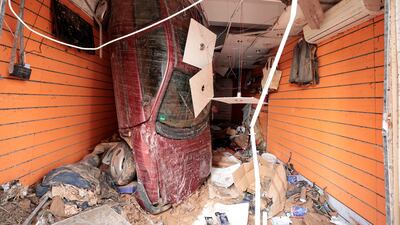
An upturned car inside a shop where it was carried by a torrent of floodwater in Derna, Libya. Reuters -
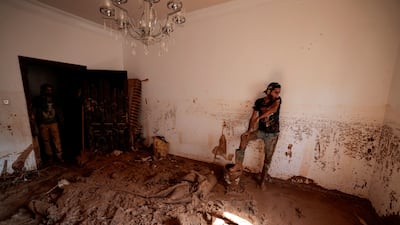
A flood survivor takes a breather from removing mud from his home in the aftermath of deadly floods in Derna. Reuters -
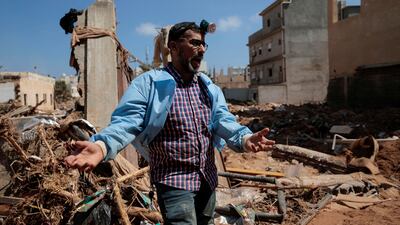
Mohammed Fathallah Al Hassi lost his mother and sister in Derna when dams collapsed, flooding the city, after heavy rainfall and a powerful storm hit eastern Libya. Reuters -
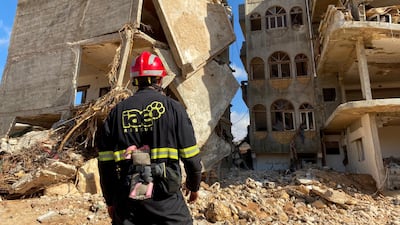
A Spanish rescue worker in Derna where authorities have been struggling to cope with thousands of flood victims' bodies washing up or decaying under rubble. Reuters -
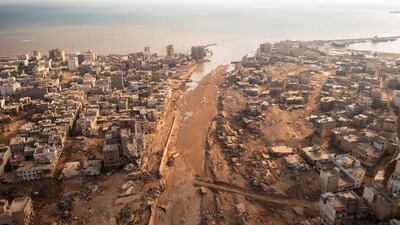
The destruction in the aftermath of the floods in Derna, Libya, as seen from the air. Reuters -

A view of Derna in the aftermath of the floods. Reuters -
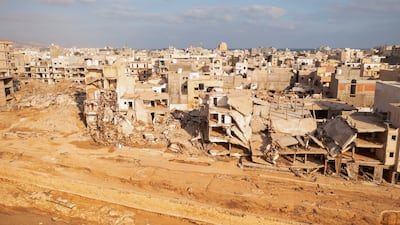
The aftermath of the floods in Derna. Libyan authorities said access to some areas had become impossible. Reuters -
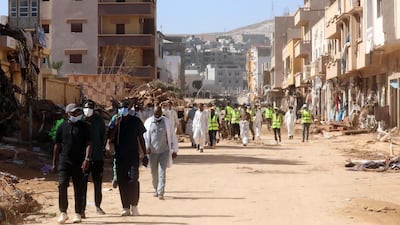
Volunteers amid the ruins and damaged homes after the Mediterranean Storm Daniel hit Libya's eastern city of Derna. AFP -
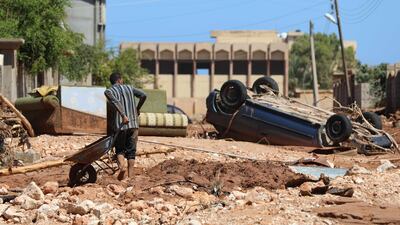
A rubble-strewn street in Libya's eastern city of Soussa. AFP -

People view areas damaged in the flooding in Derna, Libya. Reuters -
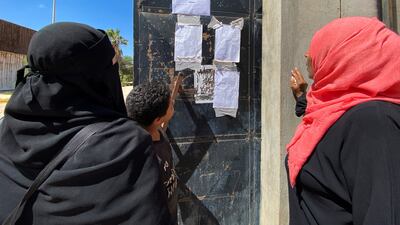
Locals view a list of the missing following the floods in Derna. Reuters -
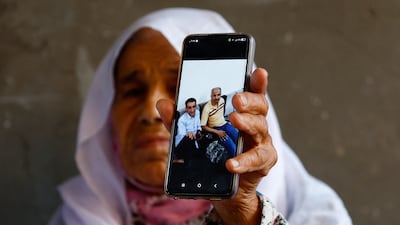
A Palestinian woman in the Gaza Strip displays a picture of her relatives, who had been living in Libya, that were among the victims of the flooding. Reuters -
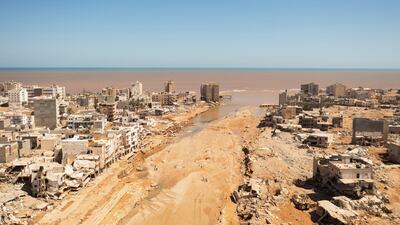
Libya's port city of Derna, days after floods swept away entire communities after two dams collapsed amid heavy rain. Reuters -
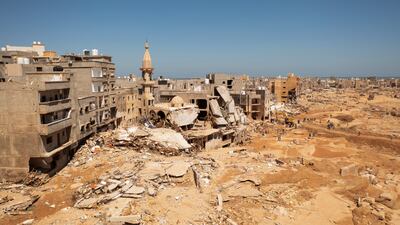
The dams collapsed causing a huge flash flood that killed thousands of people. Reuters -
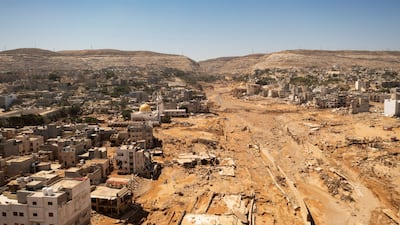
Thousands were still missing while more than 30,000 were displaced. Reuters -
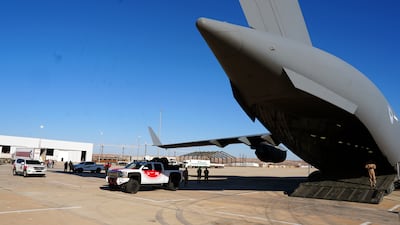
Five Emirati planes arrived in Benghazi carrying three rescue teams, urgent relief and medical aid, as part of UAE efforts to provide relief to the Libyan people. Wam -
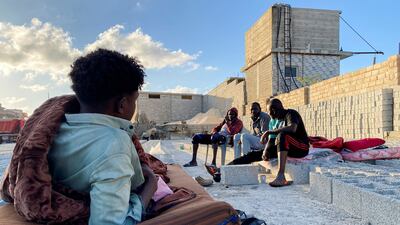
Sudanese workers who lost family members and friends during the disaster sit outside a tile factory in Derna. Reuters -
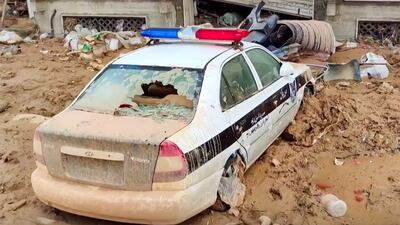
A police vehicle washed away by floods lies on a street in Derna. AFP -

A militiaman directs vehicles on along a muddy road after deadly floods caused by Storm Daniel hit Derna, forcing two dams to collapse. AFP -
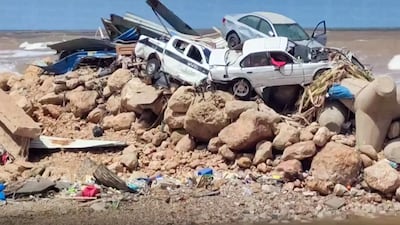
Vehicles washed away by the floods are piled up on the outskirts of Derna. AFP -
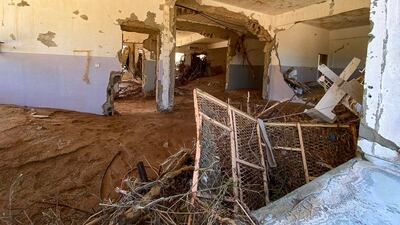
A school damaged by the floods in Derna. Reuters -
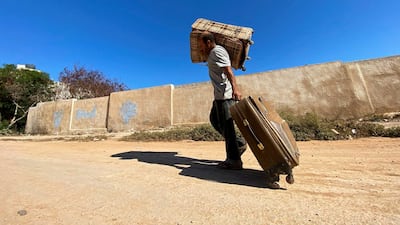
A man carries his belongings, in the aftermath of floods in Derna. Reuters -
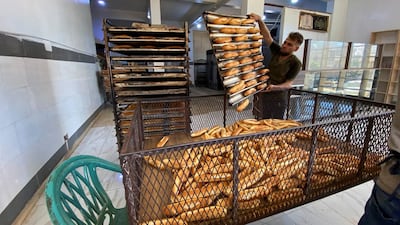
A worker puts bread in a box at a bakery, in the aftermath of the floods in Derna. Reuters -
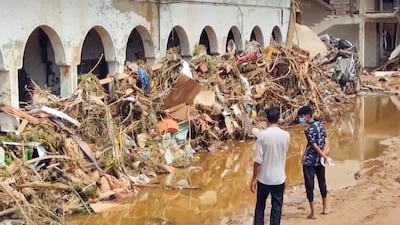
The trail of destruction left by the floods that hit Derna. AFP


'Rotting corpses everywhere'
As they continue to assess the situation, aid workers say the sheer scale of the crisis is becoming clearer.
"[People's] needs are major. They're big and mounting day by day," Bashir Ben Amer, pharmaceutical manager for the International Rescue Committee told The National from Benghazi, which is the co-ordination hub for humanitarian assistance in Derna.
"People are either looking for their loved ones or burying them, as the sea continues to bring in more bodies."
"Hospitals are full of unknown corpses. Pictures are being taken of the unknown, before they are buried ... It's overwhelming."
The International Rescue Committee is working on designing a response that is "efficient and well-integrated between sectors" like health, shelter, infrastructure and communication, Mr Ben Amer said.
But despite efforts to co-ordinate the response, the situation remains bleak.
"You can smell death some seven or eight kilometres outside the city," Mr Eljarh said.
"There are rotting corpses everywhere."

