


Will he go, or will he stay?
Speculation about whether Mohamed Salah will leave Liverpool to join a growing list of football stars playing in Saudi Arabia has sparked an intense debate among fans in his native Egypt, most of whom would rather see him stay in England.
Never mind that Egypt is gripped by record inflation, a crippling dollar crunch and a rapidly growing foreign debt; where Salah ends up playing when the summer transfer window closes on Friday has become the most talked about topic in the country.
Celebrated by his compatriots as a beacon of light and hope and a source of happiness and national pride, the debate on what Salah should do reflects the deep affection Egyptians, football fans or not, have for the prolific winger. That affection is rooted in no small part in Salah's humble beginnings and his incredible rise to global stardom.
Born to a lower middle-class family in a small village in Egypt's Nile Delta, Salah commuted for hours as a teenager to his Cairo club, where he sometimes spent the night outside its street gate after a late evening training or match. During those days, he survived on kushari, a local dish of rice, pasta and lentils with fried onions and hot sauce on top.
“Those who have gone [to the Saudi league] don’t mean to their countries what you mean to Egyptians,” wrote the Egyptian Pharoah, a Facebook account dedicated to Salah. “You are a footballer who gave children in our country a dream that’s not impossible to realise.”
Behind the flood of posts hoping that Salah stays at Liverpool is an element of “soft diplomacy” rivalry between Saudi Arabia and Egypt in which football is not a small part.
-

Liverpool's Darwin Nunez scores their winner past Newcastle United's Nick Pope in the Premier League game at St James' Park on Sunday, August 27, 2023. Reuters -
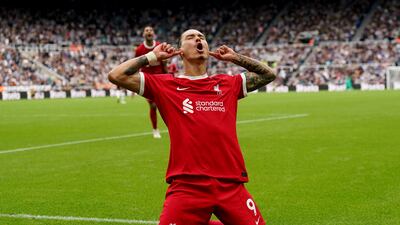
Liverpool's Darwin Nunez celebrates after scoring his side's first goal. PA -

Darwin Nunez of Liverpool scores his first goal to equalise against Newcastle United. Getty -

Darwin Nunez of Liverpool celebrates after scoring their first goal. Getty -
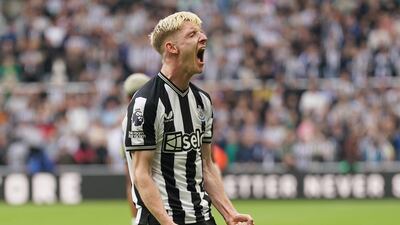
Newcastle United's Anthony Gordon celebrates after scoring the first goal. PA -

Anthony Gordon, left, of Newcastle celebrates with teammates after scoring the opener. EPA -
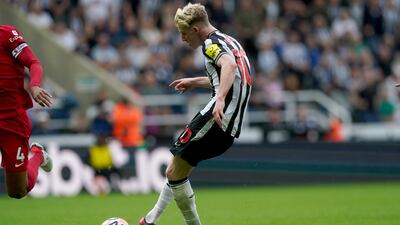
Newcastle United's Anthony Gordon scores his sides first goal. PA -
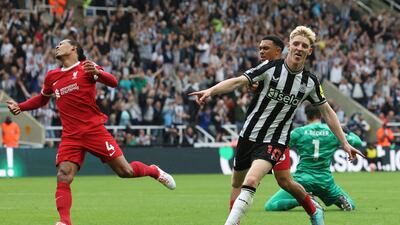
Anthony Gordon of Newcastle United celebrates his goal. Getty -
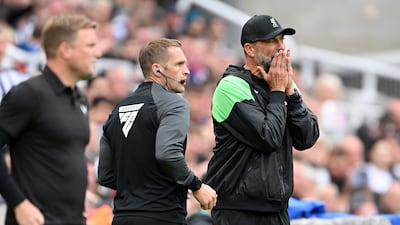
Liverpool manager Jurgen Klopp during the game. Getty -

Jurgen Klopp reacts during the match. Getty -
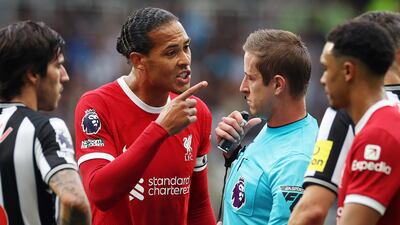
Virgil van Dijk of Liverpool reacts after being shown a red card by referee John Brooks. Getty -

Liverpool manager Jurgen Klopp talks to Virgil van Dijk after the defender was sent off. EPA -
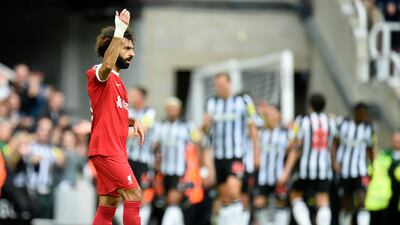
Mohamed Salah of Liverpool reacts during the match. EPA


Egypt’s long monopoly as the Arab world’s prime literary, arts and sports centre has diminished significantly in recent years. The most populous Arab nation now shares that position with Saudi Arabia and other Gulf states, something that many Egyptians are uneasy or in denial about.
That sentiment surfaced in recent weeks when Egypt’s football community reacted angrily to assertions by a prominent Saudi sports commentator, Walid Al Farag, that the Arab world’s most anticipated and watched club football derby was between Saudi clubs Al Hilal and Al Nassr, not Egypt’s Al Ahly and Al Zamalek.
Motivated in part by resentment of Saudi Arabia's financial muscle, the reaction in Egypt was disproportionate, with talk show hosts and columnists sharply rebuking, sometimes even insulting, Mr Al Farag while asserting the supremacy of Egyptian football.
However, if Saudi Pro League champions Al Ittihad succeed in luring Salah away from the English Premier League, it would leave no doubts about the regional prominence of kingdom's top division, having already recruited the likes of Cristiano Ronaldo, Karim Benzema, Sadio Mane, Jordan Henderson and Riyad Mahrez.
But Egyptians believe the winger should stay put as achieving success in Europe is more valuable.
“Saudi Arabia is the land of the possible. There is no language or scientific barriers and no difficulties worth mentioning except the pain of being away from home,” the writer Sara Allam Shaltout said on Facebook.
“In contrast, Britain has its own language, system, culture and a colonial history that makes winning there something like a 90th minute goal,” she wrote.
Her sentiment was echoed by football commentator Sabry Sirag.

“To Egyptians, Salah is a dream whose end will be tragic if he plays in the Saudi league. Our expectations are sky high … and the thought of him leaving Liverpool now is a horrific one,” he told The National.
“Salah is at his peak and his hard work in the gym means he can play another four or five years at the highest level. After that, he can go and play in Saudi Arabia or the MLS."
Although Liverpool manager Jurgen Klopp has played down talk of a Salah move, the temptation to the player is high.
Reports emerged on Thursday night claiming that Al Ittihad had renewed their interest in the winger and were prepared to double their previous offer, understood to be worth €180 million over two years.
Ittihad are reportedly ready to make an opening transfer bid of £52m ($65m) to Liverpool in order to begin contract talks.
Klopp dismissed the reports during his prematch press conference for Liverpool's game against Newcastle United on Sunday.
“He is a Liverpool player. He is essential and will be. There is nothing there," he said. "My life philosophy is, I think about a problem when I have it.”
Salah's agent, Ramy Abbas Issa, has also dismissed speculation that his client was close to move.
“If we considered leaving [Liverpool] this year, we wouldn’t have renewed the contract last summer,” he said in a post on X, formerly Twitter.
“Mohamed remains committed to LFC.”

