


Following Israeli Finance Minister Bezalel Smotrich's decision to withhold government funding for Arab towns, Prime Minister Benjamin Netanyahu pledged on Wednesday to overturn the decree and release at least 200 million shekels ($54 million).
Although Mr Netanyahu gave no details on how long this would take, he did say the money would be transferred after a review.
“Israel's Arab citizens deserve what all citizens do and I'm committed to this,” Mr Netanyahu said in a statement.
“I demand this of all government ministries and it will be carried out following an evaluation to ensure that funds are transferred for their designated purpose – Israel's Arab citizens.”
Arab community leaders said Mr Smotrich's decision was guided by racism.
“The Finance Minister is continuing his campaign of incitement against Arab society and its elected leaders,” said the National Committee of Arab Local Councils in Israel.
But Mr Smotrich shrugged off racism claims and doubled down on the fund freeze at a press briefing.
Echoing his earlier announcement, Mr Smotrich, a member of Mr Netanyahu's religious-nationalist coalition, told reporters on Wednesday that he was withholding budget funds marked for Arab local councils out of fear that the money would end up in the hands of criminals and terrorists.
Palestinian man keeps key to pre-Nakba house – in pictures
-
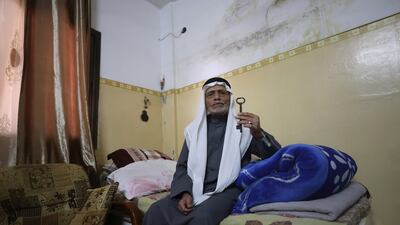
Palestinian Mustafa Abu Awad, 86, holds the key to the house he owned in 1948. All photos: EPA -

He keeps it inside a bowl in his home at Nur Shams refugee camp, near the West Bank city of Tulkarem -

He has also kept a stone and a pair of scissors his family brought from their village of Sabarin -
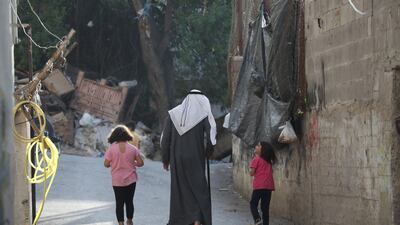
For Mr Awad, pictured with his grandchildren, the keepsakes serve as a reminder of the past before Nakba -

Palestinians are marking the 75th anniversary of Nakba Day, or Day of the Catastrophe -

It is commemorated on May 15 to remember their displacement after Israel declared independence in 1948


Arab citizens, most of whom are descendants of Palestinians who stayed in the new Israeli state after its foundation, make up about a fifth of Israel's population.
They have for decades faced social and economic disparities with Jewish citizens, including high poverty, overcrowding, inadequate infrastructure and poorly funded schools.
The funding, earmarked for basic services and development in 67 Arab local councils, is an effort to correct years of insufficient budget allocations and to narrow the gaps between Jewish Israeli and Arab communities, said Ameer Bisharat, chief executive of the National Committee of Arab Local Councils in Israel.

