

Israeli forces shot and killed a Palestinian man in a refugee camp near Nablus on Wednesday, taking the death toll to more than 180 people so far this year.
Mohammed Abd Al Hakim Nada, 23, was shot in the chest during a raid in the city, the Palestinian Health Ministry said.
“A young man died of his wounds as the occupation forces stormed the city of Nablus at noon (1pm UAE),” the ministry said.
He was seriously injured after a house was surrounded in Al Ain camp and later died in hospital, according to Wafa, the official Palestinian news agency.
The raid took place a day after three Palestinians were killed in Nablus, where Israeli troops opened fire on men it claimed were shooting at soldiers.
Palestinian militant group Hamas, which controls the Gaza Strip, said the three were members of its armed wing.
Figures released from the health ministry on Wednesday, before Mr Nada's death was announced, revealed 180 Palestinians have been killed so far this year across the occupied West Bank, East Jerusalem and Gaza.
The Israeli army confirmed troops were conducting “counter-terrorism activity in Al Ain camp” in Nablus but did not give further details.
The Al Aqsa Martyrs' Brigades said its fighters had “ambushed a unit of special forces in the alleys of Al Ain camp … and managed to inflict casualties” on Israeli troops.
Nablus and the city of Jenin have borne the brunt of almost daily Israeli raids, with the army sending Apache helicopters and drones over densely-populated refugee camps.
-
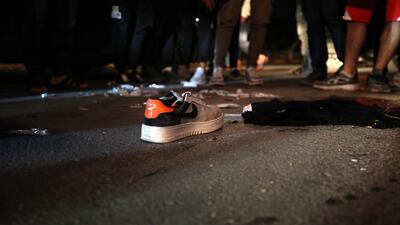
A shoe left after two Palestinians were wounded by Israeli gunfire outside the village of Yabad, near the West Bank city of Jenin. EPA -
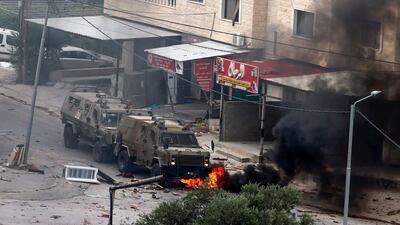
Tyres burn beneath Israeli security forces armoured vehicles during a raid in Jenin. AP -

A Palestinian militant during the Israeli raid. EPA -
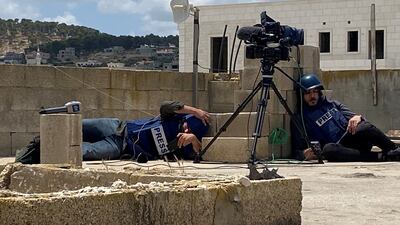
Palestinian journalists take cover on a rooftop while covering the Israeli raid. Reuters -
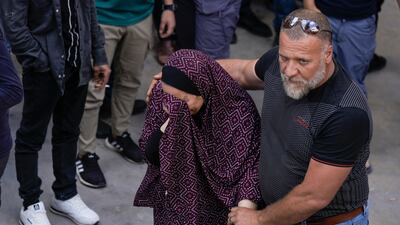
The mother of Palestinian Ahmed Saqr, 15, killed in fighting in Jenin. AP -
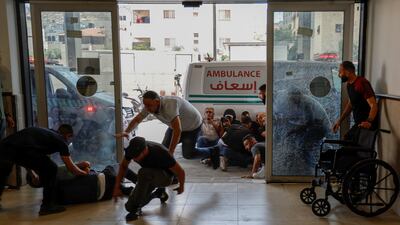
Palestinians run for cover during the raid. Reuters -
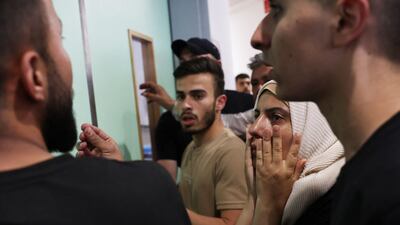
People wait for news of the injured at a hospital in Jenin. AFP -
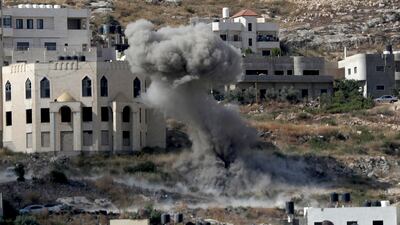
Smoke billows from an explosion during the raid. EPA -
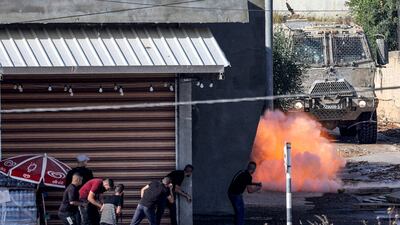
An explosive charge left by Palestinians detonates in front of an Israeli armoured vehicle during the Jenin raid. AFP -
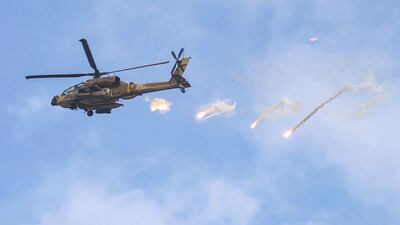
An Israeli Air Force AH-64 Apache attack helicopter releases a payload over Jenin during the raid. AFP -
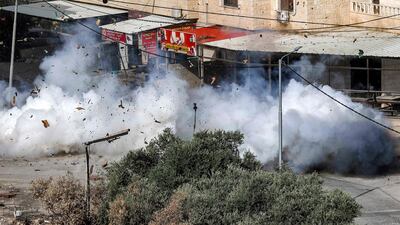
Smoke erupts from the detonation of an explosive charge left by Palestinians in Jenin during the Israeli army raid. AFP -

Paramedics carry an injured man from an ambulance. AFP -

Paramedics attend to an injured man at a hospital in Jenin. AFP


The cities have reported the highest number of deaths this year, with 52 in Jenin and 41 in Nablus.
A tally compiled by the Associated Press put the death toll at 202, including civilians and fighters.
This month, Israeli forces conducted a two-day raid on Jenin refugee camp that killed 12 Palestinians, including militants and children.
The raid on Jenin was one of the biggest operations carried out by the Israeli army in the West Bank in years.
Thirty-one children are among this year's victims, the health ministry said.
An 18-year-old Palestinian was shot dead on Saturday after an attempted car ramming, a day after another teenager was shot and killed by Israeli forces near Ramallah.
Violence has surged this year as Israel's most right-wing government yet seeks to consolidate the occupation in the West Bank, including accelerating plans for settlement construction and cracking down on Palestinian militant groups.
Israel has occupied the West Bank since the Six-Day War of 1967.

