


New alleged war crimes and crimes against humanity in Sudan’s Darfur region are being investigated by the International Criminal Court, its chief prosecutor said on Thursday.
Fighting between government forces and the paramilitary Rapid Security Forces has spilt into Darfur which was hit by bloodshed and atrocities in 2003, Karim Khan told the UN Security Council
He said the world, the country and the council are “in peril of allowing history to repeat itself”.
In 2005, the Security Council referred the situation in Darfur to the ICC, and Mr Khan said the court still has a mandate under that resolution to investigate crimes in the vast western region.
The bodies of at least 87 ethnic Masalits and others, including women and children, have been found in a mass grave in the West Darfur region of Sudan, the UN human rights office said on Thursday.
The UN said it had “credible information” that the paramilitary RSF ordered the killings.
“I condemn in the strongest terms the killing of civilians and hors de combat individuals, and I am further appalled by the callous and disrespectful way the dead, along with their families and communities, were treated,” UN High Commissioner for Human Rights Volker Turk said.
The UN also said locals were “forced” to dispose of the bodies in a mass grave.
“We are investigating those allegations,” Mr Khan told the council.
“We are by any analysis not on the precipice of a human catastrophe but in the very midst of one.
“There are women and children, boys and girls, old and young, in fear of their lives, living with uncertainty in the midst of conflict, and as their homes are burnt.
“Many as we speak will not know what the night will bring and what fate awaits them tomorrow.”
Mr Khan said the ICC was also looking to investigate other allegations in West Darfur including looting, extrajudicial killings and the burning of homes, as well as alleged crimes in North Darfur.
He said anybody inside or outside Sudan who aids or abets crimes in Darfur will be investigated.
The prosecutor added that he had instructed his office to give priority to crimes against children and sexual and gender-based violence.
“We must act urgently, collectively, to protect the most vulnerable if this oft-repeated phrase of 'never again' is to mean anything,” Mr Khan said.
At least 37 bodies were buried on 20 June in a one-metre-deep mass grave in an open area called Al Turab Al Ahmar (Red Soil), the UN said.
They were found 2-4km north-west of the Central Reserve Police headquarters in western El Geneina.
“Another 50 bodies were buried at the same site on 21 June. The bodies of seven women and seven children were among those buried,” the UN said.
It said the victims were killed around the time that Khamis Abbaker, governor of West Darfur, was killed on June 14 after speaking out against the crimes being committed by the RSF there.
Mr Turk called on the RSF to allow “prompt searches for the dead, their collection and evacuation without distinction, including based on ethnic background – as they are obliged to do under international law”.
In Sudan's conflict areas, bodies of civilians and fighters have been left lying on the ground for weeks, as morgues have become full and paramedics are left unable to tend to those in need due to the security situation.
A war broke out between the RSF and Sudan's army on April 15 this year and has persisted despite numerous ceasefire attempts by the UN, US, Saudi Arabia, African Union, Egypt and others.
-
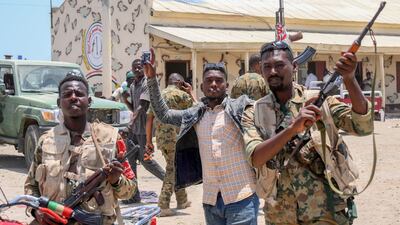
Sudanese army soldiers, loyal to army chief Gen Abdel Fattah Al Burhan, pose for a picture at the Rapid Support Forces base in the Red Sea city of Port Sudan on April 16. AFP -
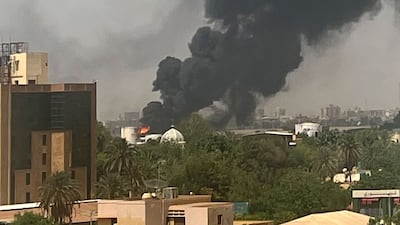
Smoke billows above residential buildings in Khartoum on April 16 as fighting in Sudan raged for a second day in battles between rival generals. AFP -
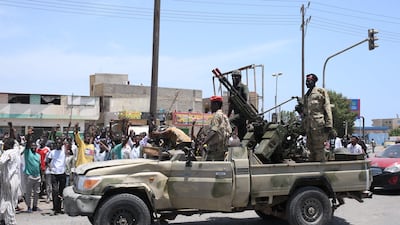
Sudanese greet army soldiers in Port Sudan on April 16. AFP -
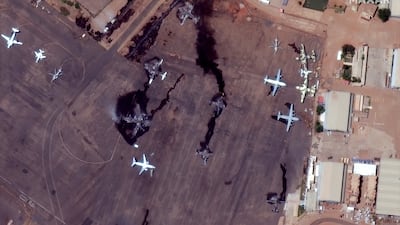
Destroyed planes at Khartoum International Airport on April 17. Reuters -

People flee Khartoum during clashes between the paramilitary RSF and the army on April 19. Reuters -
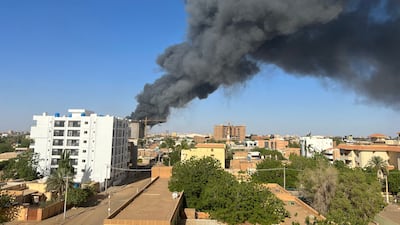
A column of smoke rises behind buildings near the airport area in Khartoum on April 19 following the collapse of a 24-hour truce. AFP -
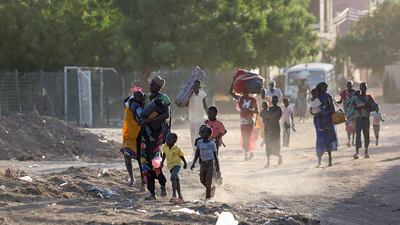
People flee their neighbourhoods amid fighting between the army and RSF in Khartoum on April 19. AFP -
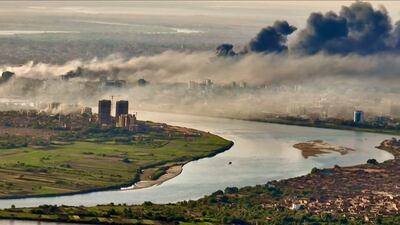
Black smoke covers the sky above Khartoum on April 19. AFP -
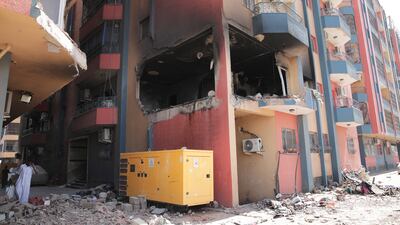
Residential buildings damaged in fighting in Khartoum on April 20. AP -
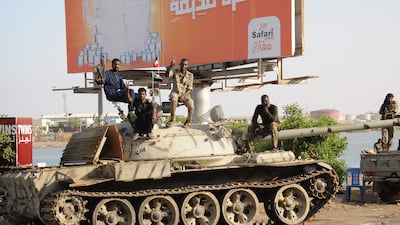
Sudanese army soldiers sit on top of a tank in the Red Sea city of Port Sudan on April 20. AFP -
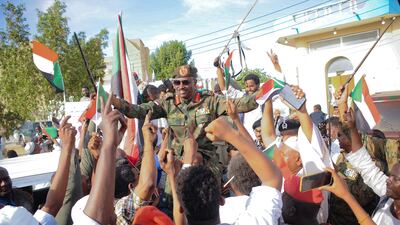
People carry Othman Mohamed, a senior general loyal to Gen Al Burhan, on their shoulders in Port Sudan on April 20. AFP -
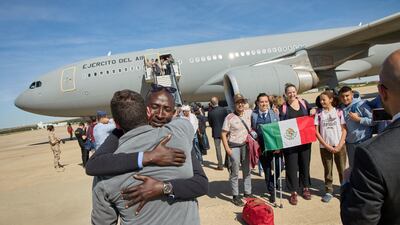
A Sudanese evacuee is embraced after disembarking from a Spanish Air and Space Force plane at Torrejon de Ardoz Airbase, Spain, on April 24. Reuters -
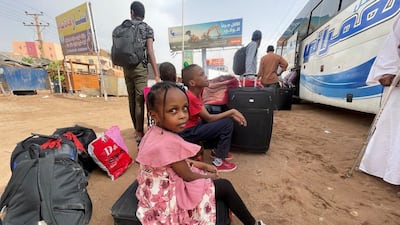
People gather as they flee clashes between the RSF and the army in Khartoum on April 24. Reuters -
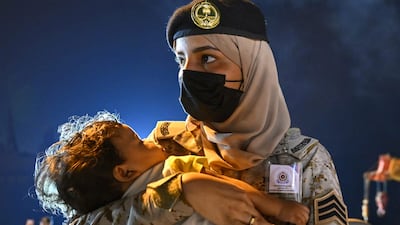
A member of the Saudi Royal Navy carries a child who was evacuated from Sudan, in Jeddah on April 24. Photo: SPA -
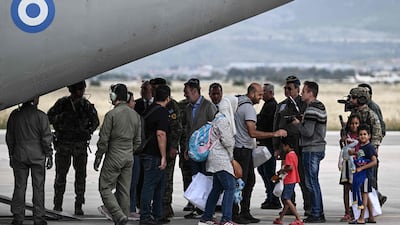
Greek citizens arrive in Greece from Sudan on board a military plane on April 25. AFP -
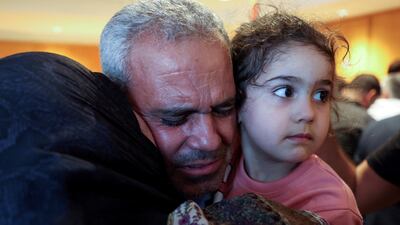
Ali Mazloum, a Lebanese citizen who was evacuated from Sudan, is welcomed upon his arrival at Beirut airport on April 25. Reuters -
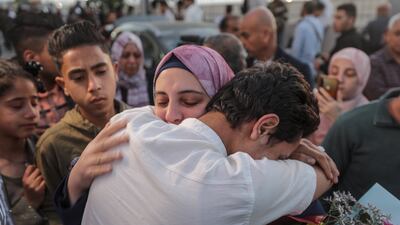
Palestinian evacuees from Sudan arrive at Rafah crossing, between Egypt and the Gaza Strip on April 28. EPA -
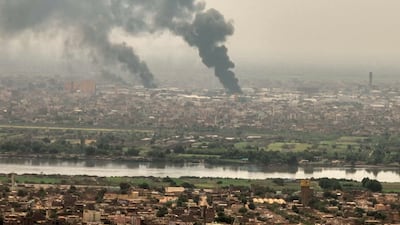
Black smoke rises over Khartoum on April 28. AFP -
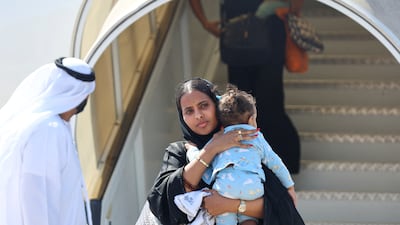
A woman and child evacuated from Sudan arrive in Abu Dhabi on April 29. Reuters -
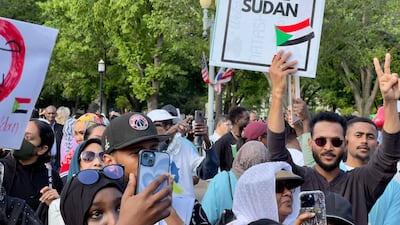
Activists demonstrate in front of the White House in Washington, calling on the US to intervene to stop the fighting in Sudan on April 29. AFP -

Children fleeing Sudan arrive at Wadi Karkar bus station in Aswan, southern Egypt, on April 30. EPA -
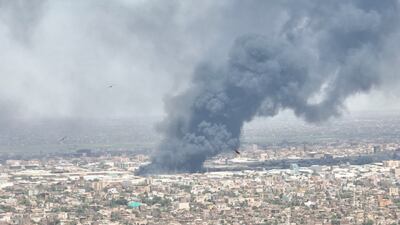
Clouds of black smoke billow over Khartoum as fighting continues on May 1. Reuters -
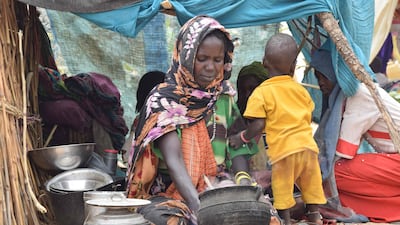
A Sudanese refugee who crossed into Chad cooks a meal in a makeshift shelter at a camp in Koufroun, near Echbara, on May 1. AFP -

People board a Russian military aircraft during an evacuation operation at Khartoum airport on May 2. EPA -

A boy holds bullet cartridges as clashes between the RSF and the army continue in Khartoum on May 13. Reuters -
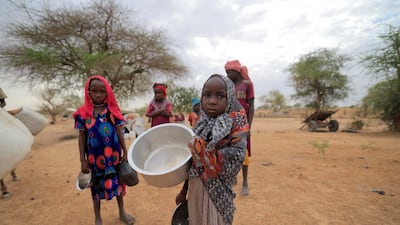
A Sudanese girl who fled the conflict in Sudan's Darfur region carries a pot on her way to collect water near the border between Sudan and Chad on May 12. Reuters -
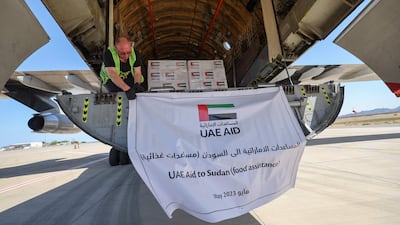
Members of staff offload aid supplies provided by the World Health Organisation and UAE Aid from a plane that arrived from the Emirates at Port Sudan on May 5. AFP -
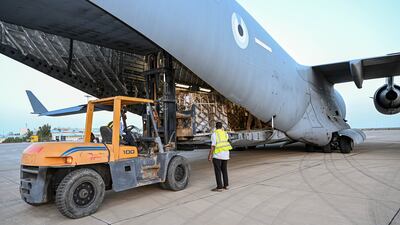
The UAE sent three aid planes to support the Sudanese people on May 8. Photo: Wam -
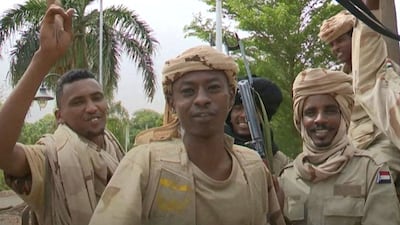
RSF fighters gather near the presidential palace in Khartoum on May 1. AFP -
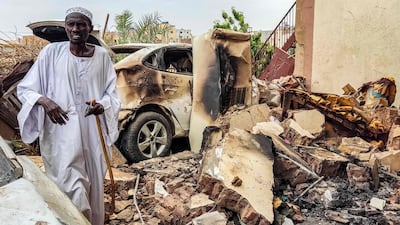
A man inspects the damage as he walks near a destroyed building and car in the Azhari district of Khartoum on June 6. AFP -
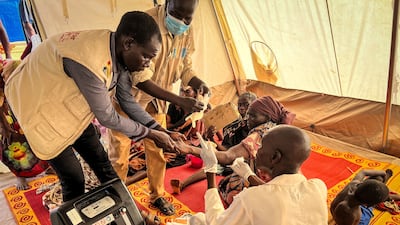
Wounded Sudanese refugees who fled conflict in West Darfur receive medical support from Doctors Without Borders and health ministry staff at a hospital in Adre, Chad, on June 16. Reuters -
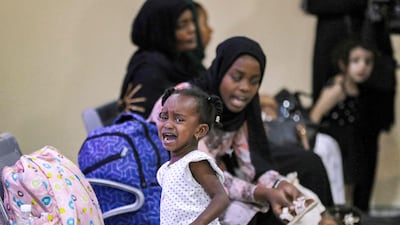
Evacuees from Sudan arrive at Baghdad International Airport on June 18. AFP -
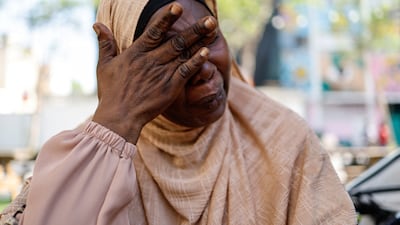
Suad Fissa, 40, an asylum seeker and factory worker from Darfur, cries as she speaks about her missing children in Tel Aviv, Israel, on June 24. Reuters


The UN said one family had to wait 13 days in West Darfur before being allowed to collect the body of a family member killed around June 9 by the RSF.
“The RSF’s leadership and their allied militia as well as all parties to an armed conflict are required to ensure that the dead are properly handled, and their dignity protected,” Mr Turk said.
“The RSF must record, or allow relief workers to record, all available information related to the dead, including taking proper photos of the bodies and marking the location of the graves, with a view to identification to facilitate the return of the remains of the deceased to the families upon their request,” the UN said.

