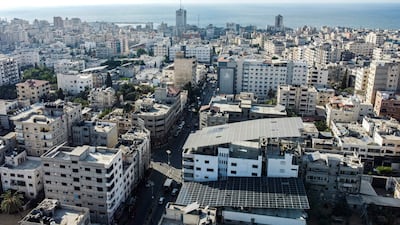
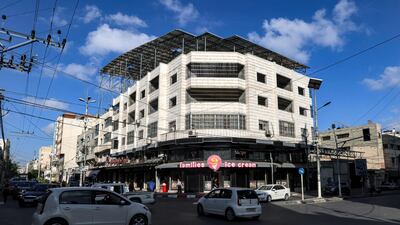
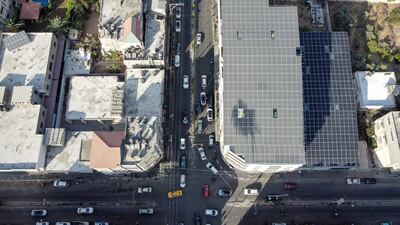
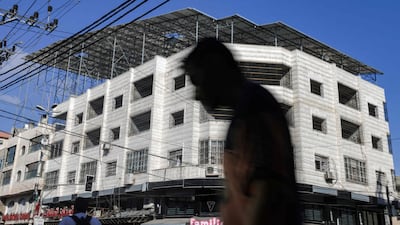
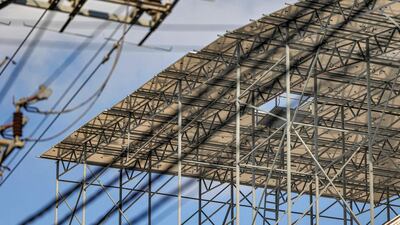
Palestinians overlook the Shejaiya neighbourhood of Gaza city, where unemployment is at 44 per cent. Sipa

Bitcoin offers a digital lifeline for Palestinians in blockaded Gaza Strip


  • English
  • Arabic

Gaza resident Noor did not know anything about Bitcoin before her make-up boutique was destroyed during the 2021 war with Israel and she started investing in cryptocurrencies to survive.

“I cannot remember the days we had to endure after the war ended except with misery and despair,” Noor tells The National.

“I struggled all day to help my family. We lacked essential supplies that at some point our neighbours donated to us.”

Destitute and with little prospect of finding work in the crowded Gaza Strip, where a 15-year blockade by Israel has left 44 per cent of the Palestinian territory’s 2.3 million residents unemployed, Noor started learning about trading cryptocurrencies.

From having to rely on handouts, the English Literature graduate made enough money to launch an online make-up store.

“My fortunes changed when I learnt to invest in Bitcoin and started selling make-up online,” she says.

Blockaded Gaza turns to solar — in pictures

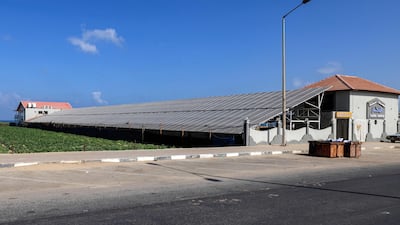
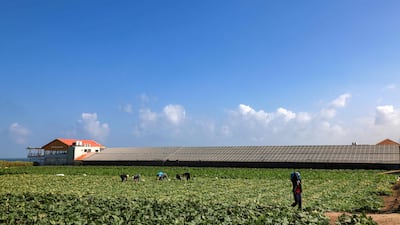
  • Palestinians in the Israeli-blockaded enclave of Gaza have long endured an unstable and costly electricity supply, so restaurateur and fish farmer Yasser Al Hajj found a different solution – solar power. All photos: AFP
    Palestinians in the Israeli-blockaded enclave of Gaza have long endured an unstable and costly electricity supply, so restaurateur and fish farmer Yasser Al Hajj found a different solution – solar power. All photos: AFP
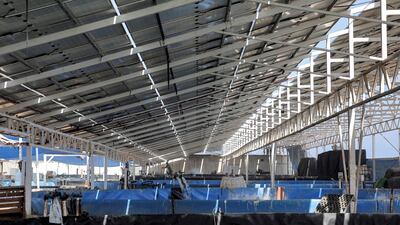
  • Mr Al Hajj's seafood restaurant The Sailor, in Gaza. Electricity generated by solar panels is used to provide oxygen for fish pools underneath the eatery and pump water from the sea.
    Mr Al Hajj's seafood restaurant The Sailor, in Gaza. Electricity generated by solar panels is used to provide oxygen for fish pools underneath the eatery and pump water from the sea.
  • Savings created by the solar panels over six years are now paying for refurbishments to the business. 'Electricity is the backbone of the project,' said Mr Al Hajj.
    Savings created by the solar panels over six years are now paying for refurbishments to the business. 'Electricity is the backbone of the project,' said Mr Al Hajj.
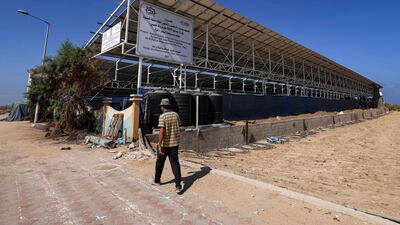
  • Gaza bakery owner Bishara Shehadeh has installed hundreds of panels on his roof. Surplus electricity generated during the day is sold to the electricity company.
    Gaza bakery owner Bishara Shehadeh has installed hundreds of panels on his roof. Surplus electricity generated during the day is sold to the electricity company.
  • Next, Mr Shehadeh wants to replace his diesel-powered ovens with electric ones.
    Next, Mr Shehadeh wants to replace his diesel-powered ovens with electric ones.
  • The bakery and fish farm partly relied on foreign donors to kick-start their switch to solar, although their owners are also investing their own cash.
    The bakery and fish farm partly relied on foreign donors to kick-start their switch to solar, although their owners are also investing their own cash.
  • Financing options are available for Gazans with some capital, like Mr Shehadeh, who got a four-year loan to fund his bakery project.
    Financing options are available for Gazans with some capital, like Mr Shehadeh, who got a four-year loan to fund his bakery project.
  • At a store selling solar power kits, engineer Shehab Hussein said prices start at around $1,000. Clients include a garment factory and a drinks producer.
    At a store selling solar power kits, engineer Shehab Hussein said prices start at around $1,000. Clients include a garment factory and a drinks producer.
  • Raya Al Dadah, who heads the University of Birmingham's sustainable energy technology laboratory in the UK, said her family in Gaza has for more than 15 years been using simple solar panels to heat water.
    Raya Al Dadah, who heads the University of Birmingham's sustainable energy technology laboratory in the UK, said her family in Gaza has for more than 15 years been using simple solar panels to heat water.
  • Despite challenges, such as imports of sophisticated technology being restricted by Egypt and Israel, Ms Al Dadah said solar energy remains 'a brilliant option' for Gaza.
    Despite challenges, such as imports of sophisticated technology being restricted by Egypt and Israel, Ms Al Dadah said solar energy remains 'a brilliant option' for Gaza.

The blockade of Gaza has not only shut Palestinians off from physical international markets, but also financial ones.

The Palestinian Monetary Authority in Ramallah cannot issue banknotes and Palestinians across the West Bank and Gaza are heavily reliant on handouts and international aid as a financial lifeline.

However, the decentralised, online and apolitical nature of cryptocurrencies has opened a path for Gazans seeking to invest internationally.

This is despite the jolt the sector has experienced with the collapse of crypto exchange FTX, which was headed by founder Sam Bankman-Fried.

FTX's filing for bankruptcy on November 11 has cast a shadow over the wider cryptocurrency sector, undermining confidence.

Unlike traditional currency trading, cryptocurrencies like Bitcoin use blockchain — in effect, a decentralised register of trades — to allow peer-to-peer exchanges of the coins with no regulatory oversight or third parties.

Palestinian "financial subordination to Israeli finance regulations" has been ongoing since before the 1990s, says Dr Tariq Dana, an assistant professor of political economy and conflict and a policy adviser for Al-Shabaka, The Palestinian Policy Network.

"Israel has long had huge power in politics, the economy and financial software,” Dr Dana says.

“From a critical perspective, installing an online, practical and secure financial system under Israel’s control is almost impossible.”

But he adds that an increasing number of Palestinians have turned to cryptocurrencies like Bitcoin as an alternative to traditional financial routes.

The anonymous nature of Bitcoin means it is hard to gauge how many Gazans are investing in cryptocurrencies, but anecdotal evidence suggests numbers have grown rapidly over recent years.

“I believe the decentralised bank status of crypto is encouraging enough for us [Palestinians] to have an income through a safe and freelance platform,” says Kareem, a resident of Gaza who trades in Bitcoin.

“I have been in the industry for almost three years and I feel it [removes] the Israeli limitations on our livelihoods.”

However, the turbulent market is also highly risky.

Since the start of 2022, Bitcoin has lost almost 75 per cent of its value, from over $238,000 per coin to just $63,300. This has wiped away the savings and fortunes of many investors.

Haitham Zuhair, a Palestinian businessman, Bitcoin investor and analyst currently based in Dubai, says investors in cryptocurrencies need to monitor the political, economic and military factors that influence the market worldwide.

“Even with the good advantage of crypto, risks of loss are still omnipresent," he says.

"I am certain the drop in Bitcoin price has cost many traders in Gaza so much, because their initial investments and capital are not as high as one would think.

“Education and experience are essential to persist with crypto as a space of online income and a symbolic tool of economic steadfastness in Palestine. It only takes one wrong call to lose an earth-worth profit in crypto.”

While cryptocurrencies have opened the door for many Palestinians to profit from the global trade, it is not a viable avenue for Palestinian authorities, warns Mohammed Khaled, a business journalist in Gaza City.

“It is impossible to make state-level procedures with Bitcoin,” he says.

“Even with the huge adoption of crypto, Palestine doesn’t possess the political or economic force to designate Bitcoin or any other digital currency as the official medium of finance.”

However, as well as the risks of the market, traders also believe that Israeli authorities are going after their gains.

“The crypto exchange system in Palestine is centralised, meaning that Israel can pause deposits and withdrawals,” says Mr Khaled.

Aftermath of Israel-Hamas fighting — in pictures

  • Rahaf Salman, 11, lost her limbs during Israel-Gaza fighting. Reuters
    Rahaf Salman, 11, lost her limbs during Israel-Gaza fighting. Reuters
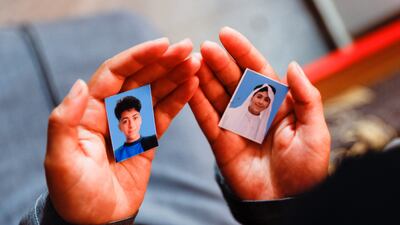
  • Najwa, mother of 19-year-old Palestinian Khalil Abu Hamada, who was conceived through IVF and killed in a missile strike in latest Gaza-Israel fighting, holds his pictures at her home in Jabalya refugee camp, in the northern Gaza Strip. Reuters
    Najwa, mother of 19-year-old Palestinian Khalil Abu Hamada, who was conceived through IVF and killed in a missile strike in latest Gaza-Israel fighting, holds his pictures at her home in Jabalya refugee camp, in the northern Gaza Strip. Reuters
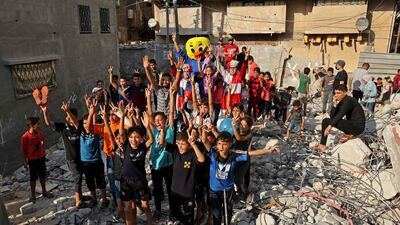
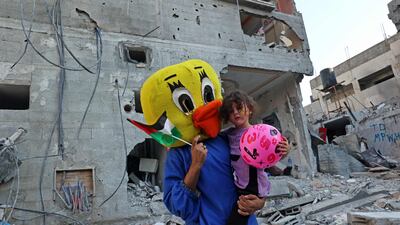
  • Palestinian children are entertained amid the rubble. AFP
    Palestinian children are entertained amid the rubble. AFP
  • An Egypt-brokered ceasefire reached late on August 7 ended the intense fighting that killed 46 people including 16 children and wounded 360 in the enclave, according to Gaza's health ministry. AFP
    An Egypt-brokered ceasefire reached late on August 7 ended the intense fighting that killed 46 people including 16 children and wounded 360 in the enclave, according to Gaza's health ministry. AFP
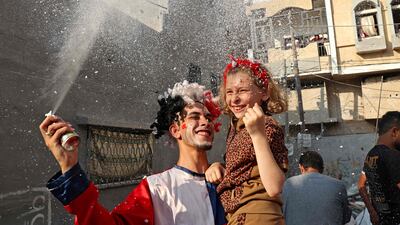
  • A performer tries to bring happiness to the children in Gaza. AFP
    A performer tries to bring happiness to the children in Gaza. AFP
  • Intense fighting killed 46 people, including 16 children, and wounded 360. AFP
    Intense fighting killed 46 people, including 16 children, and wounded 360. AFP
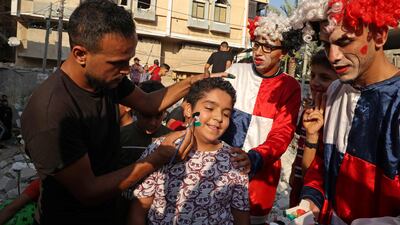
  • A Palestinian clown carries a child during a show amid the rubble of a building destroyed in the latest round of fighting between Israel and Palestinian militants in Rafah in the southern Gaza Strip. AFP
    A Palestinian clown carries a child during a show amid the rubble of a building destroyed in the latest round of fighting between Israel and Palestinian militants in Rafah in the southern Gaza Strip. AFP
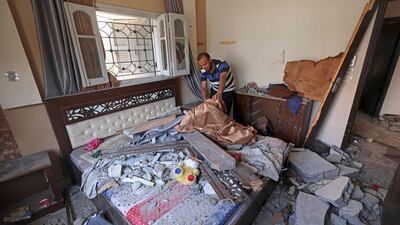
  • A Palestinian from the Shamalagh family inspects their damaged home in Gaza city early on Tuesday after a ceasefire between Israel and Palestinian militants came into force. AFP
    A Palestinian from the Shamalagh family inspects their damaged home in Gaza city early on Tuesday after a ceasefire between Israel and Palestinian militants came into force. AFP
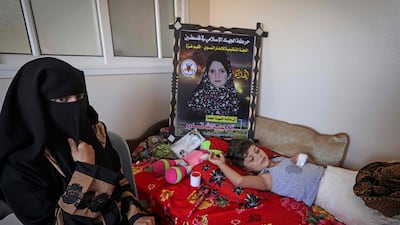
  • Wounded Palestinian Rayed Qadoom lies near a poster depicting his five-year-old sister Alaa, who was killed during the latest conflict between Israel and Palestinian militants in Gaza. AFP
    Wounded Palestinian Rayed Qadoom lies near a poster depicting his five-year-old sister Alaa, who was killed during the latest conflict between Israel and Palestinian militants in Gaza. AFP
  • Alaa was the first of 16 children killed in three days of intense conflict between Israel and Islamic Jihad militants in the densely populated Palestinian enclave of Gaza. AFP
    Alaa was the first of 16 children killed in three days of intense conflict between Israel and Islamic Jihad militants in the densely populated Palestinian enclave of Gaza. AFP
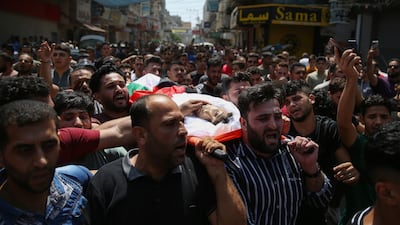
  • Mourners carry the body of a Palestinian killed in an explosion at Jebaliya refugee camp near the northern Gaza Strip. AP
    Mourners carry the body of a Palestinian killed in an explosion at Jebaliya refugee camp near the northern Gaza Strip. AP
  • Palestinians attend the funeral of Yasser Al Nabhin and his three children at Al Bureije refugee camp in the central Gaza Strip. EPA
    Palestinians attend the funeral of Yasser Al Nabhin and his three children at Al Bureije refugee camp in the central Gaza Strip. EPA
  • Palestinians carry the bodies of Yasser Al Nabhin and his three children at Al Bureije refugee camp in the central Gaza Strip. EPA
    Palestinians carry the bodies of Yasser Al Nabhin and his three children at Al Bureije refugee camp in the central Gaza Strip. EPA
  • Palestinians search through the rubble of a building in which Khaled Mansour, a top Islamic Jihad militant, was killed in an Israeli airstrike on Sunday, in Rafah, southern Gaza Strip. AP
    Palestinians search through the rubble of a building in which Khaled Mansour, a top Islamic Jihad militant, was killed in an Israeli airstrike on Sunday, in Rafah, southern Gaza Strip. AP
  • A Palestinian man sits inside his damaged home in Gaza City. AFP
    A Palestinian man sits inside his damaged home in Gaza City. AFP
  • Relatives of Khaled Mansour react to his death. AFP
    Relatives of Khaled Mansour react to his death. AFP
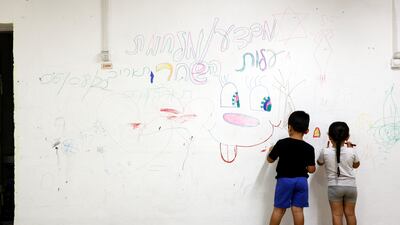
  • Israeli children draw on a wall as they stay with their family in a bomb shelter following rockets fired from Gaza towards Israel, in Ashkelon, Israel on Sunday. Reuters
    Israeli children draw on a wall as they stay with their family in a bomb shelter following rockets fired from Gaza towards Israel, in Ashkelon, Israel on Sunday. Reuters

Crypto trader Mohammed Awni from Gaza says that while he initially earned a good return, his digital savings have disappeared.

“At the beginning of my tenure in crypto trading, everything seemed excellent and I had an opportunity to have a four-times return for my capital," he says.

"I started planning to get married, only to find out my earnings were gone in the blink of an eye.

“I worked hard to make $6,000. It was my only hope to marry the girl I love. But my dream has been crushed.

"When I sought an explanation from others with similar experiences, it turned out the Israeli military had confiscated my digital wallet for no reason at all.”

Outgoing Israeli Defence Minister Benny Gantz has authorised the military to seize crypto wallets that they believe are being used to fund Hamas — Gaza’s hardline leadership, which is listed as a terrorist group by Israel, the US, the EU and others.

Hamas officials say the campaign of seizures is wider than targeting funding for the group, and that the Israeli military is going after ordinary citizens as well.

Mr Awni says cryptocurrencies have been good business, giving people opportunities and work that would otherwise be closed off in the blockaded strip.

But he says this will not be enough unless there is the “immediate stop of the Israeli full control of the economy, as well as the seizure and confiscation of digital wallets — our people's only means of survival”.


SHAITTAN
%3Cp%3E%3Cstrong%3EDirector%3A%20%3C%2Fstrong%3EVikas%20Bahl%3Cbr%3E%3Cstrong%3EStarring%3A%20%3C%2Fstrong%3EAjay%20Devgn%2C%20R.%20Madhavan%2C%20Jyothika%2C%20Janaki%20Bodiwala%3Cbr%3E%3Cstrong%3ERating%3A%20%3C%2Fstrong%3E3%2F5%3C%2Fp%3E%0A

Mercer, the investment consulting arm of US services company Marsh & McLennan, expects its wealth division to at least double its assets under management (AUM) in the Middle East as wealth in the region continues to grow despite economic headwinds, a company official said.

Mercer Wealth, which globally has $160 billion in AUM, plans to boost its AUM in the region to $2-$3bn in the next 2-3 years from the present $1bn, said Yasir AbuShaban, a Dubai-based principal with Mercer Wealth.

Within the next two to three years, we are looking at reaching $2 to $3 billion as a conservative estimate and we do see an opportunity to do so,” said Mr AbuShaban.

Mercer does not directly make investments, but allocates clients’ money they have discretion to, to professional asset managers. They also provide advice to clients.

“We have buying power. We can negotiate on their (client’s) behalf with asset managers to provide them lower fees than they otherwise would have to get on their own,” he added.

Mercer Wealth’s clients include sovereign wealth funds, family offices, and insurance companies among others.

From its office in Dubai, Mercer also looks after Africa, India and Turkey, where they also see opportunity for growth.

Wealth creation in Middle East and Africa (MEA) grew 8.5 per cent to $8.1 trillion last year from $7.5tn in 2015, higher than last year’s global average of 6 per cent and the second-highest growth in a region after Asia-Pacific which grew 9.9 per cent, according to consultancy Boston Consulting Group (BCG). In the region, where wealth grew just 1.9 per cent in 2015 compared with 2014, a pickup in oil prices has helped in wealth generation.

BCG is forecasting MEA wealth will rise to $12tn by 2021, growing at an annual average of 8 per cent.

Drivers of wealth generation in the region will be split evenly between new wealth creation and growth of performance of existing assets, according to BCG.

Another general trend in the region is clients’ looking for a comprehensive approach to investing, according to Mr AbuShaban.

“Institutional investors or some of the families are seeing a slowdown in the available capital they have to invest and in that sense they are looking at optimizing the way they manage their portfolios and making sure they are not investing haphazardly and different parts of their investment are working together,” said Mr AbuShaban.

Some clients also have a higher appetite for risk, given the low interest-rate environment that does not provide enough yield for some institutional investors. These clients are keen to invest in illiquid assets, such as private equity and infrastructure.

“What we have seen is a desire for higher returns in what has been a low-return environment specifically in various fixed income or bonds,” he said.

“In this environment, we have seen a de facto increase in the risk that clients are taking in things like illiquid investments, private equity investments, infrastructure and private debt, those kind of investments were higher illiquidity results in incrementally higher returns.”

The Abu Dhabi Investment Authority, one of the largest sovereign wealth funds, said in its 2016 report that has gradually increased its exposure in direct private equity and private credit transactions, mainly in Asian markets and especially in China and India. The authority’s private equity department focused on structured equities owing to “their defensive characteristics.”

Heather, the Totality
Matthew Weiner,
Canongate 

Who's who in Yemen conflict

Houthis: Iran-backed rebels who occupy Sanaa and run unrecognised government

Yemeni government: Exiled government in Aden led by eight-member Presidential Leadership Council

Southern Transitional Council: Faction in Yemeni government that seeks autonomy for the south

Habrish 'rebels': Tribal-backed forces feuding with STC over control of oil in government territory

The specs: Hyundai Ionic Hybrid

Price, base: Dh117,000 (estimate)

Engine: 1.6L four-cylinder, with 1.56kWh battery

Transmission: Six-speed automatic

Power: 105hp (engine), plus 43.5hp (battery)

Torque: 147Nm (engine), plus 170Nm (battery)

Fuel economy, combined: 3.4L / 100km

T10 Cricket League
Sharjah Cricket Stadium
December 14- 17
6pm, Opening ceremony, followed by:
Bengal Tigers v Kerala Kings 
Maratha Arabians v Pakhtoons
Tickets available online at q-tickets.com/t10

BULKWHIZ PROFILE

Date started: February 2017

Founders: Amira Rashad (CEO), Yusuf Saber (CTO), Mahmoud Sayedahmed (adviser), Reda Bouraoui (adviser)

Based: Dubai, UAE

Sector: E-commerce 

Size: 50 employees

Funding: approximately $6m

Investors: Beco Capital, Enabling Future and Wain in the UAE; China's MSA Capital; 500 Startups; Faith Capital and Savour Ventures in Kuwait

How to improve Arabic reading in early years

One 45-minute class per week in Standard Arabic is not sufficient

The goal should be for grade 1 and 2 students to become fluent readers

Subjects like technology, social studies, science can be taught in later grades

Grade 1 curricula should include oral instruction in Standard Arabic

First graders must regularly practice individual letters and combinations

Time should be slotted in class to read longer passages in early grades

Improve the appearance of textbooks

Revision of curriculum should be undertaken as per research findings

Conjugations of most common verb forms should be taught

Systematic learning of Standard Arabic grammar

Updated: November 28, 2022, 11:48 PM