


Since Jordanian authorities raised fuel prices sharply this year, Iraqi trader Abu Suha couldn't import electric cars fast enough to cope with demand at his lot at a duty-free zone north of Amman.
The 2022 Chinese-made Volkswagen electric crossover is his bestseller, fetching a minimum of $38,500 with tax.
“It can last almost 500 kilometres on a single charge,” says the trader.
Demand for electric cars is the latest sign of changing consumer behaviour in Jordan, as prices rise across the board following the start of the war in Ukraine in February.
The Central Bank of Jordan expects inflation to hit 3.8 per cent this year, more than double that seen in 2021.
The government also cut most electricity subsidies in April, contributing to rising prices and a drive in demand for solar panels.
On Monday, authorities raised the price of petrol to $1.39 a litre — the fourth consecutive time since the start of this year. A litre of petrol was selling for $1.17 at the end of December.
The more petrol prices have risen, the more business Abu Suha has received, but mostly from wealthy and upper-middle-class customers, he says.
“Those who cannot afford new are buying used,” says Abu Suha, who sells both.
Electric cars had previously mostly been shunned in Jordan, partly because of a lack of a plug-in network, forcing most electric car owners to use home charging stations.
In pictures: Mitsubishi and Nissan launch new electric vehicles
-
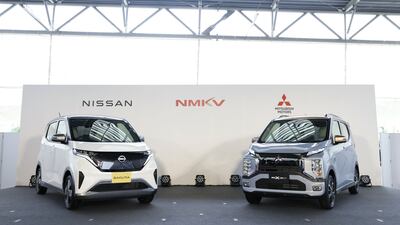
A Nissan Sakura electric vehicle (left) and a Mitsubishi eK X EV at the Mitsubishi Motors Mizushima plant in Kurashiki, Okayama Prefecture, Japan. Bloomberg -

Kei is short for keijidosha, meaning light automobile. Bloomberg -
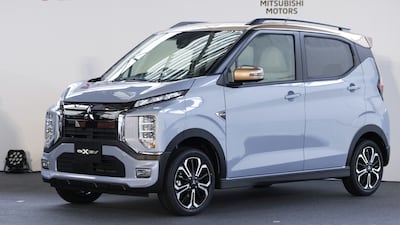
Light automobiles account for a third of all sales in Japan. Bloomberg -
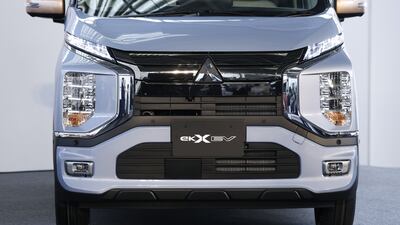
Nissan and Mitsubishi released electric kei models to the market on May 20. Bloomberg -
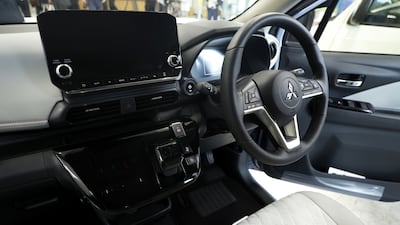
The interior of a Mitsubishi eK X EV. Bloomberg -

A Mitsubishi eK X electric vehicle. Bloomberg -
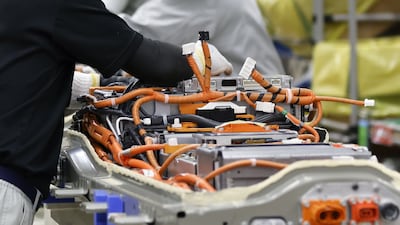
A worker assembles a battery pack for a kei electric vehicle on the production line at the Mitsubishi Mizushima plant in Kurashiki, Okayama Prefecture. Bloomberg -
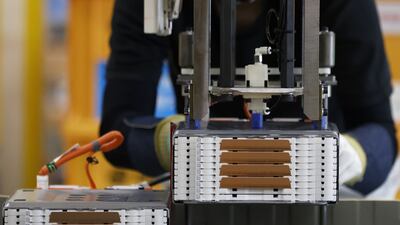
A worker installs a stack of lithium-ion batteries onto a battery pack for a kei electric vehicle. Bloomberg -

A Mitsubishi eK X in the inspection area at the company's Mizushima plant. Bloomberg -
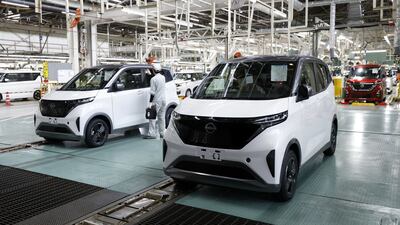
Nissan Sakura electric vehicles. Bloomberg


But the latest Free Zone data showed that 7,050 electric cares had been imported to Jordan in the first half of this year, compared with 3,700 for the whole of 2021.
They still comprise less than 2 per cent of the 1.5 million cars in the country of 10 million people.
The Chinese-made Volkswagen sells for between $36,400 and $42,000, plus a tariff of $2,100 to $4,200, depending on its battery capacity. The tariff remains far less than petrol-powered or hybrid cars.
Lina, a recent buyer, is happy with the used electric Volkswagen Golf that she bought at the end of last year for $22,000, right before the substantial petrol price increases.
“Electricity is not cheap. But I am still saving so much on petrol,” said Lina, who owned a petrol-guzzling Chevrolet suburban before.
Most people, however, continue to use their petrol-powered cars because they cannot afford to do otherwise. Jordan's annual income is $4,200 per capita and unemployment is at a record high of 23 per cent.
Abu Fares, a veteran mechanic in Al Mahata district in east Amman, says he is sticking with his 25-year-old Hyundai, which runs on petrol.
He says his family of six is already cutting down on basic food items, with even state-provided water becoming scarce in the summer, forcing him to pay $30 every six weeks to fill a four-cubic-metre tank in his home.
Jordan, which is mostly desert, has long-running problems with its water supply.
In addition, the kingdom imports most of its crude oil from Saudi Arabia. A state-owned refinery has a monopoly on fuel production, and between 30 to 35 per cent of the price of petrol at the pump goes to the government.
“They raise the fuel prices and the traffic only gets worse,” Abu Fares said.

