



Proposals by Sudan’s military ruler to end the country’s crippling political crisis were dismissed on Tuesday by opposition groups as another attempt by generals to maintain their grip on power and undermine the protest movement.
Gen Abdel Fattah Al Burhan announced on Monday that the military was withdrawing from negotiations with the opposition, leaving political and revolutionary forces alone to find a way out of the crisis.
Describing the challenges facing Sudan as "existential," he urged those left to immediately begin a dialogue and come to an agreement on the country’s political future, eventually forming a civilian-led government of independent technocrats that takes charge of the country through a democratic transitional period.
The proposals by Gen Al Burhan, delivered in a televised address to the nation, appeared to give the impression that the military was finally caving in to demands by the pro-democracy movement to quit politics.
However, opposition politicians and analysts said his proposals were in reality designed to strengthen the military's grip on power and legitimise a coup Gen Al Burhan led last October and which derailed the country's fragile democratic transition.
"Contrary to what he is saying, his proposals are broadening the political role of the armed forces," said Adel Khalafallah, a senior member of the pro-democracy group Forces of Freedom and Change. "They are essentially old ideas that he rephrased and designed to undermine the protest movement."
Yasser Irman, a veteran opposition figure who is now a spokesman for one of the key pro-democracy groups, said the plan may in part be designed to counter the revival of street activism that began on Thursday, when tens of thousands took to the streets in Khartoum in what became the deadliest protests in Sudan this year.
“They are meant to undermine the popular eruption of the past few days and the restoration of the December revolution’s energy,” he told The National, alluding to the successful 2018-19 uprising against long-time dictator Omar Al Bashir.
“His address appears to portray the crisis as one among politicians and that it has nothing to do with the military or the coup.”
-
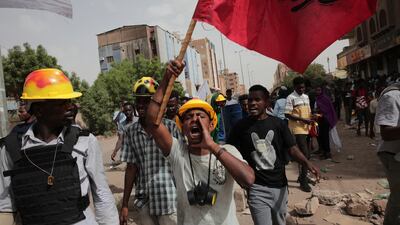
Anti-military protesters march in Khartoum, Sudan, a day after nine people were killed in demonstrations against the country’s ruling generals. AP -
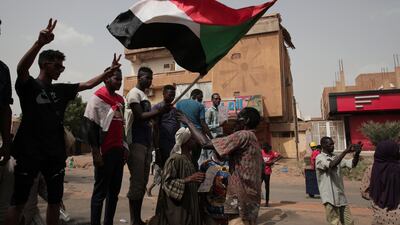
Anti-military protesters march in Khartoum. AP -
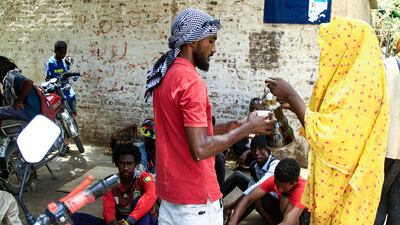
A woman serves tea to a Sudanese protester. AFP -
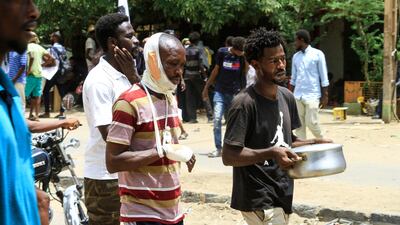
A wounded Sudanese demonstrator follows a protester carrying a pot of food. AFP -
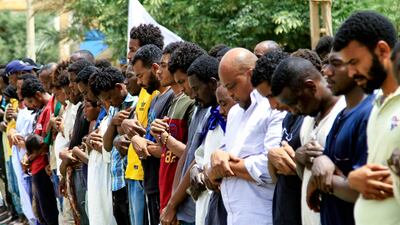
Sudanese demonstrators perform the Friday noon prayers in southern Khartoum. AFP -
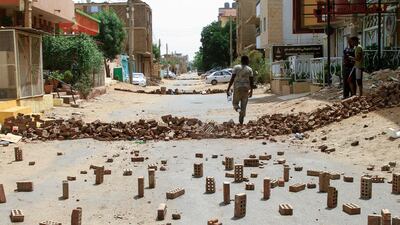
Blocks of brick are used to make barricades. AFP -
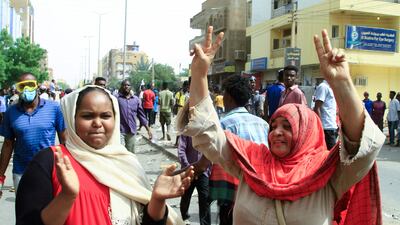
Hundreds of activists mass near the presidential palace and other areas of the capital. AFP -
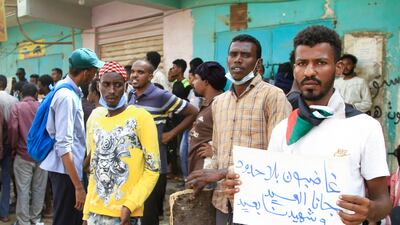
A Sudanese protester carries a placard which reads: 'Angry without borders, Eid is here and the martyr is absent' as he takes part in a rally in southern Khartoum. AFP -
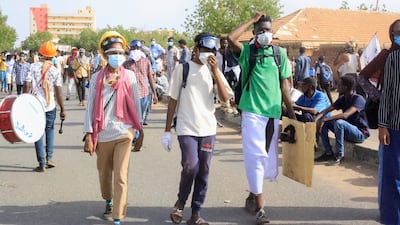
Protesters take part in a rally against military rule, after the last coup and to commemorate the third anniversary of revolution, in Khartoum, Sudan. Reuters -
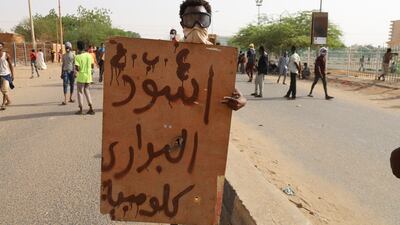
A protester holds a placard reading 'Barari Lions'. Reuters -
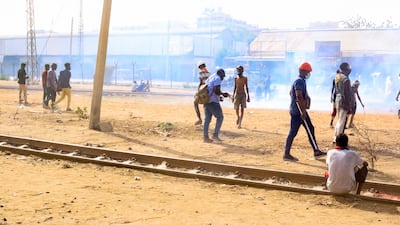
Sudanese security forces fired tear gas on Friday to disperse the hundreds of anti-military protesters. Reuters -

Protesters try to block the road during a rally against military rule in Khartoum. Reuters -
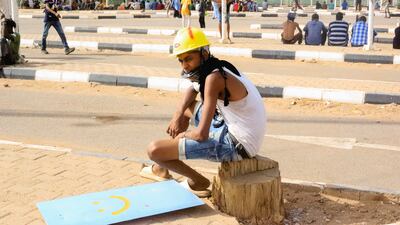
A sit-in protest. Reuters -
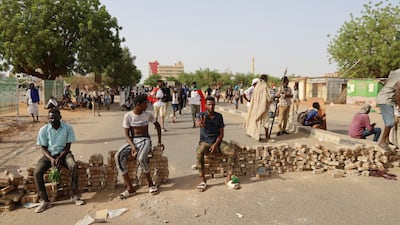
The actions of Sudan’s security forces against protesters have been condemned. Reuters -
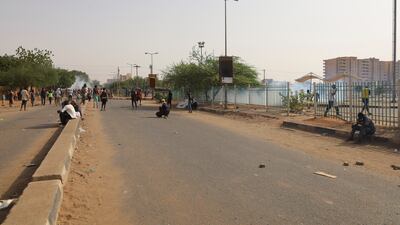
The pro-democracy protesters remain determined to end the rule of the generals. Reuters


Already, the announcement looks unlikely to bring an end to the protests that have been taking place nearly every day since Gen Al Burhan's coup on October 25, which plunged the Afro-Arab nation of 44 million into political crisis and deepened its economic woes.
On Tuesday, security forces attempted to break up small sit-in protests at several districts in Khartoum, including one not far from the city centre. Witnesses said the security forces used tear gas and stun grenades to try to disperse the protesters, who stood their ground.
A medical group aligned with the opposition said 11 protesters were injured when police tried late on Monday night to break up one of six sit-ins across the city.
Protesters meanwhile continued to barricade residential streets across the capital, disrupting traffic and denying access to security forces.
The sit-ins began the day after security forces killed nine protesters during anti-military rallies last Thursday, taking the number of those killed in violence since the coup to 114, including 18 children. About 6,000 others have been injured.
Scant details of plans for Sudan's future
Under Gen Al Burhan's plan, a supreme council of the armed forces would be formed to take care of security and defence issues, carrying out its mandate in co-ordination with the government.
The council, he said, would include Rapid Support Forces (RSF), a notorious paramilitary originating from tribal militias that fought on the government's side against rebels in the vast Darfur region in the 2000s.
He gave little details on the boundaries of the power of the military and did not appear to plan to place the military, the RSF and security forces under civilian review as demanded by the opposition.
He also appeared to link the dissolution of the ruling Sovereign Council he chairs to the formation of the government, effectively making it subject to his approval.
In practical terms, the effects of his announcement may be negligible, as the negotiations from which the military is withdrawing amount to only one procedural session last month after which they were indefinitely postponed after the opposition boycotted them.
The negotiations were facilitated by the UN, African Union and the regional IGAD group. The trio later said they would not be of any use if the opposition continued to stay away.
“The aim of the proposals appears to be creating a climate of confusion for everyone, while absolving Al Burhan and the military from any responsibility,” said Sudanese political analyst Moussa Hamed. "Many are at loss now over what the man really wants."
Daily life, meanwhile, appeared to be back to normal in central Khartoum on Tuesday, with more vehicles and pedestrians on the streets than in the past several days, when the city was gripped by apprehension after Thursday’s deadly protests.
Significantly, Gen Al Burhan on Tuesday flew to Kenya to attend a meeting of the regional IGAD group, giving the impression of business as usual at a time when Sudan appears engulfed by crisis.

