

Libya's parliament on Wednesday approved a budget for the government it appointed in March despite the incumbent administration refusing to step down, a move that may accelerate a return to parallel rule.
The budget passed by the parliament in the coastal city of Sirte is intended to finance the government of Fathi Bashagha, who has been unable to enter the capital Tripoli to take over from an administration that rejects his appointment.
The 89.7 billion Libyan dinar ($18.6 billion) budget was approved unanimously, the parliament's spokesperson said.
The session was attended by 98 of 165 legislators, while five voted in favour remotely, the spokesperson said.
The dispute over control of government and state revenue, and over a political solution to resolve 11 years of violent chaos, threatens to plunge Libya back into administrative partition and war.
In Tripoli, Abdulhamid al-Dbeibah, installed last year through a UN-backed process to lead an interim unity government, has said he will step down only after an election.
Underlining the divide in Libya, parliament speaker Aguila Saleh told legislators that Tripoli was controlled by outlaw groups and there were "local and international parties" seeking to prolong the crisis.
The Central Bank of Libya (CBL), which is based in Tripoli and is the only internationally recognised depository for Libyan oil revenues, finances Mr Dbeibah's government.
Under previous agreements, however, it pays salaries across Libya's political divide, including to fighters on different sides.
Legislator Saed Amgeb told Reuters that CBL governor Sadiq al-Kabir would not be able to refuse to finance the budget, citing an agreement between parliament and Libya's High State Council.
Libya analysts say if the CBL refuses to fund Mr Bashagha's budget, parliament may ask the head of its eastern branch to do so, effectively ending the CBL reunification process.
From 2014 to 2020, Libya was divided between warring eastern and western factions with a parallel government set up in the east with its own institutions, including a central bank.
The effort to reunify Libya's banking system is seen as crucial to resolving underlying economic drivers of conflict and has been a major thrust of diplomacy, but has moved slowly.
The parliament is based in the east and largely supported commander Khalifa Haftar's war against Tripoli and western factions.
-
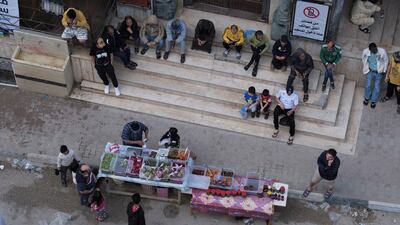
People visit a market during Ramadan in Benghazi, Libya. Reuters -

Boys play football in Benghazi. Reuters -
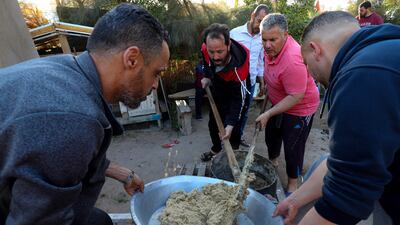
Libyans cook traditional bread as they prepare to break their fast in Tajoura, east of the capital Tripoli. AFP -
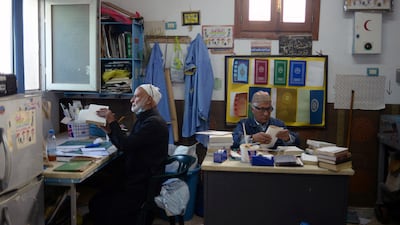
Libyan volunteers repair copies of the Quran during Ramadan in Tripoli. Reuters -
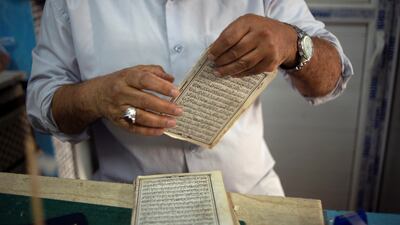
An artisan glues the pages of an old Quran in Tripoli. Reuters -
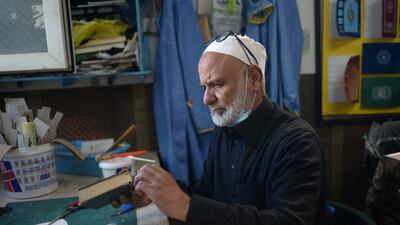
A Libyan volunteer repairs a Quran in Tripoli. Reuters -
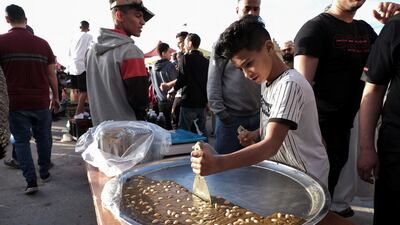
A boy cuts into a desert in Benghazi. Reuters -
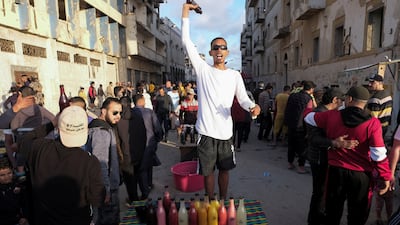
A man holds a juice bottle at a market in Benghazi. Reuters -
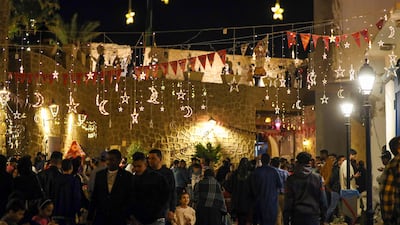
Libyans gather in Tripoli following iftar. AFP


Meanwhile, eastern factions demanding that Mr Dbeibah step aside have instigated a blockade of most Libyan oil output, with production falling to 100,000-150,000 barrels per day, according to the oil ministry.
Libya had been due to hold elections in December under a UN-backed peace process, but the vote was called off when factions could not agree on the rules. No new date has been set.
Libyan oil output last year was more than 1.2 million bpd and the reduced production adds to the pressure on markets already squeezed by tight supply elsewhere.
The oil ministry spokesman said Libya was facing a daily loss in export revenue of $70 million to $80 million as a result of the shutdowns. National Oil Corporation has not recently commented on oil output.
The political dispute over the control of government that is driving the shutdown meanwhile shows signs of escalating, making any swift return of Libyan oil to global markets uncertain.

