


Libya's 5+5 Joint Military Commission resumed first-person meetings in Tunisia’s capital to address the issues of disarmament and the withdrawal of foreign fighters stationed in the country.
The meeting, that began on Tuesday, follows a two-month suspension of talks after a dispute over army salaries and is one of several meetings expected to continue until Thursday, according to media reports. It was held under the auspices of the United Nations and France.
The sessions will focus on negotiating the disarmament of armed groups and the withdrawal of mercenaries and foreign forces from Libya, two issues that have made little progress between the rival administrations running the country.
Stephanie Williams, UN Secretary General Antonio Guterres' special adviser on Libya, also attended the meeting.
“Yesterday in Tunis I co-chaired, in collaboration with France, a Security Working Group (SWG) plenary meeting for Libya,” Ms Williams said in a series of tweets. “We were joined by the entirety of the JMC 5+5, as well as other co-chairs, the UK, Türkiye, Italy, and the AU, for a valuable discussion on ceasefire monitoring, disarmament and demobilisation, and the way forward on the JMC 5+5’s work.”
-

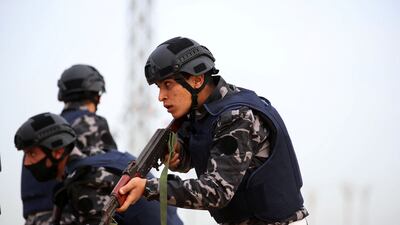
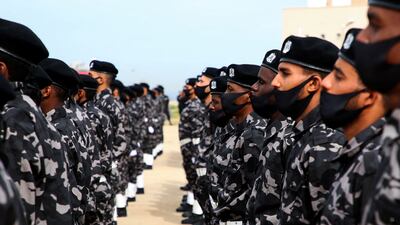
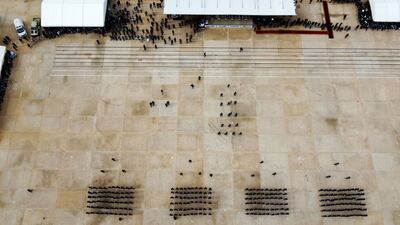
Recruits demonstrate their skills during an Interior Ministry passing-out ceremony in Tripoli, Libya. All photos: Reuters -

Libya is trying to rebuild its forces after being ripped apart by a decade of violence since a 2011 revolt toppled and killed dictator Muammar Qaddafi. -
The UN chief's special adviser in Libya, Stephanie Williams, has urged the country to preserve calm. -
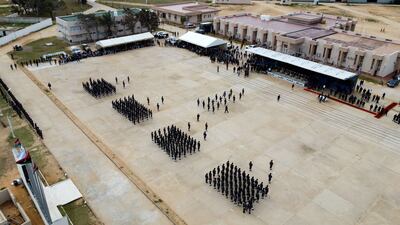
The graduation ceremony was attended by senior officials. -
Tensions remain high in the country and many fear a return to conflict. -
Members of the security forces during the graduation ceremony. -
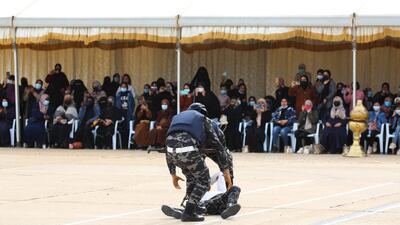
Recruits demonstrate their skills as officials watch. -

The graduation comes as rivals jostle for the position of prime minister. -
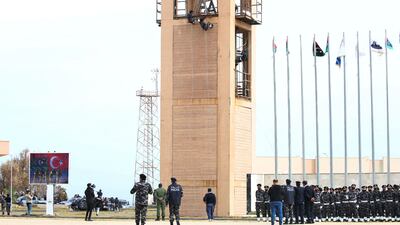
Recruits abseil down the walls of a tower.


The UN special adviser on Libya stressed the importance of ensuring that stability is maintained and calm is preserved on the ground.
This 5+5 Joint Military Commission decided to suspend its meetings in April following the withdrawal of members of the general command of the Libyan National Army due to the suspension of salaries of army personnel for four months by Prime Minister Abdul Hamid Dbeibah.
The meetings this week come after the UN Security Council approved a resolution on Friday extending the authorisation for countries and regional organisations to inspect ships off the coast of Libya suspected of violating the UN arms embargo on the troubled North African nation.
The vote on the French-sponsored resolution was 14-0, with Russia abstaining. The brief resolution extends the authorisation for inspections for a year.
Libya plunged into turmoil after a Nato-backed uprising in 2011 toppled dictator Muammar Gaddafi, who was later killed. It then became divided between rival governments — one in the east, backed by Khalifa Haftar, and a UN-supported administration in the capital, Tripoli. Each side is supported by different foreign powers.

