



Egypt is pulling out all the stops to ensure that bread, a politically sensitive staple for most of its 103 million people, is available despite the disruption of its large wheat imports from warring Russia and Ukraine.
This week, the government announced additional measures that appeared to reflect a heightened level of anxiety over its efforts to meet demand, particularly its $2-billion programme to encourage local growers to deliver six million tonnes from this year’s harvest.
Helwan University
Prime Minister Mostapha Madbouli on Monday prohibited local growers from selling their wheat to anyone except the government. The unprecedented measure will remain in force until August, which sees the end of the harvest.
“We must firmly deal with citizens who hoard wheat at their homes to avoid delivering it within the official system,” Mr Madbouly told provincial governors on Monday. “Every governor is directly responsible for the procurement of his province’s wheat quota,” he was quoted as saying in a Cabinet statement.
“The governors must directly deal with the prime minister without go-betweens on the question of wheat procurement.”
Separately, the government, faced with reduced supply on world markets, has relaxed its key quality requirement for imported wheat, allowing for a higher percentage of moisture content — 14 per cent, up from 13.5 per cent.
Authorities are meanwhile stepping up their crackdown on illegal wheat trading at home, arresting scores of offenders and closely monitoring lorry traffic across the country.
Wheat involved in the illegal trade is confiscated along with the vehicles used to transport it. Special storage facilities have been built to stockpile the confiscated wheat.
Egypt, the world’s largest wheat importer, bought more than 10 million tonnes on the world market in 2021. More than half of that came from Russia and Ukraine.
This year, it has given local wheat growers a target of six million tonnes to sell to the government. It has also introduced a new law that punishes anyone convicted of illegally dealing with wheat with up to five years in prison and a fine.

The government has so far locally procured more than three million tonnes, media reports say.
“The rate of procurement is satisfactory given that it is early June and we have around 100 more days until the harvest season is over,” said MP Magdy Malek of the house's Agriculture Committee. “We are doing just fine.”
The drive to procure locally grown wheat also aims to reduce the bill for imports. Egypt is currently paying $480 a tonne for imported wheat, up from the $270 per tonne paid before Russia’s invasion of Ukraine in February.
Besides the jail term and fine awaiting anyone convicted of involvement in the illegal sale of wheat, the government has offered a carrot-and-stick programme to wheat farmers.
The programme provides financial incentives for growers who meet their quota. Those who do not are denied state-subsidised fertilisers and other farming essentials for their next crop.
“The illegal trading in wheat must be dealt with firmly and decisively,” said MP El Sayed Shamseldeen, a member of the house’s Local Administration Committee which chiefly deals with issues related to rural areas.
“The law must be above everyone.
“The role of provincial governors is key in combating the wheat-hoarding mafia.”
Egypt is expected to harvest 10 million tonnes of wheat this year ― an increase of a million tonnes on 2021. The government plans to be 65 per cent self-sufficient in wheat in the next few years, as hundreds of thousands of hectares of fresh farmland are added to agrarian areas through reclamation projects.
-
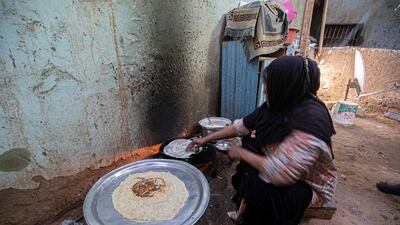
Umm Abdo prepares bread for the family in her home on the west bank of the Nile, by Egypt's southern city of Aswan. All photos: AFP -
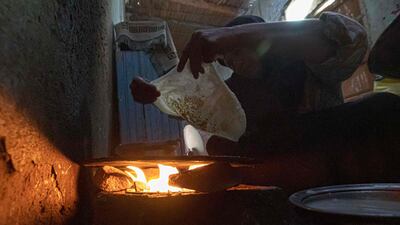
Russia's invasion of Ukraine has disrupted wheat imports to many countries, fuelling fears of higher prices and shortages. -

With global supply chains already under strain due to the Covid-19 pandemic, a wheat-buying frenzy in Egypt, Libya, Tunisia, Algeria and Morocco – all of which depend heavily on imported wheat to feed their populations – lays bare the magnitude of the challenge governments face amid sharp rises in food prices. -
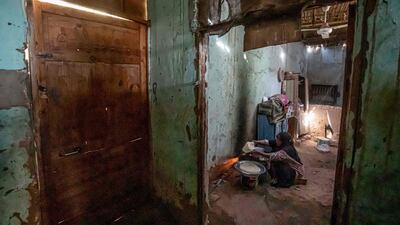
The crisis was highlighted by the UN food agency, which this week predicted that poorer countries in northern Africa, Asia and the Middle East that depend heavily on wheat imports risk suffering significant food insecurity because of the war in Ukraine. -
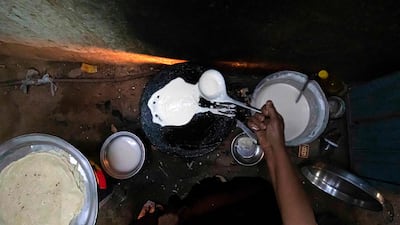
Of the five nations in northern Africa, Egypt’s wheat predicament is perhaps the gravest. The world’s largest wheat importer with a population of 102 million, Egypt relies on Russia and Ukraine for 80 per cent of its supply. -
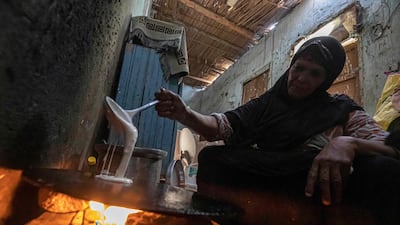
Egypt’s wheat is chiefly used to make the flatbreads provided for about 60 million citizens who are entitled to subsidised food.


If met, this year’s local procurement target would mean Egypt has enough wheat to last it until the end of the year.
The government is also discussing with Poland the possibility of moving wheat from Ukraine into Polish territory by freight trains and then to Egypt by sea, according to Polish media reports. Egypt has also been looking for alternative wheat sources to make up for the shortfall caused by the Ukraine war.
“Securing sufficient wheat supplies, especially at times of crisis like now, has a great deal to do with maintaining the government’s claim to power and prestige,” said Gehad Auda, a political science professor at Egypt’s Helwan University.
“It’s not all about keeping subsidised bread available to millions of Egyptians.”
The disruption of wheat supplies from Russia and Ukraine is one of several effects the conflict has had on Egypt.
Egypt had relied on the two countries for about a third of all visitors to the country. Its economy has also been affected by rising energy prices and shipping costs.
The uncertainty created by the war has led to the flight of more than $20 billion in foreign investments in Egyptian treasuries and forced the government to devalue its currency by 14 per cent against the US dollar in March.
Successive Egyptian governments have for decades gone to great lengths to secure enough wheat to feed the population. About 71 million people in the country rely on cheap bread under a state subsidised food card system.

Past attempts to remove or reduce bread subsidies have led to unrest, forcing authorities to back down.
But governments have over the years sought to cut the bread subsidies bill by reducing the size of the standard flat loaf sold for 0.05 pounds — a fraction of one US cent — to Egyptians covered by the card system.
The government frequently reviews the financial status of beneficiaries, removing hundreds of thousands from the programme on the grounds that they can afford to buy bread and other items available to card holders on the free market.
The criterion used by the government to exclude people from the card system is a sufficiently high income or ownership of an “expensive” car.
Last year, President Abdel Fattah El Sisi, the architect of and driving force behind overhauling the economy, said it was high time that bread subsidies were removed. But a public outcry forced his government to shelve the idea.

