



From Saudi Arabia to Iraq and Kuwait to Iran, sandstorms have been blanketing the Middle East, causing delays to flights, school closures and thousands to be admitted to hospital with breathing difficulties.
The severe weather caused by the strong winds, known as Shamal winds in the Gulf, has led many governments to take proactive measures. These follow warnings from experts that climate change could worsen and lead to more severe weather events in the coming years.
In the UAE, a countrywide weather alert was issued on Wednesday with forecasts of sandstorms and dusty, windy weather. The warning came a day after a dust storm blanketed Abu Dhabi, reducing visibility to only a few hundred metres across the city and causing a major drop in air quality, according to the Air Quality Index.
In Saudi Arabia, about 1,285 people were admitted to hospitals in Riyadh in one day suffering from respiratory problems as a result of the sandstorm.
Iraq experienced the brunt of the storms this week when its eighth dust storm since mid-April descended on Monday. At least 4,000 people were treated at hospitals for breathing problems and the storm has led to the closure of airports, schools and public offices across the country.
Why do Gulf Arabs call dust storms 'Shamal winds'?
People in the Gulf are accustomed to frequent sand and dust storms and have attached the Arabic word “Shamal”, which means northern, to the phenomenon owing to the direction of the winds.
Are increasing temperatures causing sandstorms?
While the exact causes of sand and dust storms are not yet fully known by scientists, many experts point to a correlation with deforestation and desertification to explain why more of these storms have become more frequent in recent years.
Banafsheh Keynoush, a non-resident scholar with the Middle East Institute’s Iran Programme, said sand and dust storms often originated in countries with limited vegetation, where there were fewer barriers to strong winds.
-
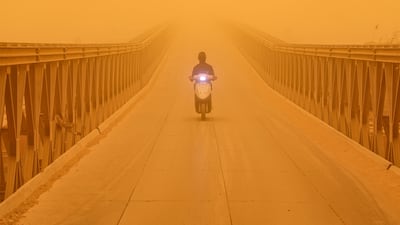
A motorist drives a scooter along a bridge in the city of Nasiriyah, Iraq, during a heavy dust storm. AFP -
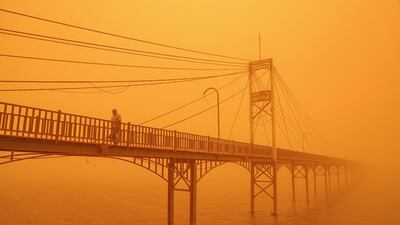
A man crosses the River Euphrates in Nasiriyah, where the dust storm had reduced visibility severely. AFP -
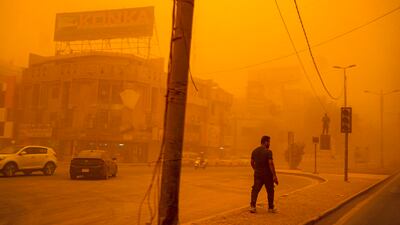
Heavy dust in the air in Iraq's capital Baghdad. AFP -
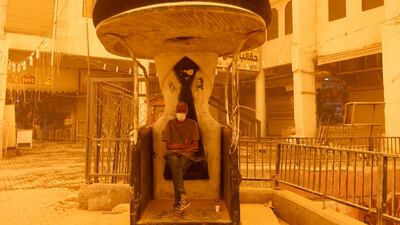
A man wears a mask as he rests in a traffic policeman's booth during the storm in Baghdad. Reuters -
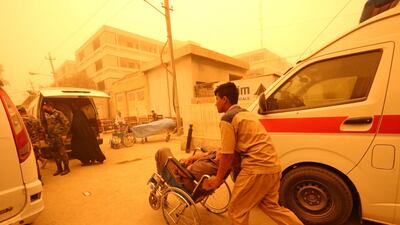
A patient suffering from breathing problems arrives for care at Sheikh Zayed Hospital in Baghdad. AFP -

Baghdad's streets were quieter than usual as the dust storm raged. AP -
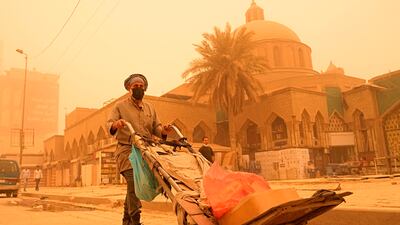
A man wearing a protective mask pushes a cart during the dust storm in Baghdad. AP -
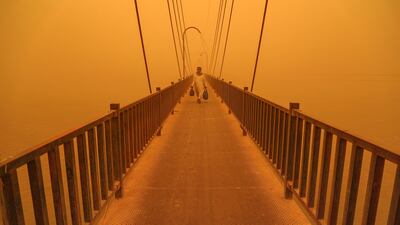
This man found it hard to see from one side of the bridge to the other as he crossed over the Euphrates. AFP -
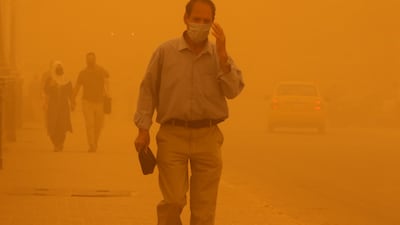
Dust or sand storms are not unusual in the region but many have hit Baghdad and its surrounding areas in the past few weeks. Reuters -

Cars drive by a mosque in Baghdad, barely visible due to the storm. Reuters -
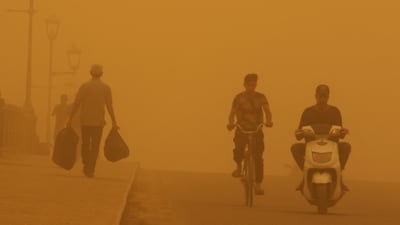
People cross a bridge during a sandstorm in Baghdad. Reuters -
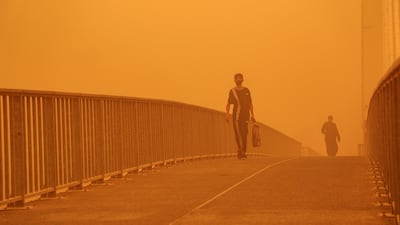
The storms tend to turn the sky an orange colour. AFP -
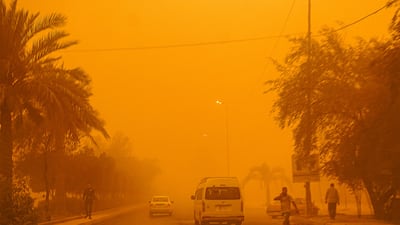
Dust fills the air in Baghdad. AFP


“SDSs hit vegetation-poor Kuwait more than three months a year. In comparison, SDSs affect Bahrain 5.6 per cent of the year, Qatar 7.1 per cent and Abu Dhabi 3.9 per cent. Winds in Kuwait carrying sand and dust can also reach 93-109 km per hour, reducing visibility to almost zero,” Ms Keynoush said.
Is water mismanagement in Iran and Iraq to blame?
Experts in the region who have followed the sand and dust storms over the years have said mismanagement of water resources in countries such as Iran and Iraq, where rivers have dried up, has caused an increase in the frequency of such storms hitting the region.
Enric Terradellas, a meteorologist with the World Meteorology Organisation's sand and dust storm prediction centre, told the BBC that the increased frequency of sand storms was directly related to a decrease in the flow of rivers in Iraq and Iran owing to the construction of dams.
“One of the main sources of sand and dust storms is Iraq, where the flow of rivers has decreased because of a race in dam constructions in upstream countries,” Mr Terradellas said.
“That has led to the disappearance of marshes and drying up of lakes both in Iraq and Iran, and the sediments left behind are very important sources of dust in the region.”
-
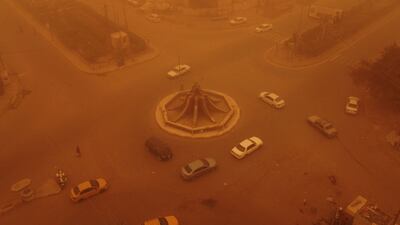
An aerial view of Iraq's southern city of Nasiriyah during a heavy sandstorm. AFP -

Imam Ali shrine in Najaf. Iraq awoke to its fifth sandstorm within a month on Thursday. AFP -
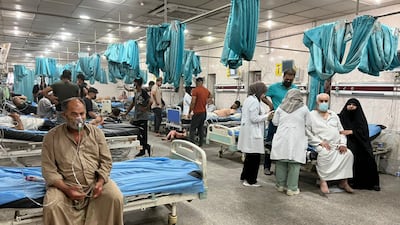
Hundreds of Iraqis with respiratory problems were admitted to hospital as a result of the sandstorm. AP -
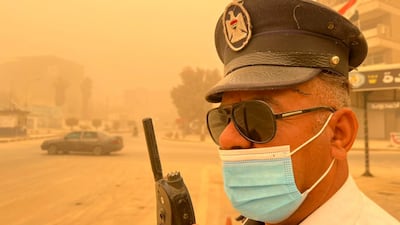
Authorities urged Iraqis to stay indoors. AP -

Flights were suspended for several hours on Thursday. AP -
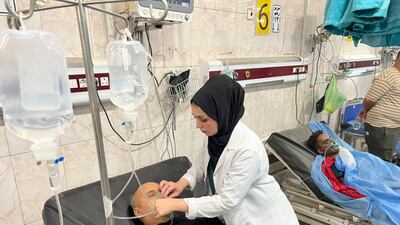
Hospitals struggled to cope with the influx of patients with respiratory problems. AP -
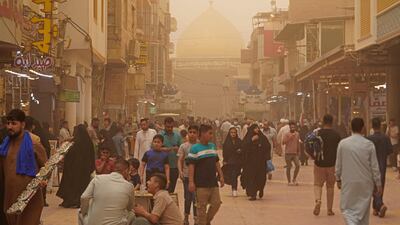
Recent sandstorms have turned the skies over Iraq orange and coated cities with dust. AFP -
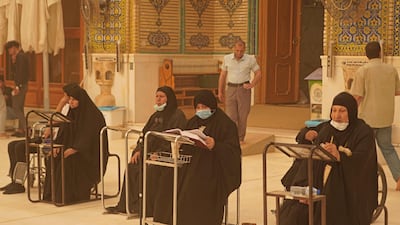
Iraqis pray at the Imam Ali shrine during the sandstorm. AFP -
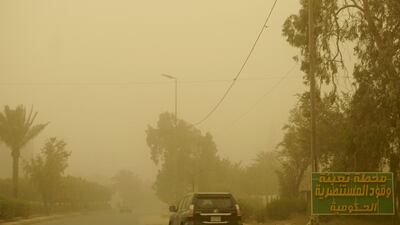
Iraq is prone to seasonal sandstorms but experts are worried about their increasing frequency in recent years. AFP -
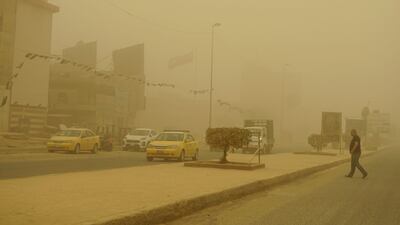
Dust fills the air during a sandstorm in Baghdad. AFP -
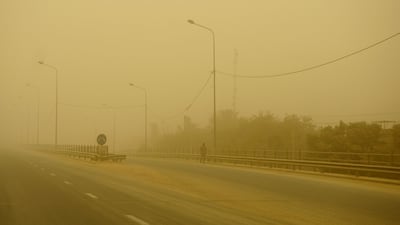
A deserted road during a spring sandstorm in Baghdad. AFP -
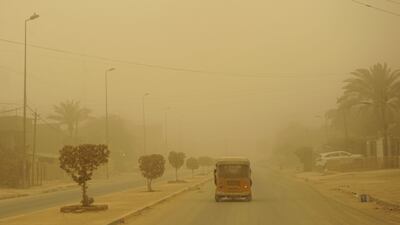
Traffic was light because of the poor visibility. AFP -
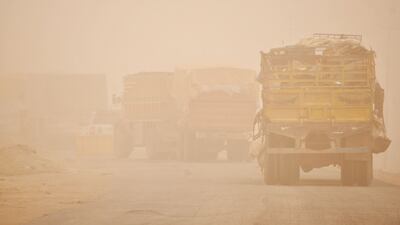
More poor visibility during a sandstorm in the city of Nasiriyah in Dhi Qar province, Iraq. AFP -
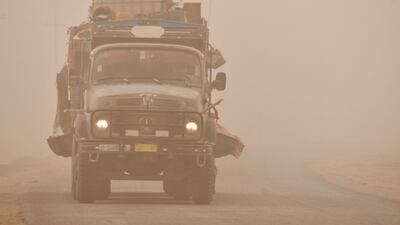
Drivers were forced to slow down in Nasiriyah. AFP -

Cars on a road as a sandstorm hits Baghdad, Iraq. Reuters -

The area is prone to sandstorms, which can reduce visibility to a few hundred metres. Reuters -

Sandstorms often lead to all flights from Baghdad being cancelled. Reuters -

The sandstorms can cause breathing difficulties for residents. Reuters -

Iraq's Meteorological Authority this week said the country was under a North African depression, known locally as ‘khamaseen’. Reuters -

The sandstorm turns the Baghdad sky orange. Reuters


What are the effects of dust storms and are there benefits?
While dust storms have affected health and economies in the region, some experts also say the sand and dust storms carry nutrients from the Sahara.
“In this region, we encounter dust storms frequently and people usually associate dust with cars covered with dirt or reduced visibility,” said Cecile Guieu, a visiting scientist at New York University Abu Dhabi’s Centre for Prototype Climate Modelling.
“Dust contains nutrients and these small particles have a very positive impact for microscopic plant-like organisms called phytoplankton that live in the ocean.”

What are governments doing to change it?
Saudi Arabia’s Crown Prince Mohammed bin Salman has said $13 billion is lost each year across the region due to dust storms.
To counter that, he announced the Green Saudi Initiative and Green Middle East Initiative last March to reduce carbon emissions by 60 per cent in the region and plant 50 billion trees in the world’s biggest afforestation project.
In the UAE, there has been investment in new technology to help the country to better equip itself for potential dust storms after Masdar Institute of Science and Technology announced the launch of its real-time dust storm forecasting system in 2016.
“This is a turning point in the region’s ability to properly manage the impacts of dust storms. With access to an accurate forecast of dust events and sandstorms, people can better prepare for them,” Dr Hosni Ghedira, director of the Research Centre for Renewable Energy Mapping and Assessment and professor of practice at Masdar Institute, said at the time.

