
Hundreds gathered at Jerusalem's Al Aqsa mosque compound for Friday prayers despite violence throughout the morning that medics said left 152 Palestinians wounded.
Riot police said Palestinians hurled firecrackers and stones at officers after early morning prayers and they responded by entering the holy site to "disperse and push back [crowds to] enable the rest of the worshippers to leave the place safely."
Jordan condemned the Israeli police raid into the compound as "a flagrant violation".
Read full story here
Violence at Al Aqsa Mosque - In Pictures
-

A child runs away from a confrontation between Palestinian protesters and Israeli security forces, at Beita village in the occupied West Bank. AFP -
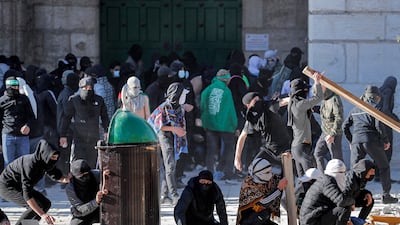
Palestinian demonstrators at Al Aqsa Mosque compound in Jerusalem. AFP -
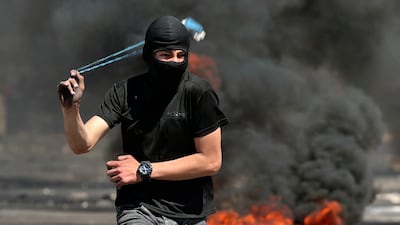
A Palestinian protester uses a sling during a confrontation with Israeli security forces during a demonstration against Jewish settlements, at Beita, in the occupied West Bank. AFP -
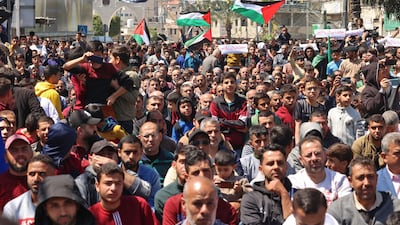
Supporters of the Palestinian Hamas and Islamic Jihad movements rally after Friday prayers in Gaza City, following clashes at Al Aqsa Mosque compound in Jerusalem. AFP -
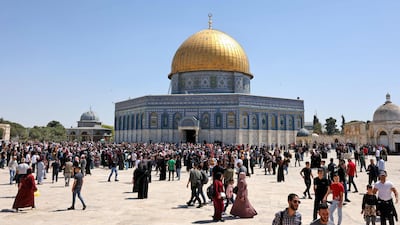
Palestinians gather around the Dome of the Rock shrine at the Al Aqsa Mosque compound, after Friday prayers. AFP -

Palestinian men wearing national flags kneel to pray near the Dome of the Rock shrine in the Al Aqsa Mosque compound. AFP -
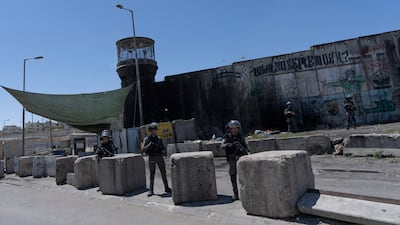
Israeli Border Police secure the perimeter of the closed Israeli army Qalandia checkpoint, used by Palestinians to cross from the West Bank into Jerusalem, near the West Bank city of Ramallah. AP Photo -
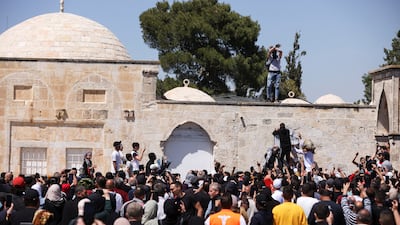
A Palestinian man removes a police sign from a wall at Al Aqsa Mosque compound after Israeli security forces used force against worshippers gathered for Ramadan prayers. Reuters -
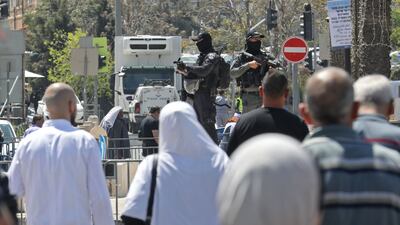
Palestinians return from Al Aqsa Mosque after Friday prayers. AFP -
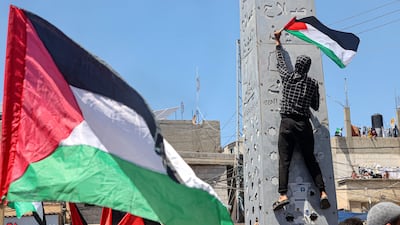
Supporters of the Hamas and Islamic Jihad groups rally after Friday prayers in Khan Yunis in the southern Gaza Strip, to express support for those at Al Aqsa Mosque. AFP -
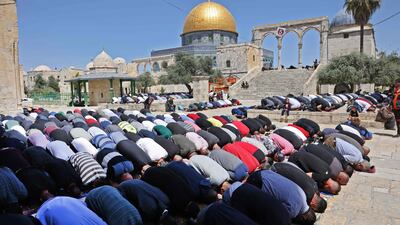
Worshippers during Friday prayers at Al Aqsa Mosque compound. AFP -
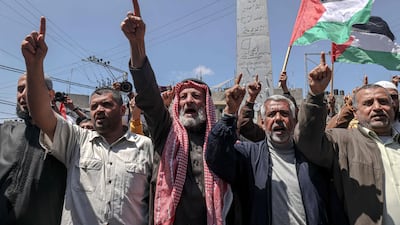
Hamas and Islamic Jihad supporters at a rally on Friday in Khan Yunis. AFP -
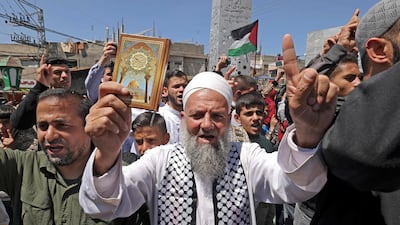
Palestinian protesters in Khan Yunis. AFP -
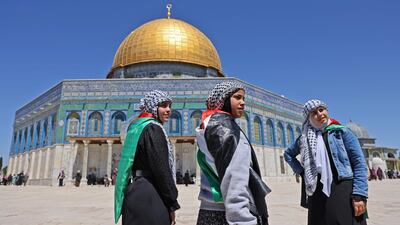
Palestinian girls in front of the Dome of the Rock mosque in Jerusalem's Old City. AFP -
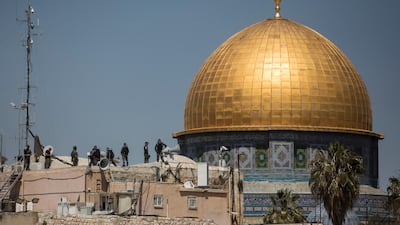
Israeli police officers keep watch after clashes with Muslim worshippers in Jerusalem. The overlapping religious occasions – Ramadan for Muslims, Passover for Jews and Easter for Christians – have increased tensions near contested sacred sites in Jerusalem. Getty Images -
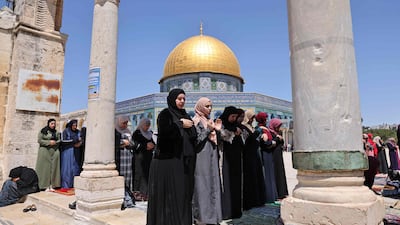
Worshippers during Friday prayers at Jerusalem's Al Aqsa Mosque complex. AFP -
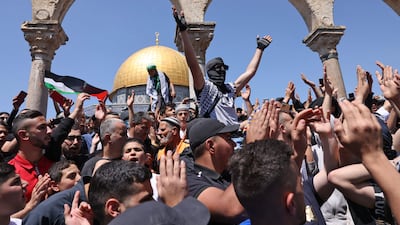
Palestinian protesters after Friday prayers in Jerusalem. AFP -
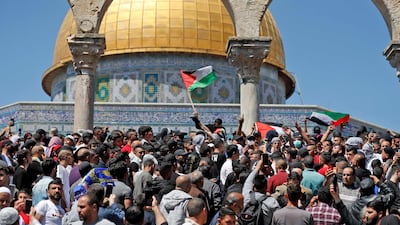
Worshippers gather for Friday prayers at Jerusalem's Al Aqsa Mosque compound. AFP -
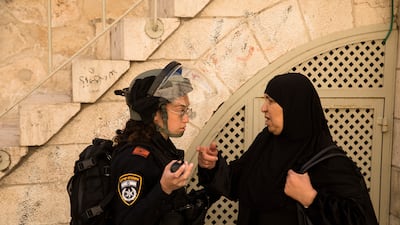
An Israeli police officer stops a Muslim woman on her way to Friday prayer in Jerusalem. Getty Images -
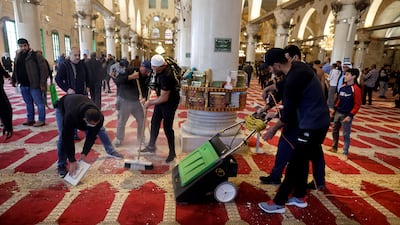
Palestinians clean Jerusalem's Al Aqsa Mosque after Israeli security forces entered. Reuters -
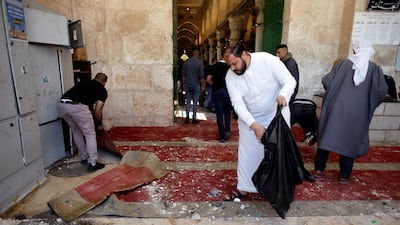
Palestinians clean the entrance to the mosque. Debris and broken glass cover the floor. Reuters -

Palestinian youths who took part in a protest at the mosque are arrested by Israeli security forces. AFP -
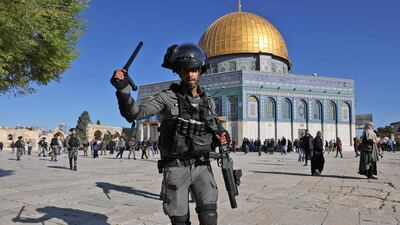
A member of the Israeli security forces lifts his baton in front of the Dome of the Rock mosque. Witnesses said Palestinian protesters threw stones at Israeli forces, who fired rubber bullets. AFP -
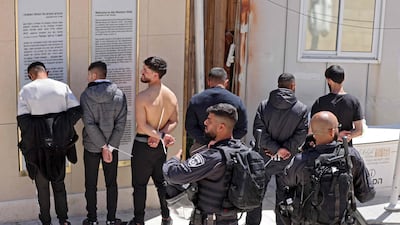
Israeli security forces detain Palestinian youths after a violent confrontation at the mosque. AFP -
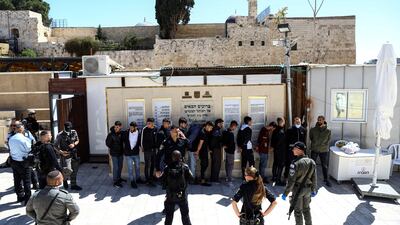
Israeli security forces detain Palestinian protesters following the violence. Reuters -

Israeli security forces take their positions during clashes with Palestinian protesters. Reuters -

Palestinians are kept at bay by Israeli police during clashes. AFP -
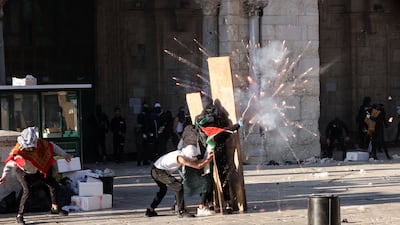
Israel said its forces entered to remove rocks and stones that had been gathered in anticipation of violence. Reuters -
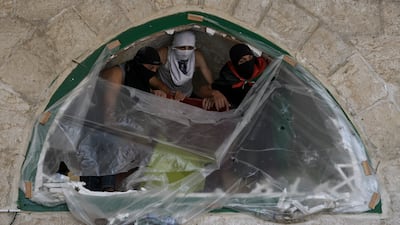
Masked Palestinians take position. The Palestinian Red Crescent emergency service said 59 wounded people were admitted to hospital. AP Photo -
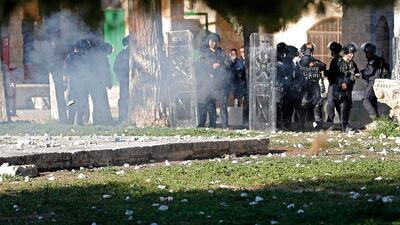
Israeli police fire tear gas towards Palestinian demonstrators. AFP -
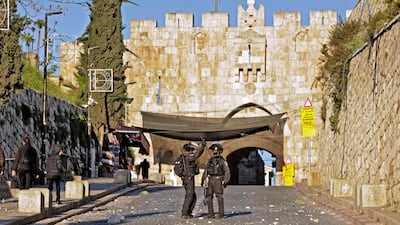
Israeli security forces deploy in front of the Lion's gate. AFP -
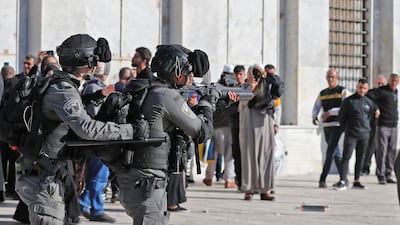
Palestinians are kept at bay by Israeli police. AFP -
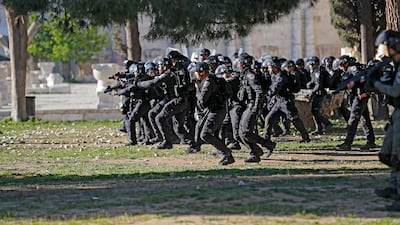
Israeli security forces advance against worshippers and protesters Jerusalem's Al Aqsa Mosque compound. Witnesses said that Palestinian protesters threw stones at Israeli security forces, who fired rubber bullets at some of the demonstrators. AFP -
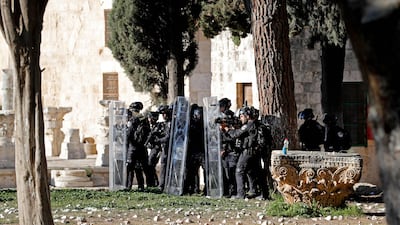
The Israeli Foreign Ministry said dozens of masked men carrying Palestinian and Hamas flags had marched to the compound early on Friday and gathered stones. AFP -
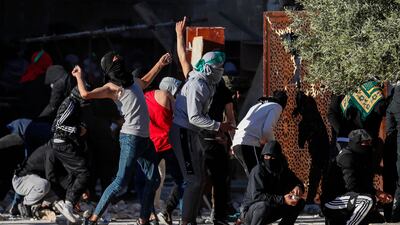
Palestinian demonstrators throw rocks at Israeli police at Jerusalem's Al Aqsa Mosque compound. AFP -
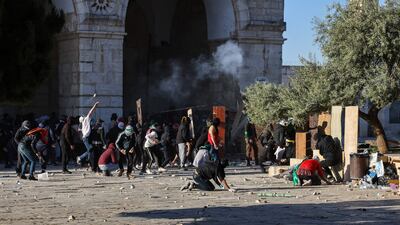
Videos circulating online showed clouds of tear gas at the mosque. AFP -

Palestinians use boards to protect themselves from Israeli police, who also used rubber bullets and stun grenades. AP -
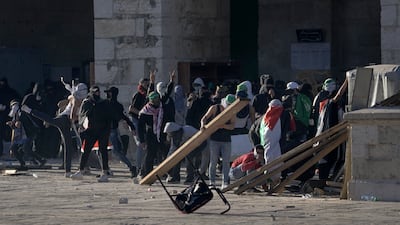
Worshippers set up barricades outside the mosque during the violence. AP -
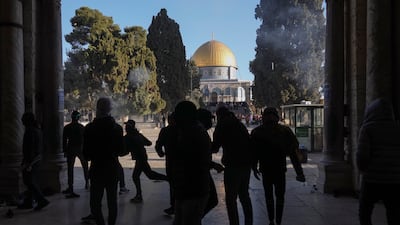
Israeli police entered the compound before dawn as thousands of worshippers gathered for early morning prayers during Ramadan. AP -

A man is carried on a stretcher after being wounded during the violence. AFP -

The mosque is part of Haram Al Sharif, the third holiest site in Islam. It is built on a hilltop that is the most sacred site for Jews. AFP -
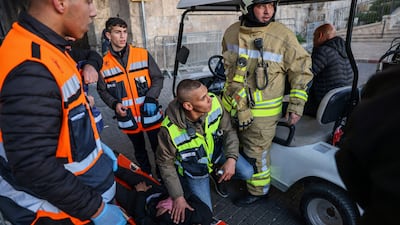
The mosque has been a major flashpoint for Israeli-Palestinian violence for decades.. AFP -

One of the guards at the site was reportedly shot in the eye with a rubber bullet. AFP
Switching%20sides
Our family matters legal consultant
Name: Hassan Mohsen Elhais
Position: legal consultant with Al Rowaad Advocates and Legal Consultants.
THE BIO
Bio Box
Role Model: Sheikh Zayed, God bless his soul
Favorite book: Zayed Biography of the leader
Favorite quote: To be or not to be, that is the question, from William Shakespeare's Hamlet
Favorite food: seafood
Favorite place to travel: Lebanon
Favorite movie: Braveheart
THE%C2%A0SPECS
Mercer, the investment consulting arm of US services company Marsh & McLennan, expects its wealth division to at least double its assets under management (AUM) in the Middle East as wealth in the region continues to grow despite economic headwinds, a company official said.
Mercer Wealth, which globally has $160 billion in AUM, plans to boost its AUM in the region to $2-$3bn in the next 2-3 years from the present $1bn, said Yasir AbuShaban, a Dubai-based principal with Mercer Wealth.
“Within the next two to three years, we are looking at reaching $2 to $3 billion as a conservative estimate and we do see an opportunity to do so,” said Mr AbuShaban.
Mercer does not directly make investments, but allocates clients’ money they have discretion to, to professional asset managers. They also provide advice to clients.
“We have buying power. We can negotiate on their (client’s) behalf with asset managers to provide them lower fees than they otherwise would have to get on their own,” he added.
Mercer Wealth’s clients include sovereign wealth funds, family offices, and insurance companies among others.
From its office in Dubai, Mercer also looks after Africa, India and Turkey, where they also see opportunity for growth.
Wealth creation in Middle East and Africa (MEA) grew 8.5 per cent to $8.1 trillion last year from $7.5tn in 2015, higher than last year’s global average of 6 per cent and the second-highest growth in a region after Asia-Pacific which grew 9.9 per cent, according to consultancy Boston Consulting Group (BCG). In the region, where wealth grew just 1.9 per cent in 2015 compared with 2014, a pickup in oil prices has helped in wealth generation.
BCG is forecasting MEA wealth will rise to $12tn by 2021, growing at an annual average of 8 per cent.
Drivers of wealth generation in the region will be split evenly between new wealth creation and growth of performance of existing assets, according to BCG.
Another general trend in the region is clients’ looking for a comprehensive approach to investing, according to Mr AbuShaban.
“Institutional investors or some of the families are seeing a slowdown in the available capital they have to invest and in that sense they are looking at optimizing the way they manage their portfolios and making sure they are not investing haphazardly and different parts of their investment are working together,” said Mr AbuShaban.
Some clients also have a higher appetite for risk, given the low interest-rate environment that does not provide enough yield for some institutional investors. These clients are keen to invest in illiquid assets, such as private equity and infrastructure.
“What we have seen is a desire for higher returns in what has been a low-return environment specifically in various fixed income or bonds,” he said.
“In this environment, we have seen a de facto increase in the risk that clients are taking in things like illiquid investments, private equity investments, infrastructure and private debt, those kind of investments were higher illiquidity results in incrementally higher returns.”
The Abu Dhabi Investment Authority, one of the largest sovereign wealth funds, said in its 2016 report that has gradually increased its exposure in direct private equity and private credit transactions, mainly in Asian markets and especially in China and India. The authority’s private equity department focused on structured equities owing to “their defensive characteristics.”
How Apple's credit card works
The Apple Card looks different from a traditional credit card — there's no number on the front and the users' name is etched in metal. The card expands the company's digital Apple Pay services, marrying the physical card to a virtual one and integrating both with the iPhone. Its attributes include quick sign-up, elimination of most fees, strong security protections and cash back.
What does it cost?
Apple says there are no fees associated with the card. That means no late fee, no annual fee, no international fee and no over-the-limit fees. It also said it aims to have among the lowest interest rates in the industry. Users must have an iPhone to use the card, which comes at a cost. But they will earn cash back on their purchases — 3 per cent on Apple purchases, 2 per cent on those with the virtual card and 1 per cent with the physical card. Apple says it is the only card to provide those rewards in real time, so that cash earned can be used immediately.
What will the interest rate be?
The card doesn't come out until summer but Apple has said that as of March, the variable annual percentage rate on the card could be anywhere from 13.24 per cent to 24.24 per cent based on creditworthiness. That's in line with the rest of the market, according to analysts
What about security?
The physical card has no numbers so purchases are made with the embedded chip and the digital version lives in your Apple Wallet on your phone, where it's protected by fingerprints or facial recognition. That means that even if someone steals your phone, they won't be able to use the card to buy things.
Is it easy to use?
Apple says users will be able to sign up for the card in the Wallet app on their iPhone and begin using it almost immediately. It also tracks spending on the phone in a more user-friendly format, eliminating some of the gibberish that fills a traditional credit card statement. Plus it includes some budgeting tools, such as tracking spending and providing estimates of how much interest could be charged on a purchase to help people make an informed decision.
* Associated Press
Stage 2
1. Mathieu van der Poel (NED) Alpecin-Fenix 4:18:30
2. Tadej Pogacar (SLV) UAE Team Emirates 0:00:06
3. Primoz Roglic (SLV) Jumbo-Visma 0:00:06
4. Wilco Kelderman (NED) Bora-Hansgrohe 0:00:06
5. Julian Alaphilippe (FRA) Deceuninck-QuickStep 0:00:08
10 tips for entry-level job seekers
- Have an up-to-date, professional LinkedIn profile. If you don’t have a LinkedIn account, set one up today. Avoid poor-quality profile pictures with distracting backgrounds. Include a professional summary and begin to grow your network.
- Keep track of the job trends in your sector through the news. Apply for job alerts at your dream organisations and the types of jobs you want – LinkedIn uses AI to share similar relevant jobs based on your selections.
- Double check that you’ve highlighted relevant skills on your resume and LinkedIn profile.
- For most entry-level jobs, your resume will first be filtered by an applicant tracking system for keywords. Look closely at the description of the job you are applying for and mirror the language as much as possible (while being honest and accurate about your skills and experience).
- Keep your CV professional and in a simple format – make sure you tailor your cover letter and application to the company and role.
- Go online and look for details on job specifications for your target position. Make a list of skills required and set yourself some learning goals to tick off all the necessary skills one by one.
- Don’t be afraid to reach outside your immediate friends and family to other acquaintances and let them know you are looking for new opportunities.
- Make sure you’ve set your LinkedIn profile to signal that you are “open to opportunities”. Also be sure to use LinkedIn to search for people who are still actively hiring by searching for those that have the headline “I’m hiring” or “We’re hiring” in their profile.
- Prepare for online interviews using mock interview tools. Even before landing interviews, it can be useful to start practising.
- Be professional and patient. Always be professional with whoever you are interacting with throughout your search process, this will be remembered. You need to be patient, dedicated and not give up on your search. Candidates need to make sure they are following up appropriately for roles they have applied.
Arda Atalay, head of Mena private sector at LinkedIn Talent Solutions, Rudy Bier, managing partner of Kinetic Business Solutions and Ben Kinerman Daltrey, co-founder of KinFitz
More from Rashmee Roshan Lall
Donating your hair
• Your hair should be least 30 cms long, as some of the hair is lost during manufacturing of the wigs.
• Clean, dry hair in good condition (no split ends) from any gender, and of any natural colour, is required.
• Straight, wavy, curly, permed or chemically straightened is permitted.
• Dyed hair must be of a natural colour
The biog
Born November 11, 1948
Education: BA, English Language and Literature, Cairo University
Family: Four brothers, seven sisters, two daughters, 42 and 39, two sons, 43 and 35, and 15 grandchildren
Hobbies: Reading and traveling
Killing of Qassem Suleimani
National Editorial: Suleimani has been killed, now we must de-escalate
Mina Al Oraibi: Air strike casts a long shadow over the decade ahead
Jack Moore: Why the assassination is such a monumental gamble
Damien McElroy: A CEO tasked with spreading Iran's influence
Hussein Ibish: Trump's order on solid constitutional ground
Simon Waldman: Cautious Israel keeping a low profile
RESULTS
6.30pm Handicap (TB) US$65,000 (Dirt) 1,400m
Winner Golden Goal, Pat Dobbs (jockey), Doug Watson (trainer)
7.05pm Dubai Racing Club Classic Listed Handicap (TB) $88,000 (Turf) 2,410m
Winner: Walton Street, William Buick, Charlie Appleby.
7.40pm Dubai Stakes Group 3 (TB) $130,000 (D) 1,200m
Winner Switzerland, Tadhg O’Shea, Satish Seemar
8.15pm Singspiel Stakes Group 3 (TB) $163,000 (T) 1,800m
Winner Lord Giltters, Adrie de Vries, David O’Meara
8.50pm Al Maktoum Challenge Round-1 (TB) $228,000 (D) 1,600m
Winner Military Law, Antonio Fresu, Musabah Al Muhairi.
9.25pm Al Fahidi Fort Group 2 (TB) $163,000 (T) 1,400m
Winner Land Of Legends, Frankie Dettori, Saeed bin Suroor
10pm Dubai Dash Listed Handicap (TB) $88,000 (T) 1,000m
Winner Equilateral, Frankie Dettori, Charles Hills.
Background: Chemical Weapons
Ten tax points to be aware of in 2026
1. Domestic VAT refund amendments: request your refund within five years
If a business does not apply for the refund on time, they lose their credit.
2. E-invoicing in the UAE
Businesses should continue preparing for the implementation of e-invoicing in the UAE, with 2026 a preparation and transition period ahead of phased mandatory adoption.
3. More tax audits
Tax authorities are increasingly using data already available across multiple filings to identify audit risks.
4. More beneficial VAT and excise tax penalty regime
Tax disputes are expected to become more frequent and more structured, with clearer administrative objection and appeal processes. The UAE has adopted a new penalty regime for VAT and excise disputes, which now mirrors the penalty regime for corporate tax.
5. Greater emphasis on statutory audit
There is a greater need for the accuracy of financial statements. The International Financial Reporting Standards standards need to be strictly adhered to and, as a result, the quality of the audits will need to increase.
6. Further transfer pricing enforcement
Transfer pricing enforcement, which refers to the practice of establishing prices for internal transactions between related entities, is expected to broaden in scope. The UAE will shortly open the possibility to negotiate advance pricing agreements, or essentially rulings for transfer pricing purposes.
7. Limited time periods for audits
Recent amendments also introduce a default five-year limitation period for tax audits and assessments, subject to specific statutory exceptions. While the standard audit and assessment period is five years, this may be extended to up to 15 years in cases involving fraud or tax evasion.
8. Pillar 2 implementation
Many multinational groups will begin to feel the practical effect of the Domestic Minimum Top-Up Tax (DMTT), the UAE's implementation of the OECD’s global minimum tax under Pillar 2. While the rules apply for financial years starting on or after January 1, 2025, it is 2026 that marks the transition to an operational phase.
9. Reduced compliance obligations for imported goods and services
Businesses that apply the reverse-charge mechanism for VAT purposes in the UAE may benefit from reduced compliance obligations.
10. Substance and CbC reporting focus
Tax authorities are expected to continue strengthening the enforcement of economic substance and Country-by-Country (CbC) reporting frameworks. In the UAE, these regimes are increasingly being used as risk-assessment tools, providing tax authorities with a comprehensive view of multinational groups’ global footprints and enabling them to assess whether profits are aligned with real economic activity.
Contributed by Thomas Vanhee and Hend Rashwan, Aurifer
COMPANY%20PROFILE
MATCH INFO
Fixture: Ukraine v Portugal, Monday, 10.45pm (UAE)
TV: BeIN Sports
MATCH INFO
Quarter-finals
Saturday (all times UAE)
England v Australia, 11.15am
New Zealand v Ireland, 2.15pm
Sunday
Wales v France, 11.15am
Japan v South Africa, 2.15pm
Sole survivors
- Cecelia Crocker was on board Northwest Airlines Flight 255 in 1987 when it crashed in Detroit, killing 154 people, including her parents and brother. The plane had hit a light pole on take off
- George Lamson Jr, from Minnesota, was on a Galaxy Airlines flight that crashed in Reno in 1985, killing 68 people. His entire seat was launched out of the plane
- Bahia Bakari, then 12, survived when a Yemenia Airways flight crashed near the Comoros in 2009, killing 152. She was found clinging to wreckage after floating in the ocean for 13 hours.
- Jim Polehinke was the co-pilot and sole survivor of a 2006 Comair flight that crashed in Lexington, Kentucky, killing 49.
THE SPECS
Engine: 1.5-litre, four-cylinder turbo
Transmission: seven-speed dual clutch automatic
Power: 169bhp
Torque: 250Nm
Price: Dh54,500
On sale: now
More from this story
Our commentary on Brexit
- Con Coughlin: Choice of the British people will be vindicated
- Sam Williams: Departure is influenced by its sense of place
The National in Davos
We are bringing you the inside story from the World Economic Forum's Annual Meeting in Davos, a gathering of hundreds of world leaders, top executives and billionaires.

