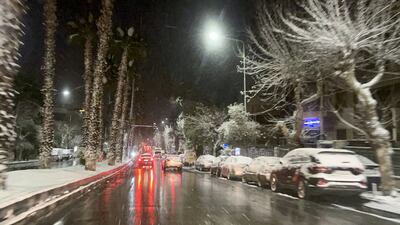
• Fruit-laden trees are weighed down with snow in Amman, Jordan. All pictures: Amy McConaghy / The National
    Fruit-laden trees are weighed down with snow in Amman, Jordan. All pictures: Amy McConaghy / The National
  • People in Amman woke to find Jordan's capital covered in snow on Thursday.
    People in Amman woke to find Jordan's capital covered in snow on Thursday.
  • Some of the city's streets could only be driven on 'with extreme caution', said officials.
    Some of the city's streets could only be driven on 'with extreme caution', said officials.
  • The rare snowfall was part of a cold snap in Jordan.
    The rare snowfall was part of a cold snap in Jordan.
  • Delighted children made snowmen.
    Delighted children made snowmen.
  • But the cold weather may worry householders, as electricity bills are set to rise.
    But the cold weather may worry householders, as electricity bills are set to rise.
  • The snow transformed the city skyline.
    The snow transformed the city skyline.
  • The wintry blanket brought a new look to familiar views.
    The wintry blanket brought a new look to familiar views.
  • The snow brought some disruption to travel.
    The snow brought some disruption to travel.
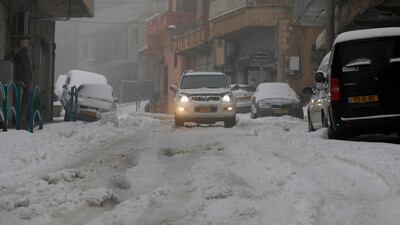
  • Some of Amman's streets were impassable by car.
    Some of Amman's streets were impassable by car.
  • Officials said other routes could only be driven with caution.
    Officials said other routes could only be driven with caution.
  • The main roads to reach vital facilities in Amman are open, a municipal officer said.
    The main roads to reach vital facilities in Amman are open, a municipal officer said.
  • Many drivers preferred to wait for a thaw before heading out.
    Many drivers preferred to wait for a thaw before heading out.
  • Some electricity lines, which in Jordan is carried on poles, were downed by the snow.
    Some electricity lines, which in Jordan is carried on poles, were downed by the snow.
  • The snow will help to ease a drought in Jordan.
    The snow will help to ease a drought in Jordan.

Jordan snow brings country to a halt but could ease drought


  • English
  • Arabic

Amman woke on Thursday to a rare blanket of overnight snow that kept people in their homes and blocked roads.

But authorities said it could also help replenish water reserves and ease pressure on severely depleted groundwater in the parched country.

Jordan has suffered prolonged bouts of drought during the past decade. Illegal digging for water for farming has depleted some underground water reservoirs and at least one dam ran dry last year.

The snow and rain should help replenish dams across the mostly desert kingdom, Hatem Al Zubi, deputy director of the National Security and Crisis Centre, said.

They include the 8 million cubic metre Wala Dam south of the capital Amman, which had emptied completely of water, he said.

“We expect it to become full during this wave. It has 2 million cubic metres to go,” Mr Al Zubi told official television.

With ample dam water, farmers will need to rely less on pumped-out groundwater.

Crews in Amman were working to fix downed electricity lines and clear main roads. The municipality described some roads as “driveable with the utmost caution”.

Electricity in Jordan is carried on poles, not through underground cables.

Youssef Al Shawarbeh, a municipal official, said trapped vehicles and falling trees hampered efforts to clear the snow and repair the lines.

“The main roads to reach vital facilities in Amman are open and some are open with caution,” he told official television.

The Meteorological Department said the weather on Thursday was “rainy and cloudy in most areas” with a high of 6°C in Amman and a low of 1°C. It expected temperatures to rise steadily in the next few days to reach 11°C on Sunday.

Queen Alia Airport, the kingdom's main airport south of Amman, announced that eight flights on Thursday were being delayed to allow passengers more time to reach the airport due to difficulties.

The cold weather may come as a worry to householders, as electricity bills are scheduled to rise in April when the authorities will remove power subsidies for middle-class households.

The kingdom’s economy has deteriorated sharply in the past two years and unemployment is at an official record high of 24 per cent.

At the Gaza refugee camp north of Amman, Nisreen and her six children huddled around a kerosene heater on Thursday.

“It snowed lightly and melted quickly, but we're sinking from water from the zinc roof,” she said, referring to the corrugated roof of her home.

Large sections of the camp are neglected and many of its 29,000 residents do not have Jordanian citizenship, unlike most of the millions of people of Palestinian origin in Jordan.

about 600,000 Syrian refugees also live in the kingdom of 10.7 million. Around a fifth of the Syrian refugees live in the Zaatari and Azraq camps in the deserts of north Jordan and are under movement restrictions.

A spokesman for the UN refugee agency said residents had enough blankets and other means to cope with the weather and denied social media reports that a child died from the cold in Zaatari earlier this month.

Snow blankets the Middle East - in pictures

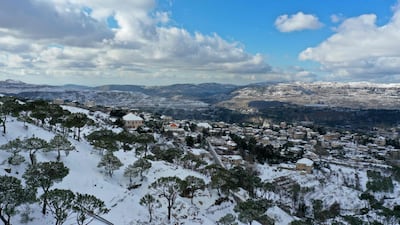
  • A snow-clad village in the Chouf district of Mount Lebanon governorate, about 52km south-east of Beirut. AFP
    A snow-clad village in the Chouf district of Mount Lebanon governorate, about 52km south-east of Beirut. AFP
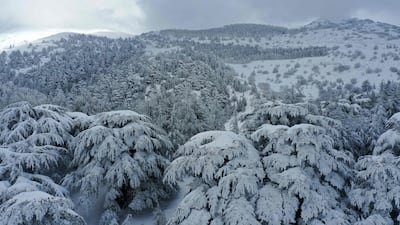
  • Cedar trees are blanketed in snow in Lebanon. AFP
    Cedar trees are blanketed in snow in Lebanon. AFP
  • A man walks in the snow in Erbil, Iraq. AP Photo
    A man walks in the snow in Erbil, Iraq. AP Photo
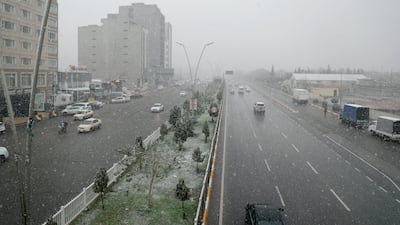
  • Snow fills the air in Erbil. AP Photo
    Snow fills the air in Erbil. AP Photo
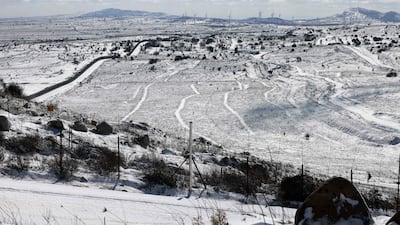
  • Israel's border with Syria is covered with snow, near the Druze town of Masada. AFP
    Israel's border with Syria is covered with snow, near the Druze town of Masada. AFP
  • Syrians drive their cars on a street as snow falls over Damascus. AFP
    Syrians drive their cars on a street as snow falls over Damascus. AFP
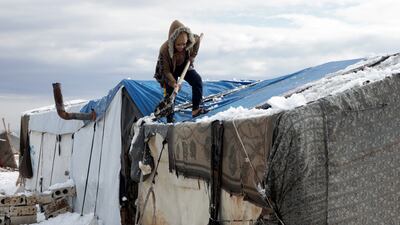
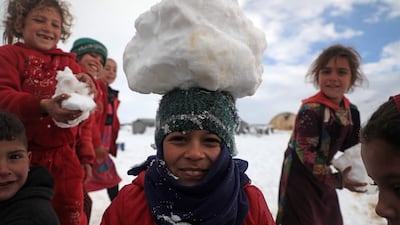
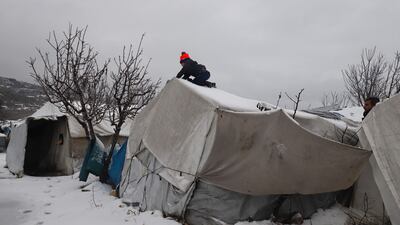
  • A child removes snow from the top of a tent at a camp for internally displaced people in the northern Aleppo countryside, Syria. Reuters
    A child removes snow from the top of a tent at a camp for internally displaced people in the northern Aleppo countryside, Syria. Reuters
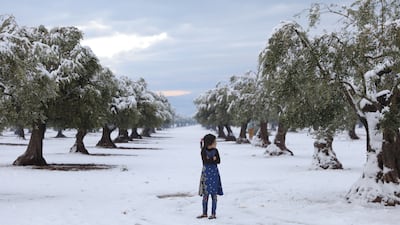
  • A child stands in the snow in Salat Zagrous, a camp for internally displaced people, in northern Syria. EPA
    A child stands in the snow in Salat Zagrous, a camp for internally displaced people, in northern Syria. EPA
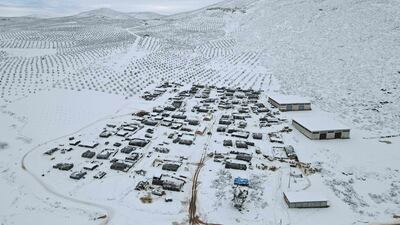
  • A camp for internally displaced people in the town of Raju in the rebel-controlled northern countryside of Syria's Aleppo province. AFP
    A camp for internally displaced people in the town of Raju in the rebel-controlled northern countryside of Syria's Aleppo province. AFP
  • Children at a camp for internally displaced people in Raju have fun in the snow. AFP
    Children at a camp for internally displaced people in Raju have fun in the snow. AFP
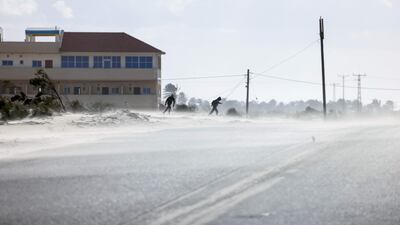
  • A windy day in Khan Younis, in the southern Gaza Strip. AFP
    A windy day in Khan Younis, in the southern Gaza Strip. AFP
  • Reindeer in the Israel-annexed Golan Heights. AFP
    Reindeer in the Israel-annexed Golan Heights. AFP
  • The Druze town of Majdal Shams in the Golan Heights. AFP
    The Druze town of Majdal Shams in the Golan Heights. AFP
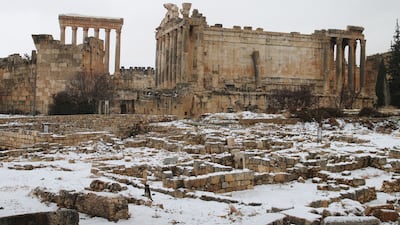
  • The Roman ruins at Baalbek in the eastern Bekaa Valley, Lebanon. AFP
    The Roman ruins at Baalbek in the eastern Bekaa Valley, Lebanon. AFP
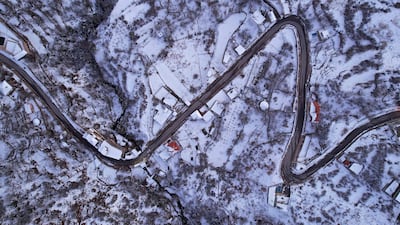
  • Snow-covered houses in the town of Sohmor, western Bekaa, Lebanon. Reuters
    Snow-covered houses in the town of Sohmor, western Bekaa, Lebanon. Reuters
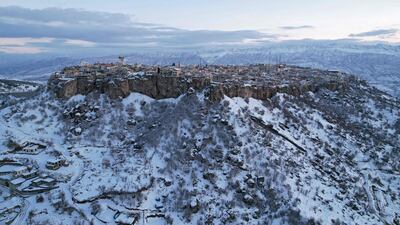
  • Amadiyah, a town built 1,400 metres above sea level and located about 75km north of the city of Dohuk, in the autonomous Iraqi Kurdistan region. AFP
    Amadiyah, a town built 1,400 metres above sea level and located about 75km north of the city of Dohuk, in the autonomous Iraqi Kurdistan region. AFP
  • Snow-covered mountains around the town of Amadiyah. AFP
    Snow-covered mountains around the town of Amadiyah. AFP
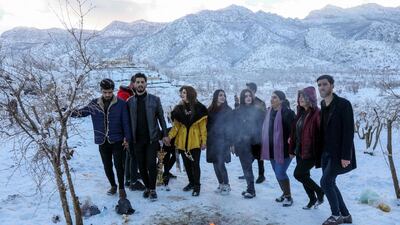
  • Iraqi Kurds perform a traditional dance near Safin Mountain, close to the city of Irbil, the capital of Iraq's northern Kurdish autonomous region. AFP
    Iraqi Kurds perform a traditional dance near Safin Mountain, close to the city of Irbil, the capital of Iraq's northern Kurdish autonomous region. AFP
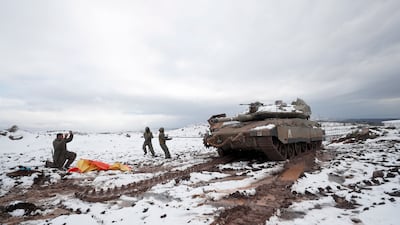
  • Israeli armored corps soldiers, fix their tank chains during snowstorm near the Israel-Syrian border in the annexed Golan Heights, near the Druze village of Majdal Shams. EPA
    Israeli armored corps soldiers, fix their tank chains during snowstorm near the Israel-Syrian border in the annexed Golan Heights, near the Druze village of Majdal Shams. EPA
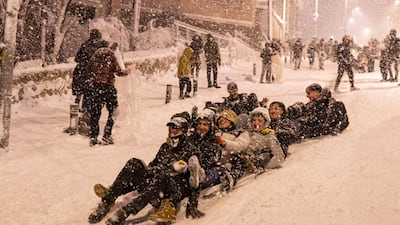
  • Children slide on the snow at the Kucukcekmece district in Istanbul. AFP
    Children slide on the snow at the Kucukcekmece district in Istanbul. AFP
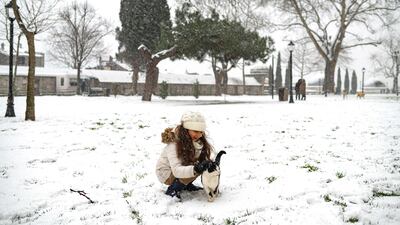
  • A child plays with a cat in a snowy park near of the Suleymaniye mosque in Istanbul. AFP
    A child plays with a cat in a snowy park near of the Suleymaniye mosque in Istanbul. AFP
  • A young Syrian boy clears the snow covering a tent at a camp for internally displaced people, near the city of Jisr al-Shugur on the border with Turkey, in the Idlib governorate of northwestern Syria. AFP
    A young Syrian boy clears the snow covering a tent at a camp for internally displaced people, near the city of Jisr al-Shugur on the border with Turkey, in the Idlib governorate of northwestern Syria. AFP

The Saga Continues

Wu-Tang Clan

(36 Chambers / Entertainment One)

'Gold'

Director:Anthony Hayes

Stars:Zaf Efron, Anthony Hayes

Rating:3/5

Notable salonnières of the Middle East through history

Al Khasan (Okaz, Saudi Arabia)

Tamadir bint Amr Al Harith, known simply as Al Khasan, was a poet from Najd famed for elegies, earning great renown for the eulogy of her brothers Mu’awiyah and Sakhr, both killed in tribal wars. Although not a salonnière, this prestigious 7th century poet fostered a culture of literary criticism and could be found standing in the souq of Okaz and reciting her poetry, publicly pronouncing her views and inviting others to join in the debate on scholarship. She later converted to Islam.


Maryana Marrash (Aleppo)

A poet and writer, Marrash helped revive the tradition of the salon and was an active part of the Nadha movement, or Arab Renaissance. Born to an established family in Aleppo in Ottoman Syria in 1848, Marrash was educated at missionary schools in Aleppo and Beirut at a time when many women did not receive an education. After touring Europe, she began to host salons where writers played chess and cards, competed in the art of poetry, and discussed literature and politics. An accomplished singer and canon player, music and dancing were a part of these evenings.


Princess Nazil Fadil (Cairo)

Princess Nazil Fadil gathered religious, literary and political elite together at her Cairo palace, although she stopped short of inviting women. The princess, a niece of Khedive Ismail, believed that Egypt’s situation could only be solved through education and she donated her own property to help fund the first modern Egyptian University in Cairo.


Mayy Ziyadah (Cairo)

Ziyadah was the first to entertain both men and women at her Cairo salon, founded in 1913. The writer, poet, public speaker and critic, her writing explored language, religious identity, language, nationalism and hierarchy. Born in Nazareth, Palestine, to a Lebanese father and Palestinian mother, her salon was open to different social classes and earned comparisons with souq of where Al Khansa herself once recited.

%20Ramez%20Gab%20Min%20El%20Akher
%3Cp%3E%3Cstrong%3ECreator%3A%3C%2Fstrong%3E%20Ramez%20Galal%3C%2Fp%3E%0A%3Cp%3E%3Cstrong%3EStarring%3A%3C%2Fstrong%3E%20Ramez%20Galal%3C%2Fp%3E%0A%3Cp%3E%3Cstrong%3EStreaming%20on%3A%20%3C%2Fstrong%3EMBC%20Shahid%3C%2Fp%3E%0A%3Cp%3E%3Cstrong%3ERating%3A%20%3C%2Fstrong%3E2.5%2F5%3C%2Fp%3E%0A
Ten tax points to be aware of in 2026

1. Domestic VAT refund amendments: request your refund within five years

If a business does not apply for the refund on time, they lose their credit.

2. E-invoicing in the UAE

Businesses should continue preparing for the implementation of e-invoicing in the UAE, with 2026 a preparation and transition period ahead of phased mandatory adoption. 

3. More tax audits

Tax authorities are increasingly using data already available across multiple filings to identify audit risks. 

4. More beneficial VAT and excise tax penalty regime

Tax disputes are expected to become more frequent and more structured, with clearer administrative objection and appeal processes. The UAE has adopted a new penalty regime for VAT and excise disputes, which now mirrors the penalty regime for corporate tax.

5. Greater emphasis on statutory audit

There is a greater need for the accuracy of financial statements. The International Financial Reporting Standards standards need to be strictly adhered to and, as a result, the quality of the audits will need to increase.

6. Further transfer pricing enforcement

Transfer pricing enforcement, which refers to the practice of establishing prices for internal transactions between related entities, is expected to broaden in scope. The UAE will shortly open the possibility to negotiate advance pricing agreements, or essentially rulings for transfer pricing purposes. 

7. Limited time periods for audits

Recent amendments also introduce a default five-year limitation period for tax audits and assessments, subject to specific statutory exceptions. While the standard audit and assessment period is five years, this may be extended to up to 15 years in cases involving fraud or tax evasion. 

8. Pillar 2 implementation 

Many multinational groups will begin to feel the practical effect of the Domestic Minimum Top-Up Tax (DMTT), the UAE's implementation of the OECD’s global minimum tax under Pillar 2. While the rules apply for financial years starting on or after January 1, 2025, it is 2026 that marks the transition to an operational phase.

9. Reduced compliance obligations for imported goods and services

Businesses that apply the reverse-charge mechanism for VAT purposes in the UAE may benefit from reduced compliance obligations. 

10. Substance and CbC reporting focus

Tax authorities are expected to continue strengthening the enforcement of economic substance and Country-by-Country (CbC) reporting frameworks. In the UAE, these regimes are increasingly being used as risk-assessment tools, providing tax authorities with a comprehensive view of multinational groups’ global footprints and enabling them to assess whether profits are aligned with real economic activity. 

Contributed by Thomas Vanhee and Hend Rashwan, Aurifer

Updated: January 28, 2022, 10:26 AM