


Kathleen Martinez, a former criminal lawyer from the Dominican Republic, is perhaps not the likeliest archaeologist, but she is determined to uncover an ancient mystery that has stymied the archaeological world: the location of Cleopatra's tomb.
After leaving her marriage and moving to Egypt, she endured criticism from all sides as she pursued her quest to find the Egyptian queen's lost tomb, becoming the only archaeologist from the Dominican Republic practising outside country.
“If the world was crazy about King Tut, it will be way crazier about Cleopatra’s tomb if found. Besides the scientific value of finding it, can you imagine what it will do to tourism in Egypt?” she told The National in Cairo.
“Cleopatra was the final chapter of ancient Egypt, while King Tut was just a boy king who did little for Egypt but attracted much attention essentially because his tomb was found intact.”
Egypt's most famous mummies - in pictures
-
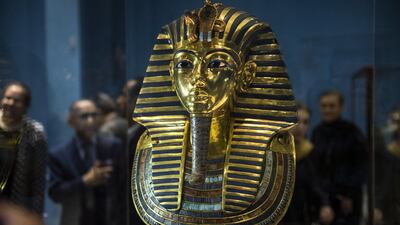
A picture taken on November 28, 2017 shows Golden Mask of King Tutankhamun, on display at the Egyptian Museum in the capital Cairo. AFP -
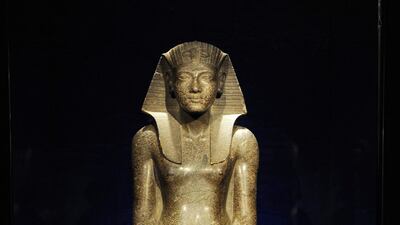
Detail of a granite statue of Tutankhamun on display April 21, 2010 at a preview of "Tutankhamun and the Golden Age of the Pharaohs", an exhibition at Discovery Times Square Exposition in New York. Multicolored medical scans of the real mummy are reflected in the glass case. AFP -
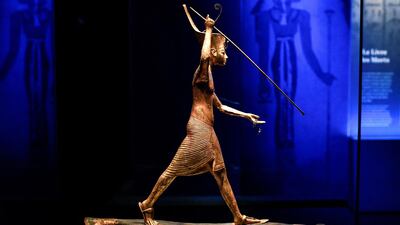
A statuette of Tutankhamun is displayed during the exhibition 'Tutankhamun, Treasures of the Golden Pharaoh' at La Villette in Paris, on March 21, 2019. AFP -

This picture taken on January 31, 2019 shows the golden sarcophagus of the 18th dynasty Pharaoh Tutankhamun (1332–1323 BC), displayed in his burial chamber in his underground tomb (KV62) in the Valley of the Kings on the west bank of the Nile river opposite the southern Egyptian city of Luxor (650 kilometres south of the capital Cairo). AFP -
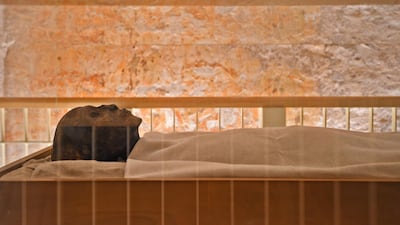
The linen-wrapped mummy of the 18th Dynasty Pharaoh Tutankhamun, displayed in a climate-controlled glass case in his underground tomb A picture taken on January 31, 2019 shows tin the Valley of the Kings on the west bank of the Nile river opposite the southern Egyptian city of Luxor. AFP -
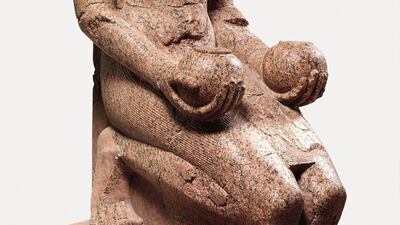
Large Kneeling Statue of Hatshepsut, New Kingdom, Dynasty 18, ca. 1479-1458 B.C., From Egypt, Upper Egypt, Thebes, Deir el-Bahri, Senenmut Quarry, 1927-28. On the upper terrace of Hatshepsut's temple at Deir el-Bahri, the central sanctuary was dedicated to the god Amun-Re, whose principal place of worship was Karnak temple, located across the Nile, on the east bank of the river. Getty Images -

The mummified remains of Queen Hatshepsut, ancient Egypt's most famous female pharaoh, lie in a glass case after being unveiled at the Cairo Museum, June 27, 2007. AFP -
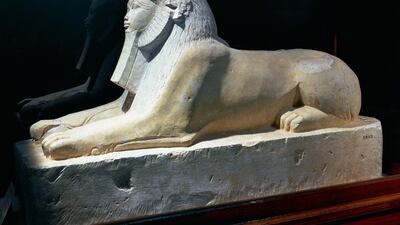
Egyptian civilization, New Kingdom, Dynasty XXI - Limestone sphinx of Queen Hatshepsut. Getty Images -
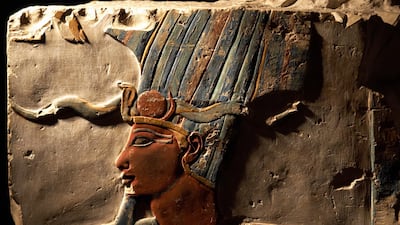
Polychrome relief of Pharaoh Thutmose III (h.1490-1436 BC), Sixth pharaoh of the 18th Dynasty, New Kingdom, Part from Thutmose Temple in Deir el-Bahari, Luxor Museum, Egypt. Getty Images -
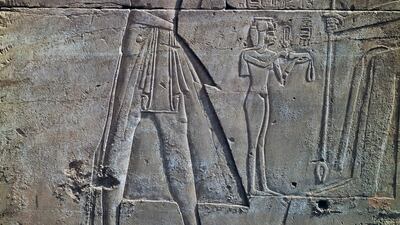
Thutmose III, relief, Temple of Amun, Karnak Temple Complex (Unesco World Heritage List, 1979). Egyptian Civilisation, New Kingdom, Dynasty XVIII. Getty Images -

The Sphinx of Thutmose III, from Egypt and dated 1480-1425 on loan from the Metropolitan Museum of Art in New York City, on show in the archaeological exhibition 'Pharaoh in Canaan: The Untold Story', at the Israel Museum in Jerusalem, Israel, March 2, 2016. EPA -
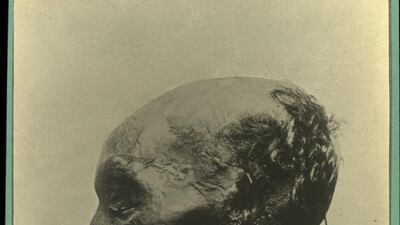
Mummified head of Egyptian Pharaoh Thutmose III, Egypt, 1900. Getty Images -
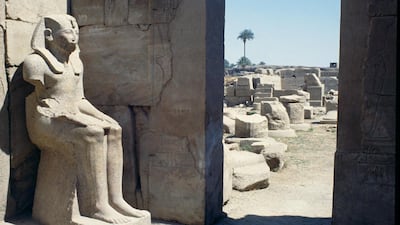
Statue of Thutmose III in ceremonial attire, Sanctuary of the sacred boat, Temple of Amun, Karnak Temple Complex (UNESCO World Heritage List, 1979). Egyptian Civilisation, New Kingdom, Dynasty XVIII. Getty Images -
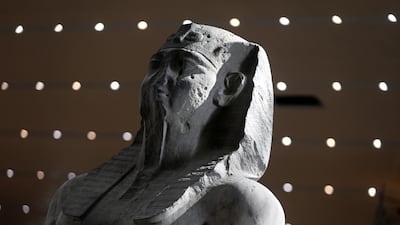
The statue of Seti I is seen after it was transferred to the Grand Egyptian Museum in Giza, Egypt September 21, 2019. Reuters -
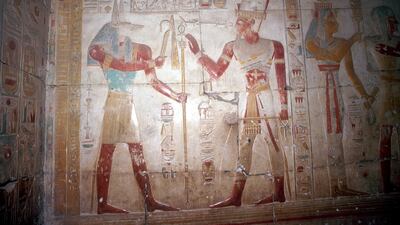
Painted relief of Sethos before Anubis (jackal headed god), Temple of Sethos I, Abydos, Egypt, 19th Dynasty, c1280 BC. Getty Images -
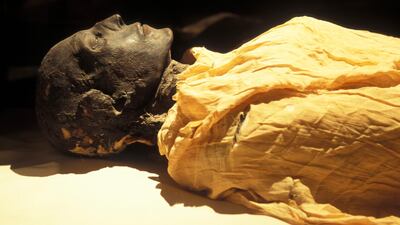
The mummy of Seti I (1294-1279 BC) bears witness to the mastery of mummification techniques of embalmers of ancient Egypt during the New Empire, April 2006. Getty Images -
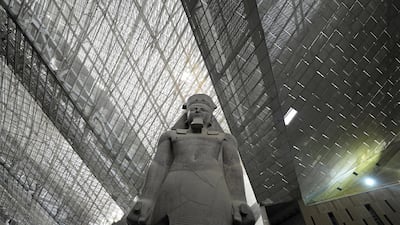
The statue of King Ramses II is seen after it was transferred to the Grand Egyptian Museum in Giza, Egypt September 21, 2019. Reuters -
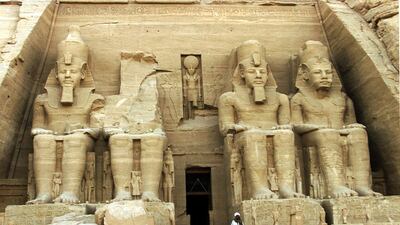
Egyptian Kamal Ahmed Mahran, an antiquities guardian, walks out of the 3200-year-old Abu Simbel temple in between the four colossal statues of the pharaoh king Ramses II, January 13, 2002. -
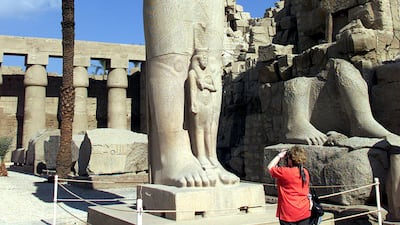
A visitor takes a picture of Pharaoh King Ramses II's statue at Karnak temple January 13, 2002. Reuters -
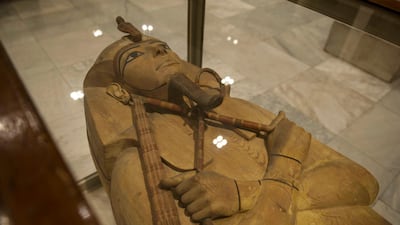
A view of the wooden coffin of King Ramses II on display in the Egyptian Museum at Tahrir Square in Cairo, Egypt, April 16, 2019. EPA -
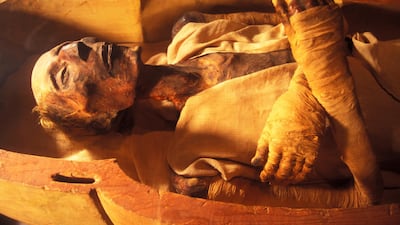
The mummy of Ramses II (1301-1235 BC), son of Sethy at Cairo Museum, Egypt, April 2006. The mummy was discovered with the other royal mummies in the Deir el Bahari hiding place. Getty Images -
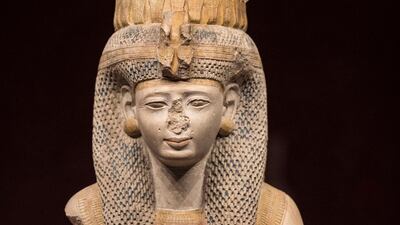
A picture taken on June 18, 2020 shows a statue of Queen Meritamen, one of the daughters of Rameses II, who became his Great Royal Wife after the death of her mother, Nefertari, at the museum in the Red Sea Egyptian resort of Hurghada. AFP -
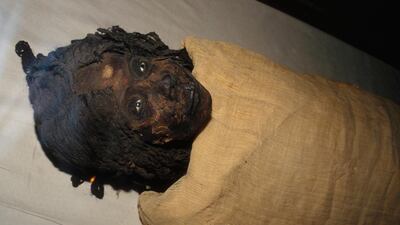
Mummy of Meritamen, daughter of Nefertari and Ramesses the Great, and later Great Royal Wife of Pharaoh Ramesses the Great. Getty Images -
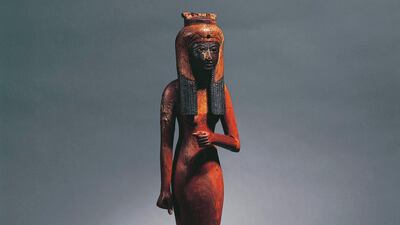
Statuette representing the Queen Ahmose-Nefertari (circa 1570-1505 B.C.)Getty Images -
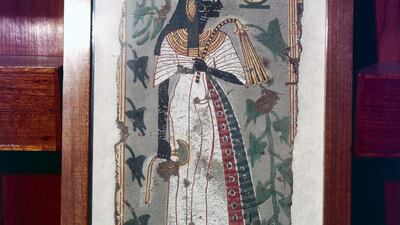
Ahmose-Nefertari, Wallpainting from a tomb of Thebes c1200BC. Ahmose-Nefertari of Ancient Egypt was the first Queen of the 18th Dynasty and mother of king Amenhotep I and may have served as his regent when he was young. Getty Images -
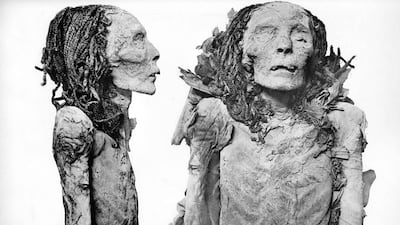
The mummy of Ahmose-Nefertari, queen of pharaoh Ahmose of the 18th dynasty. Courtesy G Elliot Smith


Ms Martinez has spent the past 15 years looking for the resting place of the last monarch of the Macedonian Ptolemaic dynasty — founded by Alexander the Great around 300 BC — who took her own life after the Romans captured Egypt in 30 BC.
And now, she says her quest could be nearing its end, despite scepticism from the archaeological community.
Her search has focused on Taposiris Magna, a sprawling temple of about seven square kilometres located some 50km west of the Mediterranean city of Alexandria that is dedicated to the ancient Egyptian goddess Isis.

“The pharaohs speak to us through their tombs and there are about 60 of them in the Valley of the Kings alone,” she said, referring to the site in southern Egypt where the tombs of many pharaohs, including King Tut, are located.
“So, if we can discover the tomb of Cleopatra, or any one of her Ptolemaic predecessors, Taposiris Magna could be the Greek version of the Valley of the Kings.”
Leading an Egyptian team of archaeologists and Bedouin helpers, she has unearthed items over the years that have kept hope alive that Cleopatra, who took her own life after she was captured by the Romans, may be buried there, alongside her husband, the Roman general Mark Antony.
At Taposiris Magna, the team uncovered coins bearing the images of Cleopatra and Mark Antony. There were also skeletons, mummies, the tomb of a Ptolemaic general, underground passages, burial rooms and, importantly, tablets the size of mobile phones stating the name of the temple, the deity to which it is dedicated, the year of its construction and the name of the monarch at the time.
Most of the pieces she discovered at the temple have gone on display in high-profile exhibitions both in Egypt and the US.
“What I have been doing is to excavate in places where I have better chances. Every year revealed a piece of the puzzle that I am putting together,” said Ms Martinez.
She says fellow archaeologists laughed when she told them she was looking for tunnels under the temple because such structures traditionally did not have them.
“They did a lot of bullying and made jokes at my expense. ‘There is nothing there,’ they would tell me. ‘We already excavated there and there’s nothing!’”
She remains unfazed and has never regretted the years she has spent searching for Cleopatra at Taposiris Magna, a structure damaged by major earthquakes over the centuries as well as aerial bombardments during the Second World War.
But now, the end may be in sight.
“Sometimes I feel like I would like to update the people on what I am doing,” she said, explaining that only Egyptian authorities, not the relevant archaeologists, announce new discoveries.
“They may announce by the end of this year, that I am now closer to my objective,” she said cryptically.
“It is very improbable that I won’t discover the tomb,” she said, striking a confident note as she sipped a glass of lemonade at the lounge of a Nile-side Cairo hotel.
Transferable skills
-
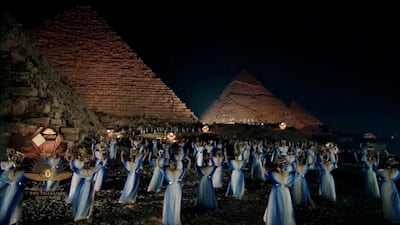
Artists perform near pyramids in a video screened at a ceremony of a transfer of royal mummies from the Egyptian Museum in Tahrir to the National Museum of Egyptian Civilization in Fustat. Reuters -
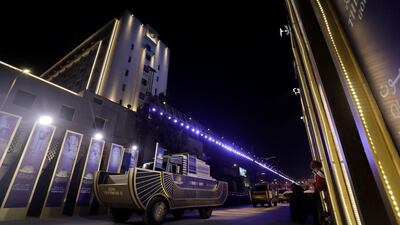
Royal mummies are transported in a convoy from the Egyptian Museum in Tahrir to the National Museum of Egyptian Civilization in Fustat. Reuters -
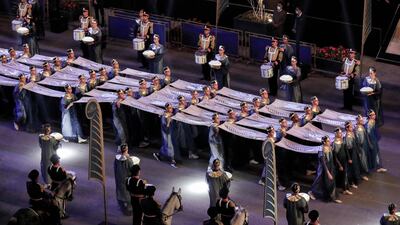
Performers dressed in ancient Egyptian costume march at the start of the parade of 22 ancient Egyptian royal mummies departing from the Egyptian Museum in Cairo's Tahrir Square. AFP -
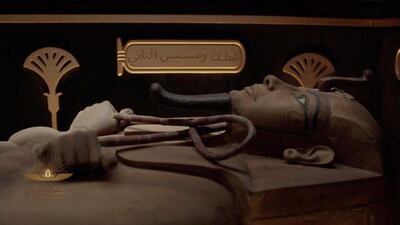
A mummy is seen in a video screened during a ceremony of a transfer of Royal mummies from the Egyptian Museum in Tahrir to the National Museum of Egyptian Civilization in Fustat. Reuters -
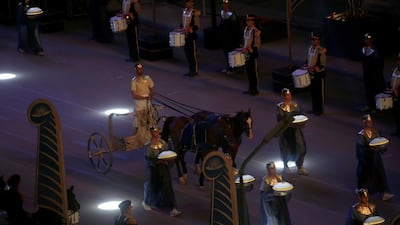
Artists perform during a transfer of royal mummies from the Egyptian Museum in Tahrir to the National Museum of Egyptian Civilization in Fustat. Reuters -
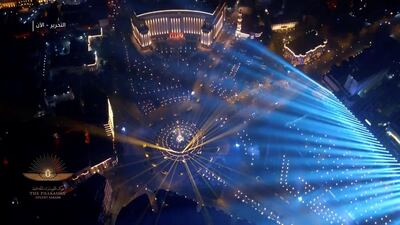
General view of a parade at a ceremony of a transfer of royal mummies from the Egyptian Museum in Tahrir to the National Museum of Egyptian Civilization in Fustat. Reuters -

Vehicles are seen during a parade at a ceremony of a transfer of royal mummies from the Egyptian Museum in Tahrir to the National Museum of Egyptian Civilization in Fustat. Reuters -
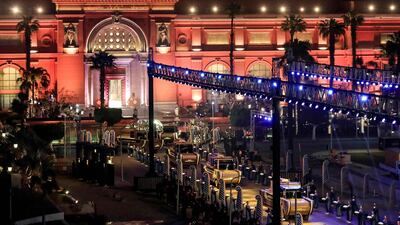
The carriages carrying 22 ancient Egyptian royal mummies depart from the Egyptian Museum in Cairo's Tahrir Square. AFP -

General view of a parade at a ceremony of a transfer of Royal mummies from the Egyptian Museum in Tahrir to the National Museum of Egyptian Civilization in Fustat. Reuters -
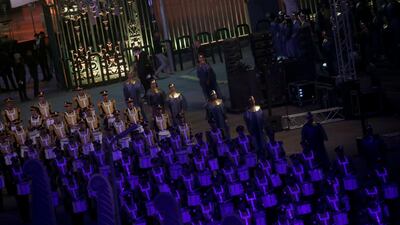
Egyptian police orchestra waits ahead of a transfer of royal mummies from the Egyptian Museum in Tahrir to the National Museum of Egyptian Civilization in Fustat, in Cairo. Reuters -
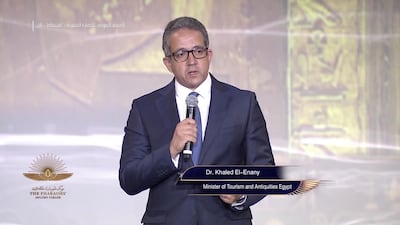
Egypt's Minister of Tourism and Antiquities Khaled El-Enany speaks during a ceremony of a transfer of Royal mummies from the Egyptian Museum in Tahrir to the National Museum of Egyptian Civilization in Fustat. Reuters -
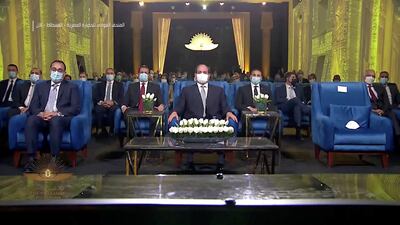
Egypt's President Abdel Fattah El Sisi attends a ceremony of a transfer of royal mummies from the Egyptian Museum in Tahrir to the National Museum of Egyptian Civilization in Fustat, in Cairo. Reuters -

Musicians perform during a ceremony of a transfer of royal mummies from the Egyptian Museum in Tahrir to the National Museum of Egyptian Civilization in Fustat. Reuters -
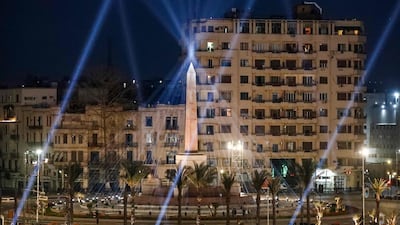
A view of the Obelisk of Ramses II, surrounded by the recently-unveiled and restored four ancient sandstone sphinxes extracted from the Avenue of the Sphinxes in Luxor, in the centre of the main roundabout of Tahrir Square in Egypt's capital Cairo. AFP


The only child of a powerful criminal lawyer and a French-English mother, Ms Martinez put aside her fascination with Cleopatra under pressure from her father and studied law in the Dominican Republic.
Her career shift to archaeology came when she was in her 30s. She was married at the time and was eventually forced to choose between her marriage — her husband refused to move to Egypt — and her dream.
She chose Cleopatra and moved with her two children to Alexandria about 15 years ago.
“Everything you want to do in life comes with a price,” she said.
It took Egyptian authorities a year to decide to give her a permit to dig at Taposiris Magna. Work was later interrupted by the Egyptian uprising in 2011 and the turmoil that lasted for several years after.

But she continued to encounter challenges, not the least of which concerning how she had not come to Egypt representing a globally respected archaeological institution like those found in European and North American universities.
This, in her view, led some in the field to take her theory about Cleopatra’s final resting place lightly, at least initially.
She had no financial backing and ended up self-financing her dig. She refuses to say how much she has spent thus far, but tens of thousands of dollars would be a conservative estimate, as she would have needed to pay for her team plus her living expenses.
Part of her expenses are covered by serving as a senior diplomat in charge of cultural relations at the embassy of the Dominican Republic in Cairo.
Academically, another formidable challenge has been the fact that the Romans destroyed a great deal of records pertaining to Cleopatra and the Ptolemaic dynasty after they captured Egypt.
Moreover, surviving chronicles from that period were written almost exclusively by Roman historians, whose accounts show a clear bias in favour of their empire and a clear disdain for the Egyptian queen.
“The difference between me and other archaeologists is that I approach the project by not using just the science of archaeology. I broaden the scope to include many other sciences,” she said.
“I treat my work like I did when I was solving legal cases.”
Going against the grain
Theories abound about the location of Cleopatra’s tomb. Compounding the mystery is that the location of the tombs of most of her fellow Ptolemaic monarchs as well as that of Alexander the Great are unknown.
To many archaeologists, including world-renowned experts in the field, the belief is that Cleopatra’s tomb was most likely submerged in the Mediterranean during a major earthquake that hit the city in the 4th century.
But Ms Martinez has other ideas.
After carefully examining several possibilities, she decided that Taposiris Magna is the likeliest final resting place for the queen.
Cleopatra, she explains, thought of herself as the embodiment of the goddess Isis, to whom the temple is dedicated. The only other temple that is dedicated to the same goddess is more than 1,000km to the south in the city of Aswan.
She also pointed out that, at the time, there was a road linking Alexandria to Taposiris Magna.
“She decided to end her life because she did not want to be taken to Rome and be paraded while shackled there as the Romans often did with those they vanquish,” said Ms Martinez.
“God knows how she would have died if she had let that happen. She did not want to die as a slave but rather as a goddess and she wanted to be remembered as one.
“She thought the cobra will bite her and send her on a religious journey to be reunited with Mark Antony.”
Despite myriad challenges and scepticism from her peers, Ms Martinez's search for Cleopatra's tomb continues as she scours the past for clues showing where the fabled queen now lies.

