

Two protesters were killed and 80 wounded after Sudanese security forces opened fire on crowds that flooded the streets of Khartoum after a coup on Monday, the Sudan Doctors’ Committee said.
Sudan's military on Monday seized power, dismissed the civilian-led government, declared a nationwide emergency and arrested Prime Minister Abdalla Hamdok and other leading civilian officials.
The takeover comes only weeks before the military was supposed to hand over the leadership of the council that runs the country to civilians and more than two years after protesters ousted long-time autocrat Omar Al Bashir.
In a national TV address, army chief Gen Abdel Fattah Al Burhan said he was dissolving the ruling military-civilian Sovereignty Council he has chaired since its creation in a power-sharing deal in August 2019.
Gen Al Burhan said a government of “independent” technocrats would be formed to run the country, while the military remains the “guarantor” of the nation's transition to civilian rule.
The reins of power will be handed over to an elected government after elections in July 2023, he said. He also vowed to lead the nation to civilian rule by 2023.
He accused political forces of becoming “power hungry” and a source of incitement for violence, prompting the military to act. “We sensed the grave danger stalking the country,” said the general, who observers say has been showing signs of political ambitions.
-
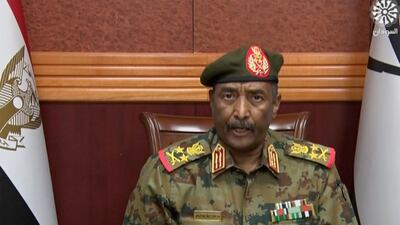
Sudan's Gen Abdel Fattah Al Burhan announced in a televised address that he was dissolving the country's ruling Sovereign Council and the government led by Prime Minister Abdalla Hamdok. Gen Al Burhan said the military would run the country until elections in 2023. Photo: Sudan TV / AP -
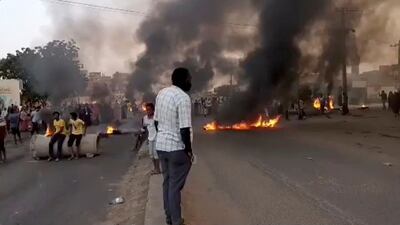
People gather on the streets of Khartoum as smoke rises after reports of a coup on Monday. Photo: Rasd Sudan Network / Reuters -

People gather on the streets of Khartoum as smoke rises after reports of a coup on October 25, 2021. Rasd Sudan Network via Reuters -
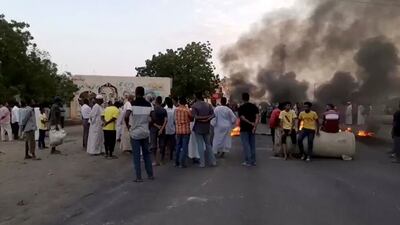
The scene on Khartoum's streets. Photo: Rasd Sudan Network / Reuters -

Sudanese Prime Minister Abdalla Hamdok has been arrested by the military and taken to an undisclosed location, the Information Ministry reported. AFP -
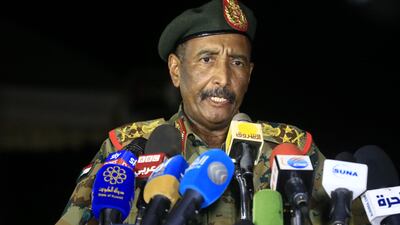
Political parties and pro-civilian rule groups have accused army general and head of the sovereign council Gen Abdel Fattah Al Burhan of ordering the military takeover. AFP -
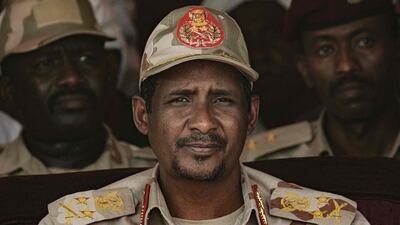
Mohamed Hamdan Dagalo, known as Himediti, is the deputy head of Sudan's ruling Transitional Military Council (TMC) and commander of the Rapid Support Forces (RSF) paramilitaries, making him one of the country’s most powerful generals. AFP -
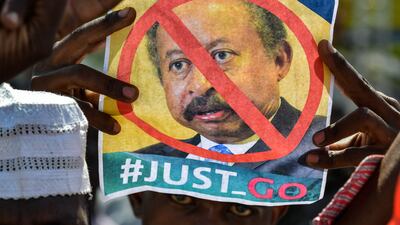
The military’s move comes after protests in favour of the military and against Mr Hamdok as well as those backing civilian rule. AFP -
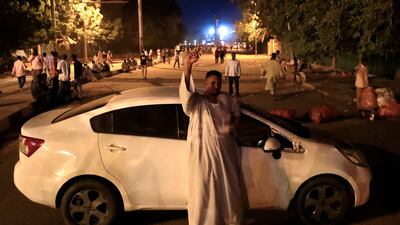
A protester blocks a street with his car during a demonstration to demand the dissolution of Sudan's transitional government. AFP -
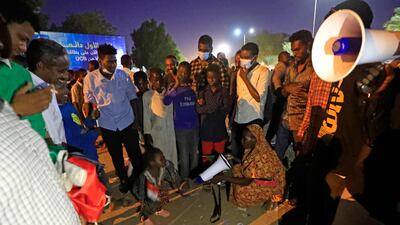
There have been numerous protests in recent days, including outside the presidential palace in Sudan's capital, Khartoum. AFP -
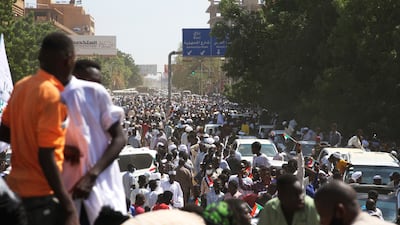
Protesters camping outside the presidential palace demand the dismissal of the government of Prime Minister Abdalla Hamdok. AP -
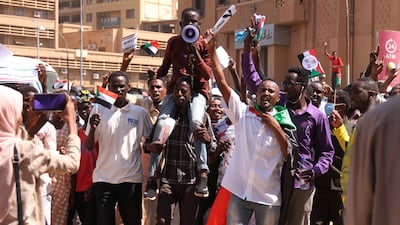
Protesters chant 'one army, one people' and 'the army will bring us bread' slogans during their demonstration outside the presidential palace in Khartoum. AP -

Pro-military protesters hold a rally demanding the dissolution of Sudan’s government, outside the presidential palace. AP -
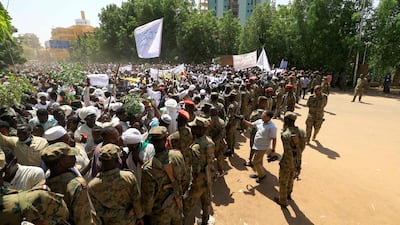
Mr Hamdok has issued a warning that the transition is facing its 'worst and most dangerous' crisis. AFP -
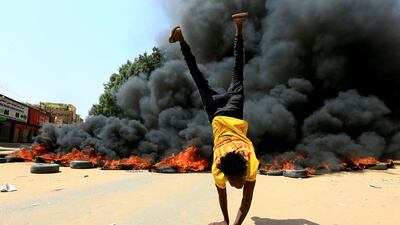
A person does a handstand in front of a burning pile of tyres during a pro-civilian rule protest against any military takeover in Khartoum on October 21. Reuters -
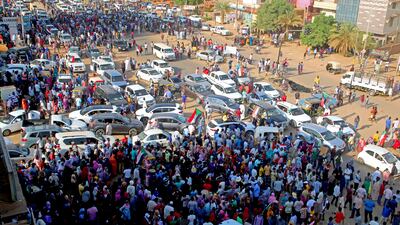
Thousands rallied to back Mr Hamdok’s government after protests by pro-military supporters. EPA -
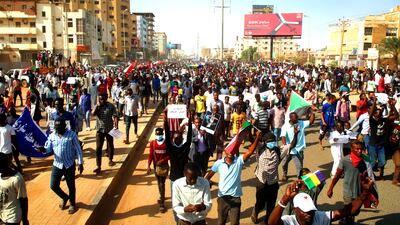
Thousands of people marched during a demonstration called by the Alliance of Forces for Freedom and Change, the Central Council Group to support the government of Abdullah Hamdok, while the army and police forces closed the roads leading to government headquarters and main markets. EPA -
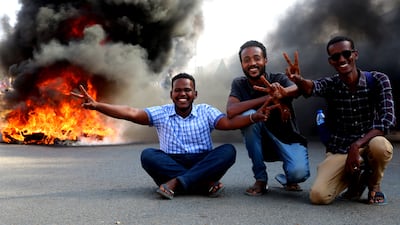
People attend demonstrations in support of the civilian government on October 21. EPA -
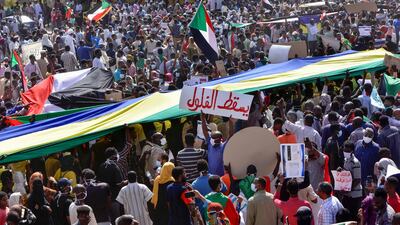
Sudanese demonstrators take part in a protest in the city of Khartoum Bahri, the northern twin city of the capital, to demand the government's transition to civilian rule. AFP


Gen Al Burhan paid tribute to the “December revolution”, the anti-Al Bashir uprising of 2018-19 that was engineered by the Forces of Freedom and Change (FFC) – a pro-democracy alliance that became the political power base of the civilian government and its political patron.
Protesters take to the streets
But his lavish tribute to the revolution found no support on the streets, where thousands of people turned out to protest against the coup that jeopardises the country’s shaky progress towards democracy, burning tyres and chanting revolutionary slogans.
Pro-democracy activists and “resistance committees” in Khartoum distributed timetables for street protests over the next week, with a call for a nationwide protest on Saturday. There were also reports that doctors and teachers have already announced they were going on strike.
“People will go out to the streets and a civil disobedience campaign will begin,” said Sulaima Ishaq, a prominent activist who took part in the 2018-19 protests. “People no longer fear death. In Sudan now, death is no longer a frightening idea but the military is unable to comprehend that.”
-
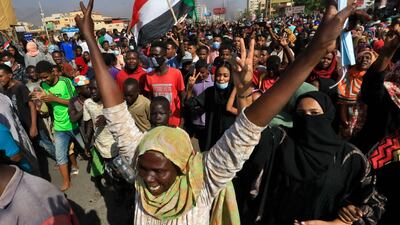
Sudanese protesters hold a rally in Khartoum against overnight detentions by the army of government members. Soldiers arrested Sudan's prime minister for his refusal to support their 'coup', the Information Ministry said. All photos: AFP -
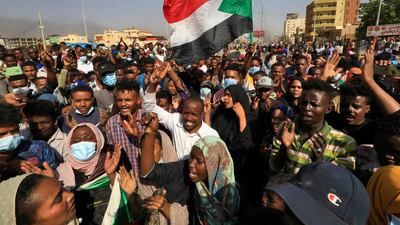
Sudanese demonstrators wave the national flag on the streets of the capital, Khartoum. -
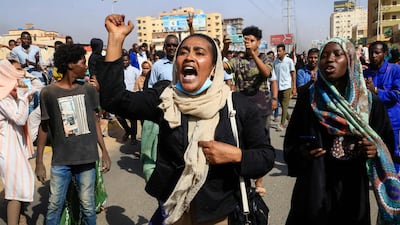
Sudanese protesters hold a rally in Khartoum against overnight detentions by the army of government members. The detentions follows weeks of tensions between military and civilian figures who have shared power since the fall of former president Omar Al Bashir. -
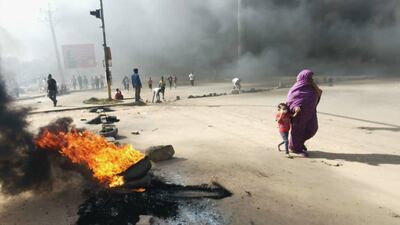
Protesters burnt tyres to block a road in Khartoum. -
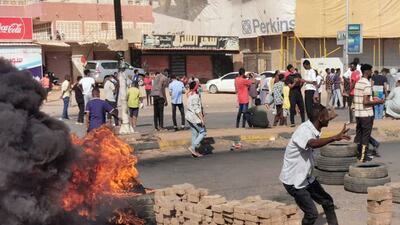
Soldiers detained Sudan's prime minister over a refusal to support their 'coup', the Information Ministry said. -
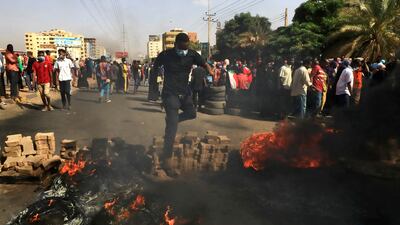
Sudanese protesters jump over a roadblock made of bricks and burning tyres as they rally on 60th Street in the capital, Khartoum. -
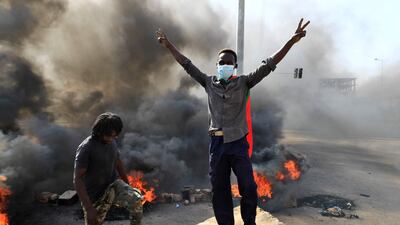
There have been weeks of tensions between the military and civilian figures who shared power since the fall of former president Omar Al Bashir. -
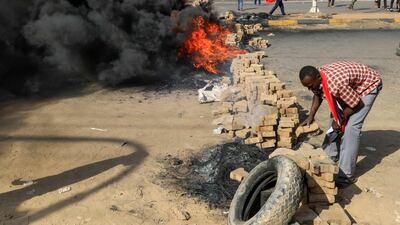
Sudanese protesters use bricks and burning tyres to block 60th Street in Khartoum. -

Protesters are angry about the overnight detentions by the army of members of Sudan's government. -
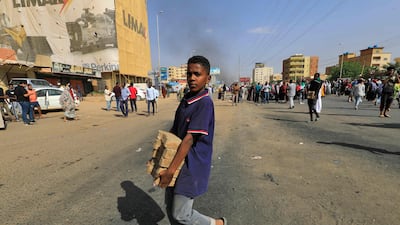
Soldiers detained Sudan's prime minister over his refusal to support their 'coup', the Information Ministry said, after weeks of tensions between military and civilian figures.


The US embassy in Khartoum called on those who were disrupting Sudan's civilian-led transition to stand down, while the European Union urged “all stakeholders” and their regional partners to help place the democratic transition process back on track.
The UN and the Arab League said they were concerned, with the latter calling on all sides to respect the 2019 power-sharing deal between the military and the FFC, which led the protests against Al Bashir in 2018 and 2019 and formed the power base of Mr Hamdok's government.
Monday's coup came after weeks of growing tension between the military and the civilian government, following a failed coup attempt last month that made public the long-simmering differences between the two sides. The dispute swiftly degenerated into mudslinging, with each side blaming the other for Sudan's problems.
The first signs of a coup were detected early on Monday morning when residents of Khartoum said thousands of soldiers were stationed across the capital at dawn and that several key Nile River bridges were closed to traffic. They also reported an internet blackout.
The Information Ministry said soldiers stormed the state radio and TV station in Khartoum's sister city of Omdurman and employees were arrested.
Police spokesman Brig Gen Idrees Suleiman told The National that the city's only international airport was closed to traffic and that Khartoum was “paralysed”.
Sudan's revolution — in pictures
-

Sudanese protesters run for cover from tear gas canisters fired by police outside the military headquarters in the capital Khartoum on April 6, 2019. AFP -
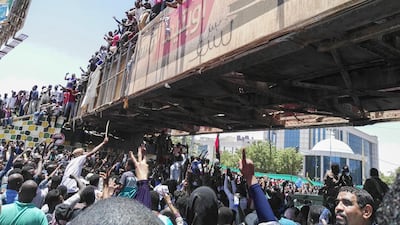
Sudanese protesters rally in front of the military headquarters in the capital Khartoum on April 8, 2019. AFP -
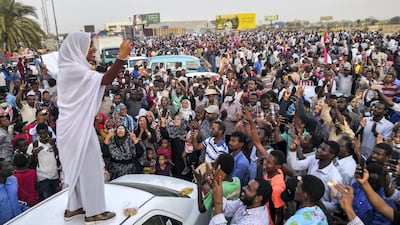
Alaa Salah, a Sudanese woman propelled to internet fame earlier this week after clips went viral of her leading powerful protest chants against President Omar Al Bashir, addresses protesters during a demonstration in front of the military headquarters in the capital Khartoum on April 10, 2019. AFP -
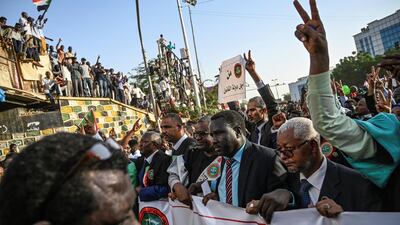
Sudanese judges, dressed in their robes, gather for a "million-strong" march outside the army headquarters in the capital Khartoum on April 25, 2019. AFP -

A Sudanese anti-regime protester kisses a soldier on the head during protests on April 11, 2019 in the area around the army headquarters in Sudan's capital Khartoum. AFP -
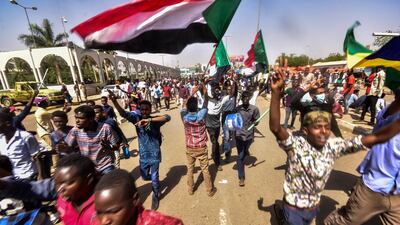
Sudanese demonstrators march with national flags as they gather during a rally demanding a civilian body to lead the transition to democracy. AFP -
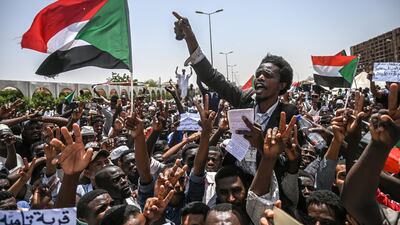
Protesters massed outside the army complex in central Khartoum on April 6, initially to demand the overthrow of longtime leader Omar Al Bashir. AFP -
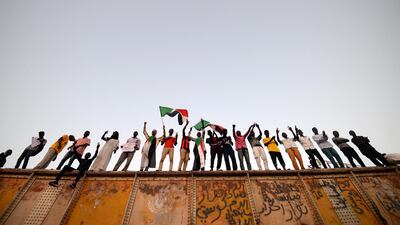
Sudanese protesters gather outside the army headquarters in Khartoum on May 6, 2019. AFP -
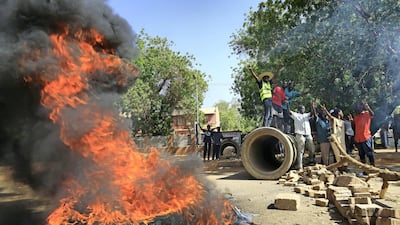
Sudanese protesters burn tyres as they block Nile Street for the second consecutive day during continuing protests in Sudan's capital Khartoum on May 13, 2019. AFP -
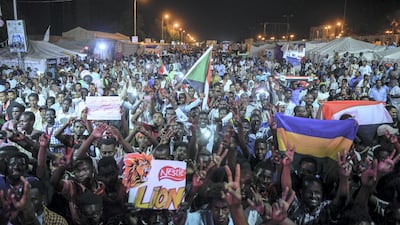
Sudanese protesters wave flags and flash victory signs as they gather for a sit-in outside the military headquarters in Khartoum on May 19, 2019. AFP -
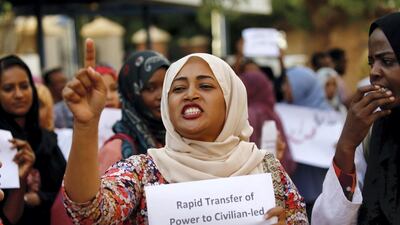
A Sudanese health worker carries a placard as scores of medics hold a rally in front of a hospital in the capital Khartoum on May 23, 2019. AFP -
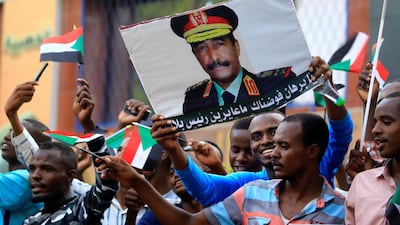
Sudanese supporters of the ruling Transitional Military Council (TMC) hold up a sign showing a portrait of its head General Abdel Fattah Al Burhan with a caption below reading in Arabic "we have delegated you Burhan, we want no president but you", during a rally in the centre of the capital Khartoum on May 31, 2019. AFP -
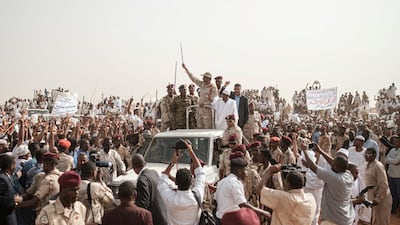
Mohamed Hamdan Dagalo, known as Himediti, deputy head of Sudan's ruling Transitional Military Council and commander of the Rapid Support Forces paramilitaries, waves a baton to supporters on a vehicle as he arrives for a rally in the village of Abraq, about 60 kilometres northwest of Khartoum, on June 22, 2019. AFP -
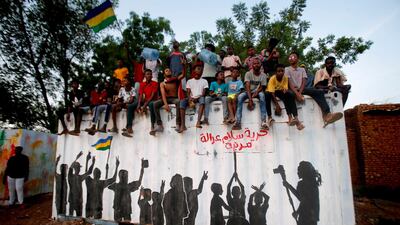
Sudanese protestors celebrate in the streets of Khartoum after ruling generals and protest leaders announced they have reached an agreement on the disputed issue of a new governing body on July 5, 2019. AFP -
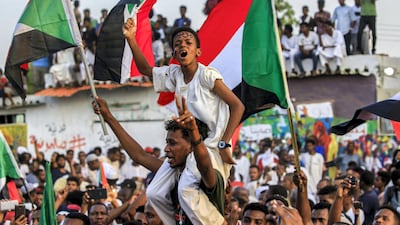
Thousands went to the streets to welcome the agreement on Saturday. AFP -
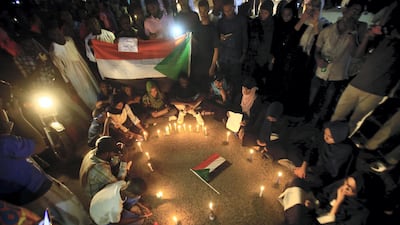
Sudanese protesters take part in a vigil in the capital Khartoum to mourn dozens of demonstrators killed last month in a raid on a Khartoum sit-in. AFP -
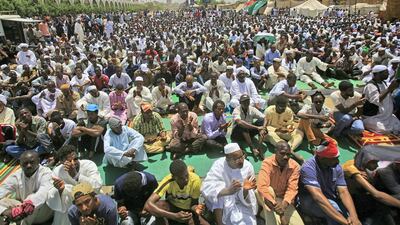
Sudanese protesters gather during Friday noon prayers outside the army headquarters in Khartoum on May 3, 2019, as they continue to protest demanding that the ruling military council hand power to a civilian administration. AFP -
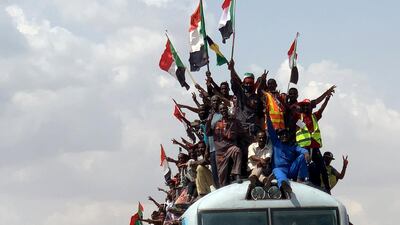
Sudanese civilians from other provinces ride on the train to join in the celebrations of the signing of Sudan's power-sharing deal. Reuters -
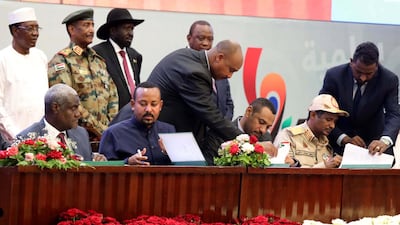
Sudan's Forces of Freedom and Change coalition leader Ahmad Rabiah (3-R) and Sudan's General and Vice President of Sudanese Transitional Military Council, Mohamed Hamdan Dagalo (2-R) sign power-sharing agreement,. EPA -
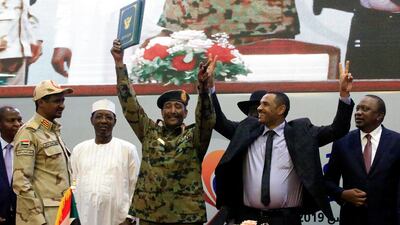
Sudan's Head of Transitional Military Council, Lieutenant General Abdel Fattah Al-Burhan, and Sudan's opposition alliance coalition's leader Ahmad Rabiah, celebrate the signing of the power-sharing deal, that paves the way for a transitional government, and eventual elections. Reuters -
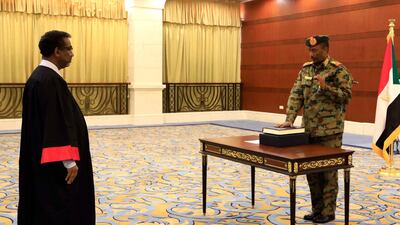
epa07783624 Leader of Sudan's transitional council, Lieutenant General Abdel Fattah Abdelrahman Burhan (R) is sworn in as the Head of the newly formed transitional Council at the presidential palace in Khartoum, Sudan, 21 August 2019. The Sudanese opposition and military council signed on 17 August a power sharing agreement. The agreement sets up a sovereign council made of five generals and six civilians, to rule the country until general elections. Protests had erupted in Sudan at the end of 2018, culminating in a long sit-in outside the army headquarters which ended with more than one hundred people being killed and others injured. Sudanese President Omar Hassan al-Bashir stepped down on 11 April 2019. EPA/STRINGER -
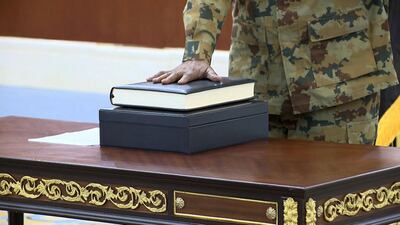
A pictured released by Sudan's Presidential Palace shows General Abdel Fattah al-Burhan, the head of Sudan's ruling military council, during a swearing in ceremony in Khartoum on August 21, 2019. Burhan was sworn today as chairman of Sudan's new sovereign council that will steer the country through a three-year transition to civilian rule. "General Abdel Fattah al-Burhan Abdel Rahman was sworn in as president of the sovereign council," the official SUNA news agency reported. / AFP / SUDAN PRESIDENTIAL PALACE / - / RESTRICTED TO EDITORIAL USE - MANDATORY CREDIT "AFP PHOTO / SUDAN PRESIDENTAIL PALACE" - NO MARKETING NO ADVERTISING CAMPAIGNS - DISTRIBUTED AS A SERVICE TO CLIENTS -
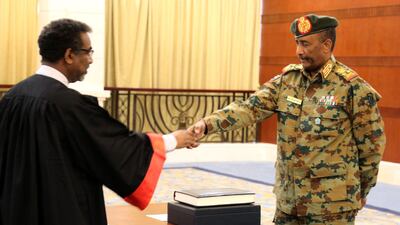
A picture released by Sudan's Presidential Palace shows General Abdel Fattah al-Burhan, the head of Sudan's ruling military council, during a swearing in ceremony in Khartoum on August 21, 2019. Burhan was sworn today as chairman of Sudan's new sovereign council that will steer the country through a three-year transition to civilian rule. "General Abdel Fattah al-Burhan Abdel Rahman was sworn in as president of the sovereign council," the official SUNA news agency reported. / AFP / SUDAN PRESIDENTIAL PALACE / - / RESTRICTED TO EDITORIAL USE - MANDATORY CREDIT "AFP PHOTO / SUDAN PRESIDENTAIL PALACE" - NO MARKETING NO ADVERTISING CAMPAIGNS - DISTRIBUTED AS A SERVICE TO CLIENTS -
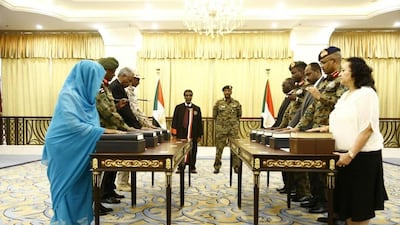
A picture released by Sudan's Presidential Palace shows General Abdel Fattah al-Burhan (C-R), the head of Sudan's ruling military council, standing during a swearing in of the new sovereign council, in Khartoum on August 21, 2019. Sudan took further steps in its transition towards civilian rule today with the swearing in of a new sovereign council, to be followed by the appointment of a prime minister. The body replaces the Transitional Military Council (TMC) that took charge after months of deadly street protests brought down longtime ruler Omar al-Bashir in April. Burhan, who already headed the TMC, was sworn in as the chairman of the new sovereign council in the morning. / AFP / SUDAN PRESIDENTIAL PALACE / - / RESTRICTED TO EDITORIAL USE - MANDATORY CREDIT "AFP PHOTO / SUDAN PRESIDENTAIL PALACE" - NO MARKETING NO ADVERTISING CAMPAIGNS - DISTRIBUTED AS A SERVICE TO CLIENTS -
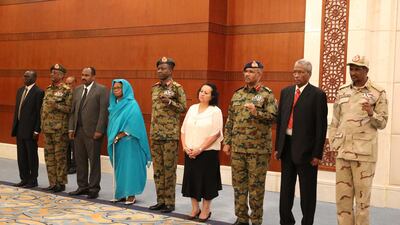
epa07784051 Members of Sudan's newly formed transitional Council (R-L) General Mohamed Hamdan Dagalo, Hassan Sheikh Idris, Genereal Ibrahim Jaber, Raja Nicola Issa Abdul-Masseh, General Shams al-Din Kabashi, Aisha Moussa, Mohamed Alfaki, General Yasser al-Atta and Sadeek Tawer look on during their sweaing-in ceremony at the presidential palace in Khartoum, Sudan, 21 August 2019. The Sudanese opposition and military council signed on 17 August a power sharing agreement. The agreement sets up a sovereign council made of five generals and six civilians, to rule the country until general elections. Protests had erupted in Sudan at the end of 2018, culminating in a long sit-in outside the army headquarters which ended with more than one hundred people being killed and others injured. Sudanese President Omar Hassan al-Bashir stepped down on 11 April 2019. EPA/MORWAN ALI -

Demonstrators march with banners and the old (L) and current (R) flags of Sudan outside a courthouse complex in the capital's twin city of Omdurman on August 21, 2019 during the trial of 40 members of Sudan's now-dissolved National Intelligence and Security Service facing charges over the death in custody of Ahmed al-Kheir, a teacher from the eastern town of Khashma el-Girba, in the early days of the wave of nationwide protests that eventually brought longtime ruler Omar al-Bashir. / AFP / Ahmed Mustafa -
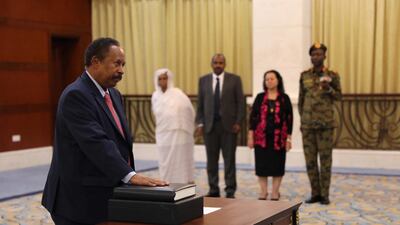
epa07784904 Sudan's new Prime Minister Abdalla Hamdok (L) swears in during a ceremony at the presidential palace in Khartoum, Sudan, 21 August 2019. The Sudanese opposition and military council signed on 17 August a power sharing agreement. The agreement sets up a sovereign council made of five generals and six civilians, to rule the country until general elections. Protests had erupted in Sudan in December 2018, culminating in a long sit-in outside the army headquarters which ended with more than one hundred people being killed and others injured. Sudanese President Omar Hassan al-Bashir stepped down on 11 April 2019. EPA/MARWAN ALI -
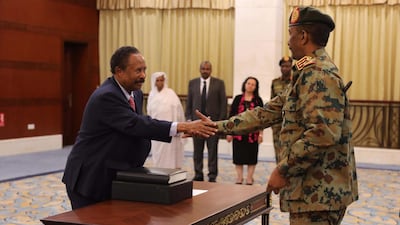
epa07784903 Sudan's new Prime Minister Abdalla Hamdok (L) shakes hands with Abdel Fattah Abdelrahman Burhan (R) after being sworn in during a ceremony at the presidential palace in Khartoum, Sudan, 21 August 2019. The Sudanese opposition and military council signed on 17 August a power sharing agreement. The agreement sets up a sovereign council made of five generals and six civilians, to rule the country until general elections. Protests had erupted in Sudan in December 2018, culminating in a long sit-in outside the army headquarters which ended with more than one hundred people being killed and others injured. Sudanese President Omar Hassan al-Bashir stepped down on 11 April 2019. EPA/MARWAN ALI -
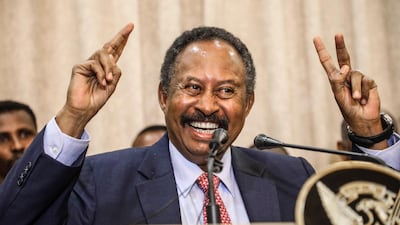
Sudan's new Prime Minister Abdalla Hamdok speaks duringa press conference in Khartoum, Sudan, Wednesday, Aug. 21, 2019. (AP Photo)


US envoy Jeffrey Feltman was in Sudan at the weekend to meet officials and sat with Gen Al Burhan – their second meeting in as many days – after warning that the collapse of the transition would jeopardise Washington's vital aid to the crisis-hit country.
On Monday, Mr Feltman said he was deeply alarmed by the developments, while UN Sudan envoy Volker Perthes said the military appeared to be in control and warned of "violence and more clashes when night falls".
Sudan's political landscape has been defined by military coups since it became independent 65 years ago, with at least two dozen attempted seizures of power and three periods of military rule lasting a total of more than 50 years.
At the weekend, leaders of the FFC warned of a “creeping” coup and said Gen Al Burhan wanted Mr Hamdok's government to be replaced with one that leaves the military with the final word on policy.
The group also claimed the military was behind a month-long blockade of the country's main commercial seaport on the Red Sea that has caused shortages of bread.
Hundreds of thousands marched in Khartoum and other major cities on Thursday to show their support for Mr Hamdok's government and demand that Gen Al Burhan step down. The military responded to the demonstrations by sealing off the area where its headquarters are located and then surrounding it with concrete barriers.

