Captagon Crisis: the rise of the Middle East’s troubling drug trade


  • English
  • Arabic

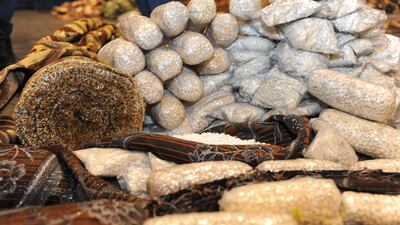
Production, trafficking and consumption of Captagon in the Middle East have all skyrocketed in the past decade, with the small, off-white pills rising to become the region’s most popular drug.

The synthetic amphetamine has long been associated with the Syrian civil war, where fighters on all sides popped pills before heading to front lines.

While huge quantities of Captagon are still being produced in Syria, experts, law enforcement and officials warn it is spreading over the borders to Lebanon and Jordan too, risking destabilising the region and flooding the Middle East with cheap but dangerous drugs.

In a series of articles from across the region, The National has documented the Middle East’s new war on drugs, uncovered the game of cat and mouse between sophisticated drug cartels and customs agencies using technology to intercept concealed shipments headed to lucrative markets in the Gulf.

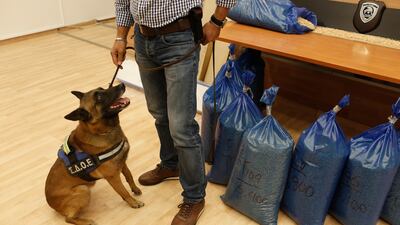
On the front lines of Saudi Arabia’s crackdown on Captagon, the kingdom’s K-9 unit is training world-class working dogs in an effort to beat increasingly complex attempts to smuggle drugs into the region’s biggest market.

A Saudi Customs officer opens pomegranates after an attempt to smuggle millions of Captagon pills inside a shipment of the fruit from Lebanon was foiled. Saudi Press Agency via AP

While the kingdom recently banned agricultural imports from Lebanon in an effort to rein in trafficking, users, doctors and health officials warn of the heavy toll amphetamine abuse can take on addicts and reveal how the kingdom is working to counter Captagon’s popularity.

But Captagon producers holed up in Lebanon’s Bekaa Valley, an ancient, fertile territory well out of the reach of the country’s security forces, boast of how easily they can manufacture large quantities of the pills, and of how much money they can make from the lucrative trade.

The bad news is that traffickers have become intelligent and more sophisticated
Thomas Pietschmann,
UNODC senior drug research officer

By air, sea and land they smuggle the drugs towards the Gulf.

The Black Desert, an arid expanse of volcanic rock and sand that stretches over the border between Jordan, Syria and Saudi Arabia, has emerged as the centre of a smuggling network fed by Syrian and Jordanian producers, which Arab security officials fear could destabilise the region.

Iraq has long been awash with Iranian made crystal meth but counter-narcotics forces are seizing Captagon in massive quantities.

While it was a transit route for Captagon from Syria, officials warn the pills are now the second most popular drug in the country and security forces are struggling to keep up with trafficking that they say could be fuelling terrorism.

In Egypt, veteran drug dealers say the influx of new synthetic drugs such as Captagon has changed habits and is fuelling crime – in a country that once tolerated the recreational use of hashish – setting off alarm bells for drug officials.

Where did Captagon come from?

First synthesised in the 1960s, it was used as a treatment for attention deficit hyperactivity disorder (ADHD).

Genuine Captagon contained a stimulant called fenetylline, but the substance was banned by a UN convention in the mid-1980s because of its side effects. With no accepted clinical use for the drug, official production ceased in the 1980s.

“The fenetylline stock that remained in Europe was largely destroyed, but part of it was trafficked and sold on the black market in the Middle East,” said Laurent Laniel, principal scientific analyst at the European Monitoring Centre for Drugs and Drug Addiction.

When that stock ran out, amphetamines were used as a replacement for fenetylline and placed in Captagon tablets, giving rise to the drug that is popular today.

“The name survived. Captagon – now an illicit product, containing an illicit drug – was trafficked to what appeared to be its largest markets: the Middle East, the Arabian Peninsula and apparently Saudi Arabia,” he told The National.

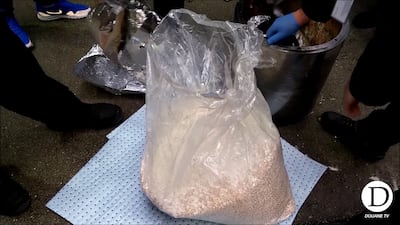
  • According to the United Nations Office on Drugs and Crime, trafficking in amphetamines has increased in the Middle East in recent years. Photo: Dubai Customs
    According to the United Nations Office on Drugs and Crime, trafficking in amphetamines has increased in the Middle East in recent years. Photo: Dubai Customs
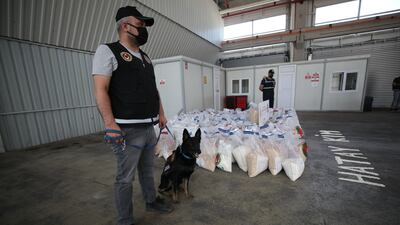
  • Specially trained K-9 units are often used by border forces to intercept shipments. EPA
    Specially trained K-9 units are often used by border forces to intercept shipments. EPA
  • Experts believe the amount intercepted accounts for only around a tenth of the total quantity of pills being smuggled out of places like Syria and Jordan. EPA
    Experts believe the amount intercepted accounts for only around a tenth of the total quantity of pills being smuggled out of places like Syria and Jordan. EPA
  • Dubai Customs thwarted 398 attempts to smuggle drugs into the city in the first three months of this year. Photo: Dubai Customs
    Dubai Customs thwarted 398 attempts to smuggle drugs into the city in the first three months of this year. Photo: Dubai Customs
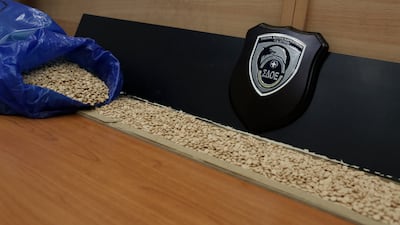
  • Captagon pills on display after being seized in Greece in 2019. EPA
    Captagon pills on display after being seized in Greece in 2019. EPA
  • Captagon became synonymous with the Syrian Civil War. AFP
    Captagon became synonymous with the Syrian Civil War. AFP
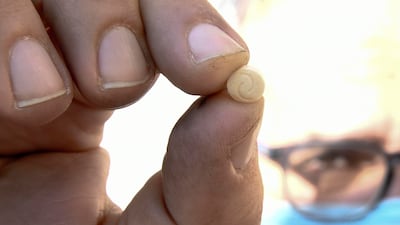
  • The small, off-white pills have quickly become one of the most widely consumed drugs in the Middle East. EPA
    The small, off-white pills have quickly become one of the most widely consumed drugs in the Middle East. EPA
  • Millions of Captagon pills are seized around the world each year. EPA
    Millions of Captagon pills are seized around the world each year. EPA
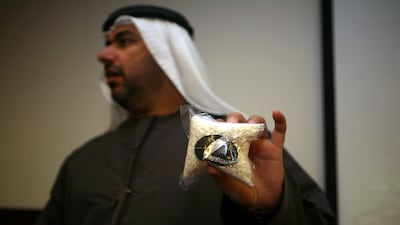
  • Captagon pills on display after a major interception of a shipment in 2009. Nicole Hill / The National
    Captagon pills on display after a major interception of a shipment in 2009. Nicole Hill / The National
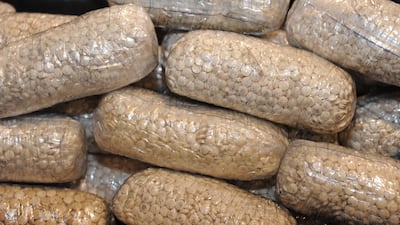
  • Customs officers say Captagon smugglers prefer to use sea ports rather than airports because of the size of shipping containers, enabling them to conceal larger quantities of drugs. Photo: Dubai Customs
    Customs officers say Captagon smugglers prefer to use sea ports rather than airports because of the size of shipping containers, enabling them to conceal larger quantities of drugs. Photo: Dubai Customs

Criminal gangs from Bulgaria and Turkey helped to introduce Captagon to the Middle East and the Arabian Peninsula.

But a crackdown on laboratories and the manufacturing process in Eastern Europe and Turkey caused production to move into the Levant.

In 2015, a Saudi citizen was caught at a Lebanese airport trying to smuggle two tonnes of Captagon pills in his private jet.

“Fairly serious organised criminals from Lebanon were seen in the airport on the same day that the prince was leaving on his private jet. There is speculation that these criminals were delivering the Captagon to the Saudi prince,” Mr Laniel said.

Efforts to crack down on production in Lebanon revealed similarities with labs discovered in Europe.

“European authorities at the scene told me the machines to manufacture and tablet the pills were, in fact, very similar to what they are used to finding in illicit labs in Europe,” he said.

This led experts to believe that European criminals are playing a role in the production and trafficking of Captagon in Lebanon.

Captagon production in Syria

Experts are crying out for more information on Captagon, saying that relying on data of busts alone to try and determine the scale of the crisis and estimate how much may be being produced is hampering efforts to stop the trade.

While the production and smuggling of Captagon remains shrouded in mystery, much of the region’s supplies have been traced back to Syria.

Several intercepted shipments of Captagon, including a possible world-record seizure in Italy worth more than $1 billion, were traced back to territory controlled by the Syrian government and Iran-backed Hezbollah.

The wreckage of armoured personnel carriers in Homs, May 2014. Reuters

Ian Larson, an analyst at COAR and the lead author of its recent report on Captagon, said: “Most of the primary centres of Captagon production are under the control of Damascus. Many are Assad regime strongholds like the Latakia coast, including places like Basa. The primary export channels for industrial-scale production are ports controlled by regime officials."

In war-ravaged Syria, it is hard to determine the level of official knowledge of the drug trades, although Syrian and Jordanian military officials met in Amman in September to talk about how to stop drug smuggling over their shared border.

"There is a lot that simply isn’t known with absolute with certainty about the Syrian Captagon trade," said Mr Larson. "The Assad regime’s involvement isn’t in question, however."

Experts say Captagon production and trade is proliferating in weakened states like Syria, Lebanon and eastern Libya because instability and eroded government control at best means bribery and corruption are commonplace even if there isn't direct official involvement.

"Lebanon, like Syria, has experienced total economic devastation. In both countries, there are organised narco-trafficking operations, but the incentives are growing for smaller wildcat operations," said Mr Larson.

“Obviously, the proliferation of the drug economy in recent years is a response to the country’s economic destitution and the need to reward loyalists.”

While there’s no hard evidence that connects senior Syrian government officials to the trade, Mr Larson and others say they must be aware.

"Much of the evidence is circumstantial, but it is compelling," Mr Larson said.

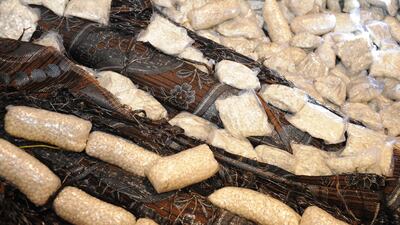
Though Italian authorities were quick to blame ISIS in Syria for the massive shipment that arrived in Europe in July 2020, experts raised doubts that the extremists could have produced and smuggled such a shipment of pills, which were so well hidden in giant rolls of paper that even X-ray scanners didn’t detect them.

Germany's Der Spiegel magazine and British newspaper The Times alleged that Samer Kamal Al Assad, a paternal cousin of Syria's leader, runs several Captagon factories disguised as packaging companies in a village south of government heartland Latakia, and the paper cylinders hiding the pills were allegedly manufactured in a factory recently set up in Aleppo so as to avoid sanctions.

Shipments seized in Greece have been traced back to Latakia in Syria. EPA

Shipments seized in Greece and have also been traced back to Latakia.

Several other high-profile Captagon shipments have since been intercepted and traced back to areas of Syria under government and Hezbollah control, including a shipment of 2.1 million pills hidden in containers of tomato paste marked "made in Syria" that was discovered by Saudi authorities at the kingdom's Al Haditha port in July 2021.

Jalel Harchaoui, a senior fellow at Global Initiative against Transnational Organised Crime, said the Syrian drug trade has been tolerated because the weakened state is unable to clamp down on the trade while also dealing with raging conflicts.

"That is not necessarily to say that the very tip of the Syrian pyramid — Bashar Al Assad and his closest circle — benefit directly from the trade. But lower rungs in their own security sector are assuredly corrupt. A weak structure like Assad’s cannot fight that. It has no option but to let parts of its own state structure derive profits from drug trafficking schemes," said Mr Harchaoui.

How big is the Middle East’s Captagon problem?

Relatively little data is available on the scale of the Middle East’s Captagon consumption, but the region accounted for half of all global amphetamine seizures in 2019, according to the United Nations Office on Drugs and Crime (UNODC) World Drugs Report for 2021.

What is clear, however, is that most of the Captagon consumed in the region is produced in the region, “in particular in Lebanon and Syria”, said Thomas Pietschmann, UNODC senior drug research officer.

Captagon requires a chemical known as P2P for its production, he told The National. He said that the UNODC has worked with authorities in the region to restrict imports of P2P for non-medical purposes.

“The bad news is that traffickers have become intelligent and more sophisticated. Instead of using P2P, they import pre-cursors to produce P2P and then produce the Captagon,” Dr Pietschmann said.

Saudi Arabia has so far reported the highest number of interceptions of incoming Captagon pills, leading experts to believe that it is the Middle East’s largest market for the drug.

Despite a crackdown, smugglers continue to find ways to get large quantities of pills into the kingdom.

"Smugglers in the Middle East are very sophisticated and becoming smarter," Dr Pietschmann said.

Shipments are now being sent to Europe from Lebanon and Syria, then on to Saudi Arabia so as not to arouse suspicion, Dr Pietschmann said. "This is something we never thought would happen."

The high risks associated with Captagon smuggling also extend to the users, who can never be sure of what the pills contain.

“You don’t know what’s inside,” Dr Pietschmann said. “It is mixed with all kinds of substances.”

Sample testing has found that most pills sold as Captagon contain other amphetamine derivatives that are easier to produce, as well as additives such as caffeine, quinine and paracetamol.

Discrepancies in the quantity of amphetamine and stimulants in the individual pills mean Captagon can act as a gateway drug to harder, more addictive substances, such as methamphetamine.

“This can have devastating results. This is what we are really afraid of,” Dr Pietschmann said.

Researchers generally depend on official government releases for information, which do not always give a complete picture, particularly in socially conservative countries where Captagon is popular and drug abuse is taboo.

This makes the scale of the problem harder to understand, Mr Laniel said.

“There needs to be more information generated. We need to stop treating it as a taboo,” he said. “It’s a problem of health and crime and we need to talk honestly about it and try to produce better information to understand what’s going on.”


RESULTS

Bantamweight title:
Vinicius de Oliveira (BRA) bt Xavier Alaoui (MAR)
(KO round 2)
Catchweight 68kg:
Sean Soriano (USA) bt Noad Lahat (ISR)
(TKO round 1)
Middleweight:
Denis Tiuliulin (RUS) bt Juscelino Ferreira (BRA)
(TKO round 1)
Lightweight:
Anas Siraj Mounir (MAR) bt Joachim Tollefsen (DEN)
(Unanimous decision)
Catchweight 68kg:
Austin Arnett (USA) bt Daniel Vega (MEX)
(TKO round 3)
Lightweight:
Carrington Banks (USA) bt Marcio Andrade (BRA)
(Unanimous decision)
Catchweight 58kg:
Corinne Laframboise (CAN) bt Malin Hermansson (SWE)
(Submission round 2)
Bantamweight:
Jalal Al Daaja (CAN) bt Juares Dea (CMR)
(Split decision)
Middleweight:
Mohamad Osseili (LEB) bt Ivan Slynko (UKR)
(TKO round 1)
Featherweight:
Tarun Grigoryan (ARM) bt Islam Makhamadjanov (UZB)
(Unanimous decision)
Catchweight 54kg:
Mariagiovanna Vai (ITA) bt Daniella Shutov (ISR)
(Submission round 1)
Middleweight:
Joan Arastey (ESP) bt Omran Chaaban (LEB)
(Unanimous decision)
Welterweight:
Bruno Carvalho (POR) bt Souhil Tahiri (ALG)
(TKO)

UAE currency: the story behind the money in your pockets
Skoda Superb Specs

Engine: 2-litre TSI petrol

Power: 190hp

Torque: 320Nm

Price: From Dh147,000

Available: Now

Medicus AI

Started: 2016

Founder(s): Dr Baher Al Hakim, Dr Nadine Nehme and Makram Saleh

Based: Vienna, Austria; started in Dubai

Sector: Health Tech

Staff: 119

Funding: €7.7 million (Dh31m)


West Asia Premiership

Dubai Hurricanes 58-10 Dubai Knights Eagles

Dubai Tigers 5-39 Bahrain

Jebel Ali Dragons 16-56 Abu Dhabi Harlequins

Results

Final: Iran beat Spain 6-3.

Play-off 3rd: UAE beat Russia 2-1 (in extra time).

Play-off 5th: Japan beat Egypt 7-2.

Play-off 7th: Italy beat Mexico 3-2.

Queen

Nicki Minaj

(Young Money/Cash Money)

Tuesday results:

  • Singapore bt Malaysia by 29 runs
  • UAE bt Oman by 13 runs
  • Hong Kong bt Nepal by 3 wickets

Final:
Thursday, UAE v Hong Kong

Five healthy carbs and how to eat them

Brown rice: consume an amount that fits in the palm of your hand

Non-starchy vegetables, such as broccoli: consume raw or at low temperatures, and don’t reheat  

Oatmeal: look out for pure whole oat grains or kernels, which are locally grown and packaged; avoid those that have travelled from afar

Fruit: a medium bowl a day and no more, and never fruit juices

Lentils and lentil pasta: soak these well and cook them at a low temperature; refrain from eating highly processed pasta variants

Courtesy Roma Megchiani, functional nutritionist at Dubai’s 77 Veggie Boutique

Match info:

Burnley 0

Manchester United 2
Lukaku (22', 44')

Red card: Marcus Rashford (Man United)

Man of the match: Romelu Lukaku (Manchester United)

Sanchez's club career

2005-2006: Cobreloa

2006-2011 Udinese

2006-2007 Colo-Colo (on loan)

2007-2008 River Plate (on loan)

2011-2014 Barcelona

2014–Present Arsenal

How to wear a kandura

Dos

  • Wear the right fabric for the right season and occasion 
  • Always ask for the dress code if you don’t know
  • Wear a white kandura, white ghutra / shemagh (headwear) and black shoes for work 
  • Wear 100 per cent cotton under the kandura as most fabrics are polyester

Don’ts 

  • Wear hamdania for work, always wear a ghutra and agal 
  • Buy a kandura only based on how it feels; ask questions about the fabric and understand what you are buying
KLOPP%20AT%20LIVERPOOL
%3Cp%3EYears%3A%20October%202015%20-%20June%202024%3Cbr%3ETotal%20games%3A%20491%3Cbr%3EWin%20percentage%3A%2060.9%25%3Cbr%3EMajor%20trophies%3A%206%20(Premier%20League%20x%201%2C%20Champions%20League%20x%201%2C%20FA%20Cup%20x%201%2C%20League%20Cup%20x%202%2C%20Fifa%20Club%20World%20Cup%20x1)%3C%2Fp%3E%0A
Fixtures:

Wed Aug 29 – Malaysia v Hong Kong, Nepal v Oman, UAE v Singapore
Thu Aug 30 - UAE v Nepal, Hong Kong v Singapore, Malaysia v Oman
Sat Sep 1 - UAE v Hong Kong, Oman v Singapore, Malaysia v Nepal
Sun Sep 2 – Hong Kong v Oman, Malaysia v UAE, Nepal v Singapore
Tue Sep 4 - Malaysia v Singapore, UAE v Oman, Nepal v Hong Kong
Thu Sep 6 – Final

RESULTS
%3Cp%3E%3Cstrong%3E9pm%3A%20Maiden%20(PA)%20Dh70%2C000%20(Dirt)%202%2C000m%3C%2Fstrong%3E%3Cbr%3EWinner%3A%20Mubhir%20Al%20Ain%2C%20Antonio%20Fresu%20(jockey)%2C%20Ahmed%20Al%20Mehairbi%20(trainer)%3Cbr%3E%3Cstrong%3E9.30pm%3A%20Handicap%20(TB)%20Dh70%2C000%20(D)%202%2C000m%3C%2Fstrong%3E%3Cbr%3EWinner%3A%20Exciting%20Days%2C%20Oscar%20Chavez%2C%20Doug%20Watson%3Cbr%3E%3Cstrong%3E10pm%3A%20Al%20Ain%20Cup%20%E2%80%93%20Prestige%20(PA)%20Dh100%2C000%20(D)%202%2C000m%3C%2Fstrong%3E%3Cbr%3EWinner%3A%20Suny%20Du%20Loup%2C%20Marcelino%20Rodrigues%2C%20Hamad%20Al%20Marar%3Cbr%3E%3Cstrong%3E10.30pm%3A%20Maiden%20(PA)%20Dh70%2C000%20(D)%201%2C800m%3C%2Fstrong%3E%3Cbr%3EWinner%3A%20Jafar%20Des%20Arnets%2C%20Oscar%20Chavez%2C%20Ahmed%20Al%20Mehairbi%3Cbr%3E%3Cstrong%3E11pm%3A%20Wathba%20Stallions%20Cup%20%E2%80%93%20Handicap%20(PA)%20Dh70%2C000%20(D)%201%2C600m%3C%2Fstrong%3E%3Cbr%3EWinner%3A%20Taj%20Al%20Izz%2C%20Richard%20Mullen%2C%20Ibrahim%20Al%20Hadhrami%3Cbr%3E%3Cstrong%3E11.30pm%3A%20Maiden%20(PA)%20Dh70%2C000%20(D)%201%2C400m%3C%2Fstrong%3E%3Cbr%3EWinner%3A%20Majdy%2C%20Antonio%20Fresu%2C%20Jean%20de%20Roualle%3Cbr%3E%3Cstrong%3E12am%3A%20Maiden%20(PA)%20Dh70%2C000%20(D)%201%2C400m%3C%2Fstrong%3E%3Cbr%3EWinner%3A%20Hamloola%2C%20Sam%20Hitchcott%2C%20Salem%20Al%20Ketbi%3C%2Fp%3E%0A
Safety 'top priority' for rival hyperloop company

The chief operating officer of Hyperloop Transportation Technologies, Andres de Leon, said his company's hyperloop technology is “ready” and safe.

He said the company prioritised safety throughout its development and, last year, Munich Re, one of the world's largest reinsurance companies, announced it was ready to insure their technology.

“Our levitation, propulsion, and vacuum technology have all been developed [...] over several decades and have been deployed and tested at full scale,” he said in a statement to The National.

“Only once the system has been certified and approved will it move people,” he said.

HyperloopTT has begun designing and engineering processes for its Abu Dhabi projects and hopes to break ground soon. 

With no delivery date yet announced, Mr de Leon said timelines had to be considered carefully, as government approval, permits, and regulations could create necessary delays.

The specs

Engine: 2.0-litre 4cyl turbo

Power: 261hp at 5,500rpm

Torque: 405Nm at 1,750-3,500rpm

Transmission: 9-speed auto

Fuel consumption: 6.9L/100km

On sale: Now

Price: From Dh117,059

UAE currency: the story behind the money in your pockets
BACK%20TO%20ALEXANDRIA
%3Cp%3E%3Cstrong%3EDirector%3A%20%3C%2Fstrong%3ETamer%20Ruggli%3C%2Fp%3E%0A%3Cp%3E%3Cstrong%3EStarring%3A%20%3C%2Fstrong%3ENadine%20Labaki%2C%20Fanny%20Ardant%3C%2Fp%3E%0A%3Cp%3E%3Cstrong%3ERating%3A%20%3C%2Fstrong%3E3.5%2F5%3C%2Fp%3E%0A
The biog

Favourite hobby: taking his rescue dog, Sally, for long walks.

Favourite book: anything by Stephen King, although he said the films rarely match the quality of the books

Favourite film: The Shawshank Redemption stands out as his favourite movie, a classic King novella

Favourite music: “I have a wide and varied music taste, so it would be unfair to pick a single song from blues to rock as a favourite"

Like a Fading Shadow

Antonio Muñoz Molina

Translated from the Spanish by Camilo A. Ramirez

Tuskar Rock Press (pp. 310)

COMPANY%20PROFILE
%3Cp%3E%3Cstrong%3ECompany%3A%20%3C%2Fstrong%3EGrowdash%0D%3Cbr%3E%3Cstrong%3EStarted%3A%20%3C%2Fstrong%3EJuly%202022%0D%3Cbr%3E%3Cstrong%3EFounders%3A%20%3C%2Fstrong%3ESean%20Trevaskis%20and%20Enver%20Sorkun%0D%3Cbr%3E%3Cstrong%3EBased%3A%20%3C%2Fstrong%3EDubai%2C%20UAE%0D%3Cbr%3E%3Cstrong%3EIndustry%3A%20%3C%2Fstrong%3ERestaurant%20technology%0D%3Cbr%3E%3Cstrong%3EFunding%20so%20far%3A%3C%2Fstrong%3E%20%24750%2C000%0D%3Cbr%3E%3Cstrong%3EInvestors%3A%20%3C%2Fstrong%3EFlat6Labs%2C%20Plus%20VC%2C%20Judah%20VC%2C%20TPN%20Investments%20and%20angel%20investors%2C%20including%20former%20Talabat%20chief%20executive%20Abdulhamid%20Alomar%2C%20and%20entrepreneur%20Zeid%20Husban%3C%2Fp%3E%0A

Mercer, the investment consulting arm of US services company Marsh & McLennan, expects its wealth division to at least double its assets under management (AUM) in the Middle East as wealth in the region continues to grow despite economic headwinds, a company official said.

Mercer Wealth, which globally has $160 billion in AUM, plans to boost its AUM in the region to $2-$3bn in the next 2-3 years from the present $1bn, said Yasir AbuShaban, a Dubai-based principal with Mercer Wealth.

Within the next two to three years, we are looking at reaching $2 to $3 billion as a conservative estimate and we do see an opportunity to do so,” said Mr AbuShaban.

Mercer does not directly make investments, but allocates clients’ money they have discretion to, to professional asset managers. They also provide advice to clients.

“We have buying power. We can negotiate on their (client’s) behalf with asset managers to provide them lower fees than they otherwise would have to get on their own,” he added.

Mercer Wealth’s clients include sovereign wealth funds, family offices, and insurance companies among others.

From its office in Dubai, Mercer also looks after Africa, India and Turkey, where they also see opportunity for growth.

Wealth creation in Middle East and Africa (MEA) grew 8.5 per cent to $8.1 trillion last year from $7.5tn in 2015, higher than last year’s global average of 6 per cent and the second-highest growth in a region after Asia-Pacific which grew 9.9 per cent, according to consultancy Boston Consulting Group (BCG). In the region, where wealth grew just 1.9 per cent in 2015 compared with 2014, a pickup in oil prices has helped in wealth generation.

BCG is forecasting MEA wealth will rise to $12tn by 2021, growing at an annual average of 8 per cent.

Drivers of wealth generation in the region will be split evenly between new wealth creation and growth of performance of existing assets, according to BCG.

Another general trend in the region is clients’ looking for a comprehensive approach to investing, according to Mr AbuShaban.

“Institutional investors or some of the families are seeing a slowdown in the available capital they have to invest and in that sense they are looking at optimizing the way they manage their portfolios and making sure they are not investing haphazardly and different parts of their investment are working together,” said Mr AbuShaban.

Some clients also have a higher appetite for risk, given the low interest-rate environment that does not provide enough yield for some institutional investors. These clients are keen to invest in illiquid assets, such as private equity and infrastructure.

“What we have seen is a desire for higher returns in what has been a low-return environment specifically in various fixed income or bonds,” he said.

“In this environment, we have seen a de facto increase in the risk that clients are taking in things like illiquid investments, private equity investments, infrastructure and private debt, those kind of investments were higher illiquidity results in incrementally higher returns.”

The Abu Dhabi Investment Authority, one of the largest sovereign wealth funds, said in its 2016 report that has gradually increased its exposure in direct private equity and private credit transactions, mainly in Asian markets and especially in China and India. The authority’s private equity department focused on structured equities owing to “their defensive characteristics.”

Tickets

Tickets for the 2019 Asian Cup are available online, via www.asiancup2019.com

About Proto21

Date started: May 2018
Founder: Pir Arkam
Based: Dubai
Sector: Additive manufacturing (aka, 3D printing)
Staff: 18
Funding: Invested, supported and partnered by Joseph Group

Who's who in Yemen conflict

Houthis: Iran-backed rebels who occupy Sanaa and run unrecognised government

Yemeni government: Exiled government in Aden led by eight-member Presidential Leadership Council

Southern Transitional Council: Faction in Yemeni government that seeks autonomy for the south

Habrish 'rebels': Tribal-backed forces feuding with STC over control of oil in government territory

Groom and Two Brides

Director: Elie Semaan

Starring: Abdullah Boushehri, Laila Abdallah, Lulwa Almulla

Rating: 3/5

The specs

Engine: 1.6-litre 4-cyl turbo and dual electric motors

Power: 300hp at 6,000rpm

Torque: 520Nm at 1,500-3,000rpm

Transmission: 8-speed auto

Fuel consumption: 8.0L/100km

Price: from Dh199,900

On sale: now

Dhadak 2

Director: Shazia Iqbal

Starring: Siddhant Chaturvedi, Triptii Dimri 

Rating: 1/5

Who was Alfred Nobel?

The Nobel Prize was created by wealthy Swedish chemist and entrepreneur Alfred Nobel.

  • In his will he dictated that the bulk of his estate should be used to fund "prizes to those who, during the preceding year, have conferred the greatest benefit to humankind".
  • Nobel is best known as the inventor of dynamite, but also wrote poetry and drama and could speak Russian, French, English and German by the age of 17. The five original prize categories reflect the interests closest to his heart.
  • Nobel died in 1896 but it took until 1901, following a legal battle over his will, before the first prizes were awarded.
Updated: February 22, 2022, 12:34 PM