


Follow the latest updates on Afghanistan here
Abdul Ghani Baradar made a triumphant return to Kandahar on Tuesday, as a delegation of top Taliban officials arrived to take power in Afghanistan.
Pictures shared on Taliban social media accounts showed crowds waving the insurgent group's white flag as they waited for Mr Baradar in the country’s second-biggest city, with fireworks being lit to celebrate his return.
One of the most senior members of the Afghan Taliban, Mr Baradar is being tipped as the likely co-leader of the next government, alongside former interior minister Ali Ahmad Jalali.
A veteran military commander, Mr Baradar helped found the Taliban and was one of its late leader Mullah Omar's most trusted commanders.
According to Washington, he was the Taliban's number two and ran the group's insurgency in Afghanistan until he was captured in 2010 by security forces in the southern Pakistani city of Karachi.
Born in Uruzgan province in 1968, Mr Baradar fought alongside Mullah Omar against the Soviets. He is not known to speak English and does not speak to the media outside of official statements.
After the Russians were driven out in 1989 and the country fell into a civil war fought by rival warlords, Mr Baradar set up a madrassa in Kandahar with Mullah Omar.
It was there that the two men, along with a handful of others, established the Taliban movement.
Mr Baradar remained at the centre of the movement from its earliest days in the mid-1990s.
He was believed to be the architect of the movement's victories when they swept and took over the country in 1996.
He was described as the operational leader of the organisation, heading its leadership council and taking day-to-day control with occasional instruction from the elusive Mullah Omar, who was the movement's spiritual figurehead.
Mr Baradar was thought to be the deputy minister of defence at the time the Taliban were ousted by the US and its Afghan allies in 2001.
-
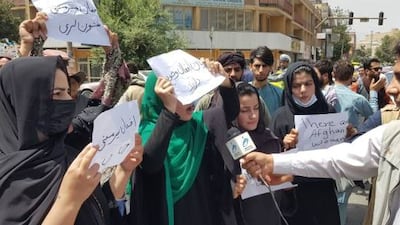
Afghan women, holding placards, gather to demand the protection of women's rights in front of the Presidential Palace in Kabul, Afghanistan. -
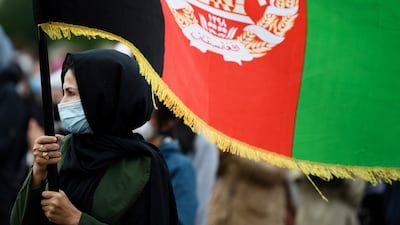
A person holds the flag of Afghanistan during a protest against support for the Taliban, in Berlin, Germany. -
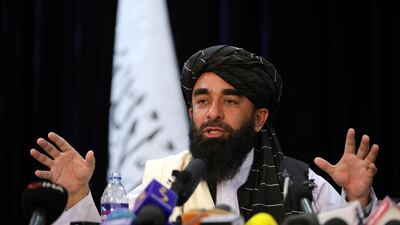
Taliban spokesman Zabihullah Mujahid speaks at his first news conference in Kabul. -
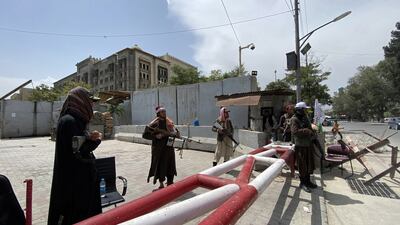
Taliban fighters stand guard outside the Green Zone where most of the embassies are situated. -
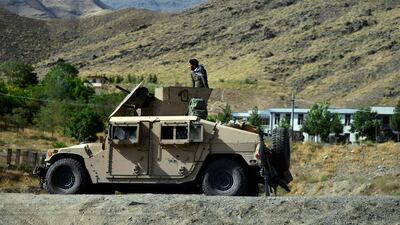
Afghan security forces patrol on humvee vehicle along a road in Bazarak town of Panjshir province. -
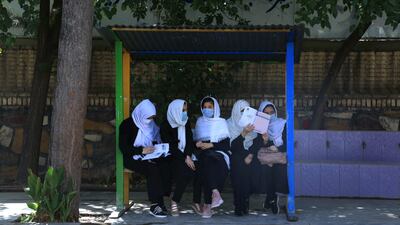
Schoolgirls sit in a schoolyard in Herat. -
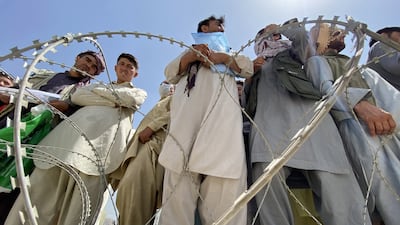
Afghans wait outside the Hamid Karzai International Airport to flee the country. -
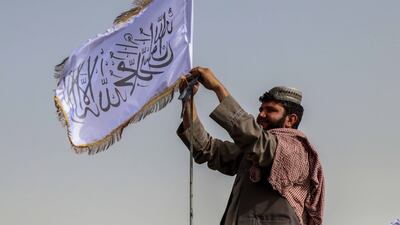
A Taliban fighter raises their flag on a vehicle as they patrol in Kandahar. -
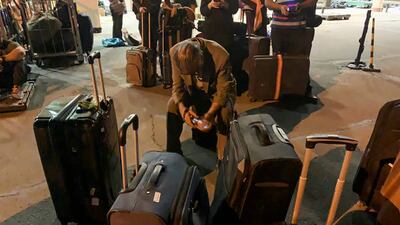
French citizens and their Afghan colleagues wait to board a French military transport plane at the airport in Kabul after the Taliban's stunning military takeover of the Afghanistan. -
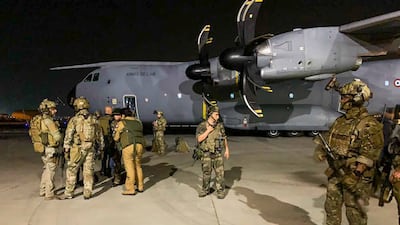
French soldiers at the airport in Kabul as they arrive to help French citizens and their Afghan colleagues to flee after the Taliban takeover. -

A US Air Force C-17 Globemaster III transport aircraft filled with about 640 Afghans fleeing to Qatar from Kabul, Afghanistan. -
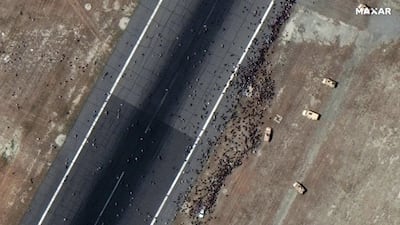
Crowds on the tarmac of Kabul International Airport, Afghanistan. Several people were reportedly killed at the airport on August 16 as Afghans tried to hang on to a moving US military plane leaving the airport. -
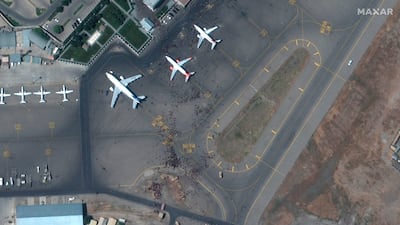
A satellite photo shows swarms of people on the tarmac at Kabul International Airport, also known as Hamid Karzai International Airport. Afghans rushed on to the tarmac of the capital's airport on Monday as thousands tried to flee the country after the Taliban seized power with stunning speed. -
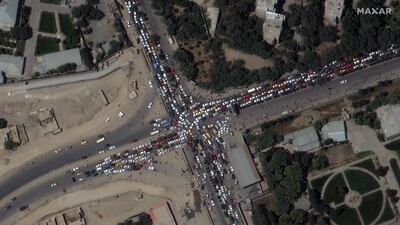
A traffic jam outside Kabul International Airport, Afghanistan after Taliban co-founder Abdul Ghani Baradar declared victory and an end to the decades-long war in the country. President Ashraf Ghani fled and conceded that the insurgents had won the 20-year war. -
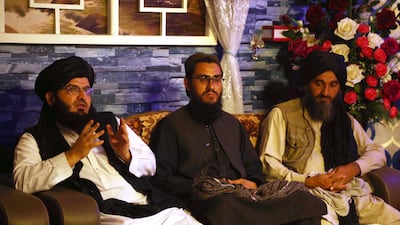
Qari Muhammad Hanif, centre, director of the Taliban's cultural and Information department, talks to journalists in Jalalabad, Afghanistan. -
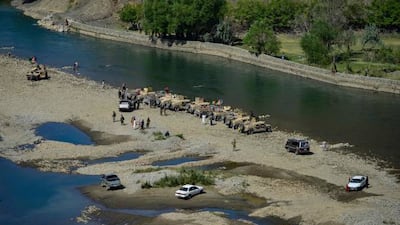
Humvee vehicles from the Afghan Security Forces in Panjshir province, Afghanistan. -
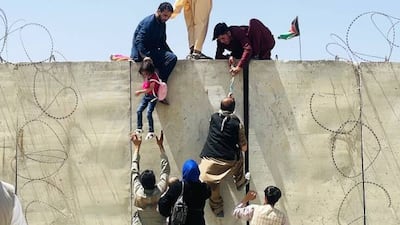
Thousands of Afghans rushed to Hamid Karzai International Airport in an attempt to flee the Afghan capital, Kabul. -
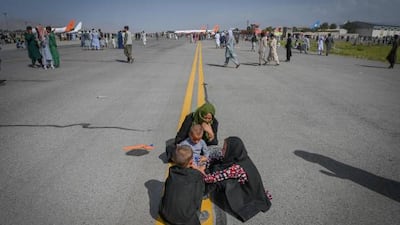
Afghans on the tarmac at Kabul airport in Kabul after a swift end to the 20-year war in the country. Thousands of people mobbed the city's airport trying to flee the group's rule. -
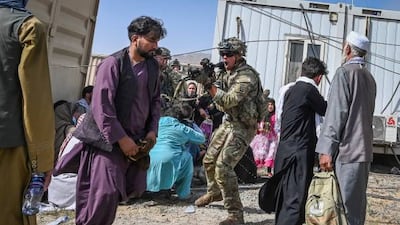
A US soldier keeps close watch on Afghan passengers at Hamid Karzai International Airport, Kabul. Thousands of people packed the airport trying to flee Taliban rule. -
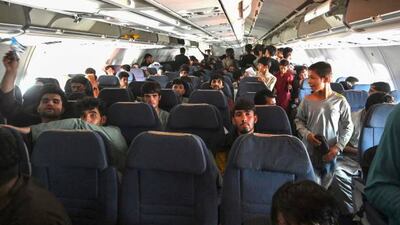
Passengers sit inside a plane as they wait to leave the runway of Kabul after the stunningly swift end of Afghanistan’s 20-year war. -
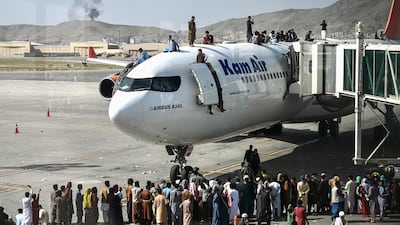
People climb on top of a plane in Kabul. -
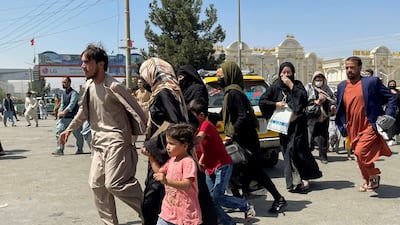
People try to enter Hamid Karzai International Airport in Kabul, Afghanistan. -
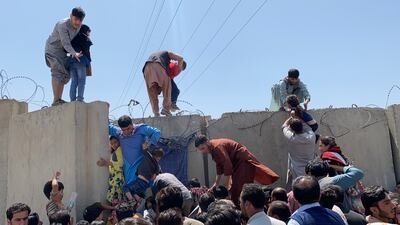
People cross the boundary wall of Hamid Karzai International Airport to flee the country after rumours that foreign countries were removing people even without visas. -
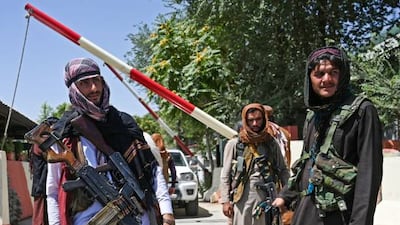
Taliban fighters stand guard along a roadside near Zanbaq Square in Kabul. -
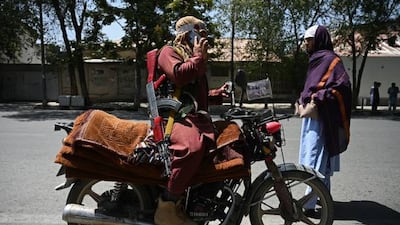
A Taliban fighter sits on his motorcycle by a road in Shahr-e Naw, Kabul. -
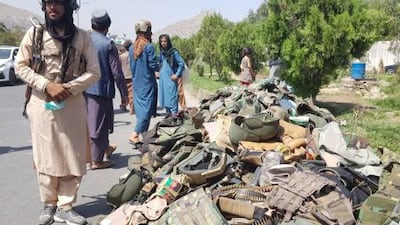
Talibs patrol the streets of Kabul as the militants take control of Afghanistan. after President Ashraf Ghani fled the country. -
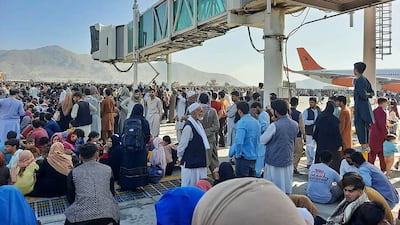
Afghans gather on the asphalt at Hamid Karzai International Airport, Kabul. -
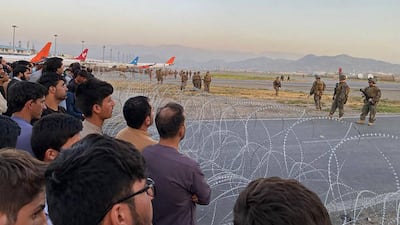
Afghans gather by the runway in Kabul as US soldiers stand guard. -
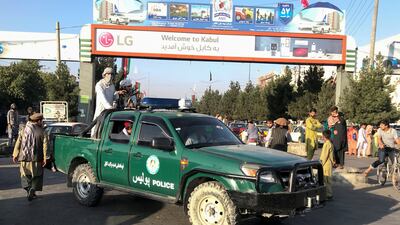
Taliban fighters on a police vehicle outside Hamid Karzai International Airport in Kabul, Afghanistan. -

Baradar Akhund, a senior official of the Taliban, with a group of men, makes a video statement. -

Taliban fighters take control of the presidential palace in Kabul, after Afghanistan's President Ashraf Ghani fled the country. -
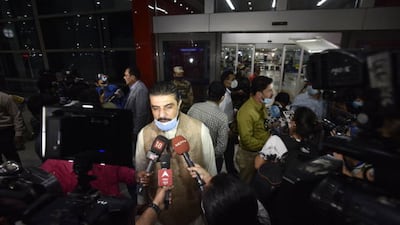
Passengers from Kabul arrive at Indira Gandhi International Airport in New Delhi, India. -
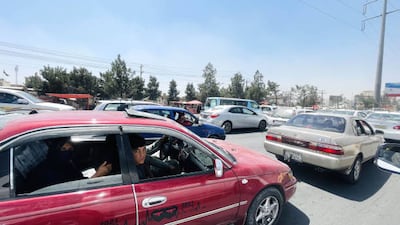
Families on a motorway trying to flee Kabul. -
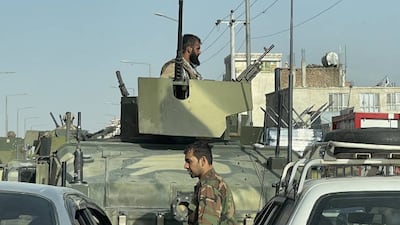
Afghan security forces on patrol in Kabul. -
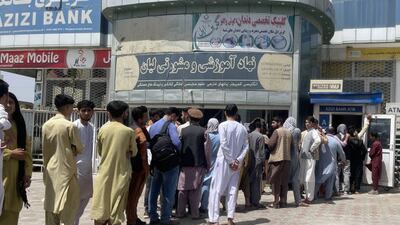
People line up outside Azizi Bank to withdraw cash during a run on deposits. -
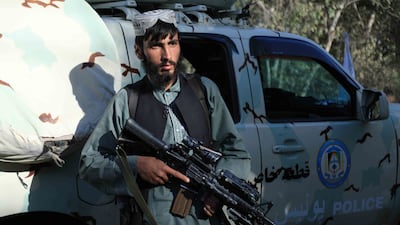
Taliban fighters use a captured Afghan security forces vehicle at a checkpoint in Herat. -
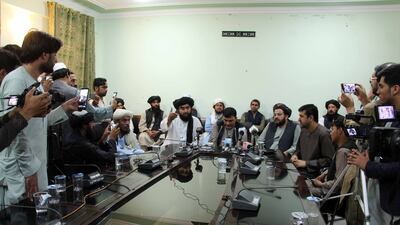
Ahmadullah Muttaqi, centre left, the Taliban's director for information and culture, addresses journalists. -
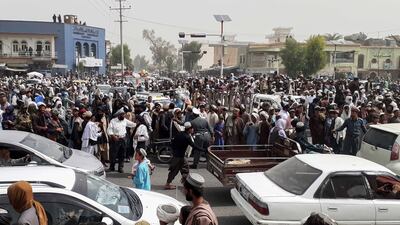
Police officers conduct their duties after the Taliban took control of Kandahar. -
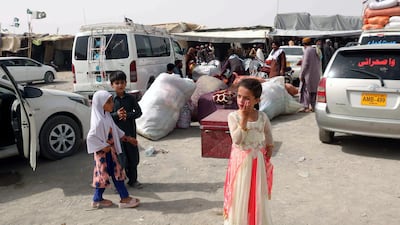
People prepare to cross into Afghanistan, at Pakistan's Chaman border. Pakistani authorities reopened the border with Afghanistan on August 13 after it had been closed for several days. -
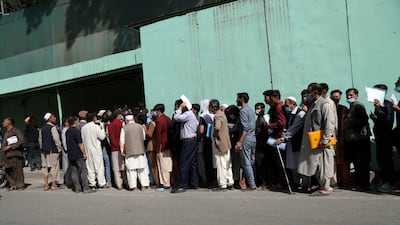
Afghans wait in long lines for hours to get visas at the Iranian embassy, in Kabul. -

Taliban fighters patrol after taking control of Jalalabad. -
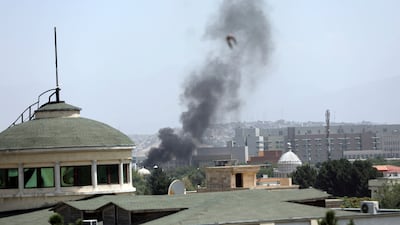
Smoke rises near the US embassy in Kabul. Taliban fighters reached the outskirts of the Afghan capital on Sunday. -
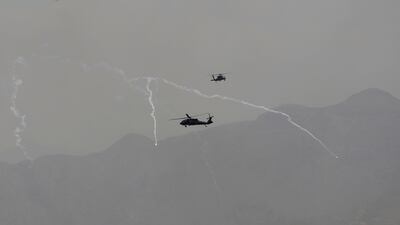
Anti-missile decoy flares are used by US Black Hawk military helicopters, while a surveillance blimp flies over Kabul. -
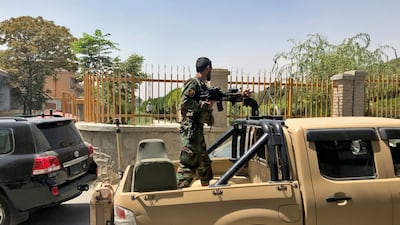
An Afghan soldier keeps watch on a street in Kabul. -
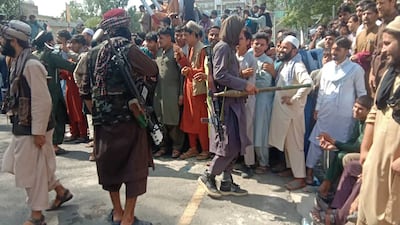
Taliban fighters and local people gather in Jalalabad province, east of Kabul. -
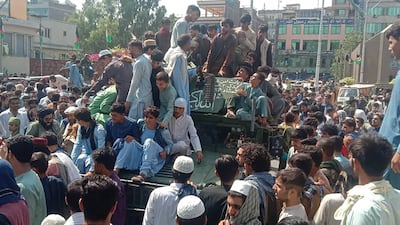
Taliban fighters sit on an Afghan Army Humvee in Jalalabad province. -
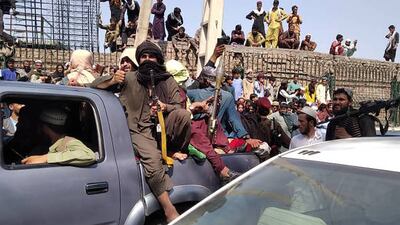
Taliban fighters travel along a street in Jalalabad province. -
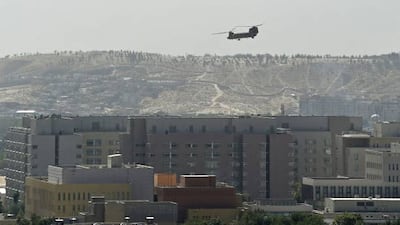
A US Chinook military helicopter flies over the US embassy in Kabul. -
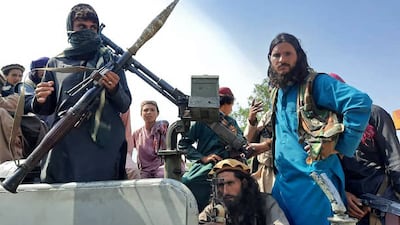
Heavily armed Taliban fighters gather in eastern Laghman province. -
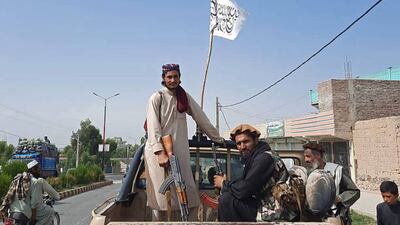
Militants wave a Taliban flag from the back of a pickup truck in Jalalabad. -
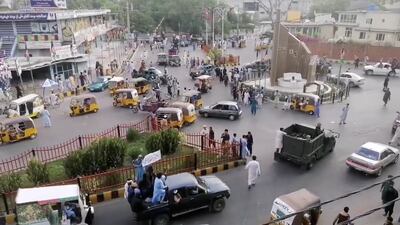
Taliban fighters drive through the streets of Laghman province. -
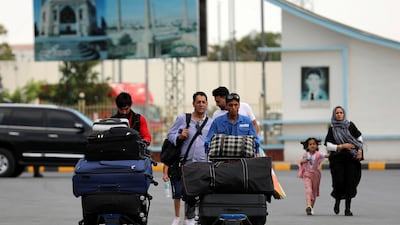
People head to the departures area of Hamid Karzai International Airport in Kabul as the Taliban approach the city. -
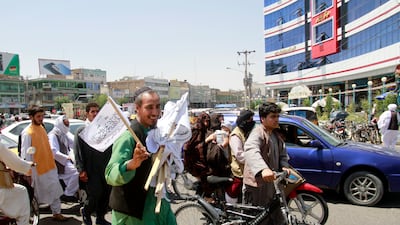
A man sells Taliban flags in western province Herat. -
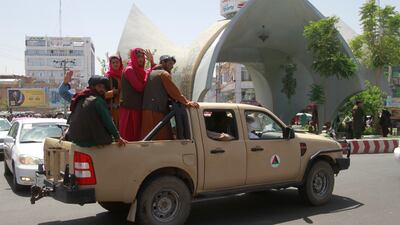
Taliban fighters travel in an Afghan Army vehicle in Herat. -
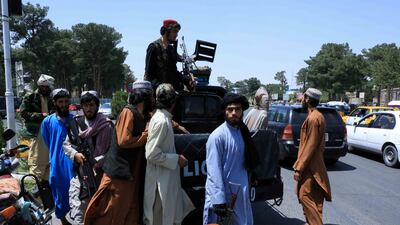
Taliban forces patrol a street in Herat. -

Taliban militants raise their flag as they gather a day after taking control of key southern city Kandahar. -

Members of the Afghan security forces stand guard along the roadside in Panjshir province. -

Afghanistan's President Ashraf Ghani and acting defence minister Bismillah Khan Mohammadi visit a military site in Kabul. -
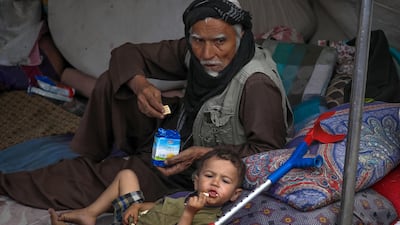
Internally displaced families from northern provinces take shelter in a public park in Kabul. -
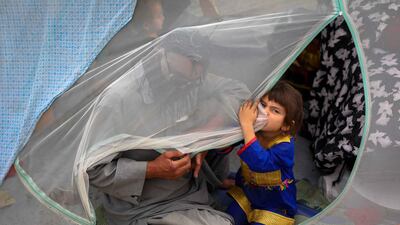
Families that fled their homes because of fighting between the Taliban and Afghan security forces take shelter in a public park in Kabul. -

Many of those seeking safety in Kabul have been sleeping on the streets. -
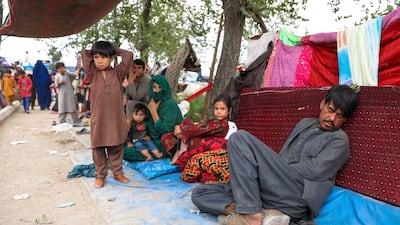
Thousands of those internally displaced have been arriving in Kabul. -
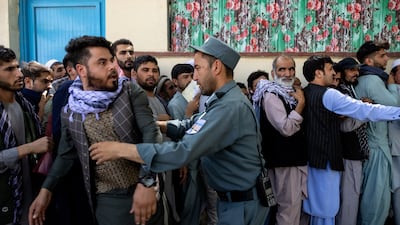
Afghans have been waiting for hours in long queues outside the passport office in Kabul, with many people desperate to leave the country.


He was placed under UN Security Council sanctions, which included the freezing of his assets, a travel ban and an arms embargo.
Mr Baradar's release in late 2018 came after US special envoy to Afghanistan, Zalmay Khalilzad, reportedly held his first meeting with the Taliban in Doha.
It is believed that Mr Baradar, along with a small group of insurgents, approached former interim Afghan leader Hamid Karzai in 2001 with a letter outlining a potential deal that would have involved the militants recognising the new administration.
He headed the political office of the Taliban and was part of a negotiating team in Qatar that attempted to create a political deal to pave the way for a ceasefire and peace in the country.
Mr Baradar oversaw the signing of the agreement with Washington that paved the way for the withdrawal of US and coalition troops from Afghanistan.
Representatives of the Afghan government and Taliban insurgents met on and off for months in the Qatari capital, but the talks lost momentum as the insurgents made battlefield gains.

