



With their land scorched by flaming balloons from Gaza, Israeli farmers see no end to the conflict as the military strikes the Palestinian enclave in response to the arson attacks.
“When they arrived here most of the place was already burnt,” said Daniel Rahamim, 66, standing in a blackened field in Nahal Oz.
Firefighters last month raced to put out the flames on the agricultural land which was sparked by an incendiary device attached to a balloon flown from Gaza.
The tightly packed buildings of Gaza City can be seen from the field, which lies less than a kilometre from Israel’s border with the Palestinian territory.
“You can see it but you can’t do anything,” said Mr Rahamim, referring to the balloons, which float on the wind before setting the dry land below ablaze.
Mr Rahamim is responsible for irrigating the farmland, home to about 500 people who rely on crops, including wheat and potatoes.

The Israeli fire service has recorded 39 fires caused by the balloons since May 21, when Israel and Gaza rulers Hamas agreed to a ceasefire after an 11-day war.
During the conflict, 10 civilians in Israel were killed by rockets fired from the enclave, while 260 Gazans were killed, according to emergency services and the UN.
Although the ceasefire has held, Palestinians launched incendiary balloons to protest against ongoing restrictions by Israel and events in Jerusalem.
Half of the fires since the war were started on June 15, the day Israeli nationalists marched in Jerusalem to celebrate seizing the eastern part of the city in 1967. Some of the marchers shouted “Death to Arabs”.
One of the Gazans who launched balloons that day told The National his actions were “a response for the provocation from the flag march”.
Although flaming balloons have been launched from Gaza since long before the war, Israel has stepped up its response in recent weeks.
“Things have changed,” Prime Minister Naftali Bennett said on Sunday, after Israeli air strikes on Hamas targets.
“Israel is interested in quiet and we have no interest in harming the residents of Gaza; however, violence, balloons, marches and harassment will be met with a sharp response,” said the premier, who took office in mid-June.
This approach has the backing of Ofer Liberman, 61, the agricultural manager of Nir Am near Gaza.
“I think these balloons are a weapon,” he said. “I ask my government to react to the balloons like it’s a missile.”
Flicking through videos of smoke and flames on his phone, Mr Liberman counted six or seven fires since late May.
“In five minutes, 10 minutes, you can change the situation from heaven to hell,” he said of the fire risk at Nir Am, which has about 500 residents.
In the charred remains of an orchard, on a slope overlooking Gaza, lemons turn to dust underfoot.
Kobi Michael, a senior research fellow at Israel’s Institute for National Security Studies, said the air strikes would probably deter the balloon launches.
“I think that eventually, it will cause Hamas to be much more constrained,” he said. “If they continue, and we will continue to retaliate, we will find ourselves in another military campaign.”
After decades of farming beside the border, Mr Liberman expects little to change until Palestinians’ lives are improved.
-
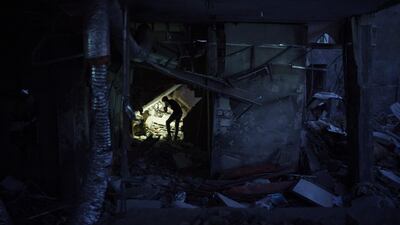
A man tries to salvage valuables from the debris of his destroyed home in Beit Lahia, northern Gaza Strip, more than a week after a ceasefire ended the 11-day war between Israel and Palestinian militants. AP Photo -

A man walks with a flashlight as he searches for valuables from the debris of a building destroyed during an 11-day war between Israel and Hamas, in Beit Lahia, northern Gaza Strip. AP Photo -
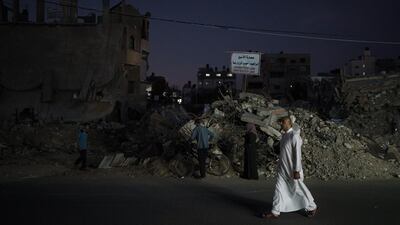
Palestinians walk next to debris of destroyed buildings more than a week after a ceasefire ended an 11-day war between Gaza's Hamas rulers and Israel, in Beit Lahia, northern Gaza Strip. AP Photo -
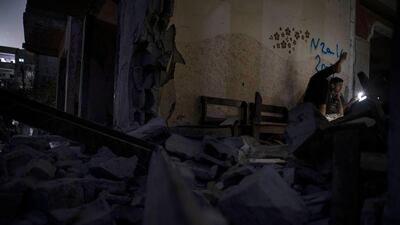
Palestinians spend the night next to their destroyed homes that were hit recently by Israeli airstrikes in the town of Beit Hanoun, northern Gaza Strip. AP Photo -
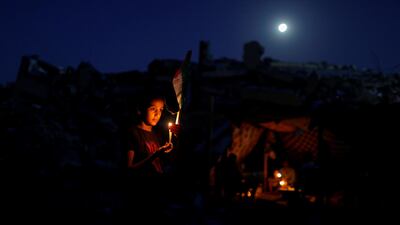
A Palestinian from Zawaraa family holds a candle near a makeshift tent amid the rubble of their houses, which were destroyed during Israeli air strikes on Gaza. Reuters -
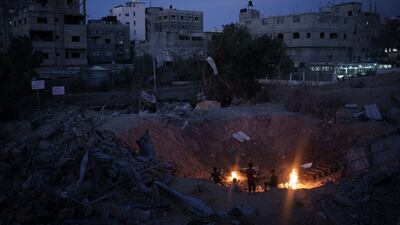
Children gather around a fire next to their destroyed home more than a week after a ceasefire ended the 11-day war between Israel and Gaza's Hamas rulers, in Beit Lahia, northern Gaza Strip. AP Photo -

Palestinians spend the night next to their destroyed homes that bore the brunt of Israeli air strikes in the town of Beit Hanoun, northern Gaza Strip. AP Photo


“In Gaza, there are a lot of people that don’t have anything to lose. And if you don’t have anything to lose, it’s a problem. I think we have to … build something with them,” he said.
“A good economic situation in Gaza will be better for us.”
The sentiment was echoed by Mr Rahamim, who pointed to the water and electricity problems in the Palestinian enclave.
“I don’t think that the solution is a military solution,” he said, suggesting that an international conference, including Gulf nations, could improve life in Gaza.
Meanwhile, he and other farmers will continue to face the flames.
“We live from these crops and to see the fires, to see the burnt ground, it’s very, very sad,” Mr Rahamim said as a breeze whipped up the blackened earth.
“I almost cried when I saw it the first time.”

