• Grounded airplanes parked at Tarmac Aerosave in Tarbes, France following a lack of travel during the coronavirus pandemic. Reuters
    Grounded airplanes parked at Tarmac Aerosave in Tarbes, France following a lack of travel during the coronavirus pandemic. Reuters
  • The sun rises over parked jets in St Athan at eCube Solution's aircraft storage and disassembly facility in Wales. Courtesy eCube
    The sun rises over parked jets in St Athan at eCube Solution's aircraft storage and disassembly facility in Wales. Courtesy eCube
  • An A380 Airbus airplane sits on the tarmac in Tarbes on June 19, 2020. Reuters
    An A380 Airbus airplane sits on the tarmac in Tarbes on June 19, 2020. Reuters
  • Passenger aircraft operated by Europe's major airlines stand parked in a storage facility operated by Tarmac Aerosave at Teruel Airport in Spain on May 18, 2020. Getty Images
    Passenger aircraft operated by Europe's major airlines stand parked in a storage facility operated by Tarmac Aerosave at Teruel Airport in Spain on May 18, 2020. Getty Images
  • Lufthansa jets were temporarily pulled out of service and parked at Germany's Berlin-Brandenburg Airport during the coronavirus crisis last year. Getty Images
    Lufthansa jets were temporarily pulled out of service and parked at Germany's Berlin-Brandenburg Airport during the coronavirus crisis last year. Getty Images
  • Grounded jets, including Airbus A380s, Boeing Max 8s and other smaller aircraft, are seen at the Asia Pacific Aircraft Storage facility on May 15, 2020 in Alice Springs, Australia. Getty Images
    Grounded jets, including Airbus A380s, Boeing Max 8s and other smaller aircraft, are seen at the Asia Pacific Aircraft Storage facility on May 15, 2020 in Alice Springs, Australia. Getty Images
  • A jogger passes grounded aeroplanes at London City Airport on March 29, 2020 in London, England. Getty Images
    A jogger passes grounded aeroplanes at London City Airport on March 29, 2020 in London, England. Getty Images
  • Grounded aeroplanes seen at the Asia Pacific Aircraft Storage facility on May 15, 2020 in Alice Springs, Australia. Getty Images
    Grounded aeroplanes seen at the Asia Pacific Aircraft Storage facility on May 15, 2020 in Alice Springs, Australia. Getty Images
  • eCube Solutions facility in Castellon, Spain. The company had to increase storage space by more than 40 per cent to cope with the pandemic demand. Courtesy eCube Solutions
    eCube Solutions facility in Castellon, Spain. The company had to increase storage space by more than 40 per cent to cope with the pandemic demand. Courtesy eCube Solutions
  • As Covid-19 continues to spread across the globe commercial airline travel has all but stopped. Airline jets are grounded at Melbourne Airport due to travel restrictions in Australia. Getty Images
    As Covid-19 continues to spread across the globe commercial airline travel has all but stopped. Airline jets are grounded at Melbourne Airport due to travel restrictions in Australia. Getty Images
  • KLM jets parked at Schiphol Airport in Amsterdam, Netherlands, April 2, 2020. Reuters
    KLM jets parked at Schiphol Airport in Amsterdam, Netherlands, April 2, 2020. Reuters
  • Germany's Lufthansa jets undergo a technical check-up to ensure safety standards after being grounded because of the coronavirus pandemic in Frankfurt, Germany, July 30, 2020. Reuters
    Germany's Lufthansa jets undergo a technical check-up to ensure safety standards after being grounded because of the coronavirus pandemic in Frankfurt, Germany, July 30, 2020. Reuters
  • Japan Airlines jets on the ground. Reuters
    Japan Airlines jets on the ground. Reuters
  • Airplanes parked at Lisbon Airport in Portugal. Reuters
    Airplanes parked at Lisbon Airport in Portugal. Reuters
  • Airplanes sit on the tarmac at the site of French aircraft storage and recycling company Tarmac Aerosave in Tarbes following the coronavirus outbreak in France, June 19, 2020. Reuters
    Airplanes sit on the tarmac at the site of French aircraft storage and recycling company Tarmac Aerosave in Tarbes following the coronavirus outbreak in France, June 19, 2020. Reuters
  • Delta Airlines jets parked at the Southern California Logistics Airport in Victorville, California, US, March 26, 2020. EPA
    Delta Airlines jets parked at the Southern California Logistics Airport in Victorville, California, US, March 26, 2020. EPA
  • Delta Airlines are just one of several airline operators turning to storage solutions for aircraft during the global pandemic. EPA
    Delta Airlines are just one of several airline operators turning to storage solutions for aircraft during the global pandemic. EPA
  • Airline jets are grounded at Melbourne Airport because of travel restrictions in Australia. Getty Images
    Airline jets are grounded at Melbourne Airport because of travel restrictions in Australia. Getty Images
  • eCube Solution's St Athan storage facility in Wales - the company has disassembled hundreds of aircraft including six Gulf Air A330s, two Etihad A319s and one Qatar A319. Courtesy eCube
    eCube Solution's St Athan storage facility in Wales - the company has disassembled hundreds of aircraft including six Gulf Air A330s, two Etihad A319s and one Qatar A319. Courtesy eCube
  • Aircraft grounded because of the Covid-19 pandemic, including planes operated by TUI pictured on the apron at Manchester Airport in the UK. AFP
    Aircraft grounded because of the Covid-19 pandemic, including planes operated by TUI pictured on the apron at Manchester Airport in the UK. AFP
  • A row of grounded Thai Airways passenger jets at Suvarnabhumi Airport in Bangkok on August 1, 2020, as passenger numbers plummeted because of the Covid-19 pandemic. AFP
    A row of grounded Thai Airways passenger jets at Suvarnabhumi Airport in Bangkok on August 1, 2020, as passenger numbers plummeted because of the Covid-19 pandemic. AFP
  • Passenger planes parked at Berlin-Brandenburg Airport during the coronavirus crisis. Getty Images
    Passenger planes parked at Berlin-Brandenburg Airport during the coronavirus crisis. Getty Images
  • Jets stocked by Tarmac Aerosave, an aircraft recycling and storage company, are pictured on the company parking area in Azereix, southwestern France. AFP
    Jets stocked by Tarmac Aerosave, an aircraft recycling and storage company, are pictured on the company parking area in Azereix, southwestern France. AFP
  • A Cathay Pacific passenger airplane is taxied onto the runway as other aircraft are seen parked on the tarmac at Hong Kong's Chek Lap Kok International Airport on March 10, 2020. AFP
    A Cathay Pacific passenger airplane is taxied onto the runway as other aircraft are seen parked on the tarmac at Hong Kong's Chek Lap Kok International Airport on March 10, 2020. AFP
  • Aircrafts from different airlines are seen grounded in Kuala Lumpur International Airport on March 21, 2020 in Sepang, Malaysia. Getty Images
    Aircrafts from different airlines are seen grounded in Kuala Lumpur International Airport on March 21, 2020 in Sepang, Malaysia. Getty Images

Covid-19: How unwanted planes are parked in aircraft boneyards across the world


Hayley Skirka
  • English
  • Arabic

On March 23, 2020, exactly one year ago, the UAE announced that all passenger flights were to be grounded to prevent the spread of the coronavirus via air travel. While flights have since resumed across the Emirates, the year that followed has been the most challenging in aviation history.

With travel restrictions and border closures in place around the world, a lack of demand for travel means that several airlines have been forced to ground their jets and, in some cases, their entire fleets.

But parking a 40-metre-long aircraft is no mean feat, and finding storage space for an entire squadron is a logistical nightmare.

Desert climes work well for long-term aircraft storage thanks to soaring temperatures and very low rainfall. Courtesy ComAv (Commercial Aviation Services)

Last year, Germany's biggest airline, Lufthansa, relied on Frankfurt Airport shutting down operations on its newest runway twice, so that it could park  grounded planes on the tarmac.

In the UAE, Emirates was fortunate to have access to Dubai World Central Airport for grounded jets, but that's something of a rarity. Most airlines do not have access to massive amounts of airport parking space. Instead, the world's airlines have been increasingly turning to aircraft boneyards as a means to navigate the circumstances they find themselves in because of the Covid-19 pandemic.

More than 60 per cent of jets parked in the pandemic

Qantas has mothballed its A380 fleet in the California desert because of the pandemic. Courtesy Qantas

Aircraft boneyards, or graveyards, are sprawling outdoor storage spaces where jets are typically sent when they retire.

Airlines have to pay a monthly fee to park vehicles at these sites, but the price is a lot less than what it would cost to park jets at an airport. Since the onset of the pandemic, boneyards around the globe have seen a sharp upturn in the influx of jets.

According to Cirium, a UK aviation data and analytics company, peak numbers of aircraft storage were recorded last March. At the time, the London company estimated an inactive inventory of under 17,000 wide-bodies, narrow-bodies and regional jets in storage. That's equivalent to more than 60 per cent of the world's fleet.

The International Air Transport Association (Iata) also confirmed that the pandemic is set to see more commercial aircraft finish their working life earlier than they would have pre-Covid.

"The Covid-19 crisis will undoubtedly accelerate many of these retirements, and several operators have already announced they are bringing forward fleet retirement programmes," stated the association in a recent report.

The 'Queen of the Skies' lies in the desert

So where are airlines sending their unwanted fleets? For British Airways, which announced that it was retiring its Boeing 747 fleet last year, the Mojave Desert in the US has been its resting place of choice. Inside the Southern California Logistics Airport, also known as Victorville, is about 240 acres of land reserved for aircraft storage with the ability to accommodate more than 500 jets.

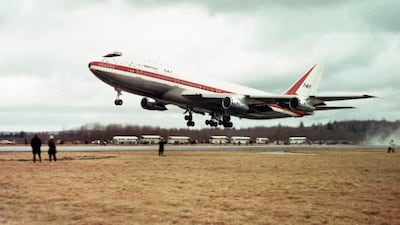
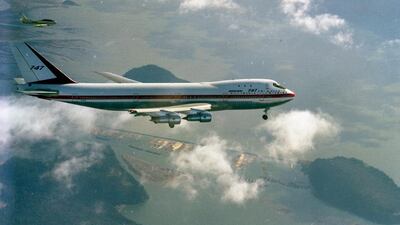
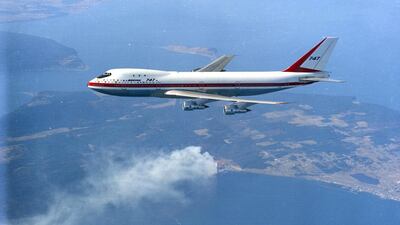
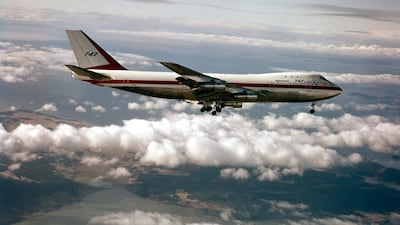
  • The 747 takes off for its first flight in 1969. All images courtesy Boeing
    The 747 takes off for its first flight in 1969. All images courtesy Boeing
  • Flight attendants pose in front of the jumbo jet.
    Flight attendants pose in front of the jumbo jet.
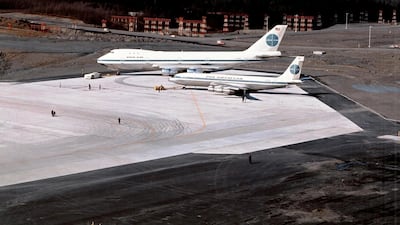
  • The Boeing 747 next to the 707.
    The Boeing 747 next to the 707.
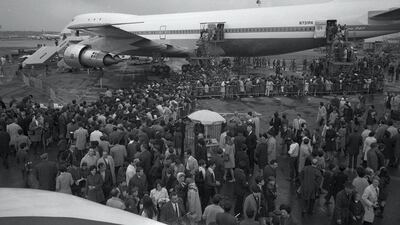
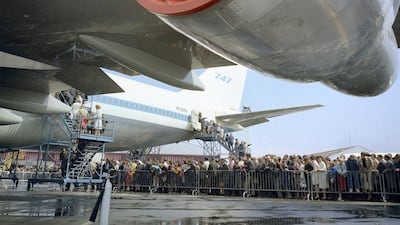
  • Crowds tour the 747 for a closer look.
    Crowds tour the 747 for a closer look.
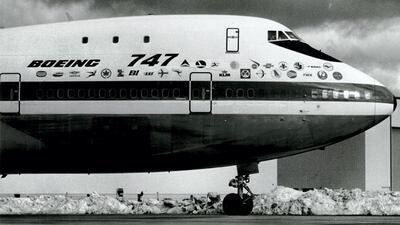
  • The iconic 747 nose.
    The iconic 747 nose.
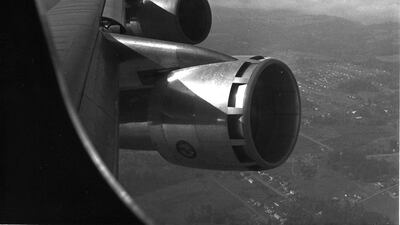
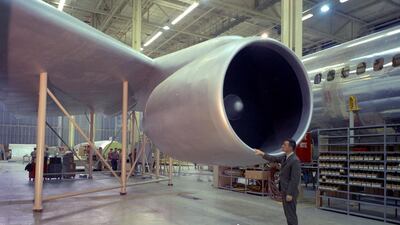
  • A close-up of the early 747 engines.
    A close-up of the early 747 engines.
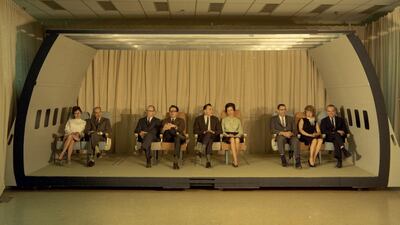
  • A mock-up of the 747 interior.
    A mock-up of the 747 interior.
  • The first 747 flight in 1969.
    The first 747 flight in 1969.
  • A 747 byline on the occasion of the Queen of the Skies 50th first flight anniversary. All photos by Boeing
    A 747 byline on the occasion of the Queen of the Skies 50th first flight anniversary. All photos by Boeing
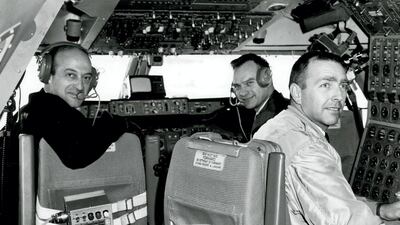
  • The flight crew for the first flight in 1969.
    The flight crew for the first flight in 1969.
  • A 747 byline on the occasion of the Queen of the Skies 50th first flight anniversary. All photos by Boeing
    A 747 byline on the occasion of the Queen of the Skies 50th first flight anniversary. All photos by Boeing
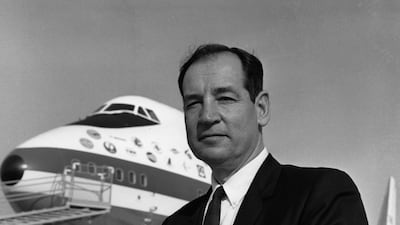
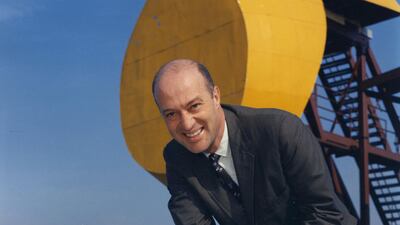
  • Joe Sutter headed the design team and has since been known as the “Father of the 747.”
    Joe Sutter headed the design team and has since been known as the “Father of the 747.”
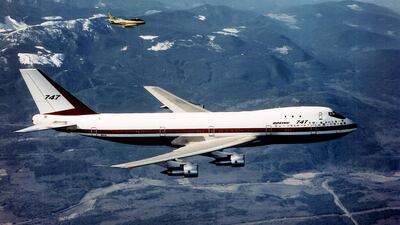
  • The first 747 flight in 1969.
    The first 747 flight in 1969.
  • A 747 byline on the occasion of the Queen of the Skies 50th first flight anniversary. All photos by Boeing
    A 747 byline on the occasion of the Queen of the Skies 50th first flight anniversary. All photos by Boeing
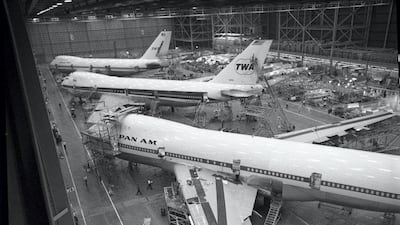
  • Pan Am 747s in the factory.
    Pan Am 747s in the factory.
  • Model mock-ups of the 747.
    Model mock-ups of the 747.
  • Crowds queue to board a 747 at an air show.
    Crowds queue to board a 747 at an air show.
  • The first 747 flight in 1969.
    The first 747 flight in 1969.
  • The 747 marked the first commercial use of the high bypass turbofan engine.
    The 747 marked the first commercial use of the high bypass turbofan engine.
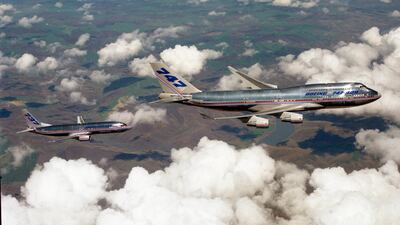
  • A Boeing 747-400 flies alongside a 737-400.
    A Boeing 747-400 flies alongside a 737-400.
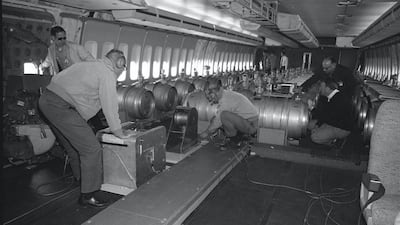
  • Balast tanks during the assembly of the 747.
    Balast tanks during the assembly of the 747.
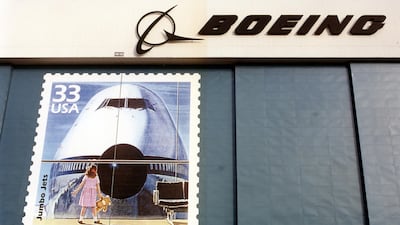
  • A stamp on the side of the Boeing plant at Everett, Washington.
    A stamp on the side of the Boeing plant at Everett, Washington.
  • 747 project test pilot Jack Waddell.
    747 project test pilot Jack Waddell.

The world's largest operator of the "Queen of the Skies" had 31 of the 70-metre-long, four-engine aircraft, the majority of which have been sent to to early retirement in California.

In Australia, Qantas has been making heavy use of aircraft boneyards after grounding much of its fleet during the pandemic. The Australian national airline also retired its Boeing 747 fleet to the Mojave Desert, with the last of its jumbos departing Sydney in July last year, headed for California.

Jets placed in boneyards are not simply parked; depending on the plan for their future usage, ongoing maintenance is required. Courtesy ComAv

The airline has also sent 10 of its 12 A380 superjumbos for deep storage at the Victorville boneyard. Ranging in age from 10 to 13 years, Qantas's jumbos could have more than a decade of flying left in them. They have currently been "mothballed", rather than retired, meaning that there are plans to return the jets to service when demand for travel picks up again.

What are aircraft boneyards?

For now, unwanted aircraft are simply taking up space. Thankfully, in Mojave, there's plenty of space to go around.

Jets parked at Alice Springs Aircraft Storage in Australia. EPA

Dry weather in the desert works in the favour of airlines when it comes to storing their expensive jets. The arid climate means that precipitation can be as low as five inches year-round, and soaring daily temperatures can also help protect aircraft from rust.

UK company eCube Solutions is the operator of a sprawling boneyard in Wales, where there is parking for up to 40 jets. It also has a second storage facility in Spain. Specialising in disassembly services for aircraft owners, eCube has taken apart more than 250 aircraft over its nine years of operations, including two Etihad A319s, six Gulf Air A330s and a Qatar Airways A319.

eCube Solution's St Athan storage and disassembly facility in Wales. Courtesy eCube

Once an aircraft arrives at a storage facility, it's only the start of the cycle. What happens there dictates each aircraft's future, with options for resale, scrapping for parts or long-term storage for those that may be used again.

"Pre-Covid-19, aircraft would typically arrive at eCube with the airframe sale agreed between the owner and the specialist parts aftermarket company, requiring a parking period of a couple of weeks awaiting a disassembly slot," says Steven Taylor, commercial director at eCube Solutions.

"The unforeseen and unprecedented advent of Covid-19 heralded an urgent requirement for airlines and aircraft owners to park more than 70 per cent of the world's fleet to cater for the sudden demise in passenger demand."

Iata says the average retirement age of a passenger aircraft is 25 years. As many of the jets currently taking up space in the world's boneyards are a lot younger than 25, they need to be carefully stored and maintained in the hope of retaining their value if and when they take to the skies again.

The path of the pandemic is likely to dictate what tomorrow brings for many of these parked jets.

"If there is a likelihood of parked multimillion-dollar assets returning to service, the aircraft needs to be kept in a [European Aviation Safety Agency] Part 145-approved maintenance storage programme," explains Taylor.

This certification is renewed every two years by EASA to certify that storage facilities meet the necessary requirements for long-term aircraft and part storage.

Singapore Airlines, another popular passenger airline, has also turned to storage solutions to navigate the pandemic. It has parked more than a dozen of its jets at the Alice Springs boneyard.

Located in Australia's Northern Territory, the Asia Pacific Aircraft Storage facility was the first large-scale boneyard to open outside the US. The number of planes housed at the facility has increased in the last year, and there are now four A380s grounded there, marking the first time the Airbus superjumbo has landed in Alice Springs.

Will stored jets ever return to the sky?

An Etihad Airways Airbus A380 takes flight over London. Getty Images

What the future holds for travel will impact what becomes of the world's currently unwanted jets. If air travel remains low for a considerable number of years, then airlines may find that demand for parking facilities increases, and operators could find themselves scrambling for space.

Should travel demand pick up, some of the jets that were retired or stored last year could see an increase in value as a source for much-needed parts.

Other jets may go on to a new type of life altogether, following in the path of aircraft such as this former Boeing 747 that was sunk to the bottom of the ocean in Bahrain last year, or this ex-Etihad Airbus that is now a glamping spot in the Welsh countryside.

At a time when so much of the world is in recession and industries are scrapping to survive, aircraft boneyards, through storage or scrapping, appear to be facing a buoyant future.


French business

France has organised a delegation of leading businesses to travel to Syria. The group was led by French shipping giant CMA CGM, which struck a 30-year contract in May with the Syrian government to develop and run Latakia port. Also present were water and waste management company Suez, defence multinational Thales, and Ellipse Group, which is currently looking into rehabilitating Syrian hospitals.

Ten tax points to be aware of in 2026

1. Domestic VAT refund amendments: request your refund within five years

If a business does not apply for the refund on time, they lose their credit.

2. E-invoicing in the UAE

Businesses should continue preparing for the implementation of e-invoicing in the UAE, with 2026 a preparation and transition period ahead of phased mandatory adoption. 

3. More tax audits

Tax authorities are increasingly using data already available across multiple filings to identify audit risks. 

4. More beneficial VAT and excise tax penalty regime

Tax disputes are expected to become more frequent and more structured, with clearer administrative objection and appeal processes. The UAE has adopted a new penalty regime for VAT and excise disputes, which now mirrors the penalty regime for corporate tax.

5. Greater emphasis on statutory audit

There is a greater need for the accuracy of financial statements. The International Financial Reporting Standards standards need to be strictly adhered to and, as a result, the quality of the audits will need to increase.

6. Further transfer pricing enforcement

Transfer pricing enforcement, which refers to the practice of establishing prices for internal transactions between related entities, is expected to broaden in scope. The UAE will shortly open the possibility to negotiate advance pricing agreements, or essentially rulings for transfer pricing purposes. 

7. Limited time periods for audits

Recent amendments also introduce a default five-year limitation period for tax audits and assessments, subject to specific statutory exceptions. While the standard audit and assessment period is five years, this may be extended to up to 15 years in cases involving fraud or tax evasion. 

8. Pillar 2 implementation 

Many multinational groups will begin to feel the practical effect of the Domestic Minimum Top-Up Tax (DMTT), the UAE's implementation of the OECD’s global minimum tax under Pillar 2. While the rules apply for financial years starting on or after January 1, 2025, it is 2026 that marks the transition to an operational phase.

9. Reduced compliance obligations for imported goods and services

Businesses that apply the reverse-charge mechanism for VAT purposes in the UAE may benefit from reduced compliance obligations. 

10. Substance and CbC reporting focus

Tax authorities are expected to continue strengthening the enforcement of economic substance and Country-by-Country (CbC) reporting frameworks. In the UAE, these regimes are increasingly being used as risk-assessment tools, providing tax authorities with a comprehensive view of multinational groups’ global footprints and enabling them to assess whether profits are aligned with real economic activity. 

Contributed by Thomas Vanhee and Hend Rashwan, Aurifer

Founders: Abdulmajeed Alsukhan, Turki Bin Zarah and Abdulmohsen Albabtain.

Based: Riyadh

Offices: UAE, Vietnam and Germany

Founded: September, 2020

Number of employees: 70

Sector: FinTech, online payment solutions

Funding to date: $116m in two funding rounds  

Investors: Checkout.com, Impact46, Vision Ventures, Wealth Well, Seedra, Khwarizmi, Hala Ventures, Nama Ventures and family offices

The%20specs
%3Cp%3E%3Cstrong%3EEngine%3A%3C%2Fstrong%3E%206.4-litre%20V8%0D%3Cbr%3E%3Cstrong%3ETransmission%3A%20%3C%2Fstrong%3E8-speed%20auto%0D%3Cbr%3E%3Cstrong%3EPower%3A%20%3C%2Fstrong%3E470bhp%0D%3Cbr%3E%3Cstrong%3ETorque%3A%20%3C%2Fstrong%3E637Nm%0D%3Cbr%3E%3Cstrong%3EPrice%3A%20%3C%2Fstrong%3EDh375%2C900%20(estimate)%0D%3Cbr%3E%3Cstrong%3EOn%20sale%3A%3C%2Fstrong%3E%20now%3C%2Fp%3E%0A
LIGUE 1 FIXTURES

All times UAE ( 4 GMT)

Friday
Nice v Angers (9pm)
Lille v Monaco (10.45pm)

Saturday
Montpellier v Paris Saint-Germain (7pm)
Bordeaux v Guingamp (10pm)
Caen v Amiens (10pm)
Lyon v Dijon (10pm)
Metz v Troyes (10pm)

Sunday
Saint-Etienne v Rennes (5pm)
Strasbourg v Nantes (7pm)
Marseille v Toulouse (11pm)