

Popular Levantine flatbread manakish has been nominated for Unesco's Intangible Cultural Heritage list. It will be considered for inscription next year.
Updated annually, the list by the UN agency safeguards traditions and ways of living in the face of increasing globalisation. Earlier this month, 47 new traditions or customs from across the world were inscribed on to the list at the 17th session of the intergovernmental committee held in Rabat, Morocco.
Sahar Baassiri, Lebanon’s ambassador and permanent representative to Unesco in Paris, announced on Thursday that all necessary paperwork has been submitted to have manakish added to the list next year.
"Manakish has become a candidate for Unesco's Intangible Cultural Heritage," Baassiri posted on Twitter, adding that the breakfast staple popular in the Arab world could join the French baguette and Italian pizza on the Unesco list.
The French baguette was inscribed to the list in November while the Italian pizza was added in 2017.
According to baking-history.com, manakish can be traced back to ancient Phoenicia (2500 BC – 539 BC) where people would make stone wheels and crush wheat into flour in order to make bread. The dough was usually made by women and baked in the morning in communal oven. They would make smaller portions of dough, topped with eggs and cheese to give to the family for breakfast.
Though it is known for its preservation of physical monuments all over the world, Unesco also considers “oral traditions, performing arts, social practices, rituals, festive events, knowledge and practices concerning nature and the universe” as intangible heritage that it seeks to preserve.
Of the 47 new traditions and customs inscribed this year, many are from the UAE, Oman, Saudi Arabia, Kuwait, Jordan, Syria and North African nations.
Scroll through the gallery for some of the newly inscribed Intangible Cultural Heritages
-
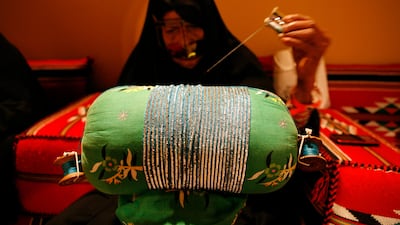
Talli, also known as Alseen, is a traditional form of embroidery in the UAE that has been added to Unesco's Intangible Cultural Heritage list this year. Asmaa Al Hameli / The National -

Oman’s khanjar or traditional dagger, part of traditional dress worn by men during national and religious events in the sultanate, has also been added to the list. EPA -

Alheda’a, the oral expression accompanied by gestures or musical instruments played by camel herders to communicate with their animals, has also been inscribed to the list. Reuters -

Khawlani tribes in Saudi Arabia have been cultivating coffee beans for more than 300 years, leading Unesco to add it this year to its intangible heritage list. AFP -
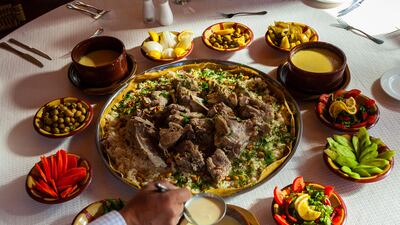
Also making the list is mansaf, a festive dish traditionally served at banquets across Jordan. Photo: Alamy -

Date palm knowledge, skills and traditions have been added on behalf of the UAE, Bahrain, Egypt, Iraq, Jordan, Kuwait, Morocco, Oman, Palestine, Qatar, Saudi Arabia, Sudan, Tunisia and Yemen. EPA -
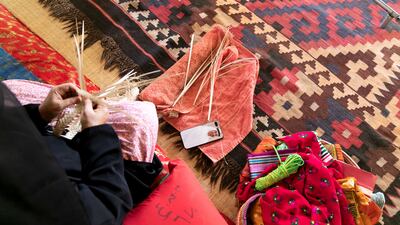
Al Sadu Educational Programme: Train the Trainers in the Art of Weaving, from Kuwait, has been added to the list. Reem Mohammed / The National -
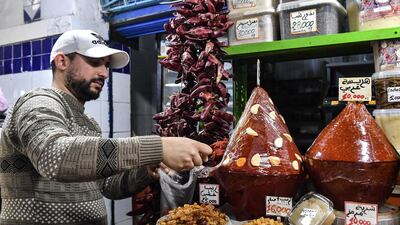
Also new to the list are the skills and knowledge around harissa, the chilli pepper paste ubiquitous in Tunisian society. AFP -
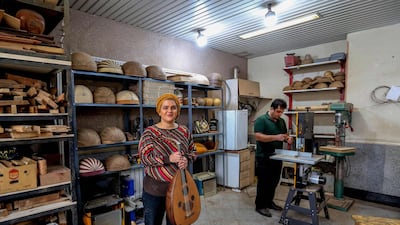
Iranian luthier Fatemeh Moussavi at her oud-making workshop in the capital Tehran. The crafting and playing of oud has been added to Unesco's list on behalf of Iran and Syria. AFP -

Algerian rai singer Cheb Khaled is one of the genre's most famous proponents. The folk song genre has been added to Unesco's list. Photo: Dawn Elder



