
Taking your mind off a pain or itch may seem the best way to deal with them but a new study suggests that attention can influence the body’s reactions.
Researchers from Bar-Ilan University’s Azrieli Faculty of Medicine in Israel studied how attention can affect our inflammatory response.
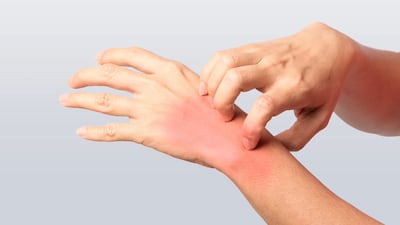
It showed that when people voluntarily focused their attention on sensations arising from a small area of inflammation in their arm, the inflammatory response was smaller and showed faster recovery than when they relied on distraction.
They researchers said: “We usually think of bodily sensations as information the brain receives. What if the way we attend to those sensations can feed back and change the biological response itself?”
The study, published on Monday in Nature Human Behaviour, involved 57 healthy volunteers who underwent a procedure that produced a small, temporary inflammatory response in the skin.
They were then instructed either to focus on sensations from the affected area or to direct their attention elsewhere. The researchers measured the inflammatory response for 20 minutes as it unfolded, along with physiological measures such as heart-rate changes, skin temperature and nervous system activity.
Nearly 90 per cent of participants showed a smaller inflammatory response when they focused on the affected area, differences emerging within minutes.
“What was particularly striking was that directing attention towards the inflamed area changed not only what participants experienced, but the inflammatory response itself,” said researcher Dr Liron Rozenkrantz. “This raises the possibility that our subjective experience of what is happening in the body is not only a passive process, but may be actively contributing to how physiological responses are regulated.”

The research team, led by Dr Nofar Mizrachi in collaboration with Prof Menachem Rottem, a clinical immunologist, suggested that the way the brain prioritises signals from the body may have consequences for how the body regulates itself.
Whether the same mechanisms apply to chronic inflammation, autoimmune disease, the healing of wounds or other conditions remains to be determined. The team’s next step is to identify the precise brain and immune pathways involved and determine whether similar effects occur in other networks of organs.

