


British scientists are infecting a group of volunteers with a type of malaria that can cause relapses years after contracting it to study its long-term effects.
Plasmodium vivax is carried by mosquitoes and infects an estimated 8.5 million people every year. It can remain dormant in the liver and reactivate months or even years after a person was first infected, causing relapsing infections, and can be fatal. Every year malaria is estimated to kill 600,000 people.
Now, scientists at the Oxford Vaccine Group want to understand more about it in the months after a person is initially infected through the bite of a mosquito.
It comes after the World Health Organisation awarded prequalification for Tafenoquine – the first single-dose medicine for the prevention of relapse of this kind of malaria – last month in what pharmaceutical firm GSK described as a "significant step toward" in closing the treatment gap.
The scientists are sending five healthy people to be deliberately bitten by infected mosquitoes at a lab in the Netherlands. The volunteers will then return to Oxford where they can be monitored before being treated to stop any relapses.
Human challenge studies involve researchers deliberately exposing healthy volunteers to infectious diseases allowing them to monitor how the body responds to the disease. It is as the result of one of these studies that the world's first malaria vaccines were approved for release.
“This proof-of-concept study is the first of its kind to safely introduce relapsing vivax malaria infections in healthy volunteers under controlled research conditions," said Prof Angela Minassian, chief investigator for the trial from the University of Oxford.
“By doing so, we aim to answer key questions about relapses and how the immune system responds to them. We know that more than 80 per cent of vivax malaria globally is due to relapsing infections and they cause significant illness in both adults and children in many parts of the world.
“Our work, if successful, aims to provide a model for testing novel vaccines or drugs which can eliminate it from the liver and stop relapses altogether. This could transform how we combat this challenging disease.”
The new malaria study has been launched by the University of Oxford in partnership with the Draper Lab with a view to transform understanding about this form of malaria. The study, known as BIO-006, will see volunteers aged 18 to 45 travel to the Radboud University Medical Centre in Nijmegen, to be bitten by mosquitoes carrying the Plasmodium vivax parasite.
After the mosquito bite, participants will return to the Centre for Clinical Vaccinology and Tropical Medicine in Oxford. They will be monitored daily for the first six days over the phone and in person from day seven onwards.
When malaria is detected in the blood, people will be “promptly” given anti-malarial medication. However, this treatment will not eliminate dormant parasites in the liver and will allow scientists to study relapsing malaria infections over the next six months.
During this period, people involved with the study will have fortnightly check-ups and 24/7 medical support to address any symptoms that suggest a relapse. Any relapse infections will be treated with anti-malarial medication.
At the end of the six-month period, all those involved in the study will be given anti-malarial tablets with an additional medication called Primaquine, which clears dormant parasites from the liver. They will then be followed up for five more years to monitor for any unexpected relapses.
The vivax malaria can cause fever, chills, vomiting, headache and muscle pain, and in some cases can lead to severe malaria and be fatal.
It was through the work of Prof Sir Brian Greenwood, at the London School of Hygiene and Tropical Medicine, that the world’s first malaria vaccine, and the first approved vaccine against a human parasitic disease, was eventually developed.
Prof Greenwood's first trials led to a pilot programme before it gained approval as a seasonal vaccine in countries of sub-Saharan Africa with a high malaria risk. More than two million children have been given the vaccine and deaths in the affected areas have so far been cut by 13 per cent.
His work helped with the development of the second malaria vaccine, called R21, which was introduced in 2023 after it was successfully tested on human volunteers.
-
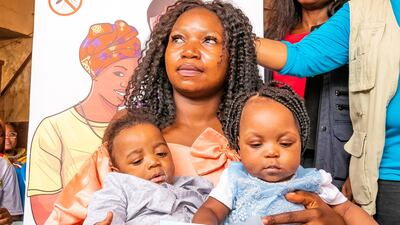
Noah Ngah (left), the first baby to receive the malaria vaccine, and his twin sister, Judith Ndzie, are held for a photograph after receiving vaccines at a hospital in Soa, Cameroon. AFP -
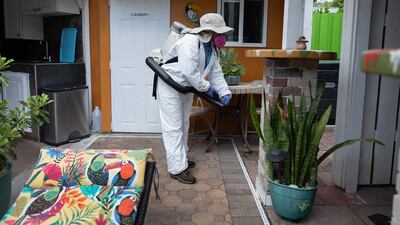
Margine Rodriguez, a Mosquito control inspector, sprays a pesticide to kill mosquitos in Miami. Getty Images -

Antoine Bissa, a nurse and the owner of a street pharmacy is giving a anti malaria injection to a patient, in Bangui. AFP -
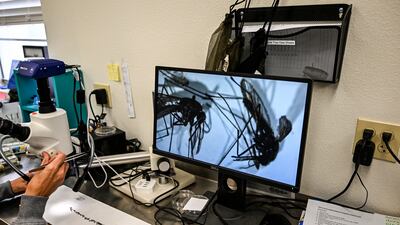
Health officials at Sarasota County Mosquito Management Services study specimens of mosquitoes that cause malaria, in Florida. AFP -

People gather outside a health centre as they wait to get treatment for malaria, in San Felix, Venezuela. Reuters -
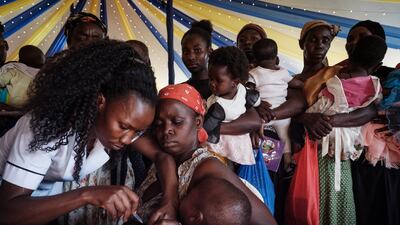
A child receives a shot during the launch of the extension of the world's first malaria vaccine pilot programme in Gisambai, Kenya. AFP -

A medical volunteer of the Doctors Without Borders (MSF) organization takes a blood sample from a patient to be tested for malaria at his home in Barcelona, Venezuela. AFP -
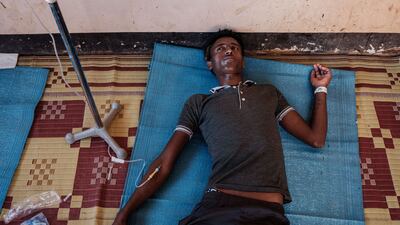
An Ethiopian refugee who fled Ethiopia's Tigray conflict is treated with a drip infusion of sodium chloride after being diagnosed with malaria and diarrhoea inside a clinic at the Um Raquba refugee camp in Sudan's eastern Gedaref state. AFP



