


A new single-dose oral treatment for sleeping sickness could be a key factor in eliminating disease transmission by 2030, a study published in The Lancet Infectious Diseases suggests.
Sleeping sickness, or human African trypanosomiasis (Hat), is a neglected tropical disease that can be fatal if left untreated.
The Gambiense human African trypanosomiasis (g-Hat) form of the disease is found across countries in west and central Africa, with most cases in the Democratic Republic of the Congo.
Until 2019, treatment for patients in the earlier stage of the disease was a daily injection for seven or more days and, for patients in the later disease stage, an intravenous drip for seven days, which required hospital treatment.
Patients were also required to undergo a spinal tap to diagnose the stage of sleeping sickness and determine the appropriate treatment.
In 2019 fexinidazole, a 10-day oral drug developed by the Drugs for Neglected Diseases initiative (DNDi) was introduced as a first-line treatment for both stages of the disease.
But its administration still requires skilled staff and, often, hospital treatment.
The new prospective study looks at the efficacy of one oral dose of acoziborole, a drug co-developed by DNDi and Sanofi, in treating g-Hat.
UAE's Reach Campaign is helping to end neglected tropical diseases - in pictures
-
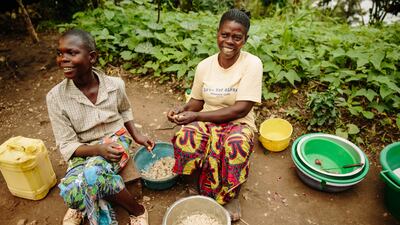
Toyota Mksiyura, right, from the Democratic Republic of Congo, who suffers from severe swelling in her feet caused by lymphatic filariasis. The UAE's Reach Campaign is aimed at tackling neglected tropical diseases. Photo: End Fund -
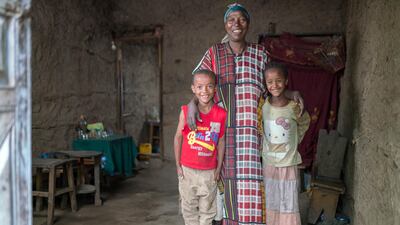
Ethiopian Kasech Fantu, who suffers from elephantiasis, with her children. Neglected tropical diseases are little known in the wider world but devastating for sufferers. Photo: The Carter Centre -

Daniel Boakye, a researcher working with The End Fund, is one of the world's foremost experts on black flies. The UAE began its Reach initiative mainly to help eliminate river blindness and lymphatic filariasis, which are caused by parasitic worms carried by flying insects. Photo: End Fund -
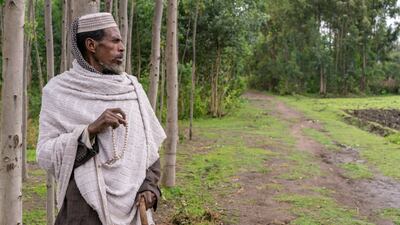
Farmer Lelamo Mukhtar had to sell his land and could not work anymore after he became ill with lymphatic filariasis. Photo: End Fund -
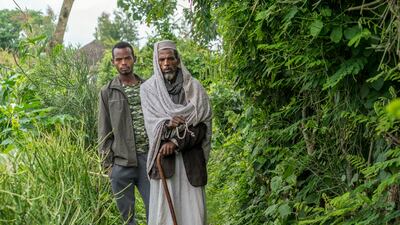
Mr Mukhtar with his son Fouwad, who has taken over farming and supporting the family after his father became ill. Photo: End Fund -
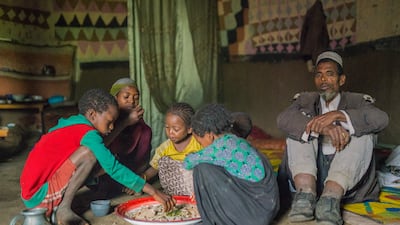
Mr Mukhtar with some of his 10 children. Photo: End Fund -
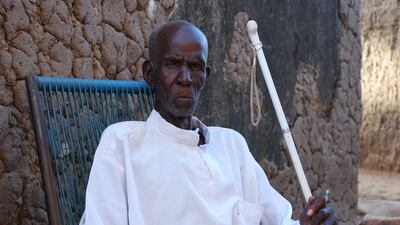
Malian Moce lost his eyesight over thirty years ago to river blindness. More than 200 million people globally require treatment for the disease, one of the leading causes of preventable blindness. Photo: End Fund -
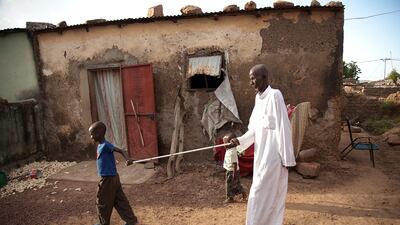
Moce is now receiving treatment. Photo: End Fund


"Sleeping sickness threatens millions of people across sub-Saharan Africa,” said Dr Antoine Tarral, head of the human African trypanosomiasis clinical programme at DNDi, and lead author of the study.
“Many of the people at risk live in remote rural areas where there is little access to adequate health services, and where acoziborole has the potential to revolutionise treatment for sleeping sickness.
“It is administered in a single dose and is effective across every stage of the disease, thereby eliminating the many barriers currently in place for people most vulnerable to the diseases, such as invasive treatments and long travel distances to a hospital or clinic, and opening the door to screen-and-treat approaches at the village level."
The researchers found that, 18 months after treatment, 95 per cent of patients with late-stage g-Hat treated with acoziborole were cured.
In the early and intermediate-stage patients, 100 per cent were successfully treated.
An analysis of the results found that they were similar to the success rate for the previous Hat treatment, nifurtimox eflornithine combination therapy (Nect), of 94 per cent.
The proportion of side-effects related to treatment was low and all events were mild or moderate.
No significant drug-related safety signals were identified in this study.
The authors noted some limits to their study, the main one being the lack of a control arm.
As enrolling patients with g-Hat into clinical trials is challenging, the study was designed as a single-arm test with no comparator or control arm, following advice from the European Medicines Agency.
The sample size was based on the maximum feasible enrolment within a reasonable timeframe, because of the challenges of enrolling patients with Hat in clinical trials given the drastic decline in incidence.
There is an continuing double-blind study investigating the use of acoziborole compared with placebo in serologically suspected but parasitologically unconfirmed cases to generate further safety data.
“Acoziborole combines all the desired qualities of a trypanocidal drug: well absorbed orally, long half-life, good penetration into the CNS and few serious adverse effects,” said Prof Jacques Pepin, of the University of Sherbrooke in Canada, who was not involved in the study.
“Purists will say that acoziborole has not been evaluated according to current standards because the study was not a randomised trial, there was no control group, and the number of participants was small.
“But these were difficult challenges to overcome, considering the drastic reduction in the number of patients with Hat and dispersion over a vast territory, particularly in the Democratic Republic of the Congo.
“For these reasons, the authors took a pragmatic approach instead.
“Acoziborole represents an extraordinary advancement in the treatment of this neglected disease and might be key to the interruption of Hat transmission.”

