


The recommended eight glasses of water a day may be too high for our needs, scientsts have concluded.
And the suggested intake of two litres of water a day in many situations is too high, research from the University of Aberdeen has found.
Publishing their findings in Science, researchers estimate we only really need about 1.5 to 1.8 litres a day, when considering that about half of our daily intake of water comes from food.
Previous research in this area depended on surveys of small samples of people, but scientists have now collaborated across the world to measure water turnover using a stable isotope technique.
They looked at 5,604 people aged between eight days and 96 years old, from 23 different countries.
Research involved people drinking a glass of water in which some of the hydrogen molecules were replaced by a stable isotope of the element called deuterium, which is found naturally in the human body and is completely harmless.
The rate of elimination of the extra deuterium reveals how quickly water in the body is being turned over.
World Water Day around the world – in pictures
-
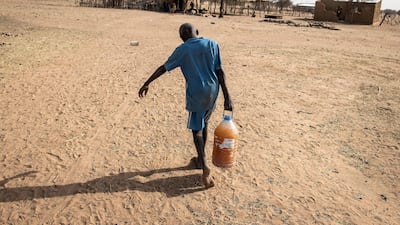
A boy carries a bottle of drinking water to his home in the village of Madina Torobe, in the Matam region of Senegal. Maintaining access to drinking water in the country's north-west is a constant concern. Through the months of November to August no rain will fall, and rivers and natural lakes dry up. Not all areas have drinking wells and flowing taps. Where they di exist, the water is sometimes dirty or used specifically for animals. Fulani pastoralists and families living in these remote villages sometimes resort to digging large holes in dried river beds in search of cleaner drinking water from themselves and their animals. AFP -
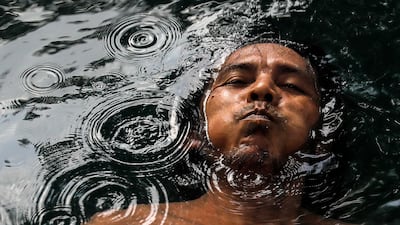
A man holds his breath while he swims in a hot spring near Kuala Lumpur, Malaysia. World Water Day, marked annually on March 22, raises awareness of the 2.2 billion people living without access to safe water. EPA -
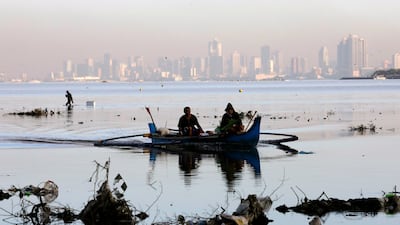
Fishermen steer a boat through debris off the shore of Manila, Philippines. The archipelago is surrounded by vast body of water, but finding potable sources is a challenge for many. EPA -
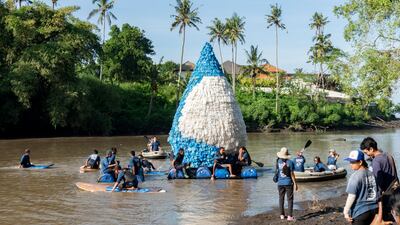
Environmental activists in Bali, Indonesia, float a sculpture made of waste plastic and depicting a droplet to mark World Water Day. The day is used to advocate the sustainable management of freshwater resources. EPA -
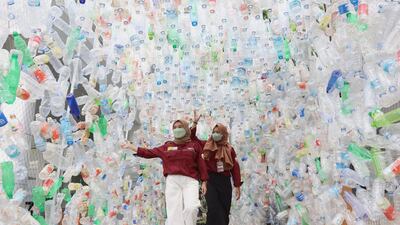
People walk through an art installation made of plastic water bottles as part of an awareness drive in Malang, East Java. AFP -
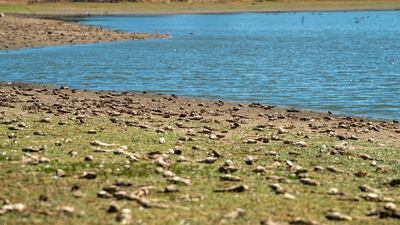
Dead carp fish lie on the dried lakebed of the Peñuelas Lake, a reservoir in Chile's Valparaiso Region. The reservoir, which supplies drinking water to Valparaiso and Viña del Mar, accumulates 0.2 per cent of its total water capacity. The central zone of Chile is facing one of the most extensive droughts documented. Despite its total capacity of 95 million cubic metres, the lake holds only 170 thousand cubic metres today. AFP -

Bikram Shah, 18, digs about six metres underground to build a well in Kathmandu, Nepal. On the backdrop of rapid urban population growth, industrialisation and uncertainties caused by climate change, the city becomes short of water in the winter and spring seasons. The theme of this year’s World Water Day is Groundwater – Making the Invisible Visible. EPA -
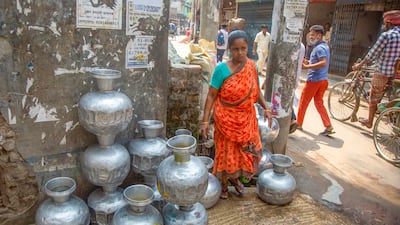
A woman collects drinking water from the city corporation water tap, on the occasion of World Water Day in Dhaka, Bangladesh. World Water Day is observed annually on 22 March to call attention and raise efforts for global access to clean water. This year's theme is Groundwater - Making the Invisible Visibible. EPA -
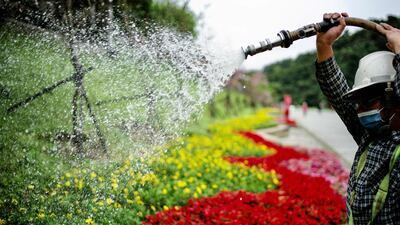
Flowers are watered in Bitan, a tourist hot spot in New Taipei City, Taiwan. AFP -
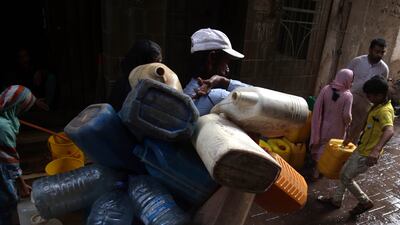
A man carries jerrycans to be filled with water in Karachi, Pakistan. EPA -
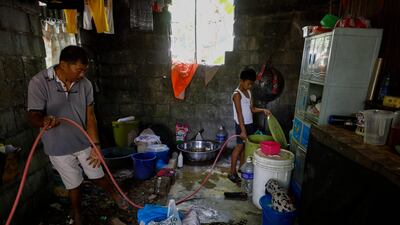
Eduardo Capillan and his son, Neo, control a hose that is funnelling water from a pump outside into their house in Sitio Bakal along the outskirts of Quezon City, Metro Manila, Philippines. With assistance from government and non-government agencies, an emergency water disinfection and filtration system is providing clean drinking water to the remote community. EPA -
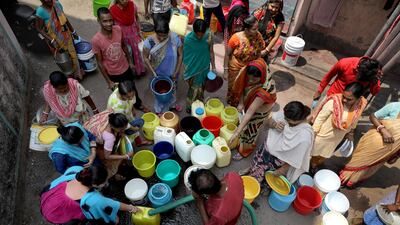
People in a slum in Kolkata, India, collect drinking water from a municipal container tank. EPA -
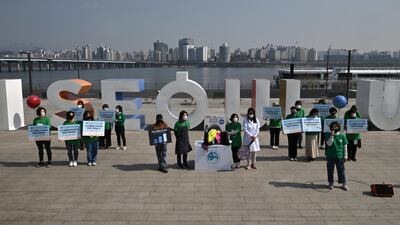
South Korean environmental activists hold placards reading ‘I will protect the sea from microplastics’ during a campaign to mark World Water Day at a park along the Han River in Seoul. AFP -
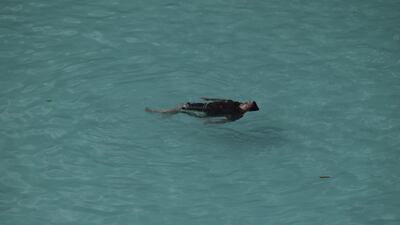
A man bathes in ‘Los Chorros’ pools formed by a natural spring of water, in Colón, El Salvador. AFP -
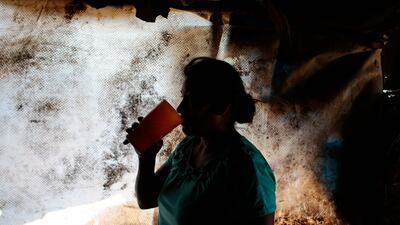
A woman drinks water distributed by a tanker to El Crucero, a town on the outskirts of Managua, Nicaragua. AFP


Those living in hot and humid environments and at high altitudes, as well as athletes and pregnant and breastfeeding women, need more water as the research showed water turnover is higher among them.
Energy expenditure is the biggest factor in water turnover, with the highest values observed in men aged between 20 and 35, who turned over an average of 4.2 litres a day.
This decreased with age, averaging 2.5 litres a day for men in their 90s.
Women aged between 20 and 40 averaged a turnover of 3.3 litres, which also declined to 2.5 litres by the age of 90.
Water scarcity in the Middle East - in pictures
-
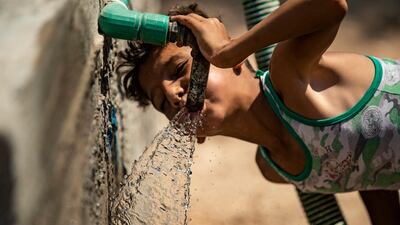
A boy drinks from the tap of a cistern donated by a humanitarian organisation during a water shortage in the north-east Syrian city of Hassakeh. AFP -
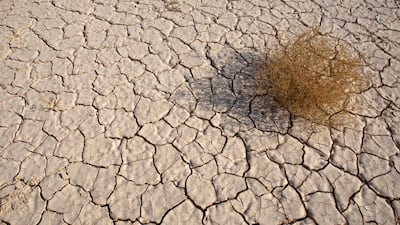
The Dead Sea in Jordan is slowly but surely drying up and could be gone in 50 years if no action is taken. Reuters -

Sudanese girls hold a sign that says ‘We need water’ as they greet a delegation of the UN-African Union Mission in Darfur in Forog. Residents say the area, controlled by the Abdul Wahid faction of the rebel Sudan Liberation Army, suffers from a serious shortage of water and medical supplies. AFP -
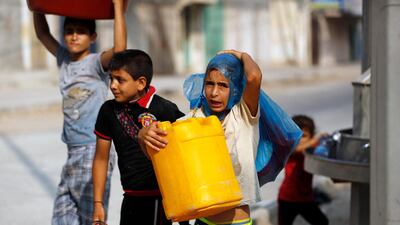
A boy holds a plastic container near a public tap in Gaza. AFP -
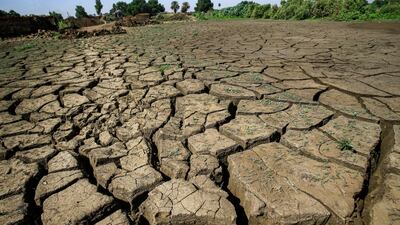
A parched agricultural field in Jureif Gharb, a district of the Sudanese capital Khartoum. AFP -
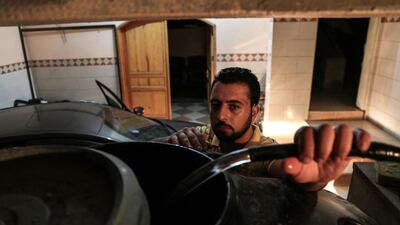
A man fills water tanks at the Rafah refugee camp in southern Gaza. AFP -

Buffalos wander along an empty riverbed in Umm Abbasiyat, about 60 kilometres east of Najaf, Iraq. In recent years, neighbouring Turkey and Iran have rerouted cross-border water sources they share with the country. AFP -
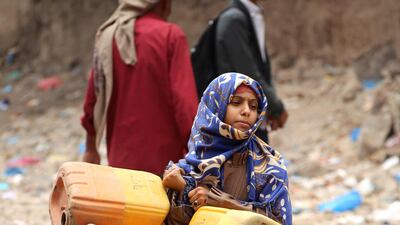
A girl carries plastic bottles to a water tank in the south-western Yemeni city of Taez. French anti-famine organisation Action Contre la Faim said 16 million people in Yemen lack access to water, sanitation and basic health care. Half of the country’s clinics have closed. AFP


Water turnover is not equal to the requirement for drinking water, said Prof John Speakman, from the University of Aberdeen.
“Even if a male in his 20s has a water turnover of on average of 4.2 litres per day, he does not need to drink 4.2 litres of water each day,” he said.
“About 15 per cent of this value reflects surface water exchange and water produced from metabolism.
“The actual required water intake is about 3.6 litres per day. Since most foods also contain water, a substantial amount of water is provided just by eating.
“This study shows that the common suggestion that we should all be drinking eight glasses of water (or around two litres a day) is probably too high for most people in most situations, and a ‘one-size-fits-all policy’ for water intake is not supported by this data.
“Understanding the factors that drive our water turnover and the relative importance of different factors is a big step forwards in our ability to predict future water needs.
“This work was built on contributions of scientists from all over the world, and shows the key importance of international scientific co-operation to answer big scientific questions.”

