
Saudis are observing Ramadan with old and new traditions in large groups once more after the kingdom lifted all precautionary measures before the holy month.
Saudi Arabia has undergone many changes since the announcement of Saudi Vision 2030 by Crown Prince Mohammed bin Salman. Changes to what may be celebrated in public have meant a return to some practices much missed by Muslims in the country.
“When I was a young boy we had many celebrations like this — with grandfather playing carom (a Saudi board game), listening to stories, the canon and traditional Ramadan songs were sung in public. Then there was a lull, but now this year you can see all that we do privately become public once again,” Abu Sulayman, a perfumer in the old town of Jeddah, tells The National.
“The youth does not fear anyone telling them to stop celebrating in public and so they carry on respectfully, as we did over 20 years ago.”

Every year, families give priority to relatives and close friends when it comes to iftar time.
“It is our culture to sit together to break our fast with our families and one of the most beautiful things about this time of the month,” says Lama Saeed, a Saudi living in Riyadh. “When I was in university in London, I used to try and come back for Ramadan as Ramadan in Saudi is like no other. The feeling of Ramadan is completely different — for instance, it is obligatory for us to send food to our neighbours, to help those in need. Last year we kept water, Arabic coffee and dates on a table outside our home for people to take from.”
Young Saudis aim to keep alive the traditions of the holy month, which include praying, breaking fast together, watching Ramadan TV shows, listening to grandfathers over Arabic coffee and sweets outdoors, and playing their favourite Ramadan board and card games.
“We love playing baloot and carom, it's the best part of the year for me. Both my grandfathers grew up playing the games and now all of us — three generations — play together,” says Mahmoud Zainy, a Saudi student in Riyadh.
Balad, a special place in Ramadan
Alanoud Albloshi, from Jeddah, says her social media posts showing the bright lights of the Balad area of the city impress her foreign friends.
“You get one chance every year to do everything you love with your loved ones. Like my grandfather and father loved going to Balad (old town) every Ramadan and so my father takes me every year and so on — the tradition lives on for many Saudis.
“Balad was the melting point. The trade, activities, everything happened here and now the city is spread out. But we come every year to have iftar and then stay around until late enjoying the local sweets, listening to our grandparents share stories, buying presents like thobes, perfumes and abayas. It's so much fun.”
New Ramadan decorations can be seen in malls, in residential and commercial buildings, and on the streets throughout the kingdom — most of the pieces of art and sculptures include the stars, moon and a lantern.
However this year, Ramadan celebrations are booming in public spaces including restaurants — with daily performances after the prayers with people dressed in traditional clothes singing Ramadan songs and playing drums. This can be seen in the old city as well.
Business is booming
-

Men drinking tea in the alleyways of Al Balad, Jeddah’s historical district. The World Heritage Site was founded in the seventh century and was once the beating heart of Jeddah, Saudi Arabia’s second-largest city. The area was formed as an ancient trading port and acted as the primary gateway to Makkah. Today, it is famous for its traditional buildings, which were constructed with coral-stone and are decorated with intricate latticed windows. Reem Mohammed / The National -
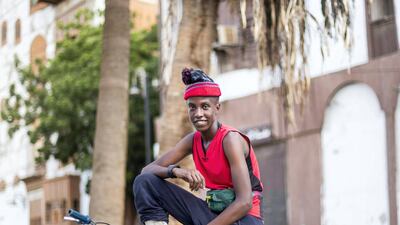
A resident of Al Balad. Reem Mohammed / The National -
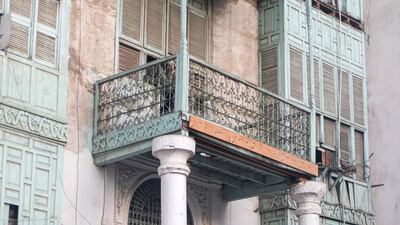
The small, secluded balconies and windows are known as rawasheen: local stories say that these bay windows were once the place from which women would assess their would-be suitors. Shielded by the wooden shutters, they could see the men proposing marriage in the majlis below, and would decide yes or no, while retaining their privacy. Reem Mohammed / The National -
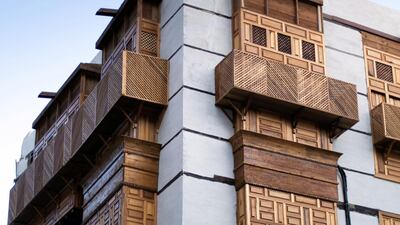
The detail of a historical building in Al Balad. Reem Mohammed/The National -

Tea time in the alleyways of Al Balad. Reem Mohammed / The National -

A badge featuring Saudi Arabia's King and Crown Prince worn by an Al Balad resident. Reem Mohammed/The National -

Jeddah's Academy of Arts in Al Balad historical district. Reem Mohammed / The National -
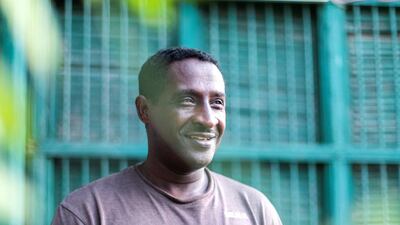
Idris Mustafa from Sudan looks after Jeddah Academy of Arts in Al Balad. Reem Mohammed / The National -

A street market near Al Balad, Jeddah’s historical district. Reem Mohammed/The National -
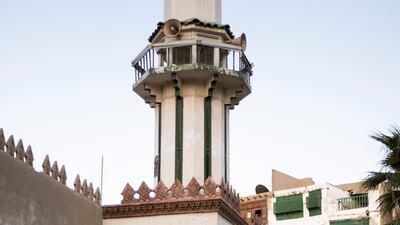
Abu Inabah masjid in Al Balad. Reem Mohammed/The National -
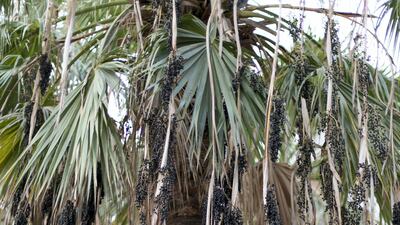
You'll find palm trees dotted around the maze-like streets. Reem Mohammed/The National -
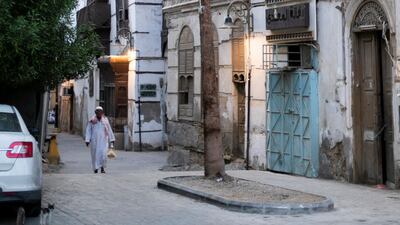
The area was formed as an ancient trading port and acted as the primary gateway to Makkah. Today, it is famous for its traditional buildings, which were constructed with coral-stone and are decorated with intricate latticed windows. Reem Mohammed / The National -
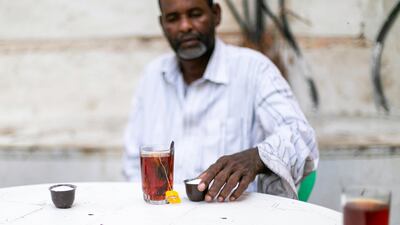
Tea time in the alleyways of Al Balad. Reem Mohammed / The National -
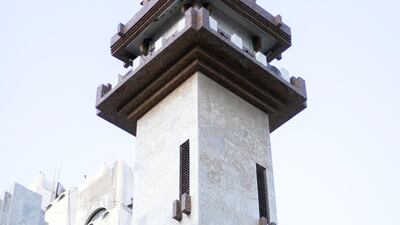
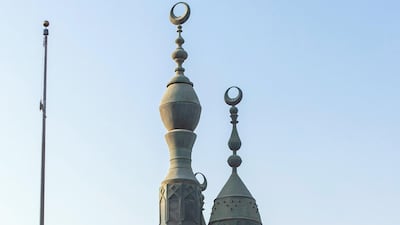
The minaret of Masjid Al Farah in Al Balad. Reem Mohammed / The National -
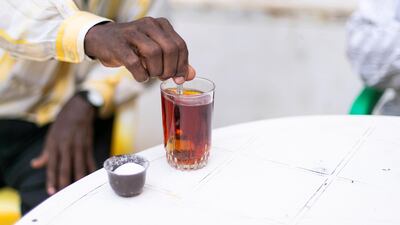
Tea time in the alleyways of Al Balad. Reem Mohammed / The National -
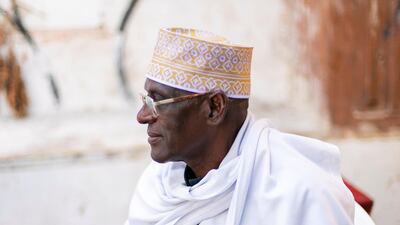
Tea time in the alleyways of Al Balad. Reem Mohammed / The National -
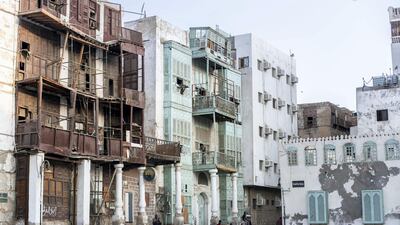
The town was formed as an ancient trading port and acted as the primary gateway to Makkah. Today, it is famous for its traditional buildings, which were constructed with coral-stone and decorated with intricate latticed windows. Reem Mohammed / The National -
A sculpture opposite Bab Jadid in Al Balad. Reem Mohammed / The National


“People are loving the fact that they can now celebrate together unlike the last two Ramadans and businesses are flourishing because it means its back to business for them and more profitable,” said Abu Ahmad, an Egyptian customer at Meez restaurant in Jeddah.
“My kid loves the set-up here. They give you games, colouring and came out surprising us with a song, beating drums. The staff were so enthusiastic and help keep our spirits high during the blessed month.”
Many Saudi women who own small businesses and sell food online say this is the most profitable season for them. “I sell online, I make fresh Arabic sweets and bread every day and sell via Instagram or on our stall in Balad. Many women do it here every year- not just cooking but also selling handmade dresses and accessories,” says Um Bilal, a Saudi vendor in Al Balad.
The area plays host to tradition and innovation.
A cultural powerhouse, 'Zawiya 97' in Al Balad is offering new programmes this month with cultural nights that help explore the historic and urban development of Al Balad with renowned Saudi architects, artists and experts including Dr Sami Angawi, Dr Ahmad Algilani, and Engineer Amr Darwish.
“I loved the talk with Dr Sami Angawi on human architecture,” said Ayesha Fareed, a Saudi visitor in Jeddah's historic town. “This is the first time I have seen something like this in Al Balad, in Ramadan. I feel so proud of the country and its progress. We have such legends talking to us in the heart of the city. It is really one of the best nights I have ever had in Al Balad.”
For some, the area also evokes the past.
“Balad for me is one of the most beautiful places in Jeddah, it's magical,” Leila Hafiz, a Saudi designer in Jeddah, told The National.
“One of my favourite things in Al Balad is hearing the Maghrib adaan (call to prayer). It gives me goose bumps — you feel the adaan fills you up. The beauty of the old houses, you can just imagine how it was for pilgrims when they used to come down from their ships; the trading- spices and materials.”

