


A group of five Saudi adventurers have become the first to reach the bottom of a volcanic cave in the west of the kingdom.
The men documented their journey into Maker Al Shayahin cave in Harrat Khaybar. It is one of the largest volcanic fields in thekingdom, located north of Medina in the Hijaz region.
In a video, one of the men described the journey as a miracle and said the cave “looks like it is from another world”.
“As we entered the cave the feeling of astonishment remained with us until we left,” Badr Al Ali said.
"The cave narrows, widens, rises and falls as you walk through it, as if you were walking inside a museum of natural arts with rocky hollows, geometric shapes and colourful ceilings."
The Maker Al Shayahin cave is thought to be the largest cave in the country – it is more than three kilometres in length, 22 metres high and 18m wide in places.
“The idea to visit the cave came after the discovery of the giant cave more than two years ago,” he said.
“It is part of an unknown giant volcanic tube underground, in which volcanic magma once flowed, and if a part of it did not collapse, it would not have been known until now.
“The cave is legendary."
The journey into the cave took the men about four and half hours during which they walked about six kilometres.
The cave is the result of volcanic eruptions. The last volcano in the region appeared about 400 years ago in the region, Mr Al Ali said.
Saudi Arabia is known to be a major destination for geologists because it has large and prominent volcanoes with more than 2,000 volcanic craters.
Exploring caves in Oman - in pictures
-
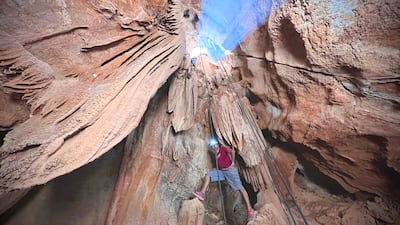
Oman’s Jebel Akhdar region is dotted with caves caused by eroding limestone. Photo: Nabil Alsaqri -

A group of Omani cavers are mapping out the openings. Photo: Salim Alsuqri -

The cavers have written a book about Oman's cave system, ranging from expert level explorations to family-friendly adventures. Photo: Nabil Alsaqri -
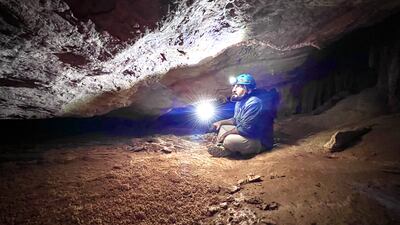
The same team discovered the 'Well of Hell' cave last year. -

The caves vary in size, from the small to the enormous. -
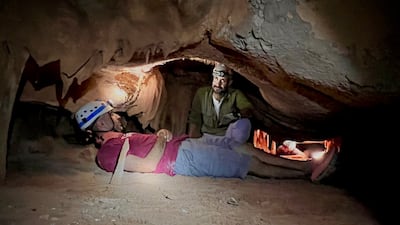
A caver lies on the ground, to manoeuvre in a tight area, during an expedition. Photo: Nabil Alsaqri -

Mounds known as stalagmites on the floor of a cave. -

Icicle-shaped stalactites form across a cave’s ceiling. -

Rays of sunlight illuminate a shaft as the explorers descend. -

Oman is promoting the caves as a tourist draw. -

The caves are home to lizards, water beetles, snails, hunting spiders and fish. -

This cave called Khaslat Safi Sahra was known to locals but not extensively explored. -

The period of discovering, documenting and surveying the cave took about five hours. -
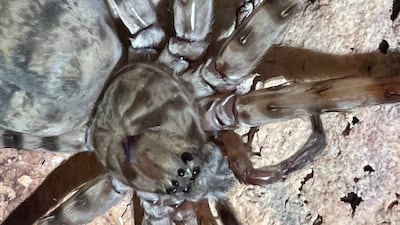
A cave-dwelling spider. -

Some caves were used in the past as shelter or hideouts during times of conflict.



