Animal traders at the livestock market in Nizwa before the pandemic. Coronavirus restrictions have forced Omanis to find ways to organise traditional Eid Habta markets online this year. Getty Images

Oman’s traditional Eid markets move online during lockdown


  • English
  • Arabic

With lockdown measures in place, Omanis have recreated the traditional Eid Habta markets online this year, using Amazon to buy festive clothes and sweets and even using WhatsApp to buy and sell live animals.

The government cancelled the Habta markets – usually held during the last week of Ramadan – under  restrictions brought in to curb the Covid-19 outbreak.

“I don’t remember not going to a Habta market. I have been to each one of them for as long as I can remember and everybody looks forward to getting a bargain. It is a centuries-old tradition but, sadly, this year it is being replaced by online buying," said Faisal Al Saleh, 49, a civil servant in Muscat.

"It is not the same but what can we do when all the shops are closed during the day?"

Stricter lockdown rules came into effect in Oman last Saturday, with all markets and shops, except for supermarkets, ordered to close during the day.

Movement has been restricted between 7pm and 4am for one week.

Mr Al Saleh said he is now doing almost all of his Eid shopping from Amazon. He hopes the deliveries will arrive in time for the first day of Eid.

Depending on the sighting of the moon, Eid will begin either on May 13 or May 14.

With markets closed, animal breeder Fahad Al Hadhrami moved his business online, using WhatsApp to share videos and pictures of his sheep and goats with customers. He sent the videos to some 800 people in several chat groups.

“In the last three days I already got over 70 orders of live animals, which I have started to deliver. I am not sure where this will lead to by the end of Ramadan – it could be the best sale I have ever made during the Habta market period,” said Mr Al Hadhrami, 57, from Musannah in the Al Batnah Region.

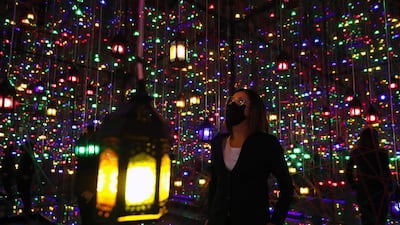
  • People visit the Ramadan Reflection room at Ibn Battuta Mall in Dubai. Chris Whiteoak / The National
    People visit the Ramadan Reflection room at Ibn Battuta Mall in Dubai. Chris Whiteoak / The National
  • An aerial view shows the Grand Mosque complex in Makkah during the first day of the holy month. AFP
    An aerial view shows the Grand Mosque complex in Makkah during the first day of the holy month. AFP
  • Ramadan decorations in City Walk, Dubai. Chris Whiteoak / The National
    Ramadan decorations in City Walk, Dubai. Chris Whiteoak / The National
  • A general view of the Dubai Skyline on April 30, 2021 in Dubai. Getty Images
    A general view of the Dubai Skyline on April 30, 2021 in Dubai. Getty Images
  • A vendor packs dried fruits and nuts for customers at an open-air market in Sanaa. AFP
    A vendor packs dried fruits and nuts for customers at an open-air market in Sanaa. AFP
  • Worshippers pray at Gaza City's Al Khaledi Mosque on April 30, 2021. AFP
    Worshippers pray at Gaza City's Al Khaledi Mosque on April 30, 2021. AFP
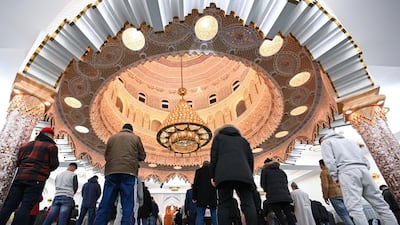
  • People pray at a mosque in Frankfurt am Main, Germany. Getty Images
    People pray at a mosque in Frankfurt am Main, Germany. Getty Images
  • April's full moon rises over Jerusalem's Damascus Gate. AFP
    April's full moon rises over Jerusalem's Damascus Gate. AFP
  • A Pakistani boy reads verses from the Quran in Peshawar. EPA
    A Pakistani boy reads verses from the Quran in Peshawar. EPA
  • Sheikh Zayed Mosque in Fujairah during Ramadan. AFP
    Sheikh Zayed Mosque in Fujairah during Ramadan. AFP
  • A camel hrder walks with his camels early morning on May 5, 2021 in Dubai. Getty Images
    A camel hrder walks with his camels early morning on May 5, 2021 in Dubai. Getty Images
  • A Syrian vendor displays the traditional Ramadan sweet known as "al-Naem" in Damascus. AFP
    A Syrian vendor displays the traditional Ramadan sweet known as "al-Naem" in Damascus. AFP
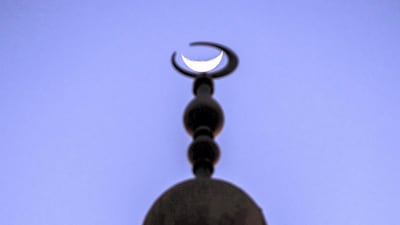
  • The crescent moon at the Sheikh Zayed Bin Sultan Al Nahyan Mosque at Al Bahia, Abu Dhabi. Victor Besa/The National
    The crescent moon at the Sheikh Zayed Bin Sultan Al Nahyan Mosque at Al Bahia, Abu Dhabi. Victor Besa/The National
  • Girls play as Palestinian Walid Al Hattab distributes soup to people in need in Gaza City. AFP
    Girls play as Palestinian Walid Al Hattab distributes soup to people in need in Gaza City. AFP
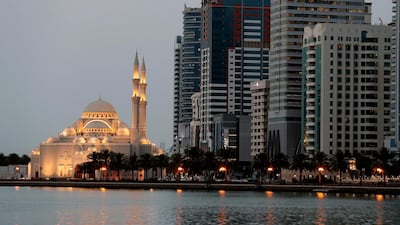
  • Al Noor Mosque in Sharjah on the second day of Ramadan after sunset. Chris Whiteoak / The National
    Al Noor Mosque in Sharjah on the second day of Ramadan after sunset. Chris Whiteoak / The National
  • A worshipper during Friday prayers at Al Jaffali mosque during Ramadan, in Jeddah, Saudi Arabia, April 30. AP
    A worshipper during Friday prayers at Al Jaffali mosque during Ramadan, in Jeddah, Saudi Arabia, April 30. AP
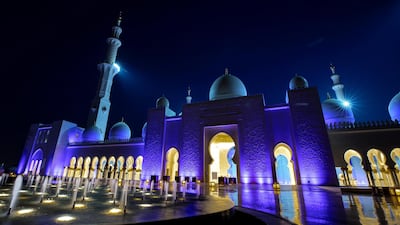
  • Sheikh Zayed Grand Mosque, Abu Dhabi, on the first evening of Ramadan 2021. Victor Besa / The National Section
    Sheikh Zayed Grand Mosque, Abu Dhabi, on the first evening of Ramadan 2021. Victor Besa / The National Section
  • A member of the moon sighting committee looks through a telescope to view the moon ahead of Ramadan near Riyadh, Saudi Arabia. Reuters
    A member of the moon sighting committee looks through a telescope to view the moon ahead of Ramadan near Riyadh, Saudi Arabia. Reuters
  • A cannon fires to denote the end of fasting at the Burj Khalifa. Dubai. Chris Whiteoak / The National
    A cannon fires to denote the end of fasting at the Burj Khalifa. Dubai. Chris Whiteoak / The National
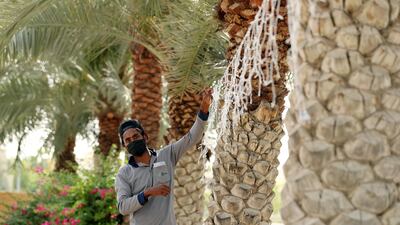
  • A gentleman puts up Ramadan lights in Sustainable City. Chris Whiteoak / The National
    A gentleman puts up Ramadan lights in Sustainable City. Chris Whiteoak / The National
  • Workers wearing protective suits spray disinfectant in al-Fateh mosque as it is being prepared for prayers in Cairo. EPA
    Workers wearing protective suits spray disinfectant in al-Fateh mosque as it is being prepared for prayers in Cairo. EPA
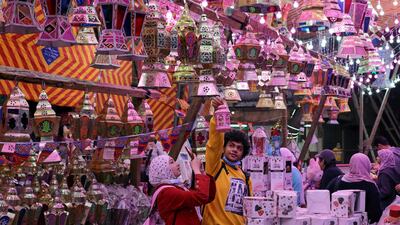
  • Ramadan lanterns on sale in Cairo, where a festive mood has taken hold ahead of the start of the holy month. Reuters
    Ramadan lanterns on sale in Cairo, where a festive mood has taken hold ahead of the start of the holy month. Reuters
  • Ramadan lights along the Abu Dhabi Corniche, April 5, 2021. Victor Besa / The National
    Ramadan lights along the Abu Dhabi Corniche, April 5, 2021. Victor Besa / The National
  • The UAE has throughout the years created economic zones to boost and diversify its economy. AFP
    The UAE has throughout the years created economic zones to boost and diversify its economy. AFP
  • Ramadan decoration at Dubai Mall in Dubai on April 22, 2021. Pawan Singh / The National. Story by Katy Gillet
    Ramadan decoration at Dubai Mall in Dubai on April 22, 2021. Pawan Singh / The National. Story by Katy Gillet
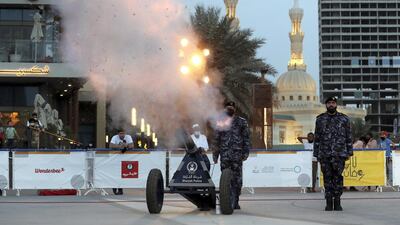
  • Cannon fire at Al Majaz Waterfront in Sharjah on the second day of Ramadan. Chris Whiteoak / The National
    Cannon fire at Al Majaz Waterfront in Sharjah on the second day of Ramadan. Chris Whiteoak / The National
  • People break their fast in Karachi, Pakistan. EPA
    People break their fast in Karachi, Pakistan. EPA
  • Worshippers read the Quran Koran in Najaf. AFP
    Worshippers read the Quran Koran in Najaf. AFP
  • People visit the Al-Qasim Mosque in Hilla, Iraq. Reuters
    People visit the Al-Qasim Mosque in Hilla, Iraq. Reuters
  • Volunteers from the Adliya Charity prepare meals in Manama. Reuters
    Volunteers from the Adliya Charity prepare meals in Manama. Reuters
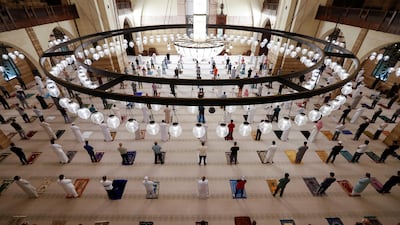
  • Muslims maintaining social distance perform their Tarawee prayers in Manama, Bahrain. Reuters
    Muslims maintaining social distance perform their Tarawee prayers in Manama, Bahrain. Reuters
  • Iraqis share a collective iftar in Mosul, on April 15, 2021. AFP
    Iraqis share a collective iftar in Mosul, on April 15, 2021. AFP
  • Muslim pilgrims circumambulate around the Kaaba during Umrah. AP Photo
    Muslim pilgrims circumambulate around the Kaaba during Umrah. AP Photo
  • A Shiite cleric reads the Quran on Laylat Al Qadr (Night of Destiny) which marks the night in which the Quran was first revealed to the Prophet Mohammed, at the Imam Ali shrine in the Iraqi city of Najaf, on May 1, 2021. AFP
    A Shiite cleric reads the Quran on Laylat Al Qadr (Night of Destiny) which marks the night in which the Quran was first revealed to the Prophet Mohammed, at the Imam Ali shrine in the Iraqi city of Najaf, on May 1, 2021. AFP
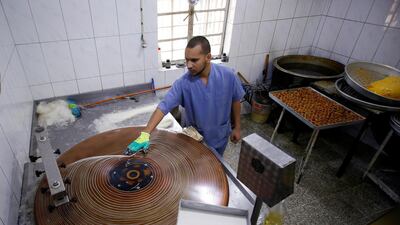
  • An Iraqi worker prepares traditional sweets for sale during the holy fasting month of Ramadan at a shop in Baghdad, Iraq. Reuters
    An Iraqi worker prepares traditional sweets for sale during the holy fasting month of Ramadan at a shop in Baghdad, Iraq. Reuters
  • This picture taken during the Muslim holy fasting month of Ramadan, from the Mecca Royal Clock Tower of the Abraj al-Bait skyscraper complex, shows an aerial view of Muslim worshippers around the Kaaba (unseen), the holiest shrine in the Grand Mosque complex in Saudi Arabia's holy city of Mecca. AFP
    This picture taken during the Muslim holy fasting month of Ramadan, from the Mecca Royal Clock Tower of the Abraj al-Bait skyscraper complex, shows an aerial view of Muslim worshippers around the Kaaba (unseen), the holiest shrine in the Grand Mosque complex in Saudi Arabia's holy city of Mecca. AFP
  • People watch a whirling dervish perform during the Muslim holy month of Ramadan, a tradition ahead of the Fitr feast, in Lebanon's southern city of Saida. Dervishes are adepts of Sufism, a mystical form of Islam that preaches tolerance and a search for understanding. Those who whirl, like planets around the sun, turn dance into a form of prayer. AFP
    People watch a whirling dervish perform during the Muslim holy month of Ramadan, a tradition ahead of the Fitr feast, in Lebanon's southern city of Saida. Dervishes are adepts of Sufism, a mystical form of Islam that preaches tolerance and a search for understanding. Those who whirl, like planets around the sun, turn dance into a form of prayer. AFP
  • Muslim men pray at Fatmah Mosque in Kuwait city just before daybreak, during Laylat al-Qadr, which falls on the 27th day of the holy month of Ramadan. Laylat al-Qadr, the most important prayer of the fasting month, is the night Muslims commemorate the revelation of the first verses of the Quran to their prophet Mohammed through the angel Gabriel. Muslims spend the night in worship and devotion, praying for the souls of the dead. AFP
    Muslim men pray at Fatmah Mosque in Kuwait city just before daybreak, during Laylat al-Qadr, which falls on the 27th day of the holy month of Ramadan. Laylat al-Qadr, the most important prayer of the fasting month, is the night Muslims commemorate the revelation of the first verses of the Quran to their prophet Mohammed through the angel Gabriel. Muslims spend the night in worship and devotion, praying for the souls of the dead. AFP
  • A Muslim worshipper takes part in evening prayers called "Tarawih" on Laylat al-Qadr or Night of Decree, outside Amr Ibn El-Aas Mosque on the holy fasting month of Ramadan, amid the coronavirus disease (COVID-19) pandemic in old Cairo, Egypt. Reuters
    A Muslim worshipper takes part in evening prayers called "Tarawih" on Laylat al-Qadr or Night of Decree, outside Amr Ibn El-Aas Mosque on the holy fasting month of Ramadan, amid the coronavirus disease (COVID-19) pandemic in old Cairo, Egypt. Reuters
  • Palestinians pray on Laylat al-Qadr during the holy month of Ramadan, at the compound that houses Al-Aqsa Mosque, known to Muslims as Noble Sanctuary and to Jews as Temple Mount, in Jerusalem's Old City. Reuters
    Palestinians pray on Laylat al-Qadr during the holy month of Ramadan, at the compound that houses Al-Aqsa Mosque, known to Muslims as Noble Sanctuary and to Jews as Temple Mount, in Jerusalem's Old City. Reuters
  • Muslim worshippers pray on Laylat al-Qadr (Night of Destiny) during the holy month of Ramadan, at the Al-Azhar Mosque in the Egyptian capital Cairo. AFP
    Muslim worshippers pray on Laylat al-Qadr (Night of Destiny) during the holy month of Ramadan, at the Al-Azhar Mosque in the Egyptian capital Cairo. AFP
  • A shop attendant puts up an Eid Mubarak sticker on a shop window in the mall. Eid decorations in Festival City Mall with shoppers preparing for Eid on May 10th, 2021. Antonie Robertson / The National.
    A shop attendant puts up an Eid Mubarak sticker on a shop window in the mall. Eid decorations in Festival City Mall with shoppers preparing for Eid on May 10th, 2021. Antonie Robertson / The National.
  • Eid Mubarak lights at the Corniche in Abu Dhabi. Victor Besa / The National.
    Eid Mubarak lights at the Corniche in Abu Dhabi. Victor Besa / The National.

But vendors who are not connected to online channels say they are missing out on customers this Eid.

“My Habta stall is in the Nizwa souq, but the souq is closed this week under the new lockdown restrictions. I am not good with social media or online channels. I always do business when customers come to my stall, said Hashim Al Shualli, 67, a market trader in Nizwa in the Dakhliya region.

“This time, I have just been knocking on doors of houses in the area where I live to make sales. I don’t think I will do as well as other Habta periods in the past,” he added.

Other traders voiced concerns that the lockdown measures would have an impact beyond their bottom lines.

The new measures could “take away not only our businesses but also the spirit of Eid”, said Jalal Al Hadhrami, 34, a trader from Ibri in the Sharqiyah region.

Oman reported 787 new Covid-19 infections on Monday and 18 deaths, the highest number of daily fatalities so far this year.

The total number of cases registered in the country has reached 202,137, with 2,138 deaths, since the outbreak began.

Ten tax points to be aware of in 2026

1. Domestic VAT refund amendments: request your refund within five years

If a business does not apply for the refund on time, they lose their credit.

2. E-invoicing in the UAE

Businesses should continue preparing for the implementation of e-invoicing in the UAE, with 2026 a preparation and transition period ahead of phased mandatory adoption. 

3. More tax audits

Tax authorities are increasingly using data already available across multiple filings to identify audit risks. 

4. More beneficial VAT and excise tax penalty regime

Tax disputes are expected to become more frequent and more structured, with clearer administrative objection and appeal processes. The UAE has adopted a new penalty regime for VAT and excise disputes, which now mirrors the penalty regime for corporate tax.

5. Greater emphasis on statutory audit

There is a greater need for the accuracy of financial statements. The International Financial Reporting Standards standards need to be strictly adhered to and, as a result, the quality of the audits will need to increase.

6. Further transfer pricing enforcement

Transfer pricing enforcement, which refers to the practice of establishing prices for internal transactions between related entities, is expected to broaden in scope. The UAE will shortly open the possibility to negotiate advance pricing agreements, or essentially rulings for transfer pricing purposes. 

7. Limited time periods for audits

Recent amendments also introduce a default five-year limitation period for tax audits and assessments, subject to specific statutory exceptions. While the standard audit and assessment period is five years, this may be extended to up to 15 years in cases involving fraud or tax evasion. 

8. Pillar 2 implementation 

Many multinational groups will begin to feel the practical effect of the Domestic Minimum Top-Up Tax (DMTT), the UAE's implementation of the OECD’s global minimum tax under Pillar 2. While the rules apply for financial years starting on or after January 1, 2025, it is 2026 that marks the transition to an operational phase.

9. Reduced compliance obligations for imported goods and services

Businesses that apply the reverse-charge mechanism for VAT purposes in the UAE may benefit from reduced compliance obligations. 

10. Substance and CbC reporting focus

Tax authorities are expected to continue strengthening the enforcement of economic substance and Country-by-Country (CbC) reporting frameworks. In the UAE, these regimes are increasingly being used as risk-assessment tools, providing tax authorities with a comprehensive view of multinational groups’ global footprints and enabling them to assess whether profits are aligned with real economic activity. 

Contributed by Thomas Vanhee and Hend Rashwan, Aurifer