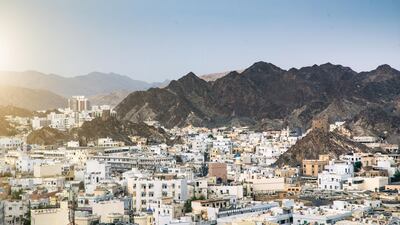
Omani citizen Khalifa Al Saadi is three days into a one-week Covid quarantine in a Muscat hotel room and feelings of captivity are starting to set in.
He landed in Oman after a two-week holiday in Tanzania and was taken straight to the Ibis Hotel in Muscat, despite testing negative for Covid-19 on arrival.
“It is very suffocating to live in a hotel room and away from your family," said Mr Al Saadi, 36, civil servant.
"I can look down from my window and see a full life in the streets and I cannot be part of it.
"I chose this hotel because it is just a few streets from my house. My family are so near but yet so far away."
Oman introduced the seven-day hotel quarantine requirement for all arrivals from February 15 to control the spread of infection.
The Ministry of Health listed more than 20 hotels in which inbound passengers can quarantine, with different options to suit varying budgets.
The cheapest is 22 rials ($55) a day and the most expensive is 45 rials a day, which includes three meals.
In another hotel, Sam Mears, 42, a British resident in Oman who arrived through Dubai from the UK, said he also felt like a captive.
-
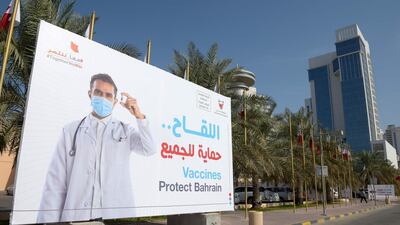
A billboard urges the public to sign up for the voluntary vaccine outside Bahrain International Exhibition and Convention Centre in Manama. The tiny island nation has put technology at the heart of its response, using WhatsApp, Facebook Messenger and chatbots to deliver test results and information. Mazen Mahdi / AFP -
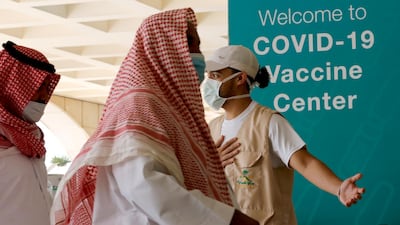
Saudis are greeted by a health worker as they enter a new coronavirus vaccination centre at the Jeddah old airport, Saudi Arabia. AP Photo -
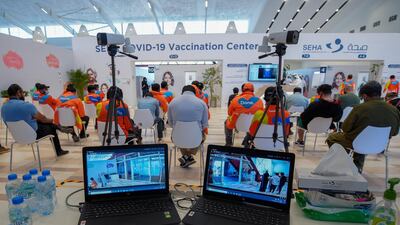
The Seha Vaccination Centre at Abu Dhabi Cruise Terminal can immunise up to 3,000 people per day. Victor Besa / The National -
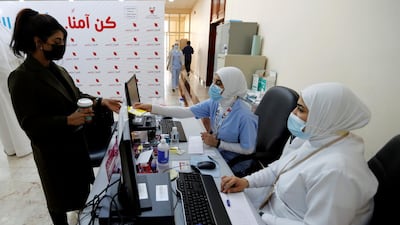
A woman attends her appointment for a second dose of a coronavirus vaccine at Bahrain International Exhibition & Convention Centre (BIECC), in Manama, Bahrain December 24, 2020. Reuters -
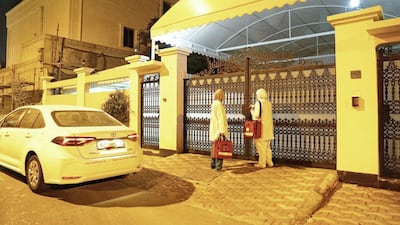
Bahrain's Mobile Vaccination Unit. Courtesy: Bahrain News Agency -
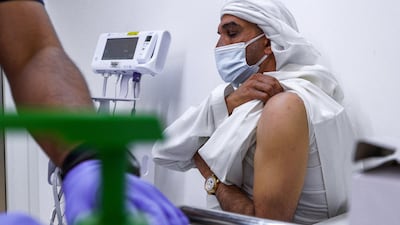
A man is inoculated at Seha Vaccination Centre in the Abu Dhabi Cruise Terminal area. Victor Besa / The National -
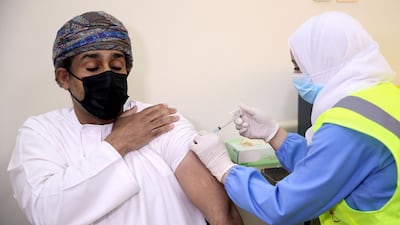
A man receives his first dose of the Pfizer-BioNTech Covid-19 vaccine in the Omani capital, Muscat. AFP -
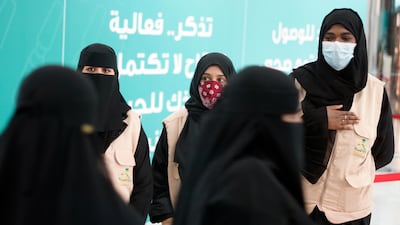
Health workers greet people after they receive their vaccine at a new coronavirus vaccination centre, at the Jeddah old airport in Saudi Arabia. Amr Nabil / AP -
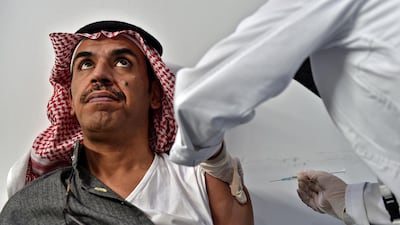
A nurse administers a dose of vaccine against the covid-19 diseases at the Riyadh International Convention and Exhibition Centre in the capital of Saudi Arabia. Fayez Nureldine / AFP -
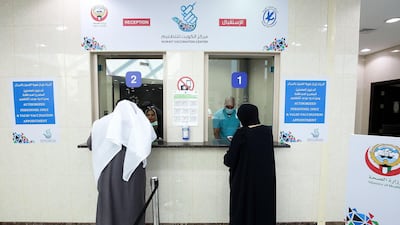
Kuwaitis arrive to get the Covid-19 vaccine at Al Masayel new vaccination centre in Kuwait City. Yasser Al Zayyat / AFP -
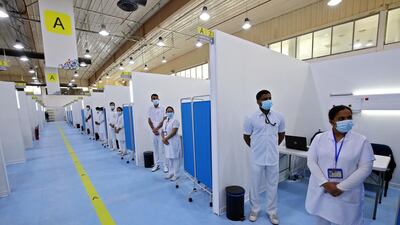
Medical staff stand ready at the Kuwait vaccination centre for Covid -19 at the International Fairgrounds in Kuwait City. Sports stadiums, cathedrals and theme parks the world over have been rapidly repurposed as temporary vaccination centres in a global drive to administer the life-saving shots. AFP -
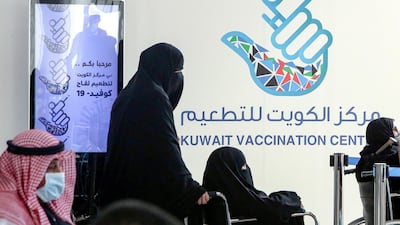
A woman pushes another in a wheelchair as they queue to register before receiving a dose of Covid-19 coronavirus vaccine at the make-shift vaccination centre erected at the Kuwait International Fairground, in the Mishref suburb south of Kuwait City. Yasser Al Zayyat / AFP


“I feel like a bird in a cage in a five-by-four-metre room," Mr Mears said.
"All meals are in the room and I have to pay 45 rials a day for what feels like a seven-day jail sentence.
"I am allowed in a swimming pool for a very limited time and the gym as well, but it is very scary to get into one of those in case I contract the virus from other guests.
“On top of my misery, I have to work online for my office since I have several deadlines during the week I am in this prison."
Oman on Wednesday reported five deaths from Covid-19, the highest since December 20.
A day earlier, there was a single-day surge of 337 infection cases, the highest this year.
Last week, the health ministry said doctors detected about 200 people with the new UK variant of the virus.
Seeraj Sampat, 26, from India, went to Oman to visit his family but did not have time to see them.
He was escorted straight to a bus and taken to his hotel after checking out of the terminal building.
“I have not seen my parents for more than a year after my graduation from Delhi University," Mr Sampat said.
"I was looking forward to it. Now I am in this prison doing time like a convict and my father has to pay the bill.
"I tested negative in India and yesterday the medical people in Oman sent me a message to say I don’t have the virus but I am still here.
"I spent the day reading a book and the evening watching television. What else can I do?”
On Thursday, Oman reported 288 new coronavirus cases with no new deaths.
A total of 138,494 people have been infected in the country so far while the death toll from the virus is 1,549.
Twenty-four coronavirus patients were admitted to hospitals in the past 24 hours. There are now 155 patients in hospital, of which 56 are in intensive care.
Oman this month began the second phase of vaccinations after receiving 100,000 doses of the Oxford-AstraZeneca vaccine made under licence by the Serum Institute of India.
The sultanate began its first vaccination campaign using Pfizer-BioNTech inoculations on December 7, reaching 30,000 people.

