



A draft law introducing income tax on high earners in Oman was passed on Sunday by the country's Shura Council.
Pending approval of the Council of Ministers and a final endorsement from Sultan Haitham, the tax will then become law.
As the levy for wealthier people becomes more of a reality in Oman, citizens at both ends of the pay scale have expressed mixed reactions.
'Too soon to tell'
The National spoke to local residents who said they had reservations about the change, and their feelings would depend on exactly how much would be deducted from their wages.
“First, we need to know what bracket of the high income earning is, which now we don’t know," said Ali Al Sabti, deputy managing director of Wave Constructions.
"Second, what percentage of the cut? If is it between 3 to 5 per cent, then I guess it will be OK. No high income earner will have to complain if it is on that low a level. If it is over that threshold, then it can hit our income.”
If a tax on income is introduced, the sultanate would be the first GCC country to do so. All six GCC states agreed to introduce VAT in 2016. Saudi Arabia and the UAE brought in VAT in 2018 and Bahrain followed suit in 2019.
Middle-income earners said they were also concerned with what the new law, if implemented, would mean for them in the long run.
“I have a feeling that once high earners are taxed, it would not be long until the government decides to charge income tax to middle earners like us," said Salim Al Habsi, a mechanic working for Bahwan Automobiles.
"I am convinced it will be a matter of time before the new income tax is to be made universal after its implementation."
The Gulf nation began weighing up plans to introduce income tax on high earners two years ago as part of the finance ministry's 2020-2024 economic scheme and efforts to reduce the fiscal deficit.
Plans for an income tax on high earners were also mentioned in a bond prospectus published by the ministry in 2020, when the sultanate raised $2 billion in external financing.
Analysts predict little impact on citizens
Despite hesitancy from some Omanis, economic experts have said it was about time officials introduced an income tax to bring in revenue for the government. They also say that, if brought into force, it would not make much impact on the take-home salary of high earners.
“I don’t think, if income tax is implemented, it would make a big difference to high earners," Dr Venkat Thumiki, an economics lecturer at the Modern College of Business Science in Muscat, told The National.
"I predict it will be a nominal tax charge and it would not hurt them. But it is good for the country’s economy overall because it will help the government’s finances to pay for its deficits."
The International Monetary Fund last week praised the Gulf nation for implementing “prudent fiscal measures” this year in a bid to rein in on its deficits.
This year Oman has predicted a fiscal deficit of 1.5bn rials ($3.9bn), about 32 per cent lower than the previous year. It recorded a budget surplus of 784 million rials ($2bn) in the first half of 2022, as revenue grew on the back of higher oil and gas prices, according to government data released in August.
Places to visit in Oman: Nizwa Fort, Mutra Souq, Sultan Qaboos Grand Mosque and more - in pictures
-

Nizwa Fort in Nizwa, Oman. All pictures: Victor Besa / The National -
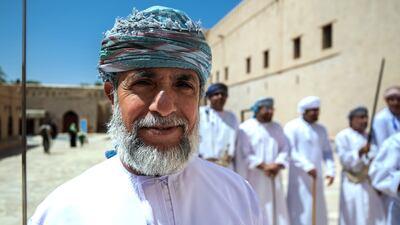
It was built in the 1650s by Imam Sultan Bin Saif Al Ya'rubi. -

It is Oman's most visited national monument. -

Imam Sultan Bin Saif Al Ya'rubi was the second of the Ya'rubi dynasty of imams. -
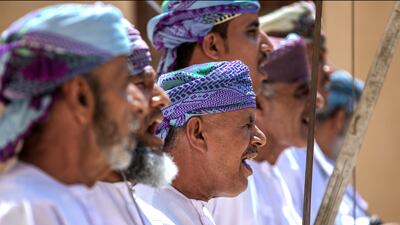
The fort's underlying structure dates back to the 12th century. -
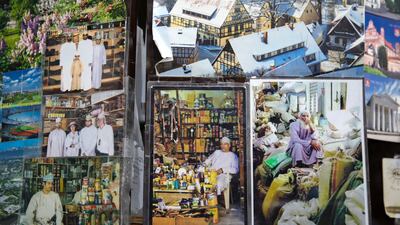
Ahmed bin Abdullah Al Amri Trading. The souq has different parts depending on what you want to shop for. -
In the mornings you will see locals buying vegetables and meat. The rest of the souq sells unique souvenirs like taqiya caps, lamps and fresh dates. -
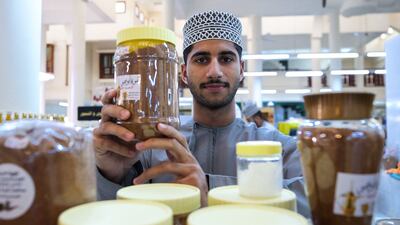
Located near the castle, the souq offers a glimpse of old Oman. -
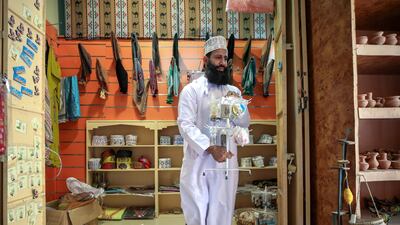
A shop owner brings out his wares. Some sections of the souq have retained its ancient architecture and unrenovated structures. -
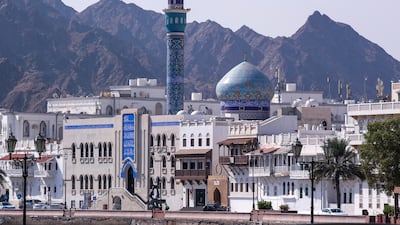
Masjid Al Rasool Al A'dham at Mutrah Fish Market. -

The fish market stretches along the Mutrah waterfront in Muscat. Omani fishermen arrive early to unload, prepare and then sell their day’s catch. -

The Mutrah Souq is located along the corniche in Muscat. -

It is one of the oldest souqs on the Arabian Peninsula. -
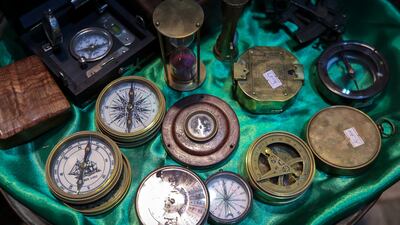
However, the souq was rebuilt in the 1970s. -

Jamal Muhammad Ali Al Balooshi, shopowner at Mutrah Souq. -
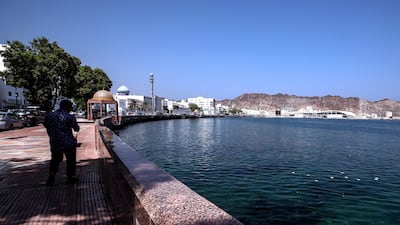
Mutrah Corniche in Muscat. -
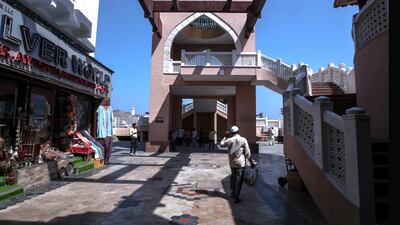
A shopper at Mutrah Souq. -
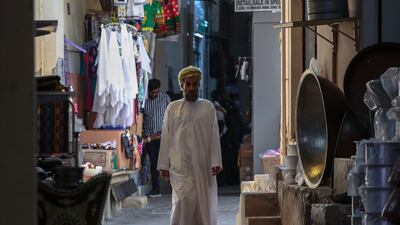
Another person browses at Mutrah Souq. -

Oman's Royal Opera House of Musical Arts in Muscat. -

The 'Oman and the World: A Musical Journey Exhibition' at the opera house. -
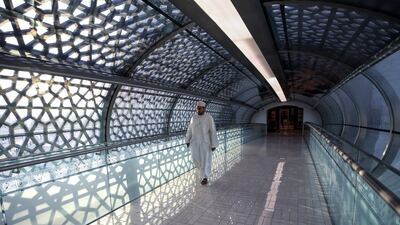
A person looking around the exhibition. -
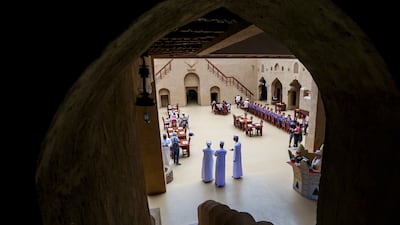
A restaurant that looks like a fort, located along Sultan Qaboos Street in Muscat. -

Mandi, made with Omani samar wood. -
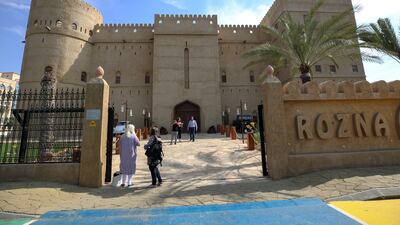
The Rozna restaurant is known for serving the best authentic Omani food in Muscat. -

The Sultan Qaboos Grand Mosque in Muscat. The chandelier sits 14 metres above the praying hall. -
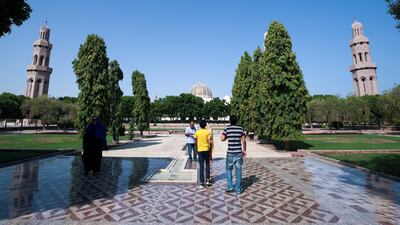
In 1992, Qaboos bin Said Al Said, then Sultan of Oman, ordered the building of the grand mosque. -
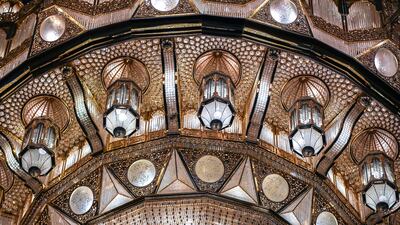
The chandelier was manufactured by the Italian company Faustig. -

Khalifa Nasser Al Maskery, 70, has been a volunteer tour guide at the mosque for more than eight years. -
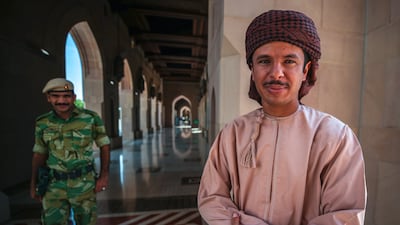
A competition for the mosque's design took place in 1993. -

Construction started in December 1994. -
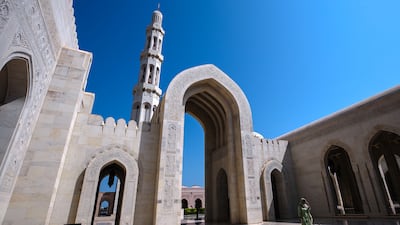
The chandelier used to be the world's largest, before being replaced by one at the Sheikh Zayed Mosque in Abu Dhabi.



