


The international community must not forget Yemen’s humanitarian crisis as its people are "on their knees”, a senior official at the International Committee of the Red Cross told The National.
Yemen’s conflict has caused a collapse in basic services, such as health care and education, with millions of people displaced and 80 per cent of the population dependent on aid.
However, in recent weeks, Russia’s invasion of Ukraine has taken the spotlight off continuing crises occurring in the region.
“I understand why the focus is on Ukraine but we need to have the capacity to integrate all these crises and not exclude one,” said Fabrizio Carboni, the ICRC’s Mena regional director.
“There is a serious concern that with time we should not forget what is still one of the major humanitarian crises which is Yemen,” Mr Carboni said, adding that “Yemen unfortunately keeps on being unstable where the same people are paying the price.”
The ICRC has said that nearly 51 per cent of Yemen’s healthcare centres are operating after eight years of war. In 2021, more than 157,000 were displaced with more than 3.3 million remaining displaced across the country.
Yemen has one of the world’s biggest humanitarian crises which is frustrating for humanitarian actors, Mr Carboni said.
“We are only patching the walls, we are not giving them some quality of life, just the bare minimum,” he said.
Mr Carboni’s comments come before the annual pledging meeting for Yemen on March 16.
Humanitarian actors worry that donor fatigue will impact the event, as governments shift allocations to Ukraine, Afghanistan and other crises.
“Donating states have to understand that it’s really life saving, it’s not about fancy humanitarian assistance, it’s literally life saving, to keep people alive,” Mr Carboni said.
-

Hollywood actress and UN special envoy Angelina Jolie, left, sits with displaced Yemeni women and listens to their stories of struggle in Al Kandam, Yemen. AP -
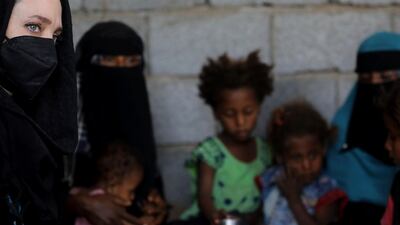
The actress arrived in Yemen on Sunday to meet people who have been displaced by the country's seven-year conflict. AP -
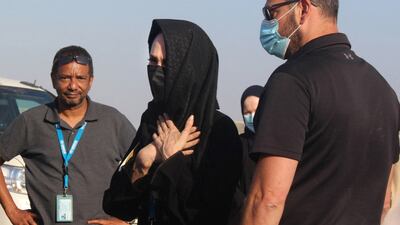
Her visit comes before the annual pledging meeting for Yemen on March 16. AFP -

Jolie is hoping her visit will help draw attention to the conflict's catastrophic consequences, said the UN refugee agency, UNHCR. AP -
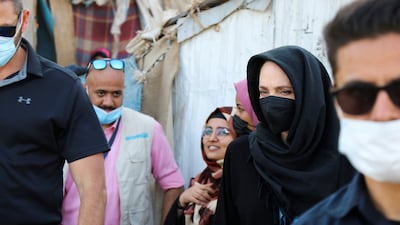
Jolie inside a camp for people displaced by war in Lahej, Yemen. Reuters -

The UN special envoy shakes hands with a woman displaced by war. Reuters -
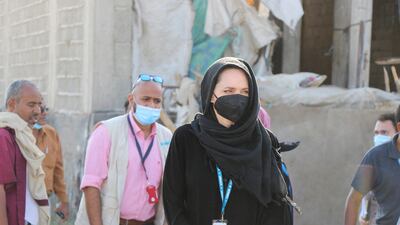
UN aid chiefs worry that donor fatigue will affect Yemen, as governments shift allocations to Ukraine, Afghanistan and other crises. Reuters -

Jolie gestures as she leaves a camp for displaced people. Reuters


“I understand that some states are frustrated because it's been years they are supporting humanitarian efforts in Yemen, but we are worried that states will divert their attention and finances to other issues,” he said.
No end in sight for political situation
Mr Carboni said the ICRC cannot ignore the political environments in which they operate.
“Today we don’t see the right condition or the will of many sides,” Mr Carboni said, adding that trust must be built because it is clear parties to the conflict do not trust each other.
The Iran-backed rebels stormed Yemen’s capital Sanaa in 2014, ousting the government and triggering a civil war that has created one of the world's worst humanitarian crises.
The fighting has continued despite several rounds of talks and peace initiatives by the UN and international community, with the rebels currently waging a major offensive on Marib, the government's only stronghold in the north.
“I don’t think that Yemen has two sides, it’s many sides. It’s complicated,” he said.
Mr Carboni said that “conflict is not an option and is not a solution for people."

